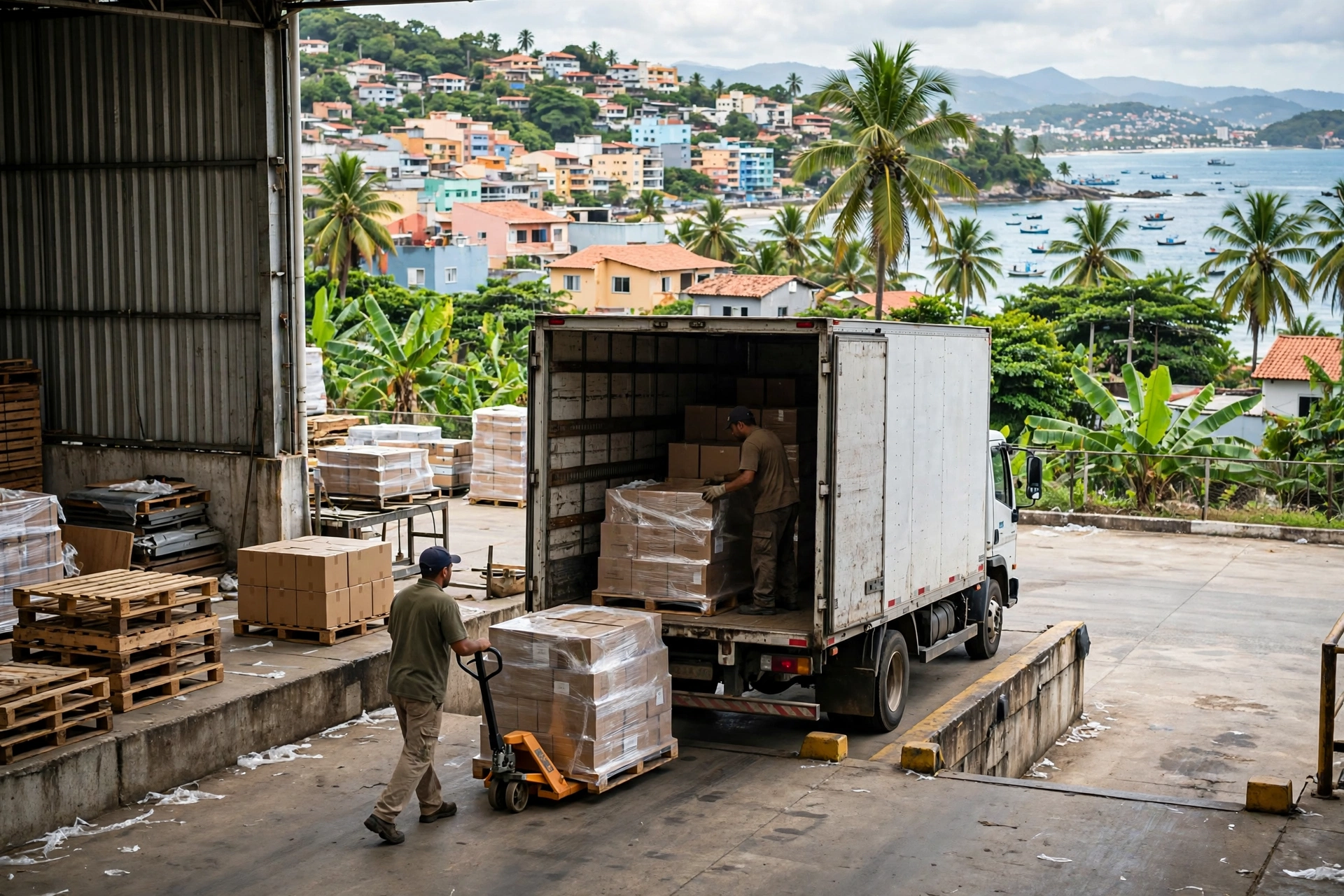
Let me tell you something straight: Fortaleza urban distribution taught me its first lesson the hard way. It was a humid morning at the start of the rainy season, and I had just picked up a container near the port, thinking I would slip into the city early and unload before lunch. Instead, the suburban stretch jammed up for most of the day. My phone kept ringing, the customer kept asking where the truck was, and the goods sat in the back baking in the heat. That one trip told me everything: in this northeastern city, delivery is not about how fast you drive, it is about how well you know the roads and the temper of each warehouse.
Fortaleza urban distribution lesson one: do not rush from the port into the city
After all these years on the road, I have learned that the port gate is only the starting line. The real test begins on the road into town. One morning I watched three trucks ahead of me all aim for the same downtown delivery window, and all three ended up queuing at the same narrow approach while their drivers burned fuel and patience. A warehouse manager later told me, plain as day, that the morning slot they gave us was never meant for three big trucks at once. The appointment said one thing, the yard could only handle another, and nobody had checked.
That is why I now treat the suburbs as my friend, not a detour. A warehouse on the outskirts may look farther on the map, but it has room to turn a truck around, a forklift that is actually free, and a door you can back into without blocking the street. I once dropped a load at a suburban site in the early afternoon, was unloaded in under an hour, and still made a second short run before dark. The downtown job that same week took one truck a whole day for a single drop. Distance on paper and time on the road are two different things here.
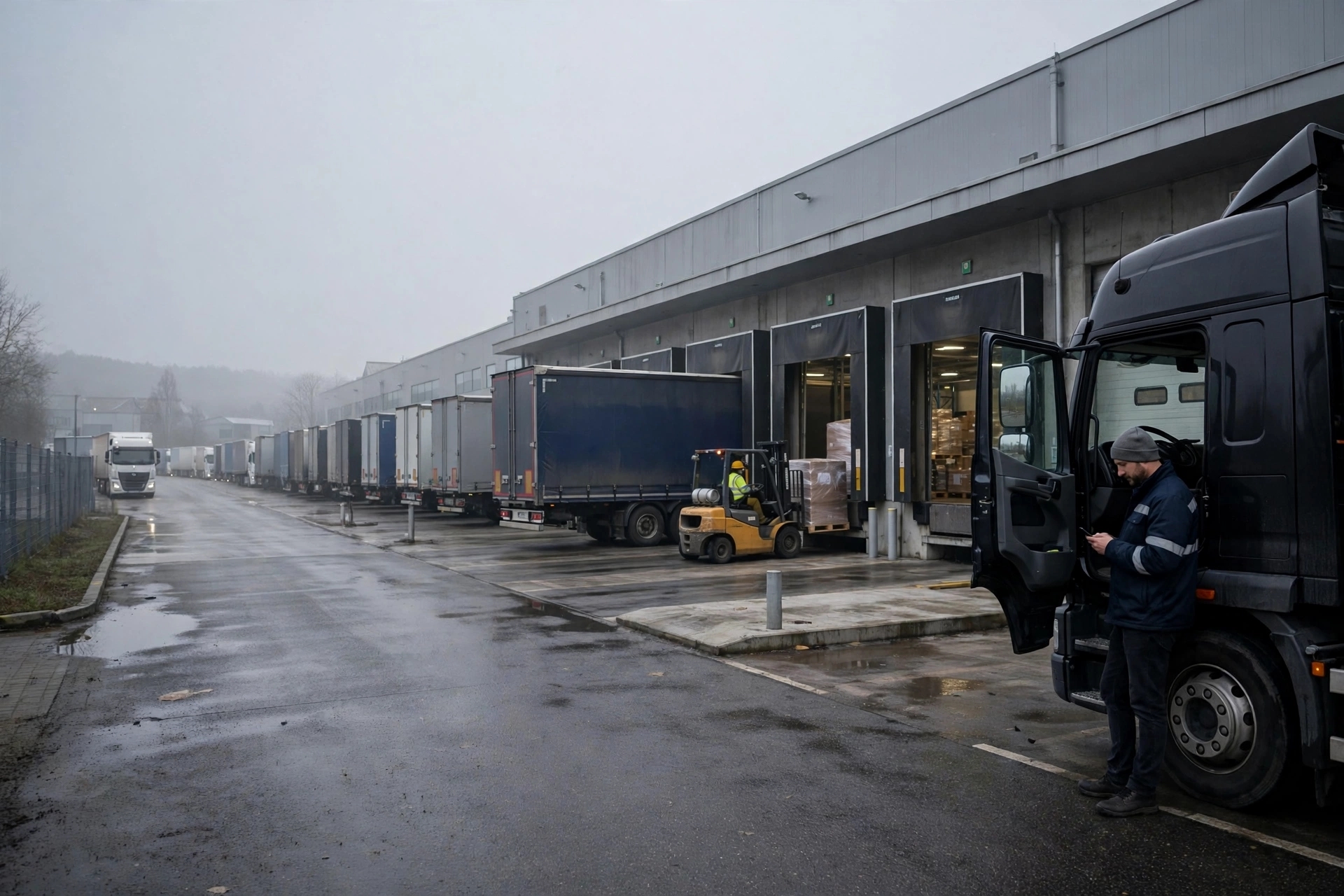
Another trip still sticks with me. I arrived on time for an early shift at a suburban warehouse, only to find two trucks ahead of me and a single forklift working the dock. The receiver came out and asked if I could park on the side lot so I would not block the way in and out. I waited nearly two hours, watching that forklift shuttle back and forth, before my turn came. After that day I made a habit of calling the receiver before departure: what time is the forklift really free, which dock door do I use, and where do I park without getting in the way? The call takes five minutes and saves half a day. Most delivery trouble is not about the road at all; it is about arriving at the gate and finding that nobody agreed on the details.
The suburban yard has a second advantage that never shows up on a quote: drivers talk to each other while they wait. A few words about which stretch is under repair, which junction clogs up in the afternoon, and which receiver takes a long lunch break — that is how a working map gets passed around. An old hand on a fixed route carries a living map in his head, not the line on the navigation screen. The screen tells you the shortest road; the old hand tells you the road that will actually move today.
The Fortaleza urban distribution math: time, damage, and the empty return
People ask me what costs more, and I always answer with the same three lines: the clock, the cargo, and the way back. A fast direct run looks cheap until you count the waiting, the rehandling, and the risk of goods shifting or getting damp on a long hot wait. A suburban transfer adds one more touch, but it can save half a day of idling and a damaged claim later. That trade-off surprises a lot of shippers. One extra unload can be the cheapest move of the whole trip.
| Route choice | What it gains | What it risks | Best for |
|---|---|---|---|
| Direct into the city | Fewest touches, simple paperwork | Long waits, tight streets, higher damage risk on hot days | Small urgent loads with a confirmed dock slot |
| Suburban warehouse transfer | Room to maneuver, faster unloading | One extra handling step | Mixed loads and multi-stop city work |
| Inland staging point | Shorter final legs, easier return loads | Needs a reliable partner inland | Regular flows beyond the metro area |
Rainy-season damage deserves its own line in the ledger. Rain rarely ruins a load all at once. It creeps in while the truck waits: a tarp that does not sit tight, a seal that weeps, cardboard that softens at the edges. I once hauled a load of cartons that caught a sudden downpour while waiting at a suburban site. The tarp was on, but a few corner cartons still came out damp, and the receiver went through them one by one. The delay cost time, and the damp cartons needed separate handling. Since then, in the rainy season I would rather arrive half an hour early and get the goods inside than gamble at the roadside. A few tarps and a little time are cheap; a damaged reputation travels with the whole load.
The return leg is where most newcomers lose money. I have seen drivers head back empty because nobody asked, the day before, whether a nearby warehouse had pallets or returns going the same way. Now I ask that question before I even leave the port area. A half-full return beats a proud empty run every time. And in the rainy season, I build in slack on purpose. A schedule with no slack is not a plan, it is a promise you cannot keep when the sky opens.
Three pieces of advice for shippers and warehouses
First, confirm the dock, not just the address. Ask who receives, what time the forklift is really free, and where a big truck is supposed to wait. A precise address with a vague dock plan is how a day disappears. Second, split the city work. Let the big truck do the trunk run to the suburban warehouse, and let smaller vehicles handle the tight downtown streets. Big trucks in small streets help nobody. Third, talk to the driver before the load, not after the delay. A five-minute call about roadworks, rain, and the receiver's lunch break saves five hours of phone calls later.
The inland leg came together through a partner I have worked with for years. At first I only ran as far as the suburbs and turned back; inland freight felt unfamiliar, and I did not want trouble on strange roads with strange customers. Then he told me he ran a fixed inland trip every week and needed a truck going his way to bring back empty pallets on the return. We tried it once: I delivered to the suburban warehouse, he carried on inland, and the return brought pallets and returns back with it. After a few runs the arithmetic settled — nobody ran empty, and the shipper's goods never waited longer. Inland work is not one truck running the whole way; it is several people each running the stretch they know, with a clean handoff between them.
I will close with an old saying from the road: slow is smooth, and smooth is fast. In Fortaleza that is not philosophy, it is arithmetic. A route that looks slow because it stops at a suburban warehouse often finishes first, because it never gets stuck. Plan for the road you actually have, respect the warehouse's rhythm, and leave room for the rain. Do that, and the city starts working with you instead of against you.
By Shifu Zhao, Trucking Veteran (15 yrs)