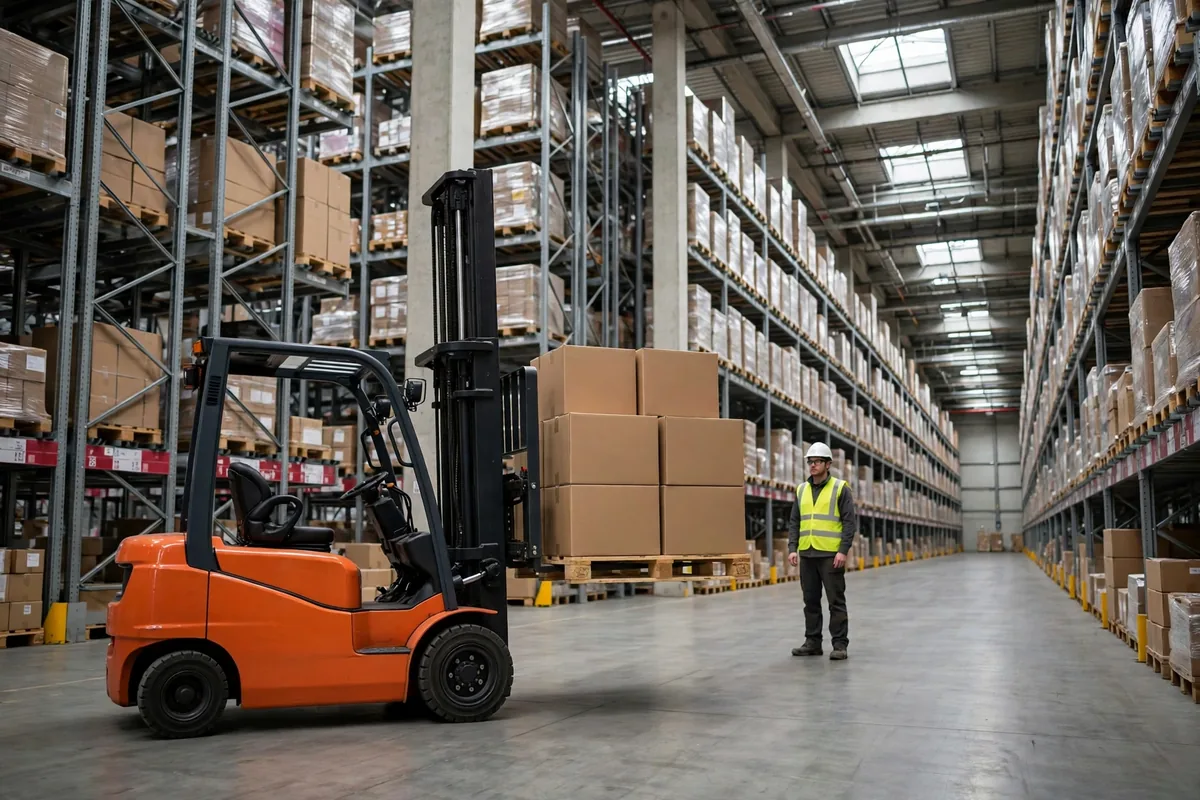
Let me tell you something about electric forklift selection I learned waiting outside a 3PL warehouse in Fontana last fall. I was waiting to get loaded, and I waited almost two hours. The freight was ready. The forklifts were not. The warehouse had just switched to a new fleet of lead-acid electric trucks because the price looked good — and then two-shift operation exposed the problem. A lead-acid battery takes about 8 hours to charge and another 8 hours to cool down before you can use it again. At shift change, there were hardly any fully charged trucks left. The warehouse manager stood on the dock shaking his head and said, "Shifu, if I had known, I would have paid extra for lithium." I have been driving trucks for fifteen years, and I have seen this scene at warehouse doors more times than I can count. A forklift is not bought on its price tag, but on how many hours a day it can work — and sold on what it is still worth at the end.
That is the trap in electric forklift selection: comparing sticker prices instead of comparing workdays. One shift a day or three shifts around the clock — the answer changes completely. Lithium, lead-acid, and diesel each have a lane where they win. None of them wins everywhere.
Electric Forklift Selection Starts With Your Shift Pattern
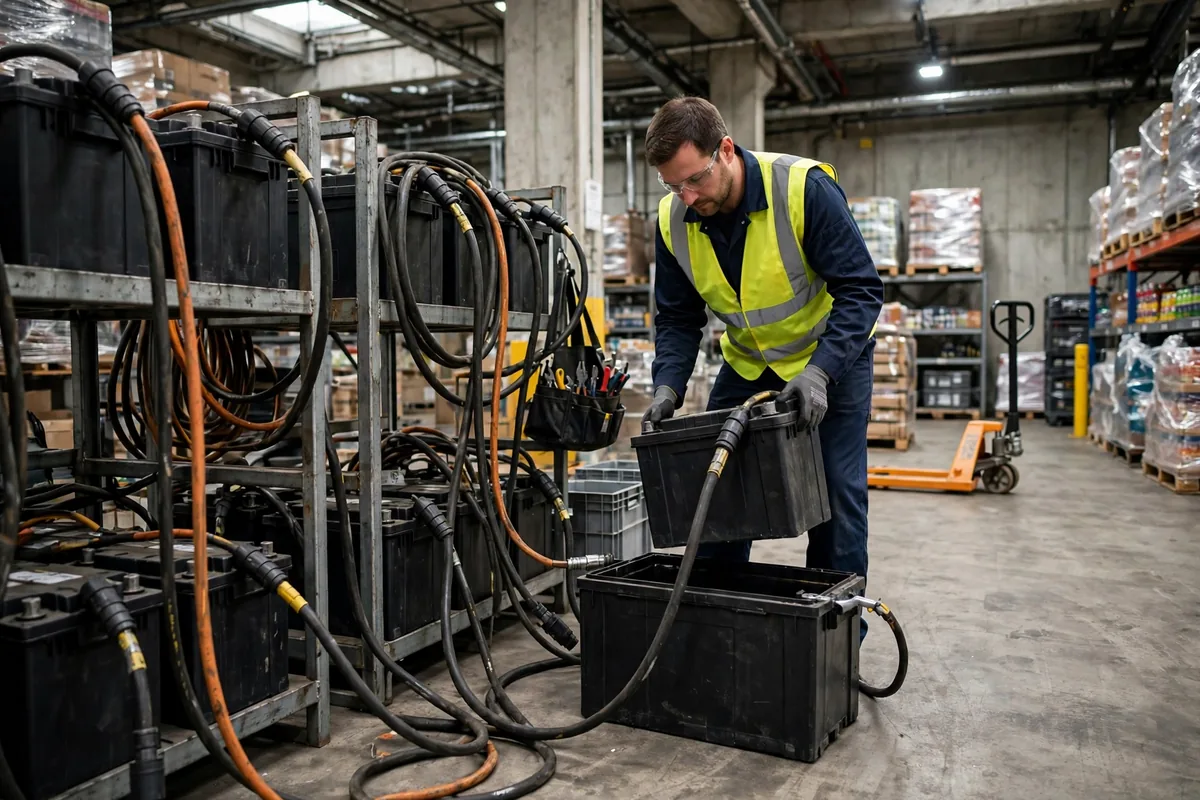
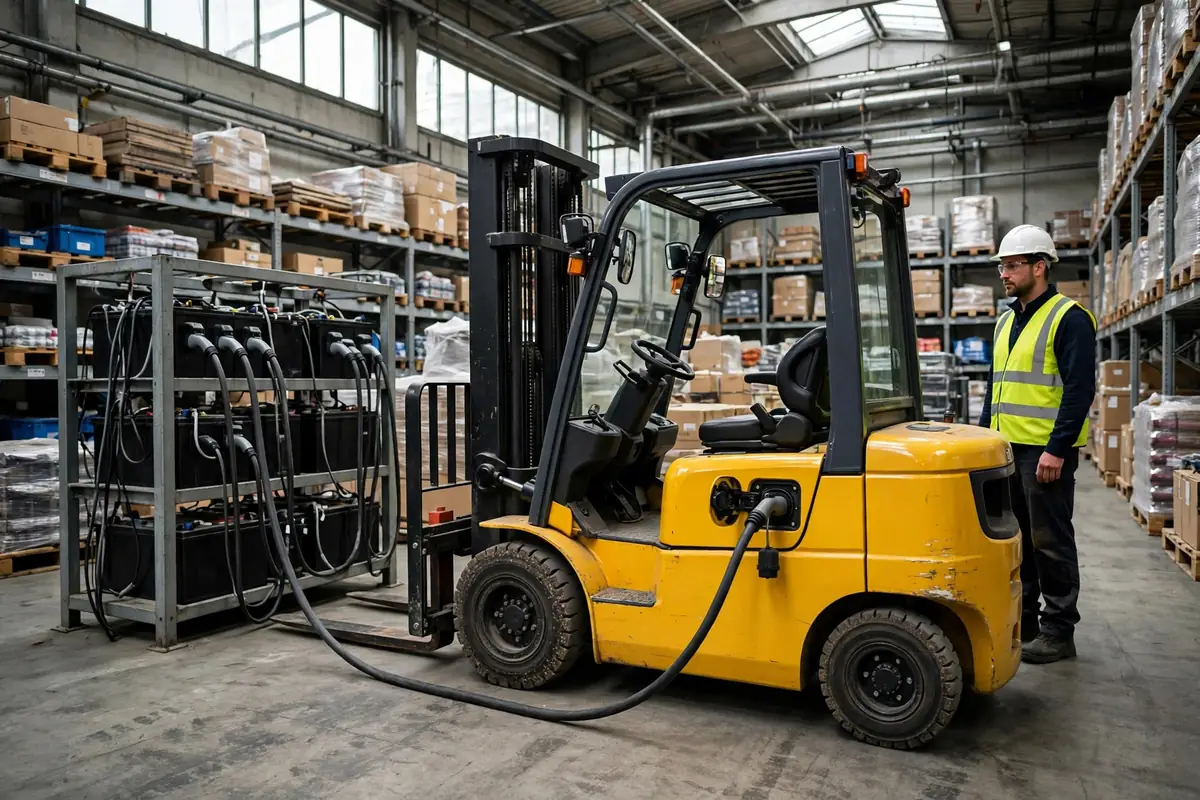
Lead-acid is the old way, and it still works — inside its limits. The rule everybody in the business knows is 8-8-8: 8 hours of work, 8 hours of charging, 8 hours of cooling. Industry figures commonly put a lead-acid pack at roughly 1,200 to 1,500 cycles, lasting 3 to 5 years with good care. For a single-shift warehouse, that rhythm fits perfectly. Work all day, charge all night, go again tomorrow. And it costs the least upfront.
But run two shifts and the math turns ugly. One battery per truck is no longer enough — you need spares, somebody has to swap batteries, top up the water, and run equalization charges. Every swap stops the work for fifteen or twenty minutes. The truck is cheap; the downtime is not.
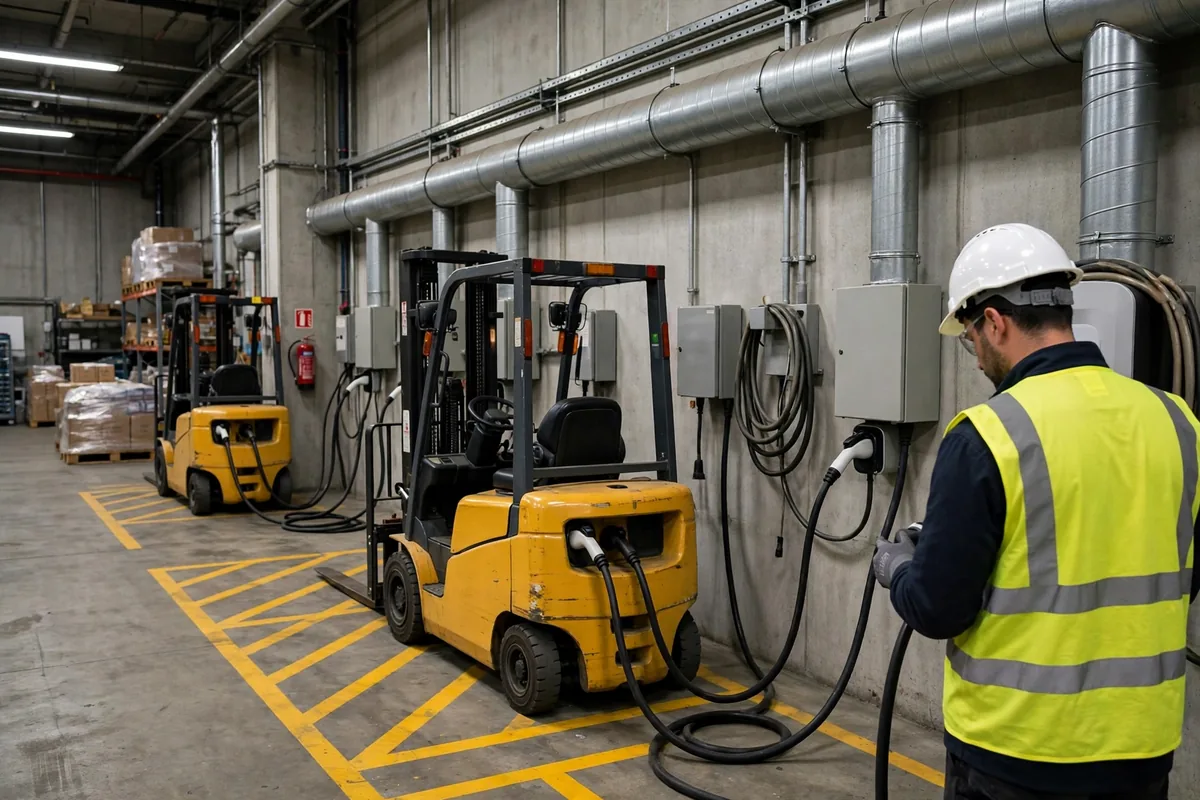
Lithium is a different animal. Forklift packs are almost always lithium iron phosphate, and the commonly published range is 3,000 to 5,000-plus cycles, lasting 8 to 10 years. A full charge takes 1 to 2 hours, there is no cooldown, and you can top up during a lunch break without hurting the cells. Drivers change shifts; the truck keeps working. For two- and three-shift operations, the hours you stop losing pay for the premium. But here is the flip side — if your warehouse runs a single short shift and the truck sits idle half the day, that lithium premium takes years to pay back. The most expensive battery in a truck that never works hard is just wasted money.
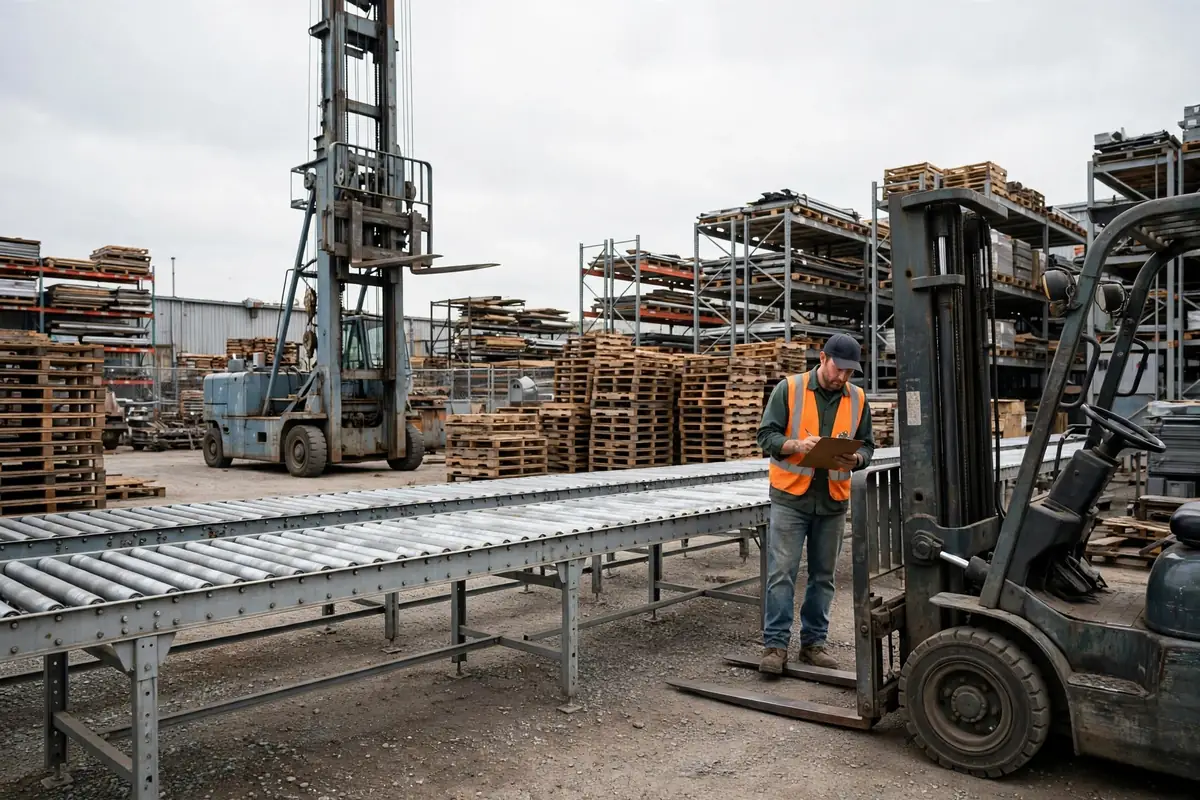
Then there is internal combustion — diesel and LPG. A fill-up takes minutes, and outdoors, on rough ground, hauling heavy loads, nothing beats it. Container yards, lumber yards, outdoor storage — that is diesel country. Bring it indoors, though, and it shows its age: exhaust fumes that need ventilation, noise, oil changes, filters, spark plugs, and engine overhauls that cost real money. Published comparisons put a 3.5-ton IC truck at several dollars per hour in fuel plus maintenance, against roughly one to two dollars per hour for an electric. The gap lives on the fuel gauge, every single day.
Lithium vs Lead-Acid vs Diesel: The Comparison Table
The figures below are commonly published industry ranges, not a quote for any specific brand or model. Confirm them against actual supplier quotes and warranty terms before you buy.
| Factor | Lead-Acid Electric | Lithium Electric | Diesel / LPG |
|---|---|---|---|
| Purchase price | Lowest | Highest, roughly 2–3x lead-acid | In the middle, cheaper than lithium |
| Full charge | ~8 hours, plus ~8 hours cooling | 1–2 hours, opportunity charging anytime | Minutes to refuel |
| Battery life | ~1,200–1,500 cycles, 3–5 years | 3,000–5,000+ cycles, 8–10 years | No battery cost; engine overhauls depend on hours |
| Daily maintenance | Watering, terminal cleaning, equalization | Virtually maintenance-free | Oil, filters, plugs — the most frequent |
| Cost per hour | Cheap energy, expensive labor | Cheap energy, least labor | Highest fuel and maintenance cost |
| Cold storage | Loses about half its capacity around −20°C | Heated battery management keeps 80%+ capacity | Cold does not bother it |
| Best fit | Single shift, indoors, smooth floors | Multi-shift, cold storage, high-bay work | Outdoors, heavy loads, rough yards |
One published five-year comparison makes the point clearly. Take a 3.5-ton truck running 2,000 hours a year: over five years the LPG truck totals about $74,000, the lead-acid electric about $58,000, and the lithium electric about $57,000. Lithium costs the most on day one and the least by year five. That is exactly why a sticker-price comparison gets you into trouble. (Figures are a published industry example; confirm against your own quotes.)
The Cold Storage Story: A Lead-Acid Truck That Quit Mid-Shift
Here is something I watched with my own eyes. In January 2024, at a cold storage warehouse in Chino running around −20°C, the forklifts were moving frozen goods in and out all day. The warehouse was still on lead-acid trucks. A driver told me the battery gauge dropped fast inside the freezer — before half a shift was done, the truck had to come out to charge, and they were swapping batteries two or three times a day. Then they brought in two lithium trucks with heated battery management. Same freezer, same work, and a truck finished a full shift with charge to spare. The reason is simple: a lead-acid battery loses roughly half its rated capacity around −20°C, while lithium iron phosphate with active heating holds on to more than 80% of it. In a freezer, a battery that hates the cold is half a truck. Buy the wrong power source and you pay for it in lost hours, every day. That is the kind of detail that decides electric forklift selection in the real world — not the brochure.
And the opposite mistake is just as common. In the summer of 2023, at an outdoor yard in Riverside, an owner heard that electric saves money and replaced six trucks with electrics in one go. The yard floor was uneven, rain left puddles, and the electrics sat low, slipped on wet concrete, and struggled on the ramps with heavy loads. He ended up calling the old diesel truck back to rescue them. Six months later he told me the electrics were great indoors — but the outdoor trucks should have stayed diesel. Indoor and outdoor work are two different jobs. Buying one type of truck for both is how you end up owning the wrong fleet twice.
Three Questions to Close Your Electric Forklift Selection
After fifteen years of talking to warehouse owners at loading docks, I have a simple test. Answer three questions before you sign anything, and the right power source picks itself.
First: how many shifts a day? One shift — lead-acid is enough, keep the money. Two or more — lithium, and hesitating only costs you downtime. Three shifts around the clock — lithium is the only option that never needs a battery swap. Second: is the work mostly indoors or outdoors? Smooth indoor floors — electric. Outdoor yards, heavy loads, rough ground — internal combustion. Half and half — keep both types in the fleet instead of forcing one truck to do a job it was never built for. Third: does the truck go into cold storage? If yes, lithium with heated battery management is the answer; lead-acid in a freezer is half a truck. If no, skip the question entirely.
Two more pieces of advice before you go. First, before buying lithium, check whether your chargers and your electrical capacity can handle fast charging. Fast charging is not just plugging in — if the panel cannot deliver the power, the fast charger is decoration. Second, do not forget residual value in the math. A lithium truck can still be worth something after ten years; a lead-acid pack will need replacing once in that span, and one major diesel engine overhaul can cost as much as half a truck.
Here is the old saying I always come back to: do not buy a truck by its price tag — buy it by how many hours a day it can work for you. A forklift is a tool that earns money for the warehouse, not a decoration parked by the door. Figure out your shifts, your ground, and your cold rooms first. After that, lithium, lead-acid, or diesel — the answer writes itself.
By Shifu Zhao, Trucking Veteran (15 yrs)