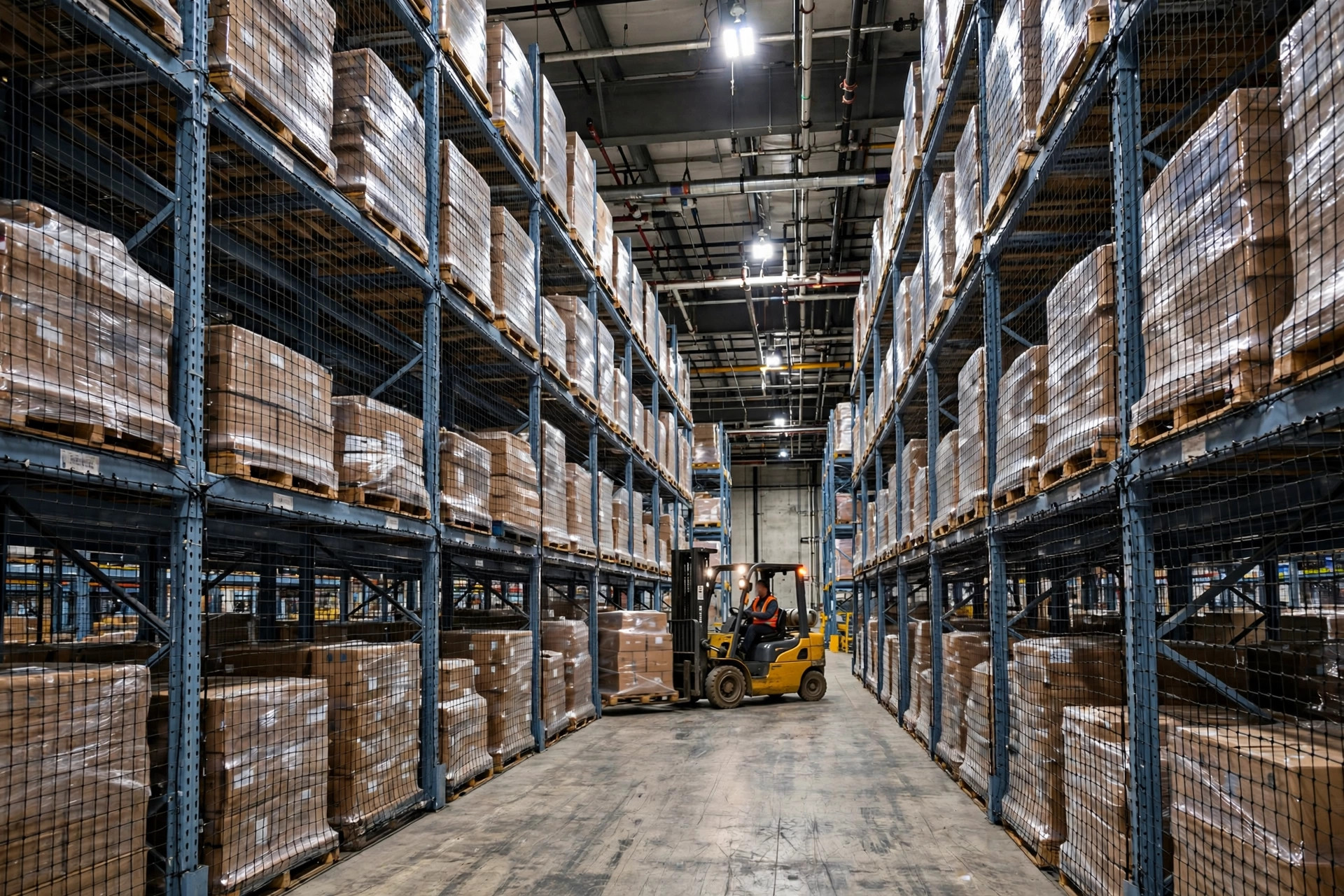
Tuesday morning, March 2026, our distribution center in Ontario, California. We'd just finished a pre-peak hiring wave and eleven new forklift operators were sitting in the break room waiting for my safety talk. Shelves were stacked to the ceiling behind them, and we were already behind on inbound.
I told the group: "Nobody touches a truck until the paperwork's done." A young guy raised his hand. "Boss, I already did one of those online courses. Fifty-eight bucks, got the card in half a day. Does that count?"
Let me be honest with you — for about three seconds, I was tempted. Eleven people, fifty-eight dollars each, done by lunch. What a deal.
Good thing I said no.
The Real Forklift Certification Cost: All Three Routes, With the Math
Here's the thing about forklift certification cost: I used to shop it the way most managers do — by the sticker price. Then, in the winter of 2024, a buddy of mine named Zhang who runs a 3PL in Fontana got an OSHA visit, and I learned what this line item is really about.
Zhang had about forty operators. To save money, he'd bought the cheapest online theory course for everyone — forty-nine dollars a head, quiz on a phone, card in half a day. He thought he was covered. The OSHA inspector thought otherwise. Under OSHA 1910.178(l), a forklift operator has to clear three gates: classroom theory, hands-on training, and a workplace evaluation by the employer. The cheap online card only clears the first one.
OSHA wrote him up for a serious violation. The fine starts at $16,131 in 2026. Zhang told me over beers later that the forty-nine-dollar card turned out to be the most expensive thing he'd ever bought.
I went back to my own operation and rebuilt the whole budget. We recertify every three years, in batches, and I cost out all three routes per operator. These are our actual 2025 numbers:
| Route | Enrollment fee | Time off the floor | Lost-wage cost | Hidden catch | True per-person cost |
|---|---|---|---|---|---|
| Online theory only | $50–$200 (usually $49–$60) | Half day | ~$112 (4 hrs × $28) | You still owe the hands-on evaluation, or you're non-compliant | $161+ and not finished |
| In-person classroom | $150–$350 | Full day | ~$224 (8 hrs × $28) | Still need an employer evaluation back at your site | $374–$574, last gate missing |
| Full package with evaluation | $300–$600 | Half day | ~$112 | All three gates cleared, least rework | $412–$712, fully compliant |
See it? The enrollment fees look hundreds apart, but once you add the lost-wage cost of pulling people off the floor, the gap shrinks fast.
Last year we recertified 37 operators with a full package, negotiated down to $420 a head, plus a half day of lost time each. Total came to about $19,700. Our finance lead balked at first, so I walked her through the alternative math: if we cheaped out on the online course, the evaluation gate falls on us — our own supervisor runs $32 an hour, about 1.5 hours per operator, so $48 a head, plus his own work getting interrupted. And if an inspector walks in, one serious-violation fine at $16,131 covers two full rounds of recertification for all 37 people, with change left over.

Where the Problem Actually Comes From: It's Not the Price, It's the Missing Gate
Let me be straight with you: online courses aren't the scam. OSHA doesn't ban online theory — doing the classroom part on a laptop saves real time. The trap is the belief that "having the card means you're compliant." OSHA wants three things. The card is only one of them.
What the pure-online card skips is the one that matters most: the employer evaluation. That means a qualified evaluator has to stand in your own building, watch the operator drive your own trucks, down your own aisles, handling your own product — and sign off. Nobody can do that step for you remotely. A contractor can come to your site and do it, but then you're buying the full package anyway, which is why it costs what it costs.
In June 2025 we learned this the small way. A veteran operator transferred in from another site. His paperwork was perfect — online theory, hands-on, the works — but it was his previous employer's evaluation. First week in our building, he clipped a rack upright. His driving wasn't bad; our aisles are two feet narrower than his old building, and every turning habit had to be relearned. We pulled his truck the same day, ran a fresh evaluation and targeted coaching, and let him work solo a week later. Since then it's an iron rule in our operation: change sites, redo the evaluation. The card travels with you; the evaluation doesn't.
The Counterintuitive Part: The Enrollment Fee Is the Cheapest Line Item
Let me be honest — nine out of ten managers I've met do this math wrong. They haggle the enrollment fee from $600 down to $450, then to $300, and feel clever. But in the true per-person cost, the enrollment fee is only about half. The other half is lost floor time — and that's not negotiable, no matter which route you pick. People still have to leave the floor.
The real trade-off is this: spend the money on the evaluator, not the course.
Here's what we do now, and it's our fixed system. In the fall of 2025, we sent two of our ten-year veterans to get trainer qualifications. Since then, all our hands-on evaluations and recertifications are done in-house by those two old hands. Training the evaluators cost us upfront, but every batch since has been cheaper — and there's a bonus no outside contractor gives you: while the veteran evaluates the new hire, he also teaches them how we run our building. New hires listen differently when it's one of their own teaching them. Scheduling, morale, the whole crew dynamic improves.
For my peers who need a budget they can copy, here's our template for a 30-operator shop:
- Enrollment: online theory at $55/head × 30 = $1,650 (theory online, less floor time lost)
- Evaluation labor: in-house evaluators, 1.5 hrs/head × $32 = $48/head, $1,440 total
- Lost floor time: half day theory + half day evaluation, 1 day × $28 × 30 = $6,720
- Buffer: 10% for rework and retests, about $1,000
Fully compliant certification for 30 people: about $11,000 total, $363 per head. More than a stack of $58 online cards — but not even close to one $16,131 OSHA fine, which alone would certify 44 people. That $363 number is the honest forklift certification cost for a mid-size warehouse: not the cheapest quote you'll find, and not a surprise waiting to happen.
One more detail: batching. Don't cram certification into the month before peak season. Pulling people off the floor when you're busiest is self-sabotage. We run batches of 8–10 in the slow season, one batch every two weeks, led by the veterans. Production barely notices.
Three Reminders for Fellow Managers
Three things we bought with real money. Yours for free:
First, when you see a $58 online card, ask one question: "Who does the evaluation?" If they can't answer, or tell you to figure it out yourself, that money is gone. OSHA doesn't audit whether you have a card — it audits whether you have all three gates.
Second, budget $350–$450 per head, not the enrollment fee. Report the full number to your boss once. That's what the real forklift certification cost looks like — going back for more later is always harder.
Third, recertification every 3 years goes in the annual budget. Don't wait until cards expire. One day expired and on a truck counts the same as never certified.
Forklifts are like that — the better your crew drives them, the easier it is to get casual. Certification is the insurance policy against casual. Everybody complains about the premium until the day they need the payout.
By Chen Feng, Warehouse Operations Manager