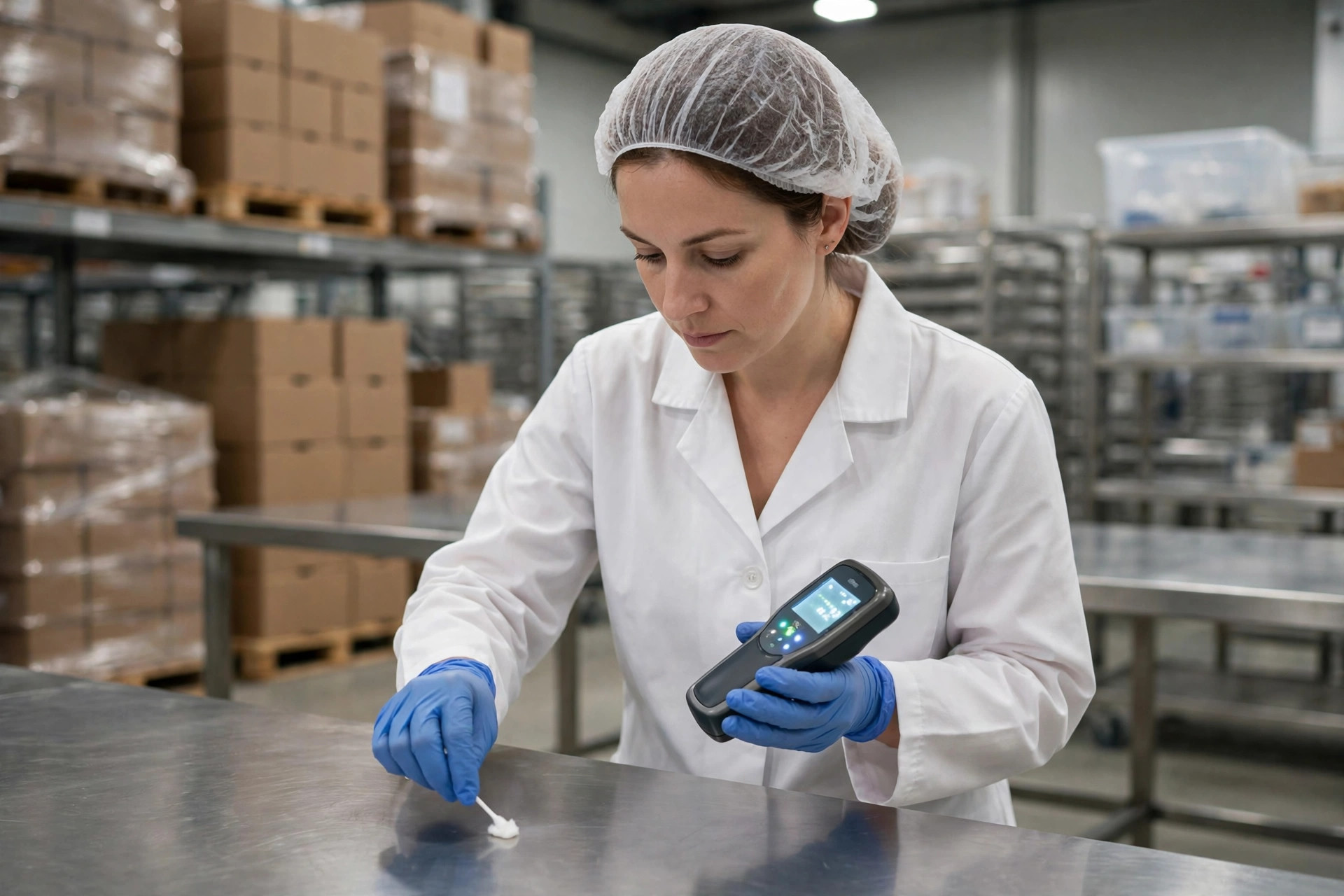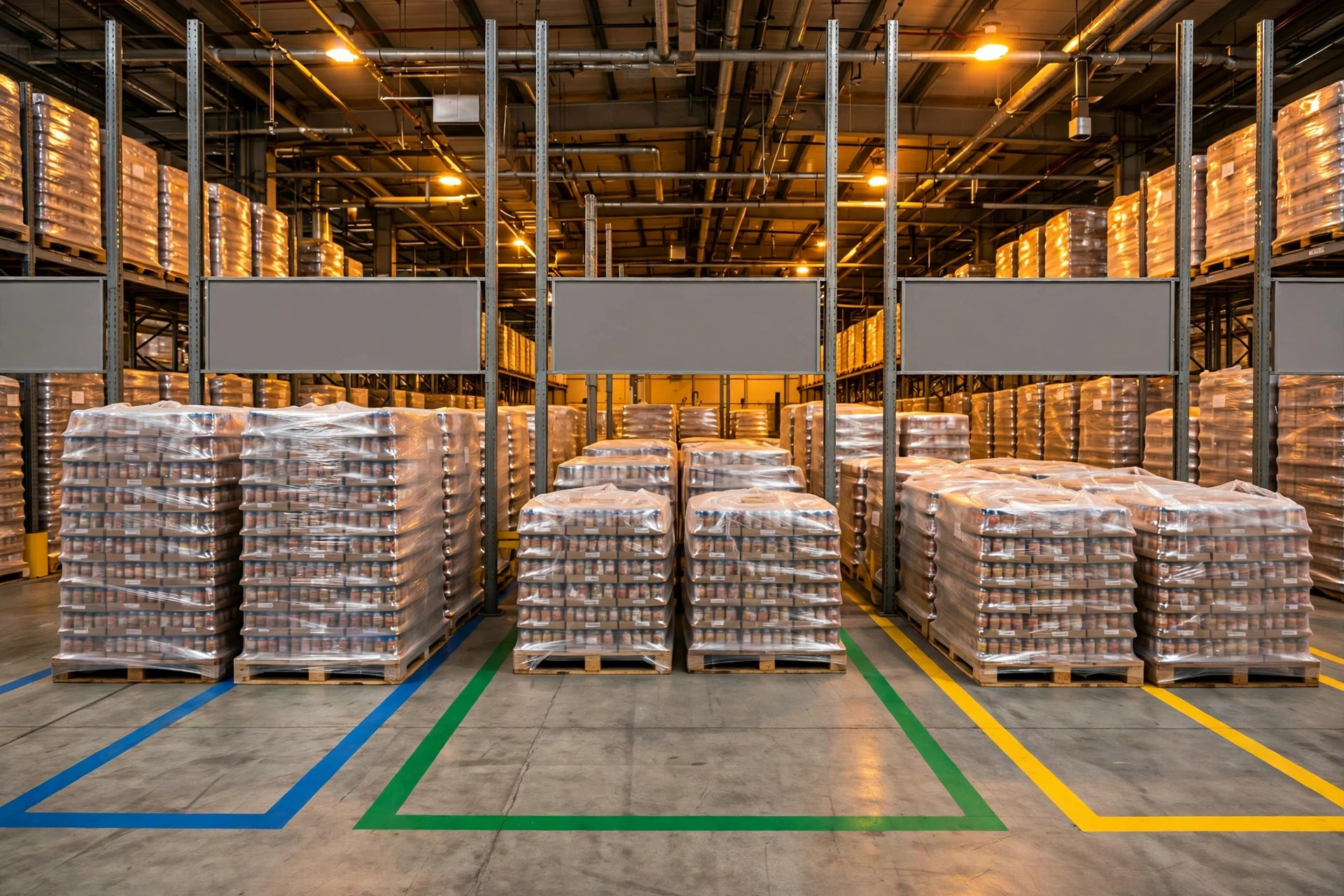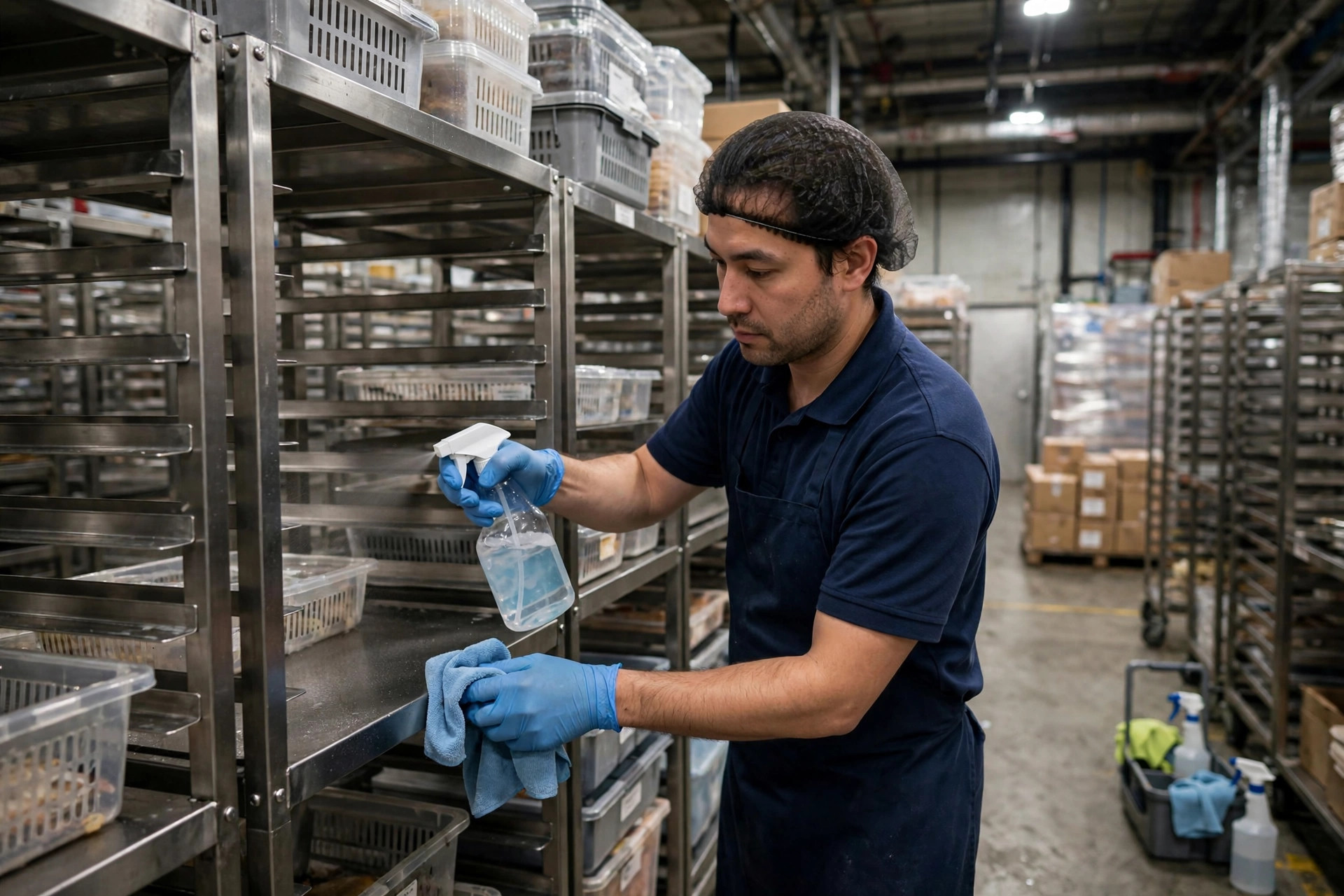
In January 2022, FDA investigators walked into a food distribution center in West Memphis, Arkansas, and found live rodents, dead and decaying rodents, rodent feces and urine, and evidence of gnawing and nesting throughout the building. On paper, the facility's food warehouse sanitation SOP may have existed; in the inspector's eyes, it did not. The fumigation that followed pulled 1,270 dead rodents out of the building. The company's name was Family Dollar. Two years later it pleaded guilty and paid $41.675 million in fines and forfeiture — the largest monetary criminal penalty in a food safety case in the history of the U.S. Department of Justice. The coldest lesson for the industry fits in one sentence: inspectors never cared whether you own a sanitation manual. They care whether your records prove the cleaning actually happened, every single day.
Sanitation SOPs Keep Topping the 483 List: What the Data Shows
According to FDA inspection data for fiscal years 2019 through 2023, roughly 90% of noncompliance observations cited on Form 483 in food facilities were related to good manufacturing practices — and the top two observations were both sanitation items: pest control (21 CFR 117.35(c)) at number one, and sanitary operations and maintenance (21 CFR 117.35(a)) at number two. In other words, the violations inspectors write up most often are not sophisticated hazard analyses but the most basic questions of all: is it clean, and are there rodents. Meanwhile, the U.S. Centers for Disease Control and Prevention estimates that about 48 million Americans get sick from foodborne illness each year, with 128,000 hospitalizations and 3,000 deaths. Put the two numbers together and the logic chain is complete: with a disease burden that heavy, enforcement resources will inevitably concentrate on the most basic — and most failure-prone — sanitation practices in the whole chain. And the warehouse, the link in the chain that only stores and never manufactures, is precisely where sanitation records tend to be thinnest.
The Five Records an FDA Inspector Pulls First
A food warehouse that stores but does not manufacture falls primarily under 21 CFR Part 117, Subpart B — the current good manufacturing practice requirements. Many third-party logistics operators carry a deeply rooted misunderstanding: no manufacturing means no hazard analysis, which must mean sanitation requirements are looser too. The first half is roughly right; the second half is dangerously wrong. An inspector walking into a warehouse has no production process to examine, so what gets examined is the sanitation record chain. Reviewing multiple enforcement cases, the inspector's reading order is remarkably consistent. First, pest monitoring records: bait station maps, inspection frequencies, and how anomalies were handled. Second, the master sanitation schedule: whether zones, frequencies, methods, and responsible persons are fully specified. Third, execution logs: whether dates, times, and signatures are continuous, and whether anything looks backfilled. Fourth, sanitizer concentration records: whether dilution ratios actually met specification. Fifth, corrective action and training records: whether problems found were ever closed out.
On April 17, 2023, the FDA issued a warning letter (CMS #651799) to Victory Trading Company of Greenland, New Hampshire. Between December 12, 2022 and January 13, 2023, investigators had inspected the company's ambient, refrigerated, and frozen food warehouse, found multiple violations of 21 CFR Part 117, and — most damning — laboratory analysis detected rodent filth throughout the facility. The food was deemed adulterated under Section 402(a)(4) of the Federal Food, Drug, and Cosmetic Act. But the detail of this case most worth pondering is not the infestation itself. It is that the company failed to provide a written response to the Form 483 observations within the required timeframe. Sometimes a record chain collapses at the step of "no response at all" — and the warning letter follows.
What an Inspection-Ready Food Warehouse Sanitation SOP Looks Like
An SOP that survives inspection was never a manual. It is a four-layer structure. At the top sits the master sanitation schedule, specifying for each zone the method, the frequency, and the person responsible. The second layer is execution records: for every cleaning, the date, time, zone, method, sanitizer concentration, and the operator's signature — none of them optional. The third layer is verification records: supervisor countersignatures, ATP bioluminescence test results, and periodic visual inspections. The bottom layer is corrective action records: how anomalies were handled, whether re-inspection passed, and whether the plan itself was revised. Remove any one of the four layers and the chain is broken.
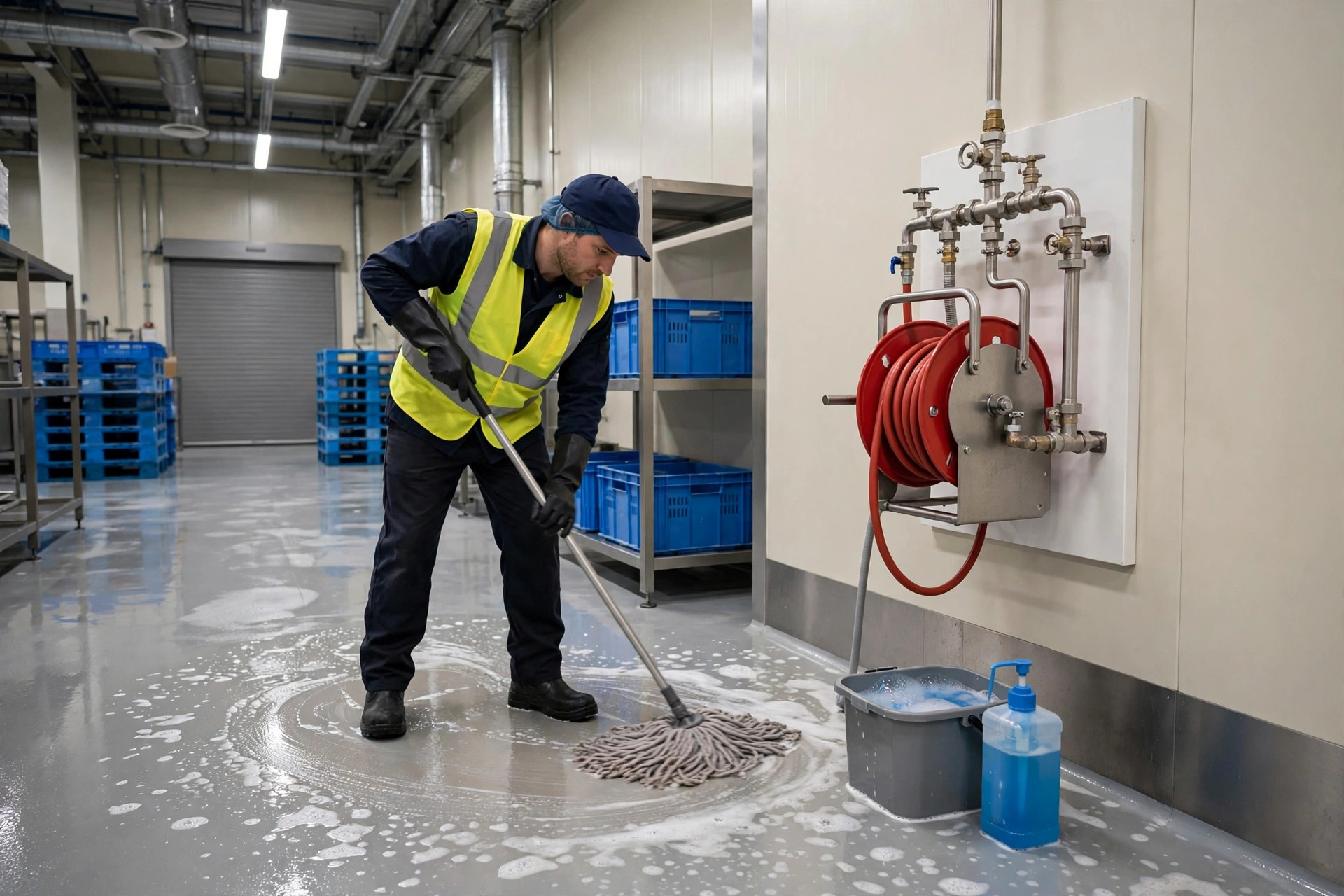
Warehouse sanitation has three structural difficulties, which is exactly why the plan has to be designed around them. First, dock doors open and close hundreds of times a day, giving pests far more entry points than a factory has — pest control carries far more weight in a warehouse than in a plant. Second, cleaning is often outsourced to a third-party contractor: the work happens at the contractor, the records live at the contractor, but when the inspector assigns responsibility, it lands on the warehouse. Once records are split across organizations, accountability becomes impossible to explain. Third, the tops of high-bay racking and the corners of cold rooms are cleaning blind spots; if the plan does not name them, they are by default never cleaned.
Doing the Math: Prevention Costs vs. Enforcement Costs
Put the two sides of the ledger next to each other and the conclusion barely needs arguing:
| Building an SOP record system (before) | Living through an enforcement action (after) | |
|---|---|---|
| Direct spending | Cleaning labor, consumables, pest control service, testing | Fines (Family Dollar case: $41.675 million), recall logistics |
| Time | Some operating windows given up | Shutdown for remediation; the distribution center later closed |
| Records | A few minutes of form-filling per shift | Lawyers and consultants, staff time answering the 483 |
| Commercial cost | A plus in food-customer audits | 14 consumer class actions, lost customers |
There is a counterintuitive judgment here: the thickest sanitation manual is usually the first thing to collapse under inspection. Inspectors are not afraid of a short manual; they are afraid of "written but not done." A manual that says "sanitize twice daily" next to logs showing once a week is not a plus in an inspector's eyes — it is evidence of dishonesty. A thin, executable plan with fully closed-loop records will always beat a 200-page manual nobody follows. Another trade-off deserves management's honest thought: cleaning frequency and operational continuity are inherently in conflict, since cleaning a cold room often means shutting it down to defrost; an in-house crew costs more but keeps records under control, while outsourcing is cheaper but lets records fragment. There is no standard answer to which is right — but the inspector recognizes exactly one standard: can the records reconstruct what happened.
If an inspector walked in tomorrow morning, could we reconstruct every cleaning, every pest check, and every concentration test from the past 90 days within 30 minutes? If the answer is no, the SOP is still just paper. And a question worth thinking about for the long term: now that the FDA has raised enforcement intensity at the warehousing link to where it is today, will the sanitation SOP stop being a pure cost item and become a bidding asset for 3PLs competing for food customers?
By Dr. Chen, Supply Chain Researcher