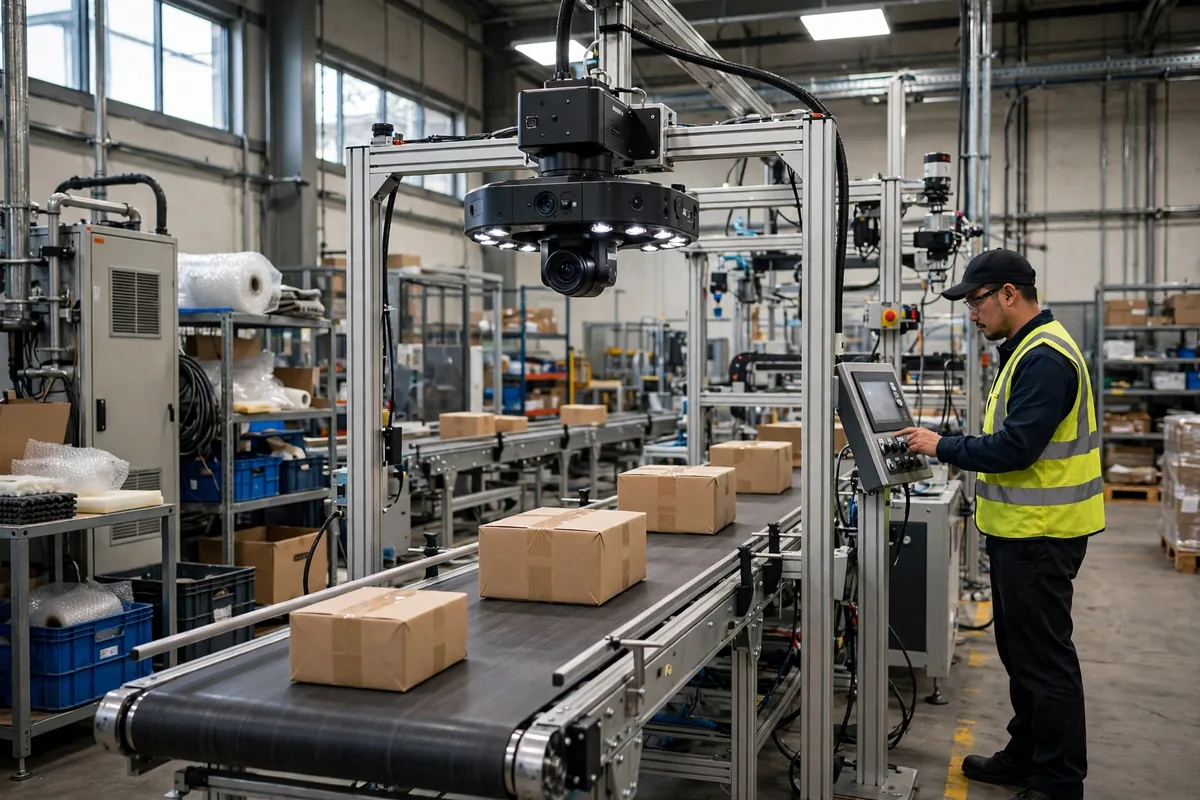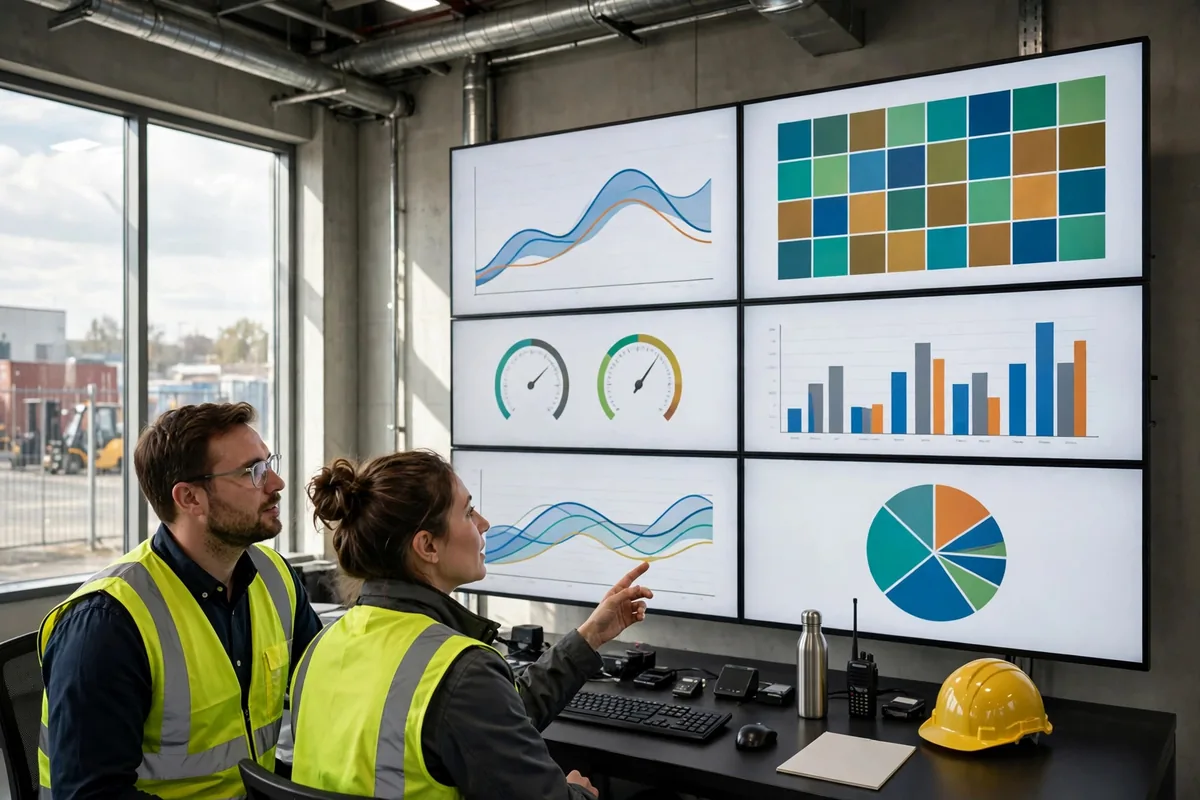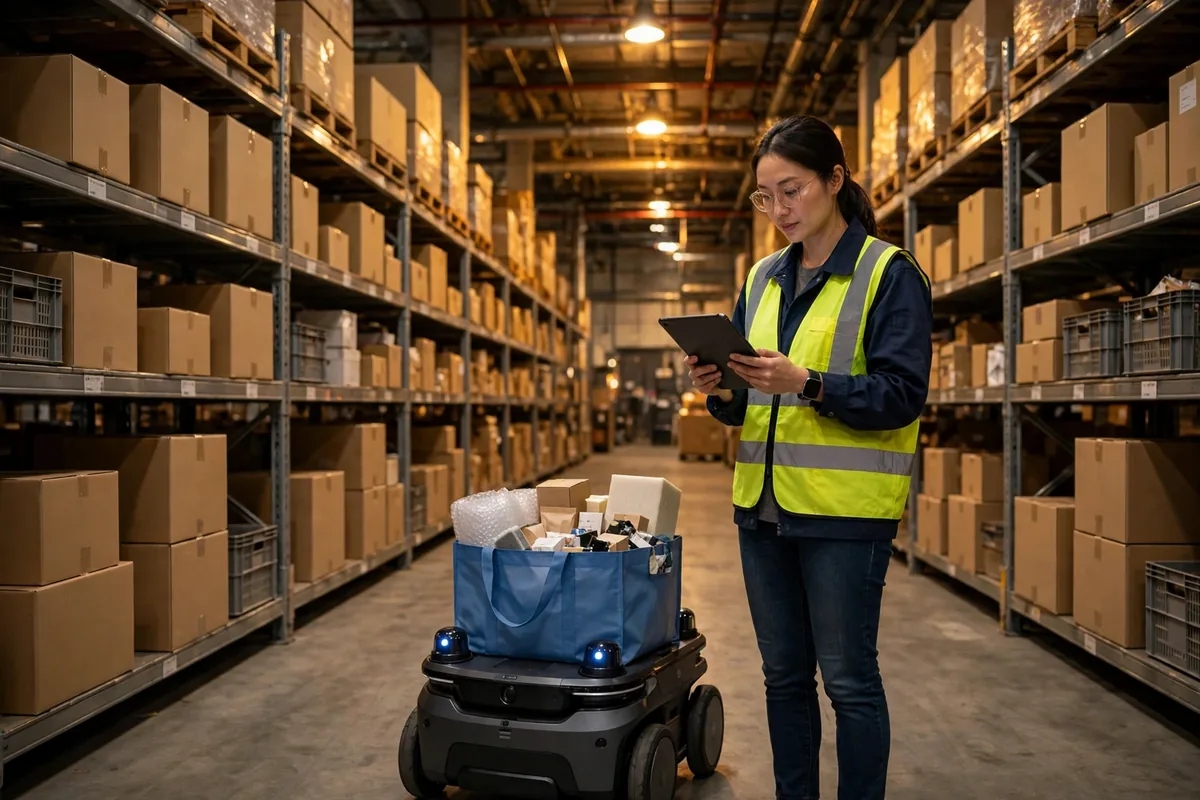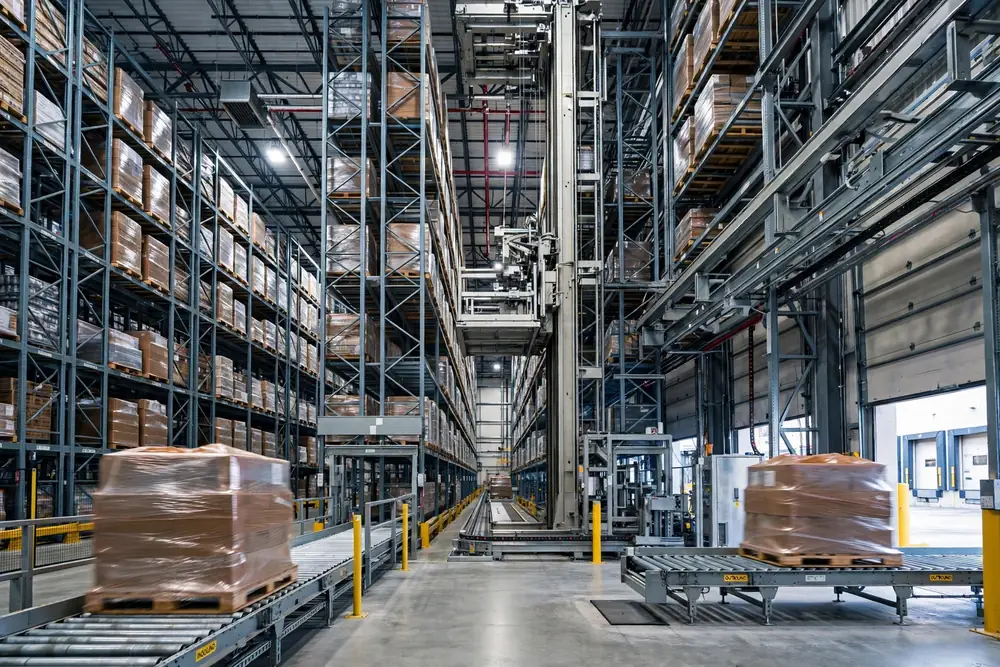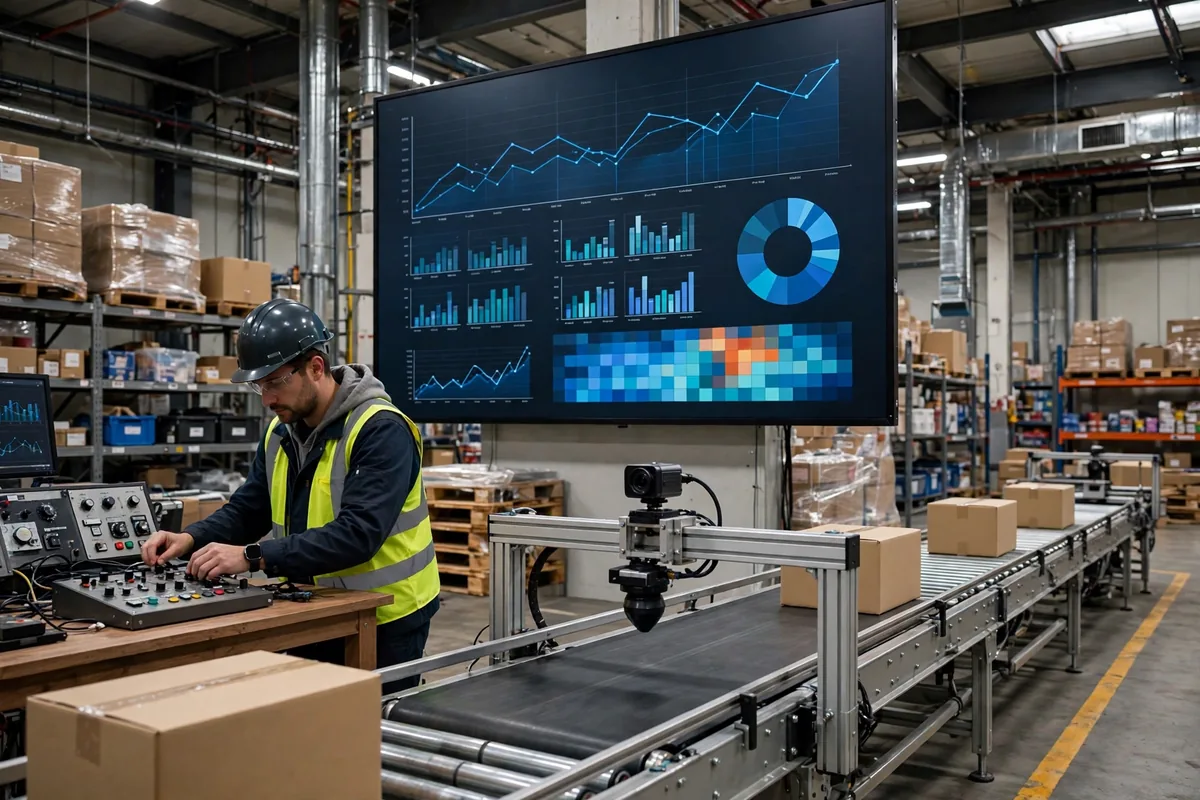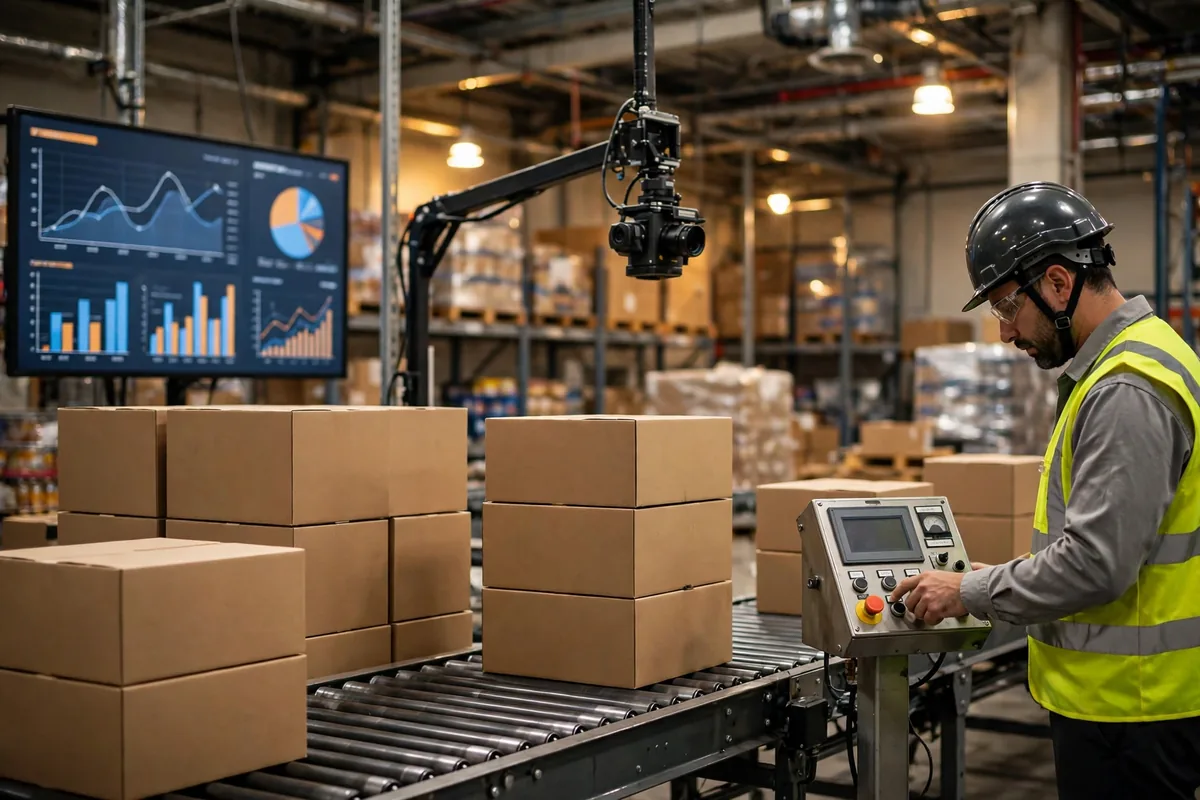
Choosing your first AI pilot in the warehouse comes down to one question: if the system gets it wrong, what happens next? Pick pack-check photo capture, exception alerts, or inbound counting support. When the AI misses something there, a person on the floor spots it in seconds and fixes it. Nothing ships wrong, nothing stops the line. Pick automated replenishment or driverless forklift dispatch instead, and a single bad call can ripple through purchasing, inventory, and safety before anyone notices.
As a WMS implementation consultant with more than 30 go-lives behind me, I see the same pattern again and again: warehouses rarely fail at AI because the technology is bad. They fail because they picked the wrong first job. Get it right and the operations manager sees the change on the floor in week two. Get it wrong and three months later the warehouse owns another system nobody uses.
What makes a good first AI pilot
I score every candidate job against four tests. The first is the cost of being wrong: if the AI misses an exception, can a checker catch it, and if it labels a photo wrong, can someone correct it with one tap? The second is visibility: can a manager see the result without opening a report — a camera taking photos, a screen flagging a mismatch, disputed orders getting fewer? The third is data readiness. Photo capture, scanning, and weighing already happen in the job, so you are not building a new data collection process just to feed the model. The fourth is scope: you touch one step, not the whole flow.
Teams usually skip the first test and go straight to the size of the prize. That is a mistake. The jobs with the biggest payoff tend to be the most entangled. Replenishment forecasting touches purchasing, stock levels, and who gets blamed for a stockout, and a wrong forecast can eat an afternoon in arguments about fault. Photo capture is different: the photo is the evidence, and the boundary of responsibility is clear before the argument starts.
Here is the counterintuitive part: the job that does not directly make money is often the best first pilot. A forecasting system can take weeks to show anything. A photo record pays off the first time a customer disputes a shipment — pull up the photo, settle the claim, move on. That visible proof buys the budget for the next pilot faster than any savings estimate on a slide.
| Candidate job | Cost of being wrong | Visibility | Data readiness | Fit as a first pilot |
|---|---|---|---|---|
| Pack-check photo capture | Low, a person can correct it | High, the photo is the evidence | Ready, checking already involves scanning | Good fit |
| Exception alerts on weight or quantity mismatch | Low, an alert only, no blocking | High, the floor sees it at once | Ready, weighing and scanning data exist | Good fit |
| Inbound counting support | Low, a miscount can be redone | Medium, counting speed is visible | Fair, pack units need standardising first | Worth trying |
| Replenishment forecasting | High, a bad call hits purchasing and stockouts | Low, results take weeks to show | Hard, history often has gaps | Not yet |
| Driverless forklift dispatch | High, a bad call hits safety and throughput | Medium, visible but risky | Hard, needs maps, tasks, and permissions wired together | Not yet |
You do not need precise scoring here. One high cost of being wrong is enough to cross a job off the first-pilot list. Low risk is not timidity. It buys the team time to learn.
A two-week plan for your first AI pilot
Take pack-check photo capture as the example. Exception alerts follow almost the same timeline.
Days 1 to 2, fix the scope. One check station, one order type — say, multi-item orders only. Write it down and stick it beside the station: which station, which order type, who owns it, who to call when something breaks.
Days 3 to 5, get the smallest loop working. The camera takes a photo, the photo is stored, and anyone can find it by order number, with photo and order details on one screen. Do not chase accuracy yet. Chase the plumbing: if photos cannot be found by order number, the smartest recognition is useless. Each shift, I pull ten orders and check the photos against the goods by hand, writing down every mismatch.
Days 6 to 8, make the floor actually use it. After each scan, the checker glances at the photo and flags anything that looks off — those flags become the labelling for later improvements. Keep it inside the checking screen they already use: one extra button, nothing more. Every extra step you add to a floor job gets skipped under pressure.
Days 9 to 11, reconcile. Take the flagged orders and work out whether the problem is camera angle, poor light, or packaging that is genuinely hard to read. Move the camera once, change one alert rule, then run for two more days. What kills a pilot is nobody looking at the data.
Days 12 to 14, write the night-before go-live checklist. Only concrete items: who checks a camera that goes offline, what happens when a photo cannot be found, whether checking stops if the network drops, whose name and phone number are on the shift sheet. Ask the check-team lead to read it out loud. Any line they cannot follow needs rewriting until they can run it without you.
Expand only if three things are true after two weeks: photos can be found by order, the checkers use the tool every day, and disputed orders now have a traceable record. If any one fails, fix that one first. Do not scale a pilot that has not cleared its own bar.
Three ways a first AI pilot goes wrong
The first failure is picking the hardest job for the glory of it. I have seen this three times, and the script barely changes: the kickoff meeting picks the most impressive use case, a month goes by, and the team discovers the data, the process, and the ownership were never ready. The project stalls halfway and the team loses faith in AI itself. The real job of a first pilot is not to prove how powerful AI is. It is to prove this warehouse can run one at all.
A 3PL warehouse in eastern China taught me the other side of that lesson in October 2024. Its check team was getting seven or eight customer complaints a week about short and over-shipments. We skipped recognition and started with photo capture on two check stations. By the third week, complaints had fallen to two or three a week. The cameras did not get smarter. Responsibility got clearer, and the checkers got more careful because the process was now visible.
The second failure is the opposite job, picked for the same reason. In March 2025, an e-commerce warehouse in Guangdong chose AI replenishment forecasting as its first pilot. The pain was real — stockouts hurt. But the history data mixed promotions, returns, and manual transfers, and purchasing would not trust the recommendations. Two months in, the model was still being tuned and the floor was still replenishing by experience. We switched the pilot to inbound counting support and had it running in two weeks. Forecasting was not useless. It was the wrong first job.
The third failure is treating the pilot as a purchase to be signed off. The contract is signed, the equipment is installed, the acceptance form is stamped, and the project is declared done. A pilot is a trial, not an acceptance. My rule is to run two weeks of real orders before anyone signs anything. What the checkers use every day is the system you are accepting. A smooth demo proves as much as a show apartment proves about a house.
One more quiet failure: nobody owns the daily upkeep. A camera lens gets dirty and nobody cleans it. Photos stop being retrievable and nobody reports it. Alert rules misfire more and more and nobody tunes them. Three months later the system is abandoned. Name the daily owner on the day the pilot starts and put it on the shift sheet. A pilot without a daily owner fades away, however good the first two weeks looked.
The trade-off underneath all of this is simple: a first pilot trades ambition for reversibility. A modest job you can roll back in an afternoon teaches the warehouse more than an ambitious job that takes a quarter to unwind. Start where a mistake is cheap, the result is visible, the data already exists, and the change is small. Run it for two weeks. Then pick the next one.
By Lin Xiao, WMS Implementation Consultant