At 6:40 in the morning I had just walked into the warehouse when the night-shift lead stopped me at the door. Our AI warehouse employee training had hit a problem overnight. The system had pushed an optimized pick sequence, two veteran pickers could not make sense of it, so they worked the old way instead. The orders got picked, but every number the system recorded was wrong. I asked him, did we not cover this in training last week? He said we did. Forty slides on a projector. Everybody listened, then went back and did what they always did. Getting a tool into a warehouse is easy. Getting people to go along with it is the hard part.
Look, the thing that stalls AI in a warehouse is almost never the technology. A 2025 survey of 300 frontline manufacturing workers in the United States found that 75% are comfortable using AI-powered tools, and 85% believe new technology could fix the daily communication problems they face. What people fear is their job: 32% in the same survey worried about job security. Worse, frontline AI research puts the share of workers who actually receive the AI training they need at only 21%. The tools arrived. The teaching did not.
We started rolling out AI wave planning and smart pick paths in March 2026, about 200 people across three shifts. The first month I stepped in a big hole. We brought in the vendor for two days of classroom training, a full meeting room, a printed manual at the end, and total chaos when people went back to the floor. Veterans said the screen text was too small. Night-shift people said daytime lessons did not match the night job. New hires could not find the right page in the manual. Our pick error rate went up that month. Classroom training in a warehouse is just going through the motions.
AI Warehouse Employee Training Starts by Removing the Fear
The first lesson is not which button to press. It is getting the fear out of the room. At our first pre-shift meeting, I did not talk about features. I said three things: this system does not record how many minutes slow you were, it is not here to decide who should go, and when something goes wrong we ask first whether the system pushed a bad sequence, and only then whether a person made a mistake. I agreed those three lines with the owner and HR, and we put them on the whiteboard where everyone could see them.
The clearest result was Lao Zhang, 52, picking for more than a decade. He pushed back hardest at the start, saying he had picked for half his life and no machine was going to teach him. So I made him the first tester, not to learn the system but to find fault with it. In three days he found four problems, and two were real: the system routed pickers on a long loop past the cold-storage door, and at peak hours the pick face clashed with the replenishment cart. The vendor fixed both. After that, Zhang told the others himself that the thing was all right, at least it listened, and his team learned fastest. Here is the part that surprises people: the loudest resister is often not the person who cannot learn. It is the person nobody asked first, what do you think is wrong with this thing? Letting him find fault works ten times better than making him memorize steps.
One more honest point, up front. If the team lead does not use it, nobody under him will. We had a lead who sat in the back row on his phone during training, then went back to handwritten wave plans. His team was still on the old method in the second month. I asked him to be the trial lead for two weeks and to mention one thing each morning that AI planning had saved him. Two weeks later his error rate had dropped. Train the leads first. It sounds crude, but that is how a warehouse works.
No Big Classes: AI Training With the Shift, Not Apart From It
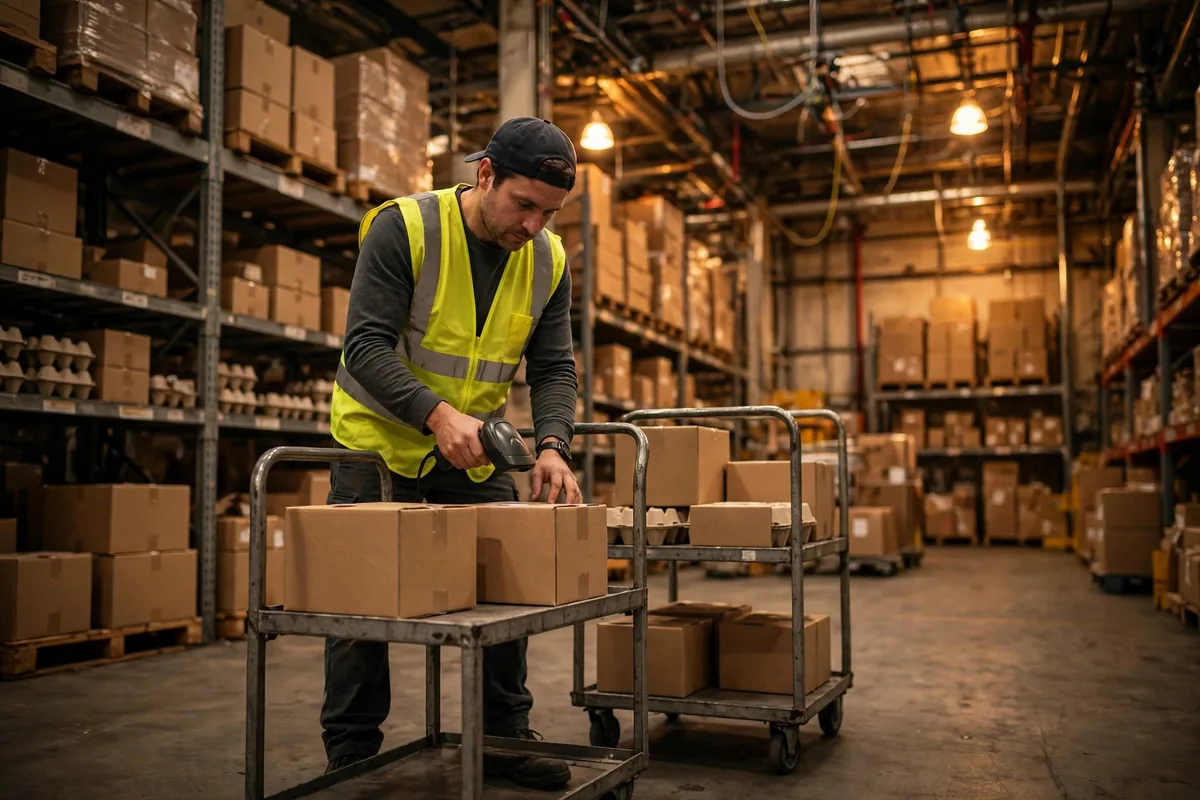
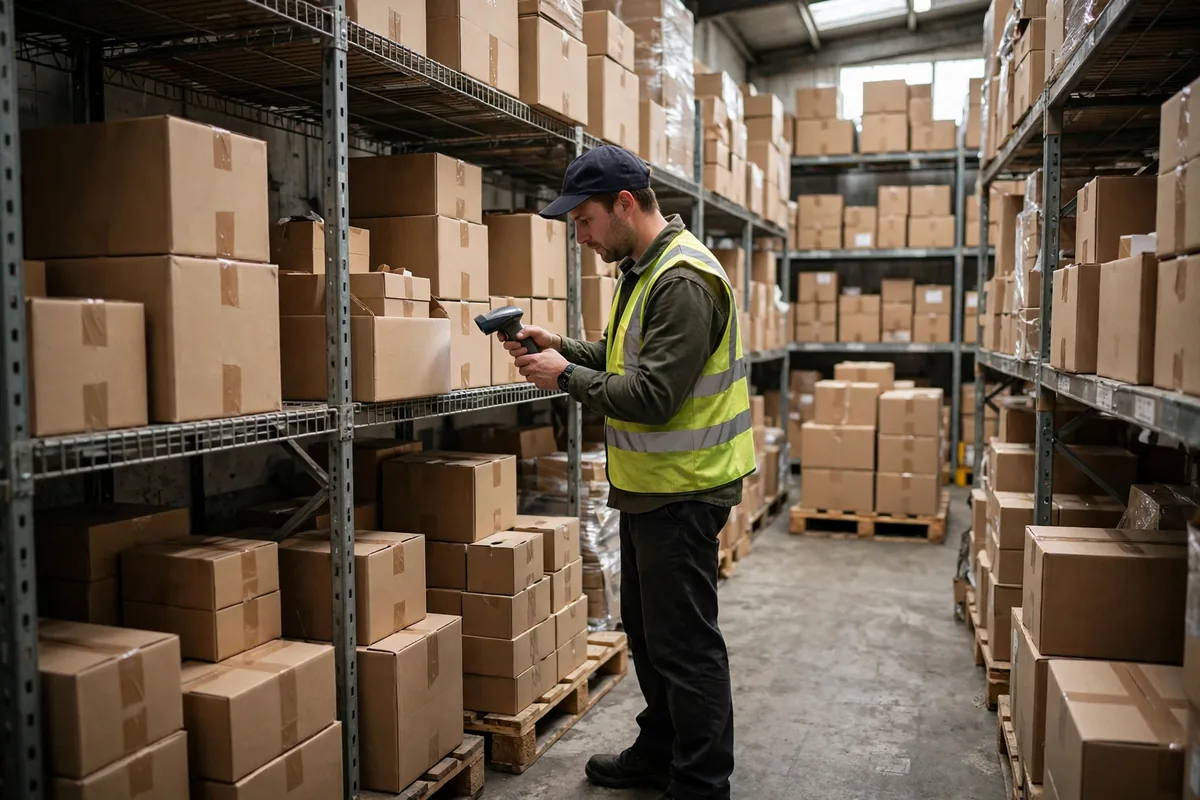
After the classroom failed, we changed to training with the shift. Each shift picks two fast learners, call them seed operators. Teach them first, then let them teach the rest of the shift. When they teach, they skip the theory and cover three things: how today's job is done, which number on the screen to watch, and who to call when it goes wrong. One scenario at a time, fifteen minutes, standing next to the rack, then do it right away.
Night shift is its own problem. Fewer people, nobody to ask when something breaks, and nobody dares stop the line when the system pushes a bad call. So night shift got its own rule: only the two steadiest features, pick paths and exception alerts, with wave optimization off. Once the night crew was comfortable, we switched on the third. At night, steady beats fast. One stoppage at 2 a.m. means the whole warehouse works overtime the next day.
New-hire onboarding changed too. It used to be two days of manuals before touching a job. Now a new hire works beside a seed operator from day one, account opened the same day, learning by doing. In May 2026, six new hires joined us. By day three they could pick on their own, and by day seven their error rate was close to the veterans. The old manual-first route took about two weeks. Those numbers come from my own warehouse log, not an industry benchmark, but they make the point: on a warehouse floor, people learn with their hands, not their ears.
| Phase | Timing | What we do | How we know it worked |
|---|---|---|---|
| Month one | Weeks 1-4 | Remove the fear, train the leads, pick seed operators, switch on only the steadiest features | Two people per shift can run it alone and ask questions |
| Month two | Weeks 5-8 | Seed operators train the whole shift, night shift follows its steady route, new hires learn on the job | Everyone can follow the system sequence, error rate back to normal |
| Month three | Weeks 9-12 | Open all features, leads share one time-saving example a day, collect faults people find | People can judge a system call themselves, and dare to stop and ask |
That table is our AI warehouse employee training rhythm. Every phase has a check, and we do not move on until the check passes. The vendor pushed us to go live everywhere faster. I pushed back with one line: if the people are not ready, going live everywhere just means going wrong everywhere. The rhythm later went up on the break-room wall, where anyone could see what this month was supposed to be.
Three Months, Laid Out Like This: Slow Is Fast
Three months in, the change was not a sudden doubling of pick speed. It was two other things. The first was the error rate. During a big promotion before peak season, our pick error rate came in about 30% lower than the same period the year before. That is our own count, and volumes were not identical year on year, so treat it as a reference. The second was that people started asking for things: could the replenishment alert come half an hour earlier, could cycle counts be ordered by location heat? Nobody asked those questions before, because nobody felt the system had anything to do with them.
Let me be straight about this. The biggest mistake is treating training as a project that ends. The day the project ends is exactly when the real work starts. We fixed three habits in place: ten minutes on the system at every weekly pre-shift meeting, a monthly round of collecting faults people find, and a quarterly rotation of seed operators. If the same two people stay the seeds forever, everyone else decides this is not their business.
There is also a trade-off I owe other managers. Productivity will dip while people learn. In our first month, picks per person fell about 10%. The owner asked me what was going on. I said it was tuition, and skipping it would cost us more later. Three months on, volume was back, and the error rate was lower.
My reminder to other managers: AI in a warehouse is not a contest over whose system costs more. It is a contest over whose people learn to use it first. Three months is enough to bring a crew along, and also enough to turn good tools into decoration. The difference is in the first step: do you hand out accounts first, or sit down with people and talk through the fear first?
By Chen Feng, Warehouse Operations Manager