We are a small warehouse. We cannot afford to burn money on the wrong first AI pilot. I say it at least three times a month.
Early this year a vendor came to pitch an AI vision system that would "completely transform" our picking. I looked at the quote once and put it down. It is not that I don't believe in AI. It is that a 3,000-square-meter warehouse like ours gets exactly one first impression. Pick the wrong first AI pilot and you lose more than money — the whole warehouse decides AI is a scam, and good luck pitching anything after that. For a first AI pilot, what you pick matters ten times more than how you roll it out.
Here is our situation: about a dozen people on staff. Every peak season, temps arrive and the mis-ship rate climbs with them. I spend half my day firefighting and have no time for a "digital transformation." The big-company playbook — build a data platform first, then an algorithm platform — is not for us. We cannot use it and we cannot afford it. Our first AI pilot had to pass three tests: cheap, visible results within two weeks, and harmless if it failed.
The Shortlist: Which First AI Pilot Scenarios Are Worth Trying
The table below is the pilot screening checklist I built for our warehouse. Risk, visibility, and investment are our own scores — use it as a reference, not a copy-paste, and score it again for your own operation.
| Candidate scenario | Risk | Visibility | Investment | Try first? |
|---|---|---|---|---|
| Exception photo capture (auto-photo damaged / short-shipped items) | Low | High | Low — a spare phone and a camera mount | Yes |
| Visual check on pick verification (AI cross-check at the audit station) | Low | High | Medium | Yes |
| Auto dimension-and-weight capture at receiving | Medium | Medium | Medium | Second batch |
| Demand forecasting and replenishment suggestions | Medium | Low | Medium | Hold off |
| Fully automated pick-path optimization | High | Medium | High | Don't touch |
| Driverless forklifts / fully automated sorting | High | High | Very high | Absolutely not first |
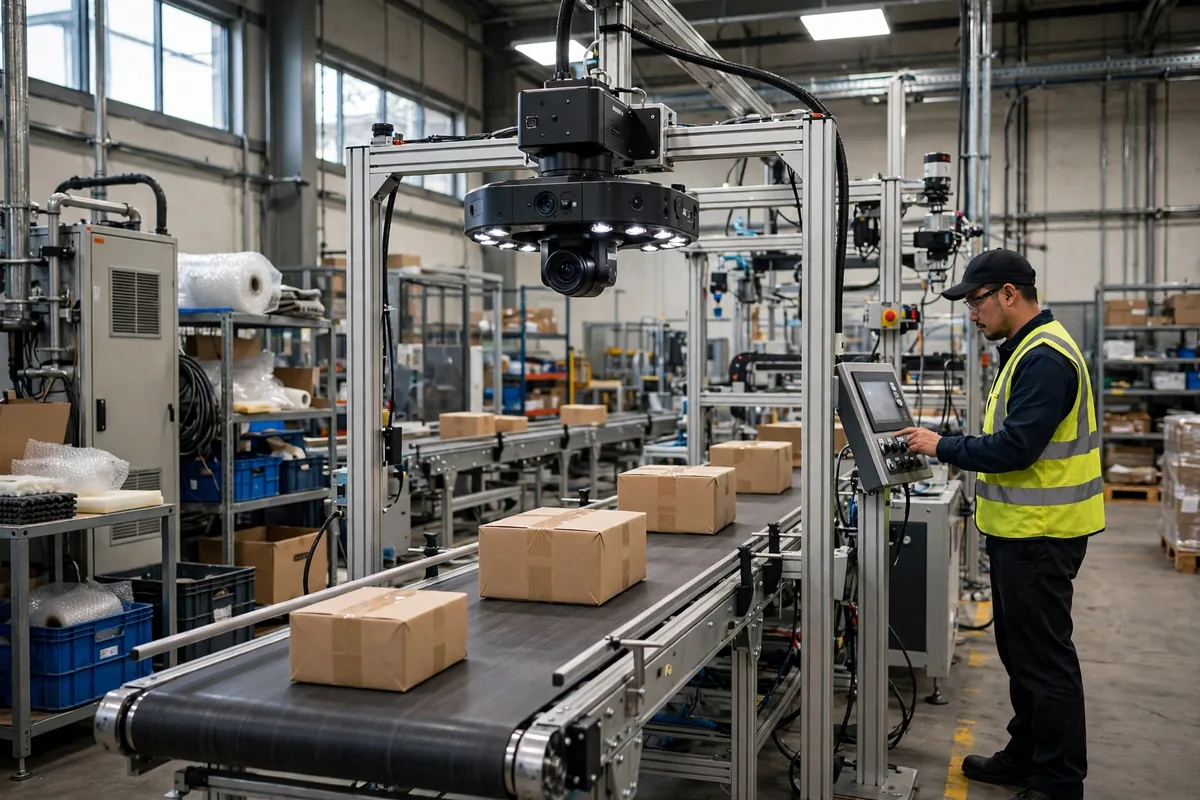
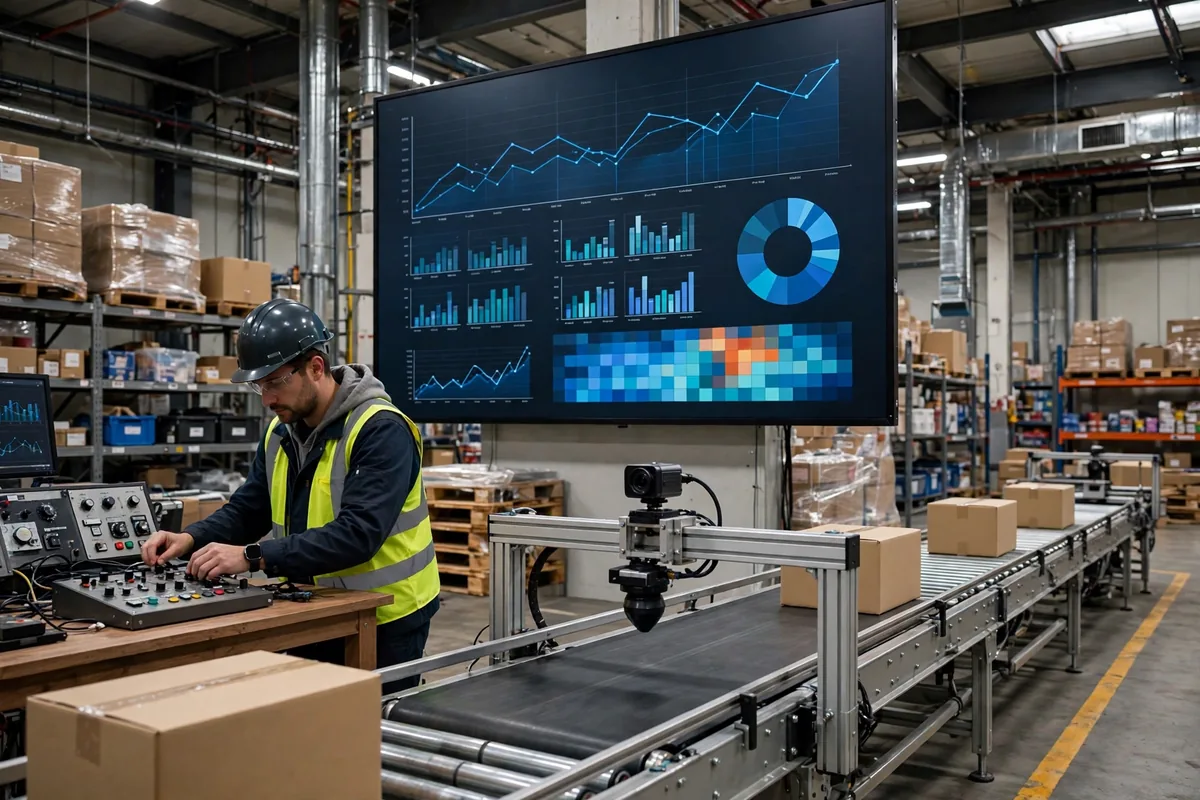
The first row is the true story of our first pilot. In November 2025 we mounted a camera next to the packing bench to photograph exceptions automatically: damaged goods, short shipments, wrong packaging, all photo-archived. What did it cost? A spare old phone and a bracket — practically nothing. What did it change? Before, when a customer claimed a short shipment, we dug through CCTV and paperwork and argued for half a day. Now we pull up the photo and the responsibility is obvious. Complaint handling dropped from most of a day to a matter of minutes. And the key part: the worst case if it failed was a missed photo. Shipping never stopped. Risk so low it barely counts.
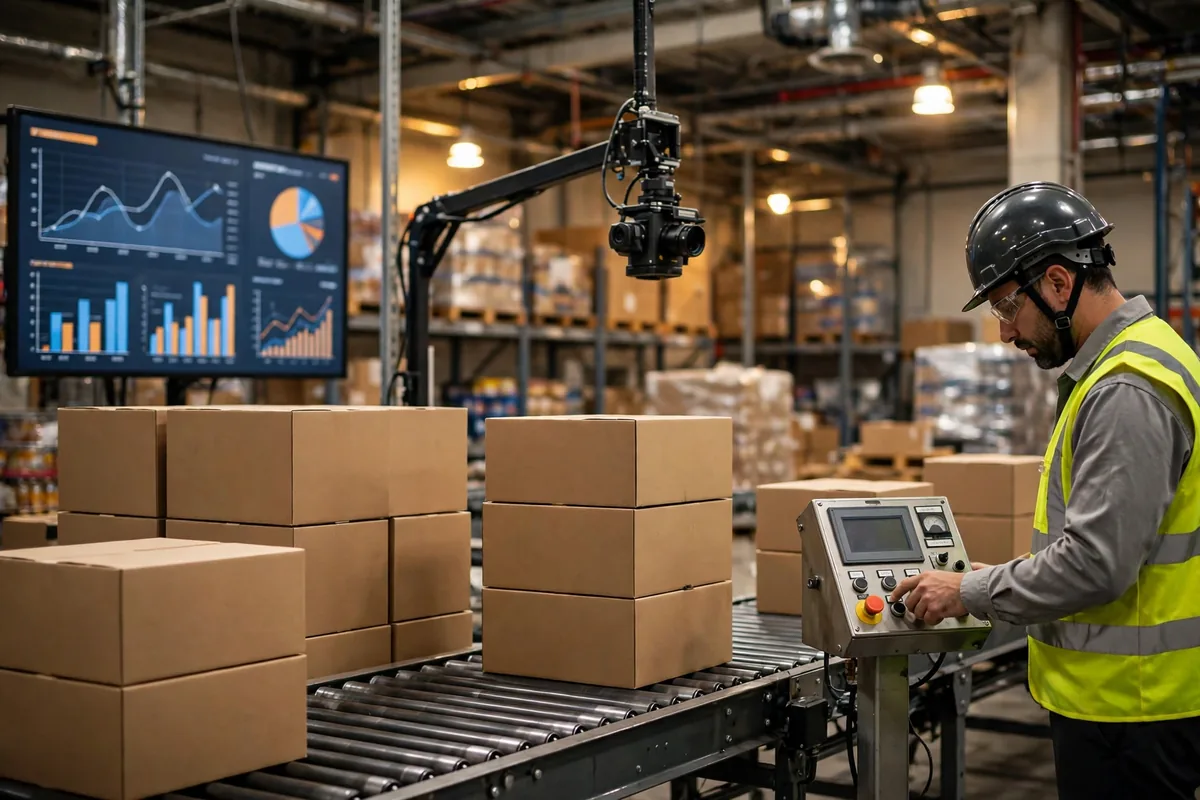
The second one worth trying first is visual spot-checking at pick verification. Not full inspection — spot checks. The AI compares the item at the audit station and only flags, never blocks. A wrong flag costs a human one glance. A right flag stops a mis-shipment. Small investment, mis-ship rate down, and the whole warehouse can see it.
The two "hold off" rows in the table deserve a word too. Demand forecasting looks great in a demo, but a small warehouse has thin, messy history — and peak season throws in outliers that wreck the model. Wait until you have a year or two of clean data and the same tool performs completely differently. Auto dimensioning at receiving is the same story: the hardware isn't expensive, but it changes the receiving process, needs a system integration, and needs training — too much motion for a first pilot. A first pilot should not touch the main workflow. Once it does, the risk is no longer "low."
How do I judge a pilot after two weeks? Three tests of my own. First, did complaints or mis-ships actually go down — that is the hard number. Second, do the staff actually use it — if the folks at the audit station keep switching the alerts off, the tool is in the way. Third, when it breaks, how long does the manual workaround take — anything over half an hour means the next pilot needs a different design. Pass all three and we talk about expanding. Fail one and we fix it before scaling, not after.
The AI Pilot You Should Not Try First Is the Coolest One
Here is the counterintuitive call: the worst first AI pilot is the coolest one in the brochure — fully automated sorting, driverless forklifts, a lights-out warehouse.
Three reasons. First, the investment is more than a small warehouse can carry — equipment, retrofit, line stoppages, all in one bill. Second, the risk sits directly on shipping: the system goes down, the whole warehouse stops, and if that happens at peak season the owner cries on the spot. Third, and most fatal: these projects take months to show anything, and after three months of nothing the whole company concludes AI doesn't work. Not because the technology failed — because you picked the wrong first battle.
Big companies can pilot driverless equipment first because they have the budget, the fallback plan, and a dedicated team to absorb the failure. We don't. Our first battle has to be won, and won fast, won cheap, and won where everyone can see it. Win a small battle first, earn the trust and the budget, then fight the big one. That is not being conservative. That is how a small warehouse survives.
And don't let a vendor's ROI sheet do your math for you. In their spreadsheet the benefits column is always generous and the cost column is always just the equipment price. The real bill adds three things: downtime for the retrofit, the learning cost for staff, and the cost of humans covering for the system when it breaks. Add those three and many "payback in six months" projects double their payback period. My rough rule: take the vendor's benefit number at 70% and their cost number at 1.5x. If the math still works, go ahead.
Small warehouses have their own way of doing things. For your first AI pilot, don't chase the coolest option. Chase the safest one. Let the whole warehouse taste one small win first, then talk about the next step.
By Xiao Ma, Small Warehouse Owner