Bottom line first: if your AI pilot worked and your rollout is stuck, the technology is almost never the problem. The pilot succeeded under conditions that cannot be copied. Scaling an AI pilot to a warehouse network means passing a completely different set of gates — data definitions, staff capability, hardware baselines, process variation — and any one of them can stall the whole program. Stop asking whether the pilot performed well. Ask whether the second warehouse can run it on its own, with nobody holding its hand.
I have watched this exact failure three times. The most recent was in the autumn of 2025, at a third-party logistics provider in East China. Its flagship warehouse had deployed AI visual verification, and over three months the error rate fell from six per ten thousand orders to about one and a half. The project was praised at the annual meeting. Six months later the rollout reached four more warehouses. In two of them the results were roughly half as good, one shut the system down after two weeks, and in the fourth the supervisors simply switched the AI prompts off, on the grounds that manual checking was faster. Same system, same vendor, wildly different outcomes.
Why an AI Pilot Stalls at the Rollout Stage
A pilot warehouse and an ordinary warehouse are not the same species. The pilot site is hand-picked: the most regular product mix, the most standard process, the cleanest locations, with the project team on site for three months and the vendor's algorithm engineers visiting weekly to tune parameters. An ordinary warehouse runs three clients in one building, five carton sizes, half its peak-season workforce on temporary contracts, and a network connection that drops out without warning. The pilot's numbers were measured in a greenhouse.
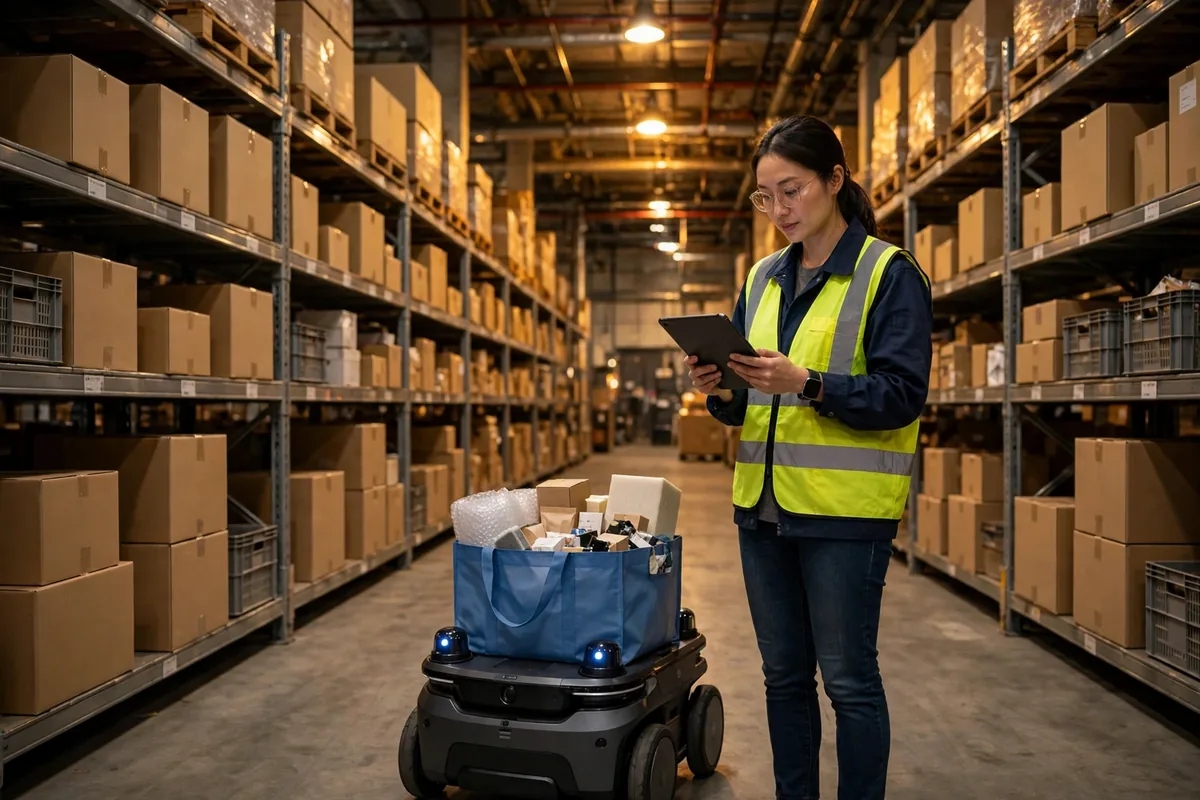
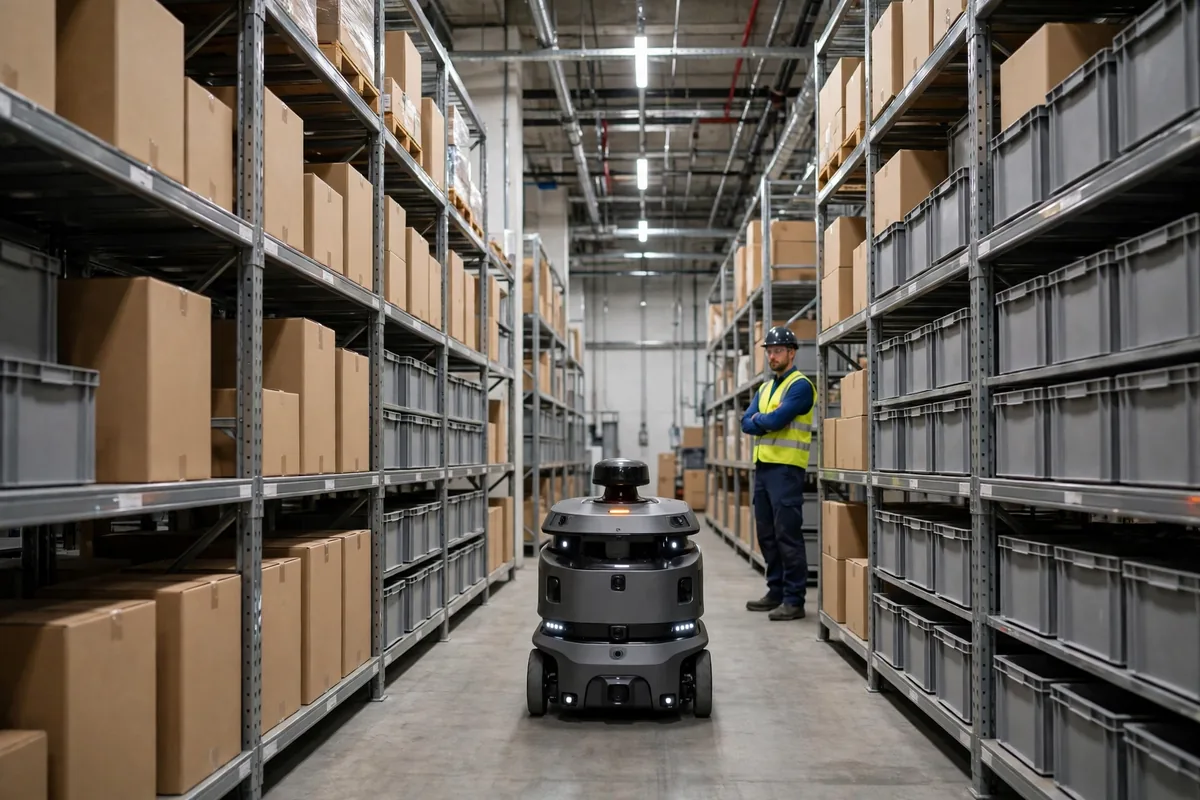
The second problem is quieter: during the pilot, a large amount of work is done by humans filling gaps the system leaves. In the spring of 2025 I followed an AMR picking pilot at an e-commerce warehouse in North China. Picking efficiency rose by roughly forty percent, and the numbers looked excellent. But the review showed that two engineers were on site every day handling exceptions, and system errors were routinely cleared by hand. The rollout plan budgeted no people and no money for that work. In the first week at the second warehouse, AMRs blocked the aisles four times, nobody on site knew how to clear them, and the line stopped while waiting for remote support. The pilot measured gross benefit; the rollout has to measure net benefit.
Then there is the data problem. Warehouse A defines "pick complete" as the order being picked. Warehouse B defines it as the order being verified. Warehouse C does not have that status in its system at all. The AI model was trained on the pilot warehouse's data, and it does not travel well. I have seen this trap three times, and the root cause is always the same: nobody aligned the definitions before rollout, because everyone assumed that one shared system meant one shared dataset.
Where the Money Actually Goes in an AI Pilot Rollout
The most common budgeting mistake is counting only software and hardware and missing the three largest cost items. The table below is the framework I use with clients when estimating a rollout. The figures are an illustrative scenario — replace them with your own numbers:
| Cost item | Pilot warehouse (1 site) | Rollout to 5 sites | Notes |
|---|---|---|---|
| Software licences and deployment | 1 unit | Roughly 4–5x | Multi-site pricing is rarely linear; negotiate here |
| Hardware retrofit (cameras, network, stations) | Already fitted | Every site needs work | Older sites cost most; cabling often exceeds budget |
| Data governance and definition alignment | Almost zero | Often a third of total budget | The most underestimated item |
| Training and on-site support | Project team resident | Every site needs coverage | High temp turnover makes training a recurring cost |
| Exception handling and rollback readiness | Vendor covers it | You cover it | Vendor response slows after go-live |
Here is the counterintuitive part: the cheapest items in the pilot become the most expensive in the rollout. Many executives budget a rollout as "pilot cost times the number of warehouses." That formula is wrong. The pilot cost was subsidised — the vendor supplied people, tuning, and trial-and-error for free, and all of that subsidy disappears at rollout. The correct formula is "pilot cost minus vendor subsidy, plus data governance and training," multiplied by the number of sites, plus a twenty percent buffer.
Scaling from One Warehouse to the Whole Network
Do not roll out everything at once. Work through four steps, each with a clear release gate:
Step one: pick the second warehouse carefully — and do not pick the one most like the pilot site. Choose a middling, representative site: a messier product mix, higher staff turnover, older hardware. If the second warehouse works, the rollout has a foundation. If you pick the easiest site, you have simply run a second pilot.
Step two: align definitions before you deploy the system. Spend two to three weeks aligning the core status definitions, exception codes, and master-data fields across sites, and publish a one-page definition map. Deploying without that map is building on sand. The acceptance test is specific: for the same order number, any two warehouses' systems must return the same status, quantity, and timestamp.
Step three: go live one warehouse at a time, with a rollback window after each. Watch at least two complete picking waves before opening the next site, and confirm that error rate, efficiency, and exception-handling time have all recovered to at least eighty percent of pilot levels. Leave at least a week between sites. A rushed rollout is paid for later in firefighting.
Step four: turn the pilot's human gap-filling into standard work. Every exception the pilot engineers handled daily — what it was, how they fixed it, how long it took — becomes a procedure, a training video, and a part-time on-site support role. Scaling AI is really about turning expert improvisation into actions ordinary staff can execute.
The Night-Before Go-Live Checklist
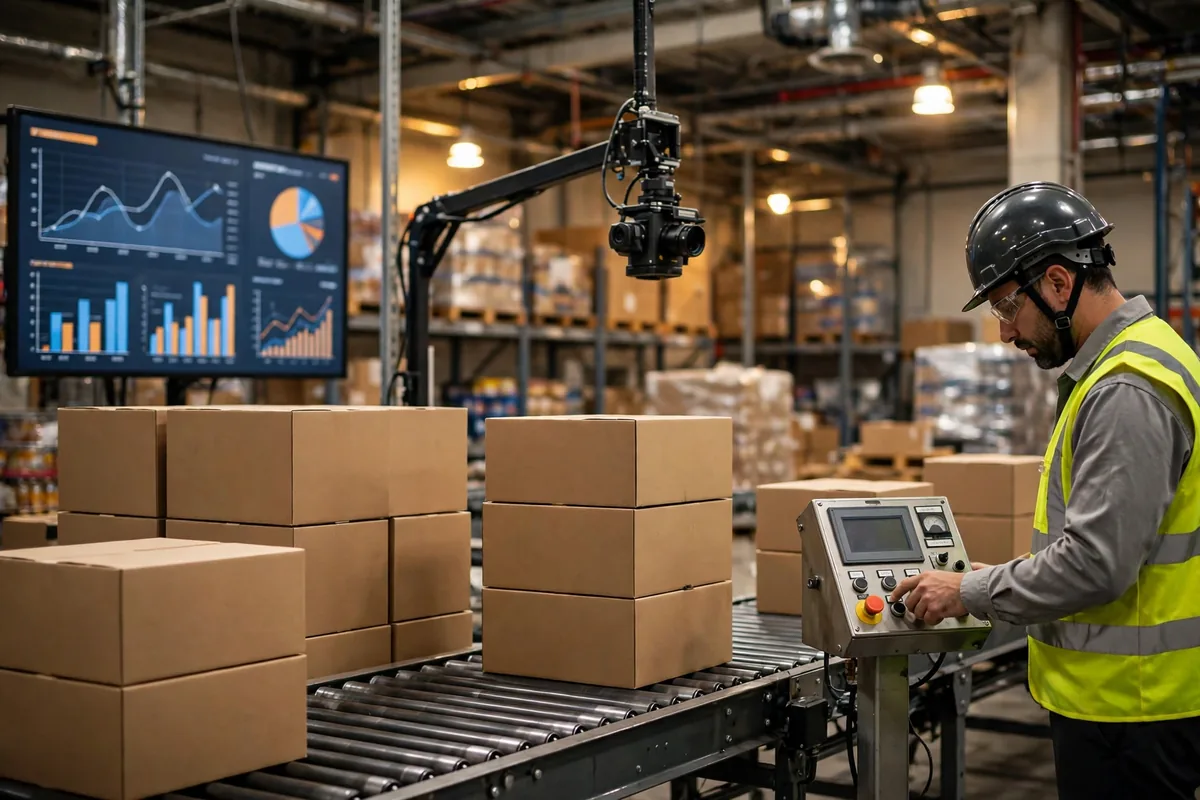
The go-live checklist is the one ritual I never skip on any project. Before a new warehouse goes live, every item gets ticked, and a single miss means no launch: definition map signed off; network bandwidth tested on site; camera coverage verified; exception codes loaded; training completed for everyone on shift; rollback plan rehearsed; vendor response times confirmed in writing; manual fallback procedures posted; monitoring dashboard connected; first-week support rostered; clients notified in advance; review meeting booked.
The item most often skipped is the rollback rehearsal. On the day the system genuinely fails, nobody remembers where the rollback switch is, and the loss is measured in hours. The rehearsal need not be elaborate: simulate a network outage, a camera offline, and a batch error, and if all three can be switched back to manual work within half an hour, you pass.
One last suggestion you can use tomorrow: do not open the third warehouse yet. Run the second one for a full month, then rebuild the rollout business case from real data — real costs, real efficiency, real exception volumes. Take that table into the next budget conversation, and the support you secure will be far greater than anything you can win today. Scaling an AI pilot is not a technology contest. It is the discipline of turning one warehouse's success into a playbook that depends on no single person.
By Lin Xiao, WMS Implementation Consultant