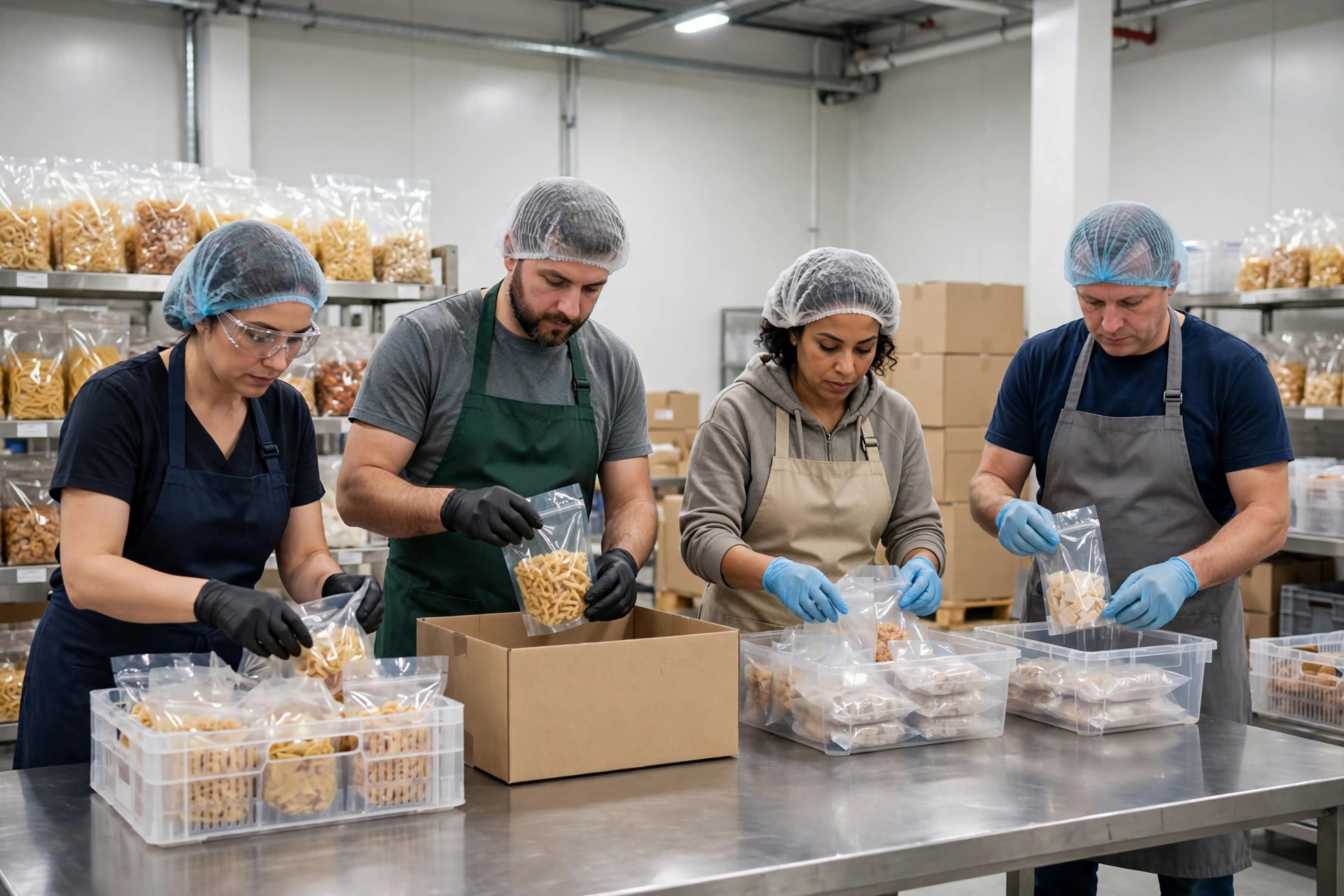
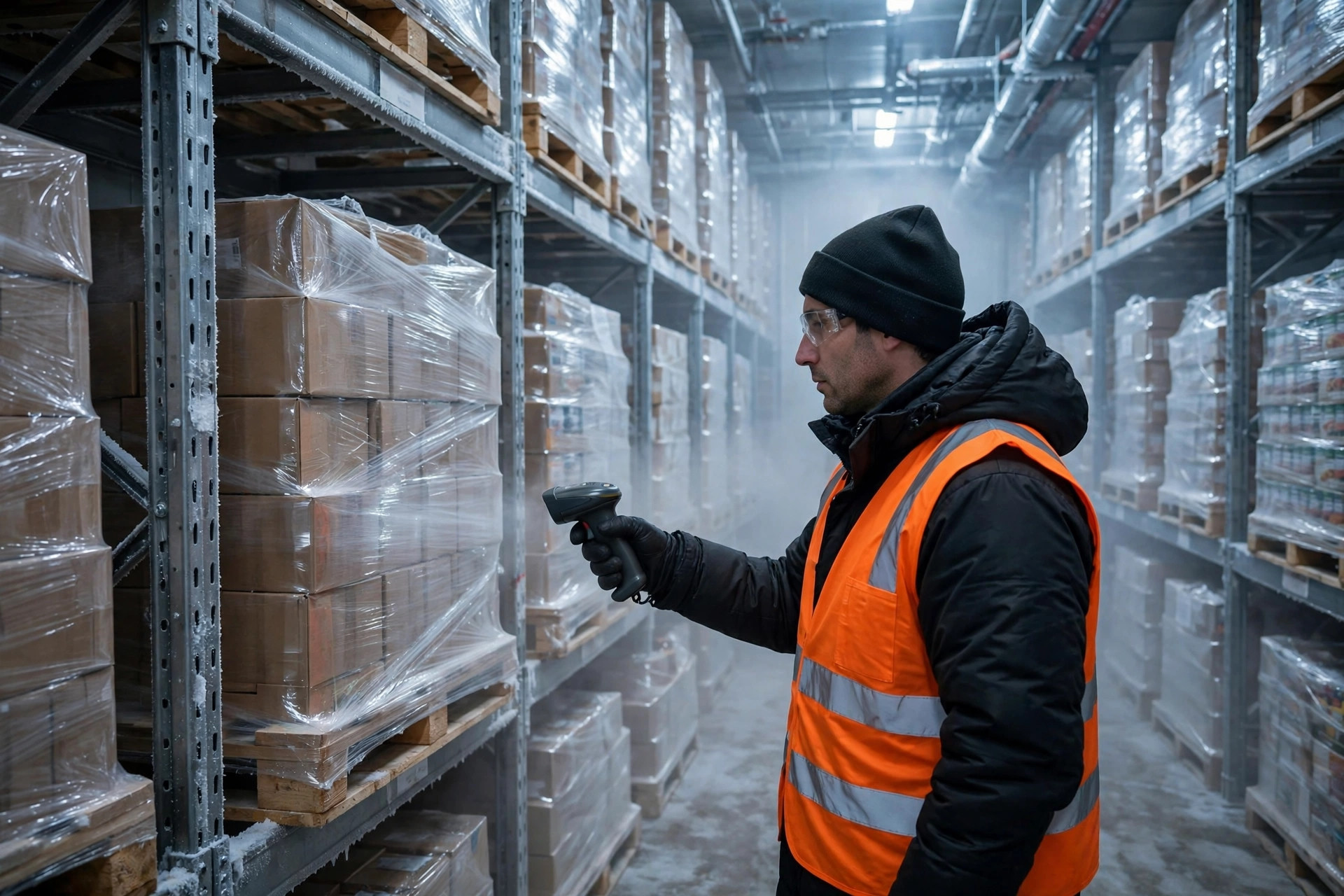
When FDA investigators walk into a food warehouse, they usually ask for three things first: temperature logs, pest control records, and sanitation records. Water quality documentation is the fourth item on that mental checklist — and the one most likely to be met with a shrug. Most warehouse managers treat water as somebody else's problem: it comes from the municipal supply, it flows when you turn the tap, and FDA water quality management in food warehouses feels like it belongs to the water utility, not the warehouse. According to publicly available FDA warning letters and Form 483 observations, that assumption is precisely what turns water into one of the most common — and most awkward — gaps found on the warehouse floor.
What "water" actually means inside a warehouse
Start by decomposing the phenomenon. Water inside a food warehouse falls into at least three functional categories. First, wash water: for floors, pallets, and utensils. Second, ice water: seafood and meat warehouses either make their own ice or buy it in for product cooling. Third, indirect-contact water: humidification mist, condensate drainage, and similar streams. Restroom and drinking water don't count here; those belong to personnel hygiene. What enters FDA's field of vision are the first two categories, because they touch food directly or indirectly. The microbiology is unforgiving: Listeria monocytogenes thrives in wet environments, and ice machines, condensate pans, and wash sinks are exactly where it likes to settle. Water quality management, in other words, is not a housekeeping question about whether water "looks clean." It is a microbial risk-control question.
Three water sources, three testing strategies: a cost comparison
Put some numbers on the table first. A third-party laboratory microbiological water test for a single sampling point typically runs in the low hundreds of dollars per event (confirm against current local lab pricing). Two rounds a year across three sampling points costs roughly what half a month of one operator's wages costs. Now set that against the cost of a single water-related 483 observation: the corrective action plan, the re-inspection coordination, and the hours spent explaining it to customer auditors routinely run ten times the annual testing budget. Few compliance investments in warehousing offer that kind of asymmetry — small money preventing large losses.
The strategy, however, differs completely by source:
| Water source | Typical use | Main risk | Recommended testing | Cost level |
|---|---|---|---|---|
| Municipal tap water | Washing, sanitation | Secondary contamination in warehouse piping, stagnation at endpoints | Keep the utility's annual water quality report; sample warehouse endpoints periodically | Low |
| Private well / self-built supply | Washing, ice making | Seasonal swings in microbial and chemical indicators | Quarterly or semi-annual full-panel third-party testing | Medium |
| Self-made or purchased ice | Seafood and meat cooling | Ice machine hygiene, secondary contamination during storage | Include ice machines in cleaning validation; test ice microbiologically on a schedule | Medium |
Why warehouses systematically neglect water: three layers of attribution
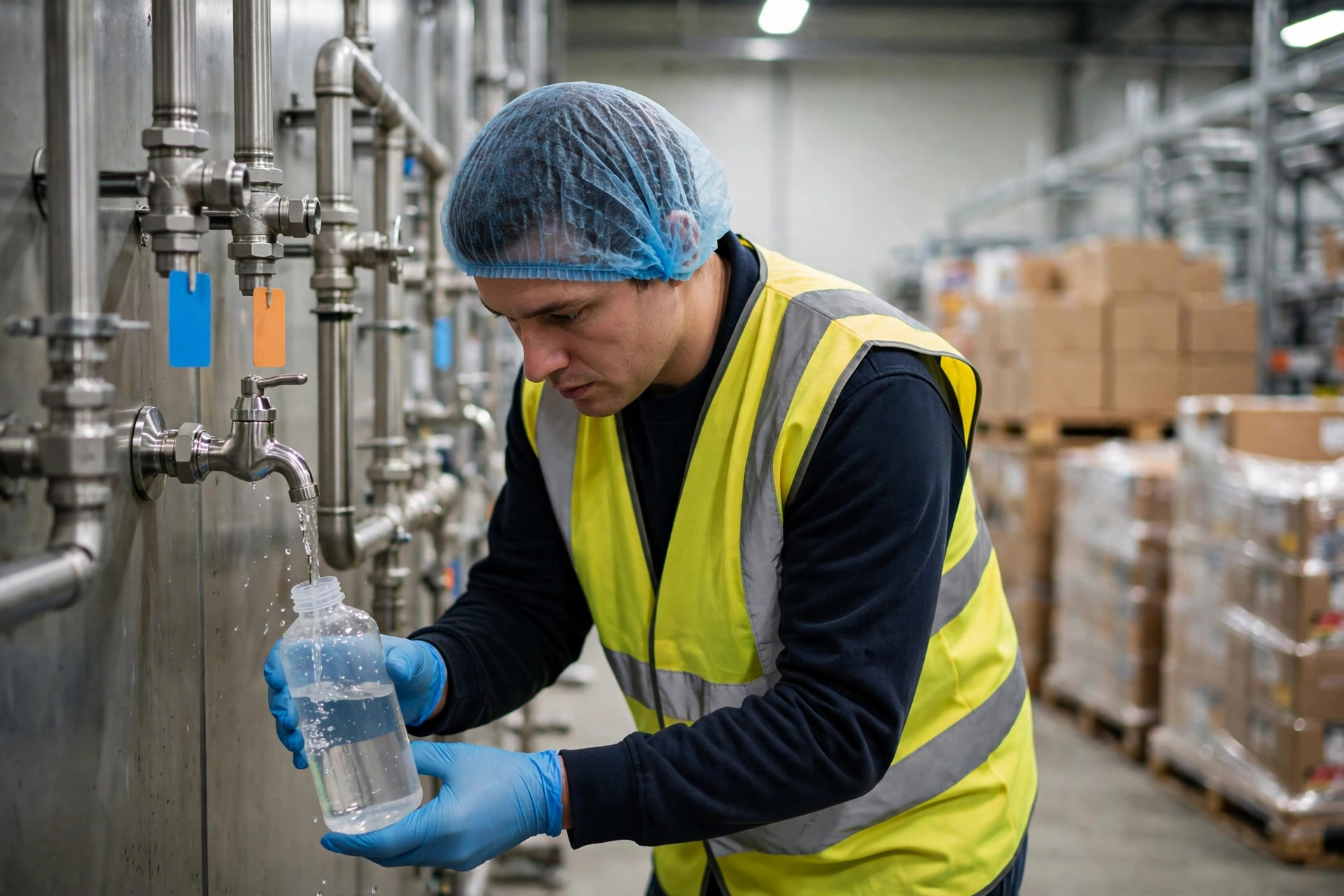
The first layer is outsourced trust. Municipal utilities publish annual water quality reports, and warehouses quietly equate "the utility passed" with "my water is fine" — overlooking a basic fact: between the municipal main and the warehouse tap lies a long stretch of piping, tanks, and valves that belong entirely to the warehouse, and water quality can degrade along that stretch. The second layer is an unfamiliar language. Temperature has a bright red line; exceed it and everyone knows. Microbial and chemical water indicators are a foreign language to operations teams — nobody is quite sure what counts as a failure or who to call when it happens, so nobody tests. The third layer is an accountability vacuum. Water quality belongs to no single department — not warehousing, not facilities, not QA — so it ends up owned by everyone and managed by no one. Temperature has a person watching its logs. Water does not.
Two field cases: what investigators actually ask at the tap
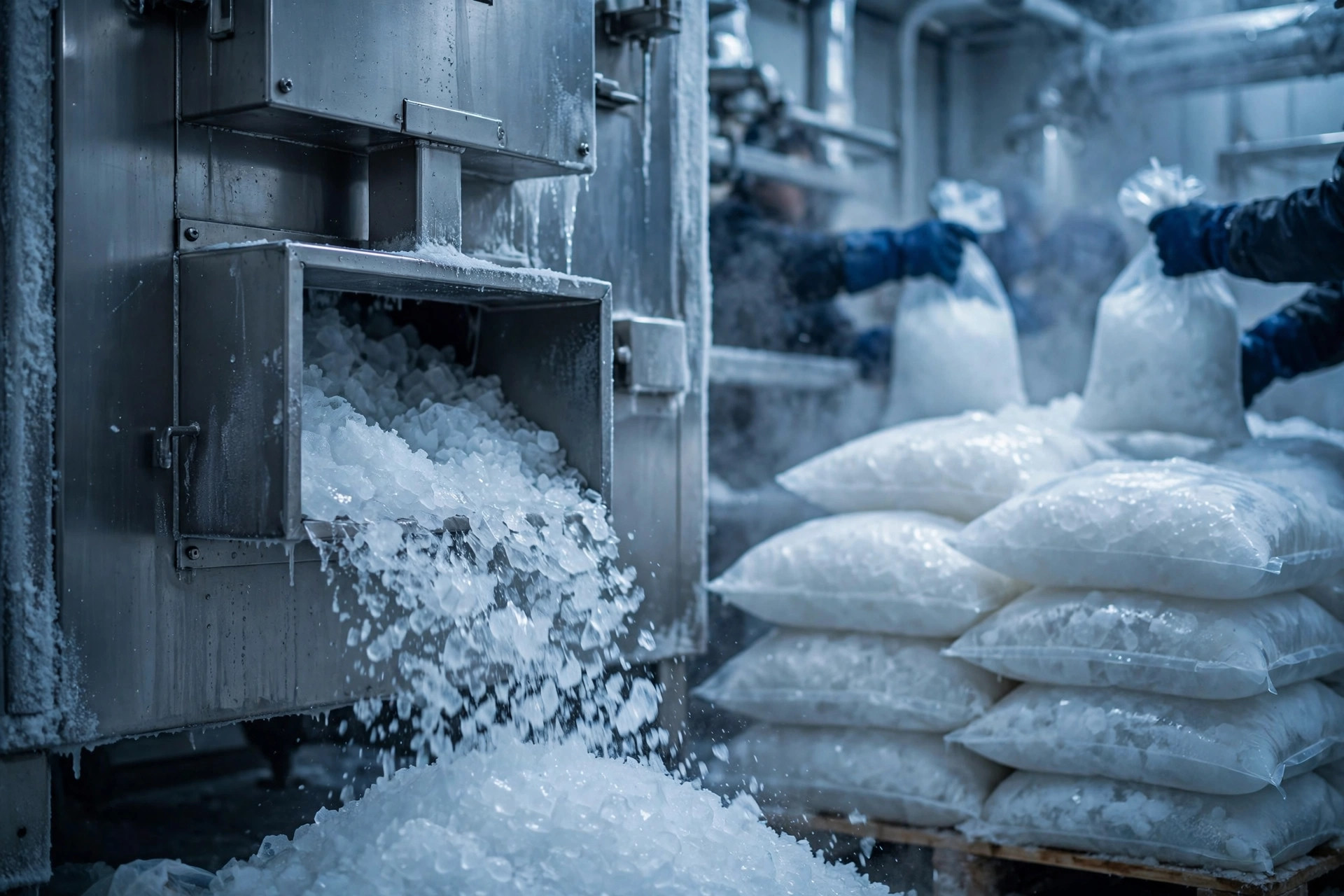
In 2023, a 3PL warehouse on the U.S. East Coast specializing in imported seafood distribution went through an FDA inspection. The investigator spent twenty minutes at the ice machines and asked three questions: when was the ice machine last cleaned, has the ice ever been tested microbiologically, and where does the meltwater drain. The warehouse could answer the first. It had no records for the other two. The result was a Form 483 observation and a three-month remediation: a retroactive water risk assessment, ice machines folded into the cleaning validation program, and quarterly ice sampling. The warehouse manager later estimated the remediation cost at more than ten times what routine testing would have cost from the start.
The second case comes from the Midwest, a large warehouse handling both dry goods and fresh product on municipal water, where management's entire water program consisted of paying the water bill. The investigator didn't want the bill. The request was for "water quality records at your sampling points." The municipal annual water quality report the warehouse produced was handed straight back, with a disarmingly simple reason: that describes water at the treatment plant's outlet, not water at your tap. Since then, the facility has run fixed sampling points at its wash area and ice machine inlet, tests semi-annually, and files the reports in the same compliance archive as its temperature logs. Both cases point to the same conclusion: investigators are not asking for a verdict that water is safe. They are asking for a documented process proving it stays safe.
A counterintuitive judgment: municipal compliance does not equal your compliance
This is the most common logical leap in water quality management, and the most dangerous one. A municipal water quality report describes the treatment plant's outlet; FDA cares about the point where water touches food. Between those two points sit the warehouse's own piping, tanks, ice machines, and long stagnation periods. Treating "the utility passed" as "my water complies" is the equivalent of using someone else's medical exam to prove your own health. The counterintuitive part: the water that looks cleanest and seems to need the least attention is precisely where the record gap is widest — and where the cost of explaining that gap during an inspection is highest.
A trend read: is water documentation becoming the next inspection focus?
A careful trend judgment, based on publicly available inspection practice in recent years: FDA's inspection emphasis for food facilities is shifting from "do records exist" to "do the records corroborate each other" — temperature logs should line up with ice machine operating records, sanitation records with water usage records, pest records with drain inspection records. Extrapolating from that direction, water quality documentation will only draw more attention over the next two to three years, not less, because it is currently the weakest link in the chain. Always confirm the operative requirements against FDA's official website, but the direction is clear: water is moving from a "presumed compliant" item to one the facility must affirmatively demonstrate.
Putting it to work: four links in water quality compliance
Converge the analysis into an executable framework with four links. First, source mapping: draw a complete map of every water use point in the warehouse, marking how each one contacts food — no testing plan is credible without this. Second, risk assessment: tier sampling points by source type and contact level, testing high-contact points more frequently and holding low-contact points at baseline. Third, the testing plan itself: fixed sampling points, fixed frequencies, fixed indicator panels, an accredited third-party lab — and for municipal water users, at minimum the utility's annual report plus internal endpoint sampling. Fourth, records and corrective action: file the lab reports, document what was done when a result exceeded limits, and fold ice machine cleaning into cleaning validation. The value of the records lies not in the pages that say "pass," but in the pages showing what you did when something didn't.
The water question was never "is the water clean." It is "can you prove it stayed clean." Next time an investigator spends twenty minutes at your ice machine, what will be waiting in your files?
By Dr. Chen, Supply Chain Researcher