December 18, 2024. Forty-seven orders in one day, every single one a custom engraved coaster set. I packed from 8 PM to 2 AM in my garage, and my wrist hurt so bad I couldn't hold the tape gun.
I did the math that night: about $11 net profit per order, six hours of my own labor. My hourly rate came out to roughly $19. Less than driving for DoorDash?
But January's numbers slapped me awake. Those Christmas orders had a 31% repeat-purchase rate, versus 12% store-wide. Handmade buyers aren't buying coasters. They're buying the feeling that a real human made something just for them. For Etsy sellers, fulfillment isn't a cost-optimization problem. It's an experience problem.
Five years in, here's my honest playbook for small-batch, multi-SKU, custom-order fulfillment.
Should You Use a 3PL? Do the Math First
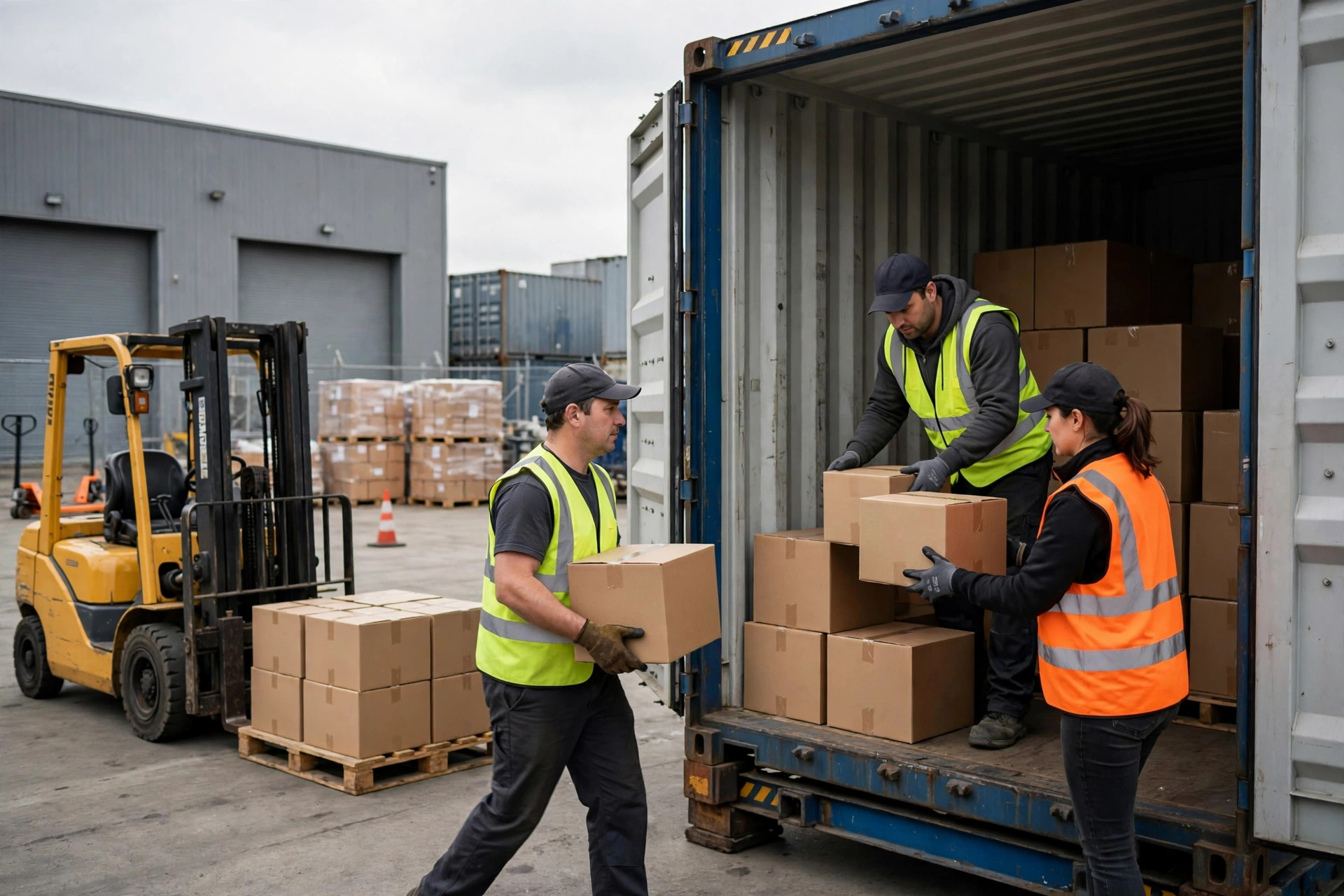
Every few months someone in the Etsy seller groups asks: should I move to a 3PL? I fell for the "scale up" dream too. In the fall of 2023, I shipped 80 SKUs to a local 3PL. Three months later I pulled everything back out, tail between my legs.
The math is ugly. Let me lay it out:
| Self-fulfillment (home studio) | 3PL | |
|---|---|---|
| Fixed monthly cost | $0 (your garage is free) | Receiving fees plus storage, often per pallet or per SKU |
| Per-order pack cost | $0.80 to $1.50 in materials | Pick-and-pack commonly $2.50 to $5 per order |
| Minimums | None | Many have monthly order minimums or minimum fees |
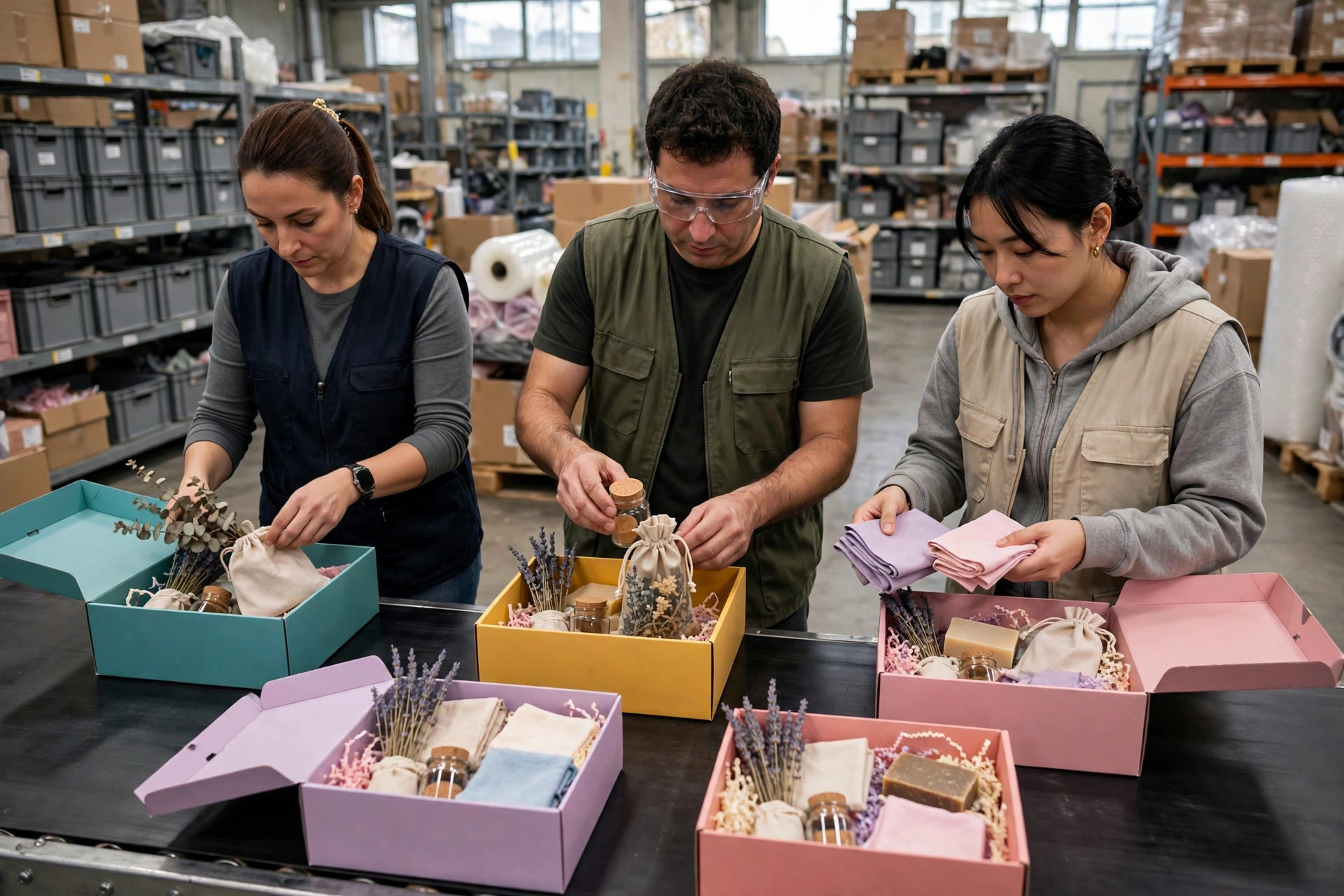
| Unboxing experience | Fully yours: handwritten cards, custom stickers | Costs extra, usually standardized |
| Custom orders | Instant response | System integration plus a long communication chain |
(Ranges above are typical industry figures; they vary a lot by provider, so check each 3PL's current published pricing.)
My verdict: below roughly 2,000 orders a month, a 3PL is usually a net loss for handmade sellers. Why? Because 3PL math is per-unit math, and your margins can't take that kind of cut. Half my SKUs sold 3 to 5 units a month. Storage fees still applied. Pick fees still applied. In the end the 3PL ate 18% of my gross margin.
This isn't "3PLs are bad." It's "3PLs are built for a different structure." A big seller with 5 SKUs moving 10,000 units a month amortizes costs down to almost nothing. They play the scale game; you play the variety game. Don't copy their homework.
Here's the contrarian take: self-fulfillment isn't backward for handmade sellers. It's the moat. Etsy buyers pay premiums for the human touch. Outsource your packing, and the unboxing goes generic. Returns don't drop, but repeat purchases do. The platform increasingly rewards repeat buyers and reviews that mention the personal touch. A 3PL can't give you that.

Custom Orders: The Real Killer Isn't Production, It's Scheduling
The worst part of custom orders isn't making them. It's promising a ship date and blowing it.
Etsy has on-time shipping requirements tied to its Star Seller badge (check Etsy's current policy page; it changes). Miss once and the badge is in danger. In spring 2024 I ate this one personally: 12 custom pet-portrait mugs, promised 7-day turnaround, and 3 came back for engraving rework. A 25% rework rate. The last order shipped 2 days late, and my Star Seller badge nearly died.
Since then, three rules, still in force:
- Promise conservatively, deliver early. My listings say 2 weeks (10 business days); I actually ship in 7 to 8 days. Buyers who get their order "earlier than expected" leave better reviews at a visibly higher rate. In the handmade category, beating your own estimate is the cheapest delight money can buy.
- Confirm custom details within 24 hours. Message the buyer to confirm engraving text, spelling, and colors. Screenshot everything. This one step took my rework rate from 25% to under 5%. Two extra minutes saves you the double cost of a remake plus a reship.
- Turn off customization for peak season. After November 15, custom options come down; ready-to-ship only. I learned this in that 2024 Christmas season: 47 custom orders nearly killed me, while a ready-to-ship order packs in 3 minutes. Peak season is about throughput, not ticket size.
On restocking: small-batch, multi-SKU sellers get squeezed by both stockouts and dead stock. My low-tech fix is ABC-tiered safety stock:
- A-tier (20+ units/month): 45 days of cover
- B-tier (5 to 20 units/month): 30 days of cover
- C-tier (under 5/month): 10 units on hand, or made to order
Count inventory every two weeks. A spreadsheet is fine; don't over-systematize this. The biggest inventory cost for a handmade seller isn't storage rent. It's cash flow. Money locked up in C-tier SKUs could have funded two restocks of your A-tier winners.
The Packing Station Upgrade: From 8 Minutes to 4 Minutes Per Order
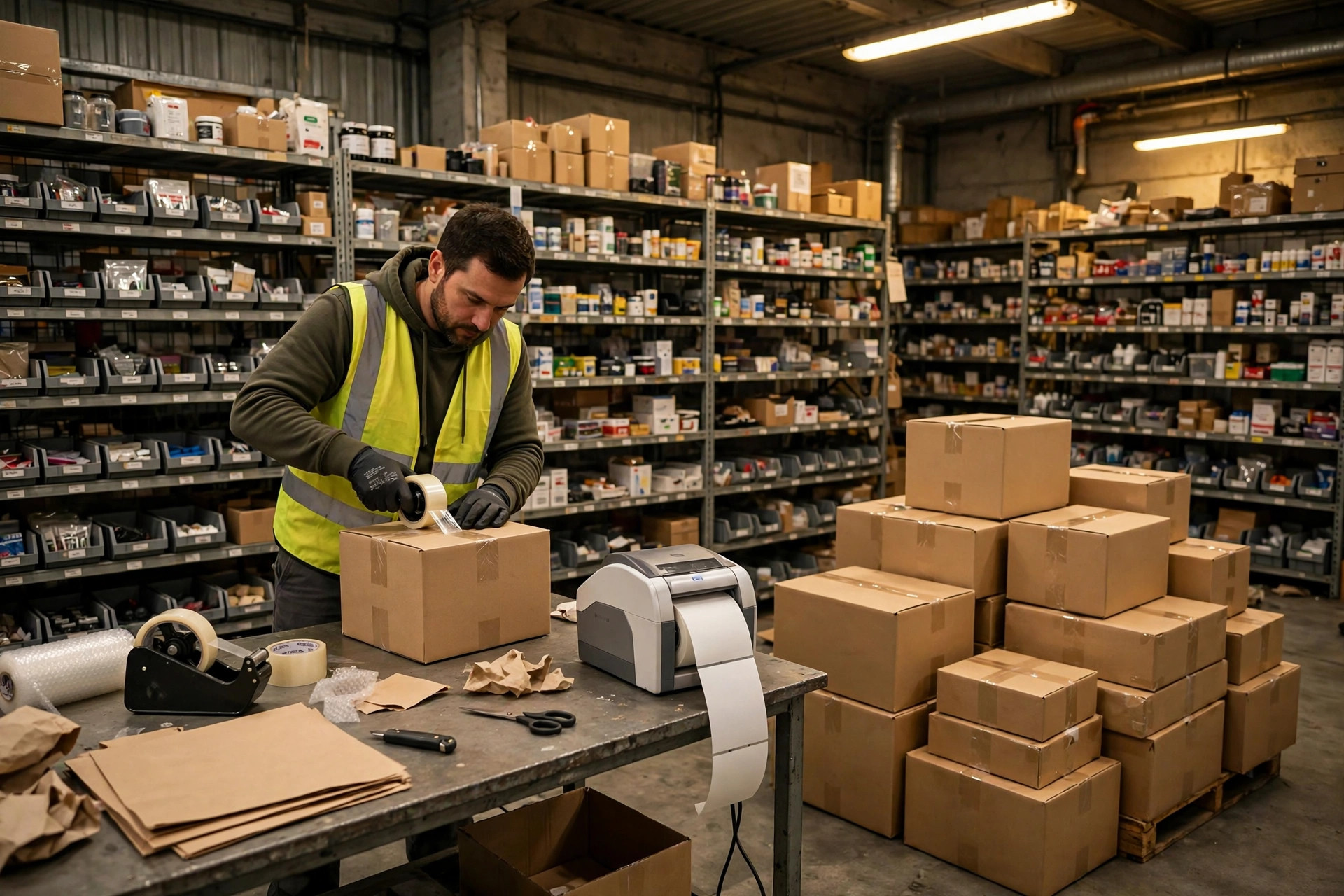
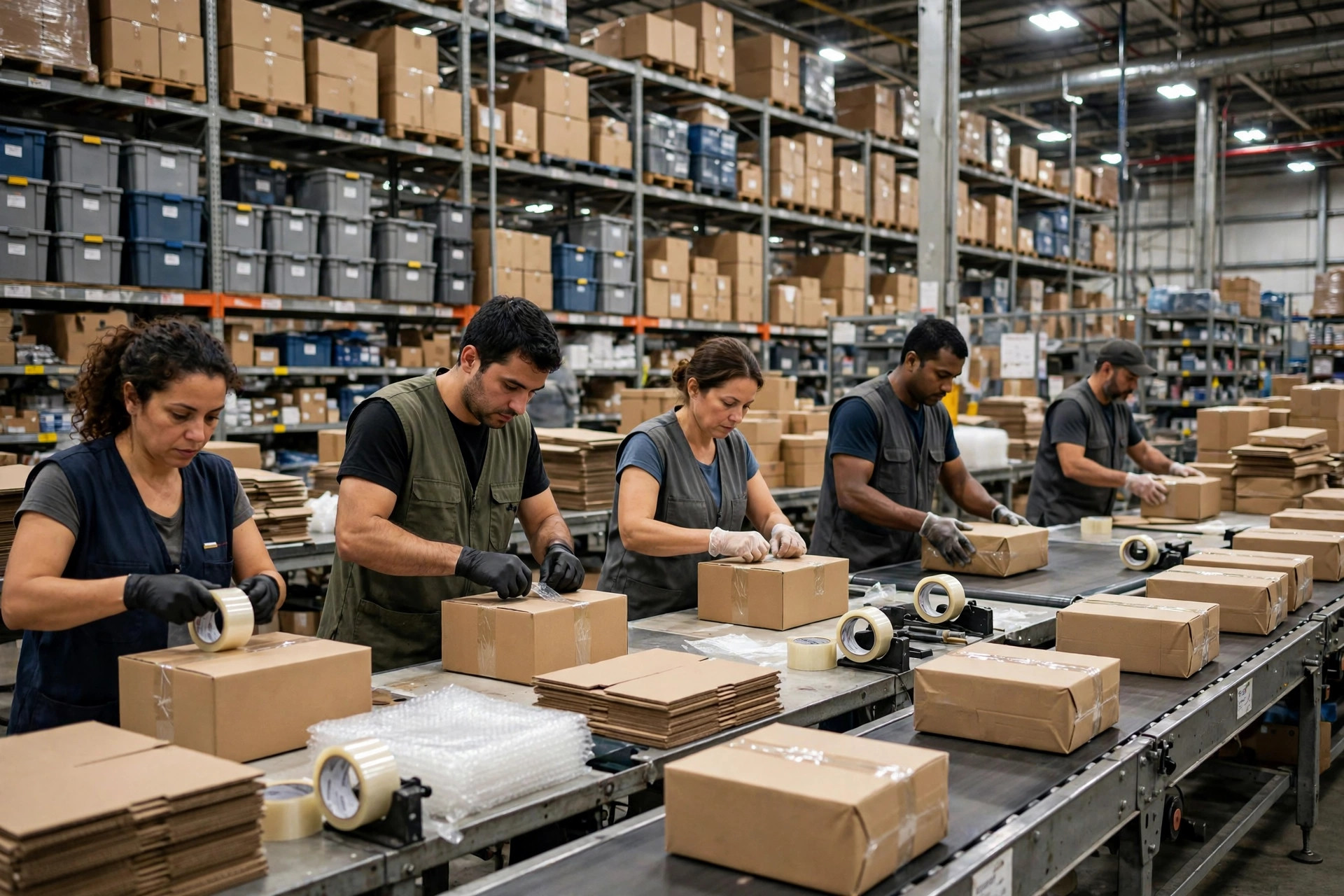
During that 2024 Christmas season I timed myself: 8 minutes per order. Forty-seven orders meant 6-plus hours. I was wrecked. The following January I spent a weekend rebuilding my garage packing station. Now it's a steady 4 minutes per order, 3 at peak flow.
Small changes, all in the details:
- U-shaped flow. Finished-goods shelf on the left, packing bench in the middle, packed-and-labeled zone on the right. Never turn more than one step. That's 30 seconds of walking saved per order.
- Pre-cut tape, pre-folded boxes. Every morning: fold 50 boxes, stick pre-cut tape strips along the bench edge. Sounds trivial, but folding boxes was 2 of my original 8 minutes.
- A thermal label printer. The single fastest-ROI purchase a handmade seller can make, full stop. Print straight from Etsy Shipping Labels. No cutting paper, no taping labels on. Saves a minute per order, and the labels are waterproof.
- A packing checklist taped to the wall. Product, filler, thank-you card, sample or freebie, seal, weigh, label. Seven steps. The miss rate drops to near zero. That's how the custom-order rework rate got crushed to 5%.
One thing most people skip: weigh every order. Etsy Shipping Labels bill by weight, and the system auto-adjusts when your estimate is off by a couple of ounces. I got burned once: a batch of coasters estimated at 8 oz actually weighed 11, and my end-of-month Etsy bill carried $40-plus in adjustments. Now every order goes on the scale, and the scale lives on the packing bench.
Mistakes I Already Made So You Don't Have To
- Don't overstock packaging. Year one, I ordered 2,000 custom boxes, then changed my branding. Fifteen hundred boxes went in the trash. Order packaging quarterly. Pay a little more per unit rather than locking cash in inventory.
- Don't be lazy with shipping profiles. I used to charge a flat $4.99 shipping store-wide. West Coast orders lost money, East Coast orders made money, and on average I bled $1.20 per order. Now shipping is weight-tiered, and that loss flipped to a profit.
- Use a PO Box for returns. Don't expose your home address. A PO Box costs a few dozen dollars a year for real peace of mind (check USPS's current pricing).
- Negotiate carrier discounts two months before peak. Etsy Shipping Labels already carry commercial discounts, but if you're consistently over 500 orders a month, a direct USPS or UPS business account can beat them. Bring your shipping data to the table. Don't be shy.
Real talk to close: on Etsy, fulfillment doesn't need fancy systems. It needs you to know exactly where every minute and every dollar goes. Small batch is your weakness and your strength: flexible, human, fast to change. A big seller takes three months of process to change their packaging. You can do it tonight.
Try this. It genuinely worked for me: tonight, list your A-tier SKUs, push their stock cover to 45 days, and add a 3-day buffer to the production time on your listings. Just those two things. Next month, your stockouts and late shipments drop by at least half.
By Ah K, E-commerce Seller (5 yrs)