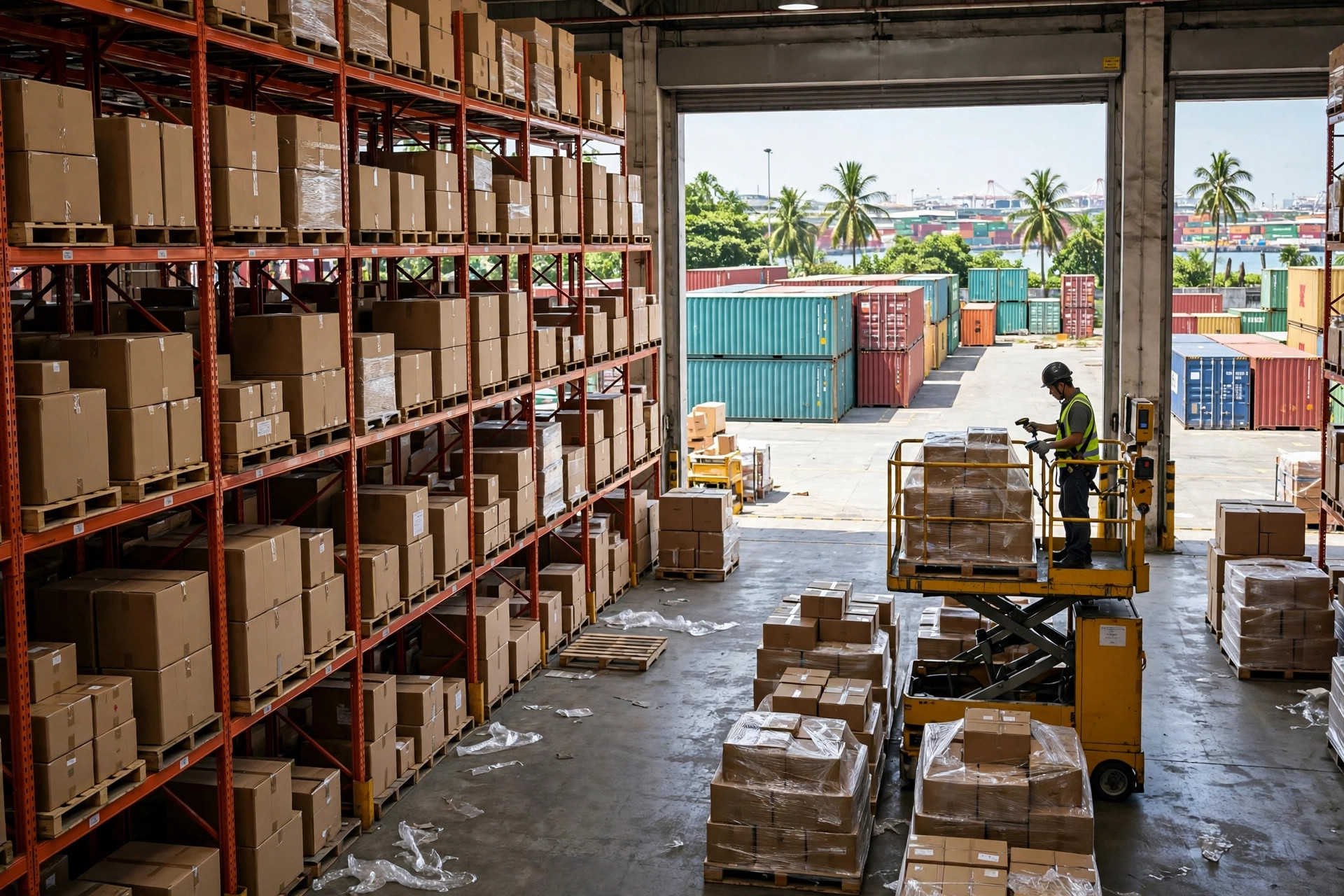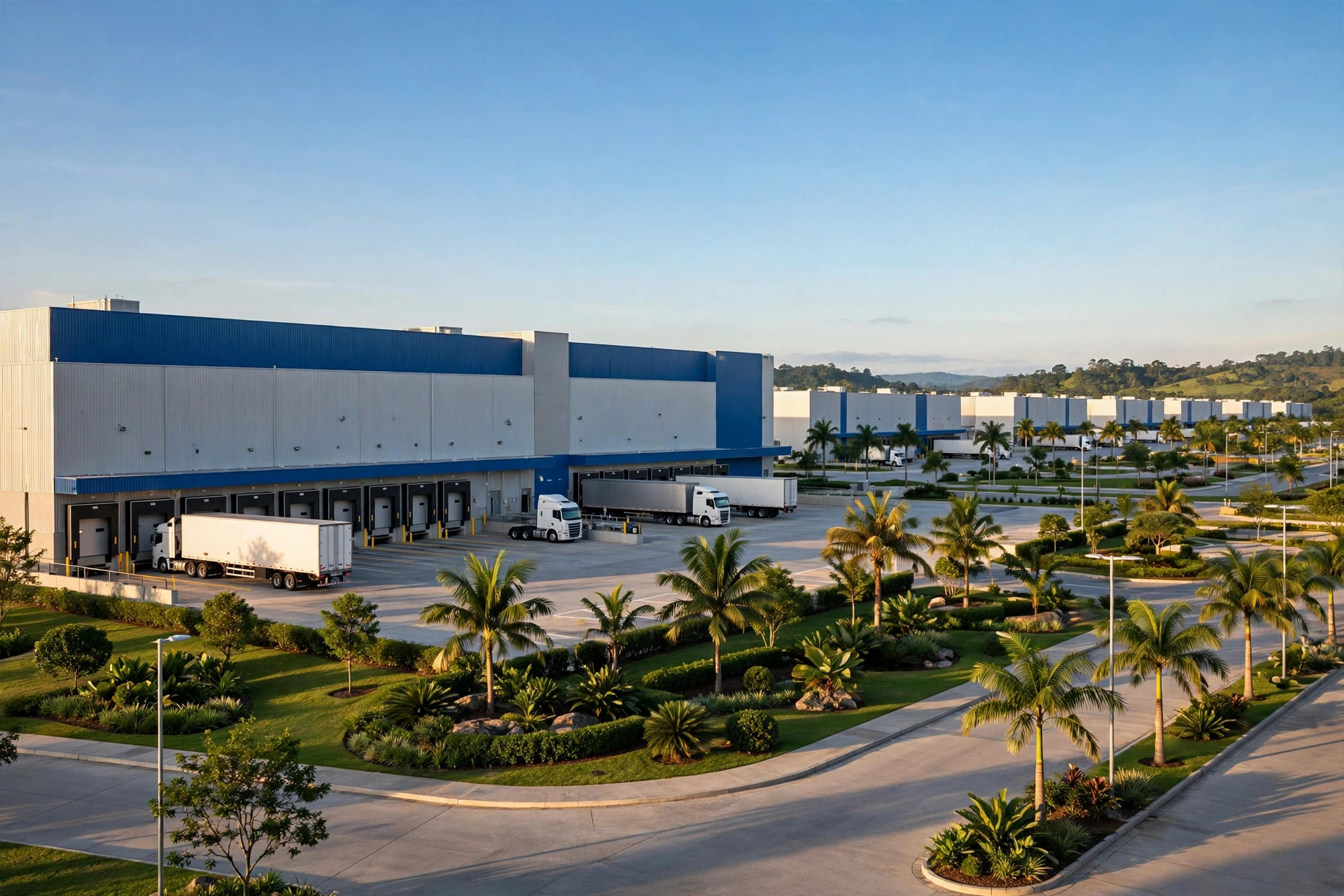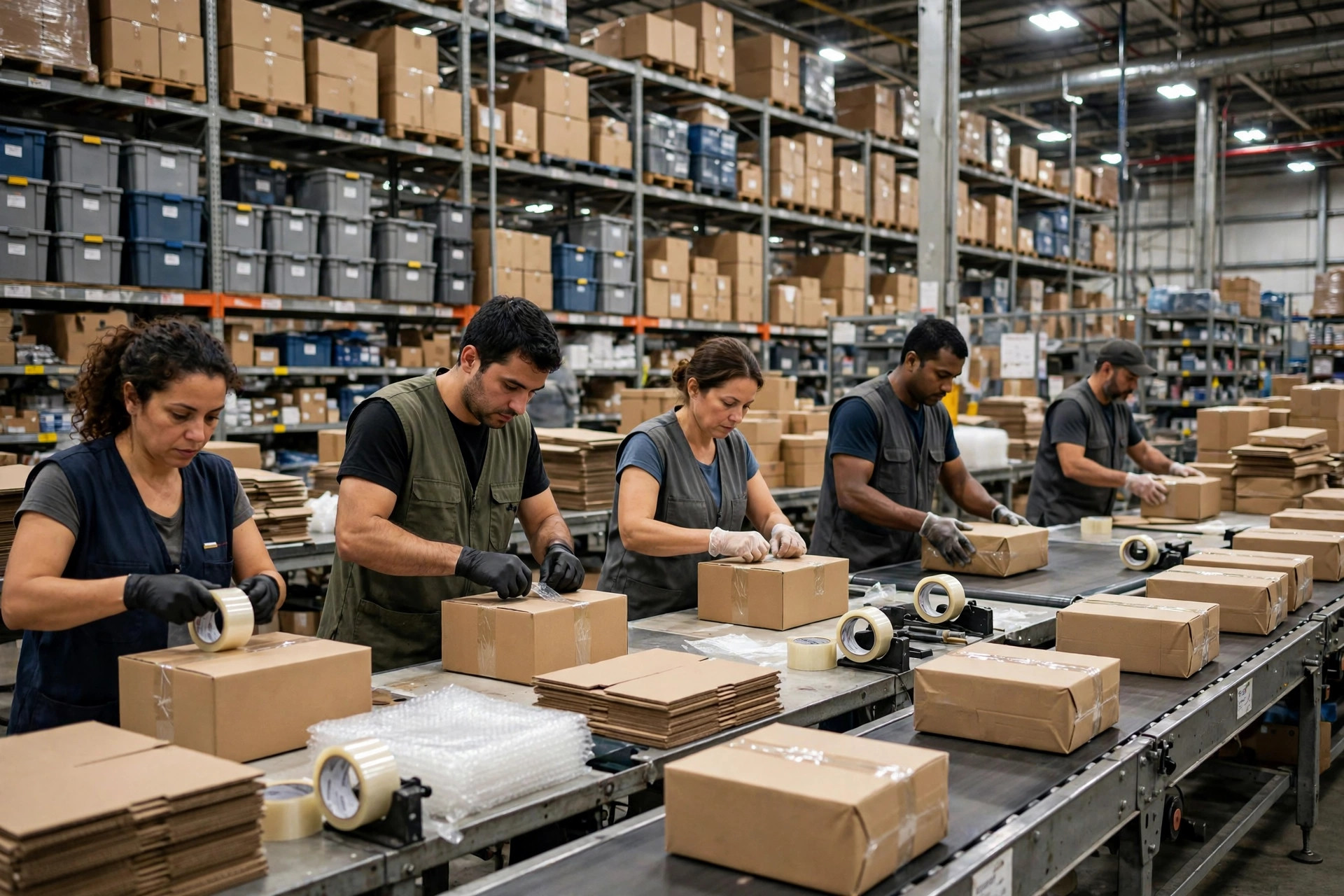
Bottom line up front: selling on Shopee Brazil as a Chinese seller in 2026, you have exactly three lanes — cross-border fulfillment, local fulfillment inside Brazil, or a hybrid that runs both. The whole "shopee brazil seller local vs cross-border fulfillment" debate has no universal winner. It's an arithmetic problem with three inputs: where your dutiable value lands against the $50 line, how fast your SKUs actually move, and whether you hold a Brazilian business entity. I have watched clients win on all three lanes — and I have watched clients get destroyed on all three.
The three lanes, side by side
| Cross-border | Local fulfillment (Brazil) | Hybrid | |
|---|---|---|---|
| Ships from | China warehouse / consolidation hub | Local warehouse in Brazil (own or 3PL) | Test via cross-border, scale winners locally |
| Best for | Low-ticket, light-and-small items | Mid-to-high ticket, repeat-purchase SKUs | Sellers transitioning up |
| Lead time | Two-plus weeks for the cross-border leg (check your forwarder's latest SLA) | Local delivery, roughly 2–5 days | Depends on the SKU |
| Tax shape | Cross-border parcel rules under the Remessa Conforme program | Domestic Brazilian sale, e-invoicing + state tax | Two books, two compliance tracks |
| Cash tied up | Low — ship per order | High — bulk inventory sits in a warehouse | Medium |
| Returns | Effectively non-returnable | Local returns, resellable after QC | Handled per SKU |
| Fits | New stores testing the market, wide SKU counts | Steady daily sales + a local entity | Most sellers who actually scale |
Tables are static; businesses aren't. The most common way to lose the local vs cross-border fulfillment decision: running a cross-border cost structure against competitors who fulfill locally. Two weeks of lead-time gap, a visible conversion gap, and no amount of ad spend closes it.
Cross-border fulfillment and the tax math: the test is tax, not freight
Most sellers compute this backwards. They optimize head-haul freight down to the cent and pencil in "roughly 20%" for tax. I've seen this exact failure three times, and every time it was the tax line that ate the margin alive.
Brazilian cross-border parcels run under the Remessa Conforme compliance program. Two brackets, that's the whole game:
- Dutiable value of $50 or less: there was a federal import-tax exemption window, but this bracket has flipped twice since 2023 — exempt, then taxed, then adjusted again. I won't hard-code a number here. Check the current official policy before you price.
- Dutiable value over $50: 60% federal import tax, minus a $20 tax credit (set by Law 914/2024 in August 2024 — this one has held steady).
Two things people miss. First, dutiable value = product price + freight + insurance. Freight counts. Second, state ICMS applies in every bracket, 17–20% depending on the state — São Paulo and a remote state are not the same number.
Here's the math from a real project. A Shenzhen small-appliance seller listed LED strip lights on Shopee Brazil at $46. Head-haul plus last-mile freight worked out to $6 per unit. Operations mapped the tax bracket off "$46" and figured they were safely under $50. Customs assessed on a $52 dutiable value — straight into the 60% bracket. Tax per order jumped from the expected teens into the thirties. The listing was margin-negative for three weeks before anyone noticed, with ads still burning. I've seen this exact failure three times: forgetting freight in the dutiable value is the first tuition fee Chinese sellers pay in Brazil.
And here's the counter-intuitive part: in Brazil cross-border, the biggest cost lever isn't freight — it's the tax bracket. Freight running $2 high? Repack, switch forwarders, fixable. Wrong tax bracket? A 60% rate is a death sentence. Step one of pricing is always tax first, freight second, your margin last.
Local fulfillment flips the equation. Once inventory sits in a Brazilian warehouse, the sale is domestic — no cross-border parcel tax. The price is a different compliance stack: you need a Brazilian company entity (CNPJ tax ID), electronic invoicing (NF-e) on every sale, and state tax registration where your warehouse sits. You trade cross-border tax uncertainty for fixed local compliance costs — a local accountant, an invoicing setup, monthly state filings. None of it optional.
What local fulfillment really costs in Brazil
People assume local fulfillment is expensive because of rent. Wrong. The three real costs:
One, the entity and the tax machine. No CNPJ, no NF-e, no legal sale. A local accountant for setup, bookkeeping, and filings is a monthly fixed burn whether you hold ten SKUs or a thousand.
Two, inventory capital. A sea container ties up product cost plus freight for weeks on the water, then more weeks in the warehouse. Fast movers call it inventory. Slow movers call it a write-off.
Three, returns. Brazilian return rates run high — that's market reality, not a complaint. Cross-border returns are economically dead: international return freight costs more than the goods. Local returns come back to a local warehouse, get QC'd, and go back on sale. Almost nobody models this, but it's the most undervalued part of the local-fulfillment case.

A rescue story. A Guangzhou apparel seller went all-in on a Brazil local warehouse in early 2025 — 20 SKUs, two containers, into a São Paulo 3PL. Three months later the review was brutal: 6 SKUs drove over 80% of sales; the other 14 sat in the warehouse collecting storage fees and heading for clearance markdowns. The fix was three moves: cut the assortment to proven movers only; switch replenishment from full containers to small air-freight test batches, scaling to sea freight only after sell-through proved out; clear dead stock locally and protect cash flow. Six months later the warehouse held 8 SKUs and profit had doubled. Local fulfillment isn't "more inventory wins" — it's "faster-moving inventory wins."
The go-live checklist: moving from cross-border to local
Running cross-border today and eyeing local or hybrid? Walk this list in order. Don't skip steps.
Step 1: Recompute dutiable value. Take your top Brazil SKUs and compute price + freight + insurance. Flag everything within $5 of the $50 line. Those are your tax-bracket danger SKUs — reprice them or move them local first.
Step 2: Test with cross-border only. Run 30–60 days on cross-border and watch sell-through speed and return rates. Slow movers and high-return SKUs get cut — never feed them into a local warehouse.
Step 3: Talk 3PL only for proven SKUs. Start with small-batch inbound to a Brazilian 3PL, not a full warehouse lease. First replenishment goes by air in small lots to validate local lead times and the returns loop; scale to sea freight once it's proven.
Step 4: Compliance before cargo. CNPJ entity, NF-e invoicing capability, state tax registration where the warehouse sits — all live before the first inbound shipment. Hire a Brazilian accountant. Don't guess, and don't copy tax advice from old blog posts — the rules have been moving.
Step 5: Write the returns playbook before you list. Return address, QC standards, resale flow, response-time SLAs — one document, one copy for the 3PL, one for customer service. Poor returns handling tanks ratings faster than you'd expect.
Step 6: Reprice from scratch. Rebuild margin on "local fulfillment cost + state tax + platform fees (check current official rates)" — never port cross-border pricing straight over.
Five failures I've seen three times
Failure 1: Leaving freight out of dutiable value. The Shenzhen story above. The formula is dutiable value = price + freight + insurance. Miss one term and you can jump a bracket.
Failure 2: Declaration mismatch. The Chinese forwarder declares one product name, the Brazil broker files another, customs inspects and holds the goods. Product name, material, and use-case must match — in every language on the paperwork.
Failure 3: Under-declaring to sneak under $50. Under Remessa Conforme the platform reports three documents: the logistics order, the payment order, and the transaction order. Customs cross-checks declared value against actual payment. Get caught and it's seizure plus fines — the "saved" tax won't cover one penalty.
Failure 4: Copying tax rates from old articles. The sub-$50 federal treatment has flip-flopped. A 2023 guide and a 2025 guide may describe two different realities. Check the article date, then verify against official policy.
Failure 5: No local returns process. Cross-border sellers never needed one. After moving local, return volume arrives and there's no process — ratings die faster than revenue does.
One thing to do tonight
Don't try to pick the perfect lane in one sitting. Brazil's policies, tax rates, and platform rules all move — getting it right once is luck; running the numbers continuously is the skill. Tonight, do one thing: recompute dutiable value (price + freight) for your top 10 Brazil SKUs, flag the ones within $5 of the $50 line, and tomorrow either reprice them or put them on the first local-warehouse inbound list. Once that table exists, you'll have a better answer to the local vs cross-border fulfillment question than most of your competitors.
By Lin Xiao, WMS Implementation Consultant