We had a client in Poland apple export warehouse storage who nearly lost a serious amount of money on a single container last autumn. He bought from orchards around Grojec, ran the fruit through a packing line beside the orchard, and rushed it to Gdansk port to catch the Christmas shipping window. When the buyer opened the cartons at destination, the mood changed fast. Large and small fruit were mixed in the same carton, and a few lightly bruised apples sat among the first-grade fruit. The buyer did not reject the shipment. He simply paid the second-grade price for the whole container. When my client did the maths afterwards, the shortfall would have covered months of cold storage. Grading is not a detail. It is money.
My client knew apples. What he had underestimated was the warehouse contract. He had treated the warehouse as a place to stack pallets and had negotiated only the storage rate per pallet. He never asked where the grading standard was written, what the sampling rate would be, or what happened when an opened carton did not match the grade. Warehouse contracts rarely volunteer those answers. When they stay vague, the warehouse keeps room to manoeuvre, and the cargo owner pays for the ambiguity. In this business, the expensive lines are often the ones missing from the contract, not the price on the first page.
Poland Apple Export Warehouse Storage Starts at the Grading Line
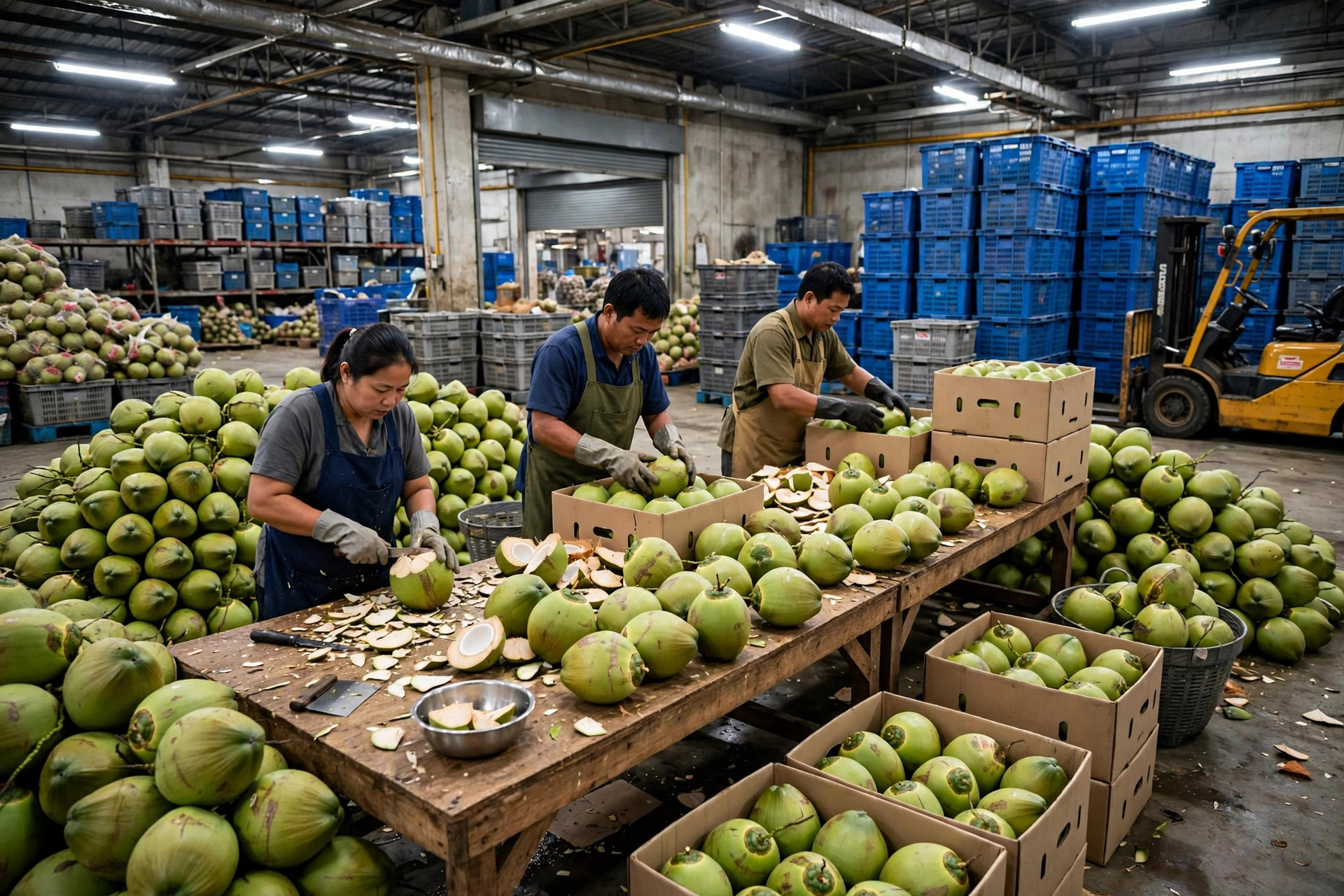
Grojec is Poland's best-known apple region, shipping Idared, Gala, and Jonagold in volume. On the packing line the work looks simple: sort by size, colour, and blemishes. What the buyer wants, though, is not pretty fruit. It is consistency. A one-size difference inside a carton can mean two prices at destination. A one-grade colour difference can change where the fruit sits on a supermarket shelf. When the grading standard is loose, the warehouse grades by habit and the buyer inspects by specification, and both sides can be honestly convinced they are right. The argument that follows is billed to the cargo owner.
The most common dispute I see is about sampling. The warehouse samples by pallet, the buyer samples by carton, and the two methods can produce results a full grade apart. Then there is photographic evidence. Without photos of opened cartons before dispatch, a problem found at destination becomes a story with no witnesses, and the cargo owner usually absorbs it. Put the grading standard, the sampling method, and the photo record into an annex to the contract. A verbal promise is worth nothing in a claim. A table in an annex is worth a great deal.
Here is the counterintuitive part: stricter grading is not always better grading. Set the bar too high and a large share of saleable fruit gets pushed into second grade. Second-grade fruit still sells, but at a lower price, through different channels, with its own storage and distribution costs to recalculate. Strict grading saves you claim headaches and costs you shipped volume. A good standard keeps first grade stable and gives second grade a clear route to market. Negotiate grade and outturn together, not strictness alone.
Controlled Atmosphere Is Not a Fridge: The Storage Bill in Poland Apple Export Warehousing
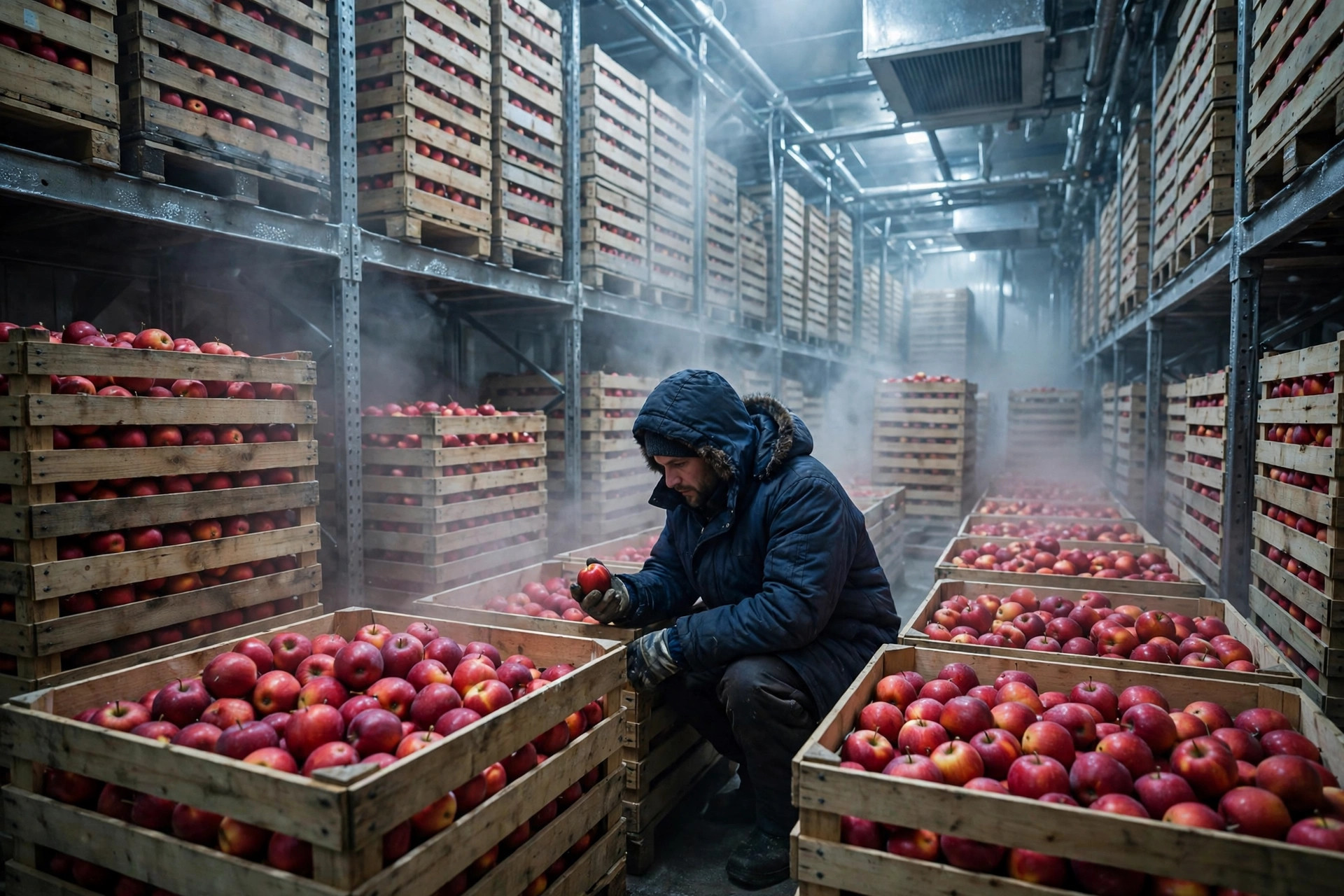
We had another client with the opposite instinct. He held an autumn crop in controlled-atmosphere storage, planning to wait for spring prices. Long-term storage in controlled atmosphere is a genuine strength of Polish apple exports. Fruit rests in a low-oxygen room and deteriorates far more slowly than in an ordinary cold store. But he missed a piece of arithmetic. Every extra month added storage charges and tied up capital, and the spring price rise did not necessarily cover both. When the fruit finally shipped, shelf-life figures were governed by the buyer's specification, and the buyer took delivery on its own rotation schedule. The late shipment had to move quickly, which weakened his bargaining position rather than strengthening it.
Price the storage by the week, not by a vague month. Opening a controlled-atmosphere room is a threshold moment. Once the door opens, the whole room starts counting down, and any fruit that cannot be sold promptly loses condition day by day. Align the opening schedule with vessel sailings and the buyer's receiving rhythm. Some clients prefer opening a whole room at once because it feels efficient, yet the second half of that room can lose condition while waiting for a ship at the port. Opening in batches and shipping in batches looks fussy. In practice it cuts the risk into smaller pieces.
Use this framework when you sit down with a warehouse. It is not a form to copy blindly. It is a list to argue through, line by line:
| Negotiation item | What goes wrong when it stays vague | What to pin down in writing | | Grading standard | Inspection at destination becomes a dispute | Size, colour, and defect grades per variety, with sample photos | | Sampling and evidence | Nobody can prove who caused a claim | Sampling method, carton photos before dispatch, retention of problem fruit | | Room-opening rhythm | A whole room opens and cannot be sold in time | Batch opening aligned with sailings and buyer receiving schedules | | Storage billing cycle | A long hold produces a runaway bill | Weekly billing, with the trigger and cap for overtime charges stated | | Damage claims deadline | Late claims are refused | Notification deadline after discovery, and the evidence required |
A warehouse will not be frightened by a client haggling over price. It will pay attention to a client who asks precise questions. Precise questions signal that you understand the operation, and the contract then has to be written for someone who understands it. That alone tends to squeeze water out of a quotation. That is what Poland apple export warehouse storage rewards: the client who asks precise questions before the season, not after the claim.
From a Grojec orchard to Gdansk port, every step costs money: hands on the grading line, oxygen levels in the storage room, days waiting for a vessel. None of it is free. Put those costs into the contract and you stop gambling on the market. A rising market is luck. A well-written contract is skill.
Next time you negotiate a contract, ask these three questions: Is the grading standard and sampling method written into an annex? Who decides the batch-opening rhythm for the controlled-atmosphere rooms? How many days do we have to notify a damage claim for it to remain valid? Once you ask those three, the other side knows you are not there to compare unit prices. You are there to make sure a whole container of apples reaches the buyer in the condition you promised.
By Susan, 3PL Sales Director