Here's the blunt truth about Ecuador banana export warehouse cold chain: bananas are the least forgiving cargo in the world, and the chain from orchard to container must never break. Treat them one degree right and they last an extra week. Let them warm up for one hour and they can drag a whole container yellow with them. This cuts both ways. Too cold and they suffer chilling injury. Too warm and they ripen early. The survivable window is 13 to 14 degrees Celsius — one or two degrees of room, for three weeks at sea. Whether that chain holds decides if the container sells at full price or gets discounted at the port.
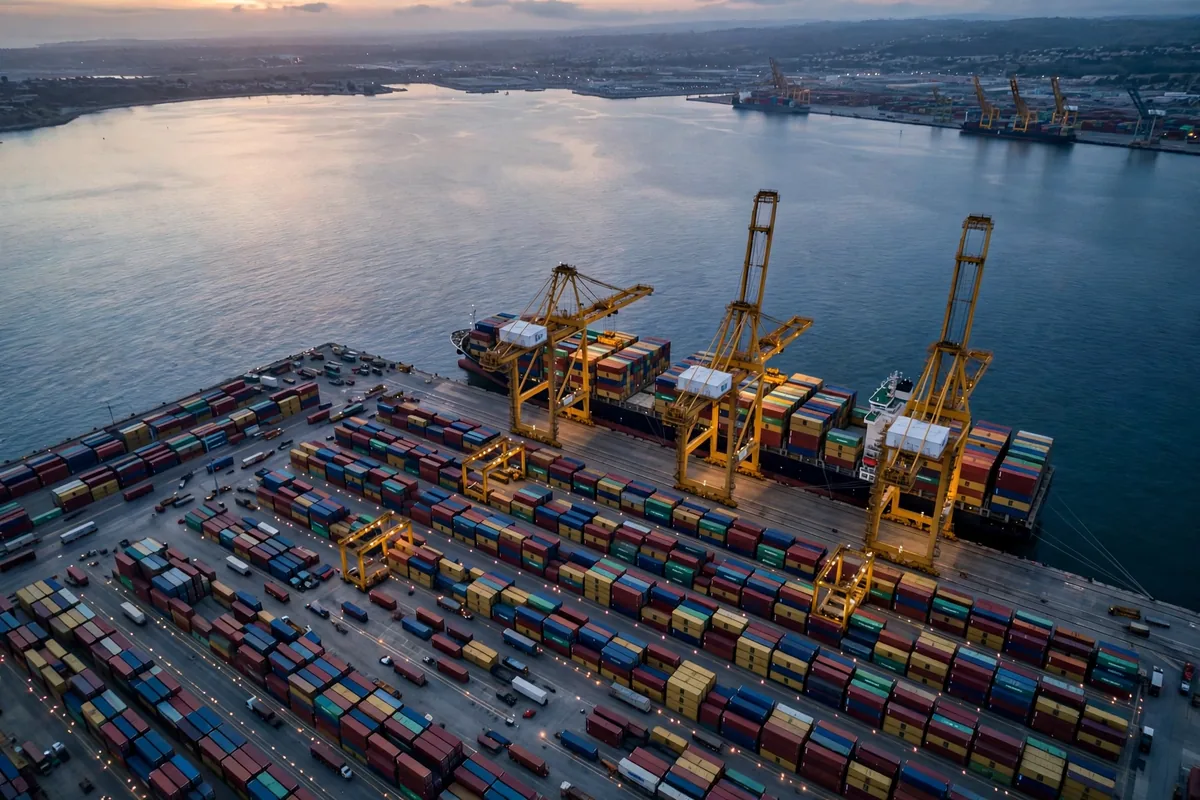
Look at the scale of this business first. Ecuador produced 7.59 million tonnes of bananas in 2024 — fourth in the world by production, according to the UN Food and Agriculture Organization — yet it is the world's largest exporter, moving roughly a quarter of all bananas traded globally, worth about $3.6 billion. Most of it leaves through the port of Guayaquil and spends two to four weeks at sea. That volume only works because a cold chain runs unbroken from the orchard to the container. Break it once and you don't just lose a container. You lose the margin on the whole shipment.
Ecuador Banana Export Warehouse Cold Chain Starts in the Field, Not the Cold Store
Most people think the cold chain starts at the cold store. It doesn't. It starts the minute the banana leaves the tree. Bananas are cut green and hard, their starch not yet turned to sugar. Fresh off the plant they carry field heat, with pulp temperatures that can reach the low 30s Celsius. Leave them sitting in the sun for half a day and the ripening clock starts early. No amount of cooling later can wind it back.
I've seen this scene too many times. A harvest crew cuts corners and stacks the stems at the edge of the field while the truck makes trip after trip. By the time the fruit reaches the packing station, the pulp is still warm. The cold store blows hard for two days, the outside of the boxes gets cold, the inside stays warm. That cargo goes into a reefer with a time bomb inside it, because the container's refrigeration unit can hold a temperature — it cannot pull a warm load down to temperature.
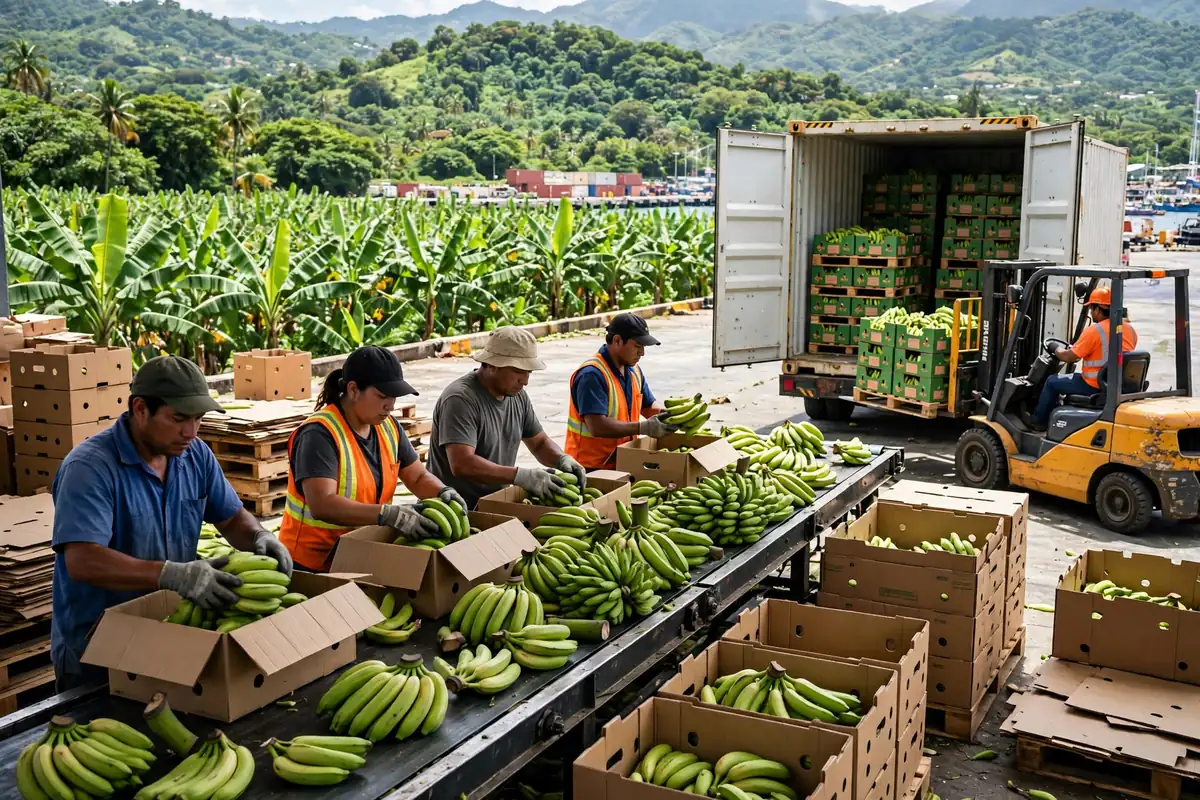
The fix is simple, and it needs someone watching: get the fruit to the packing station fast, and force-air pre-cool it before boxing, bringing pulp temperature down to around 13.5 degrees before it goes anywhere near a container. Pre-cooling is the cheapest link in the whole Ecuador banana export warehouse cold chain, and the easiest one to skip. Skip it and every link after it pays the debt.
One more detail at the packhouse: check pulp temperature by sampling, not just the cold store's air temperature. Air cools fast, pulp cools slow — the thermometer on the wall can read fine while the fruit inside is still warm. My rule with every packhouse I work with is simple: sample the pulp, and no boxing until it passes. It looks rigid. It saves whole containers.
The Most Expensive Lesson in Ecuador Banana Export Warehouse Cold Chain: a Reefer Is Not a Refrigerator
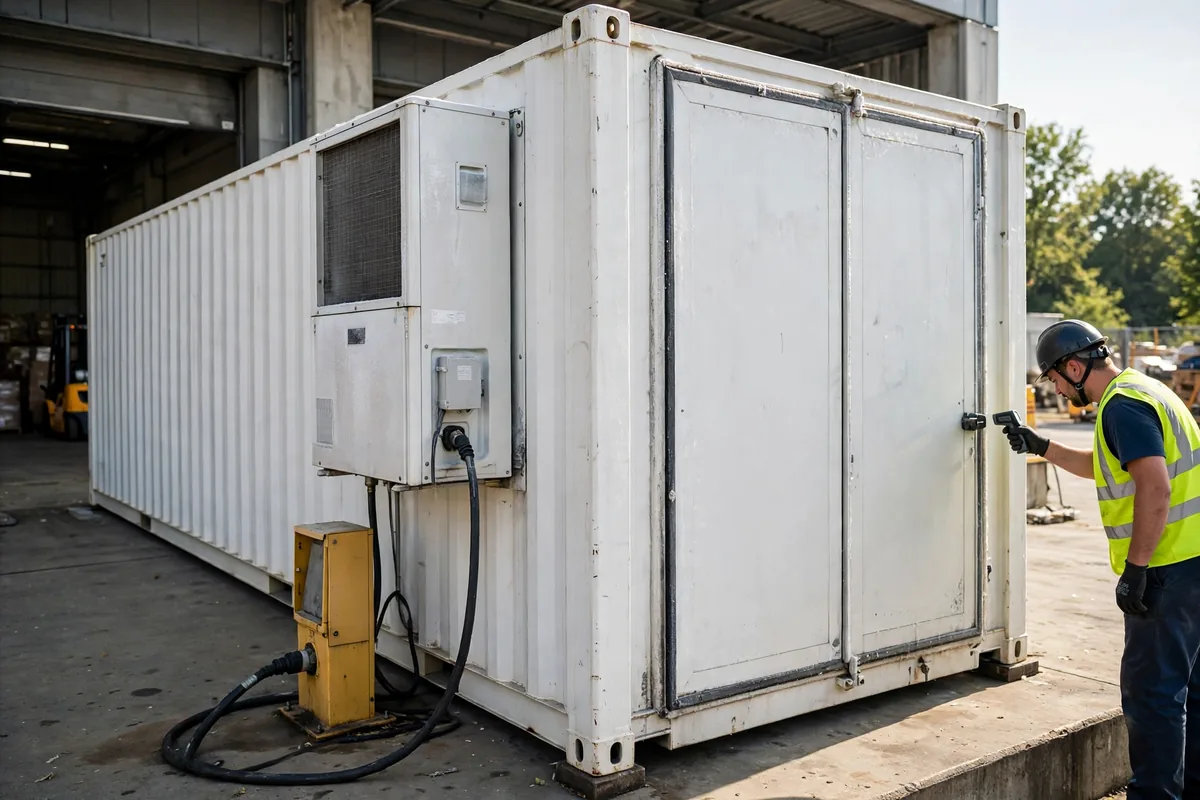
At stuffing time, the rookie mistake is treating a reefer container like a big fridge. A fridge takes warm things and makes them cold. A reefer doesn't. It holds a temperature. It cannot fix a load that was never cooled properly. If the pulp goes in warm, the cold air blows over the surface of the boxes while the fruit inside stays warm.
The setpoint is usually 13 to 14 degrees Celsius. Below about 13 degrees, the fruit takes chilling injury — dull, greyish skin that never ripens evenly at destination. Above about 15 degrees, the bananas start releasing ethylene, one ripening banana triggers the next, and the whole container turns yellow mid-ocean. Humidity matters too, 85% to 95%, or the peel dries and wrinkles. And ventilation: fresh air exchange is typically set at 15 to 25 cubic meters per hour to flush out ethylene and carbon dioxide. Leave the vents shut and you've locked a container of bananas in a room full of its own ethylene for three weeks.
In the fall of 2023, a fruit importer I work with learned this lesson the hard way. A container arrived in Rotterdam half yellow, and the other half ripened unevenly no matter what the ripening room did. The temperature log looked fine. The real cause turned out to be the vents — never opened. The fruit had stewed in its own ethylene for over 20 days at sea, and the whole load had started ripening on its own. The loss came to roughly half the container's landed value. Every switch on a reefer is there for a reason. Before the doors close, check four things one by one: setpoint, humidity, ventilation, and pulp temperature. Miss one and don't seal the door.
A temperature logger is the best money in this whole chain. Put one inside the container and it records the temperature and humidity curve for the entire voyage — when the cargo lands, one look tells you exactly which link broke. Without that curve, everyone just blames everyone else: the carrier says the packhouse never pre-cooled, the packhouse says the carrier never held temperature, and nobody can prove a thing. A logger costs next to nothing next to a container's value. I've watched too many exporters skip it, then pay ten times as much to investigate a failure that still ends in "unclear."
What a Broken Link Actually Costs
The trouble with cold chain work is that nobody does the math until something breaks. Once you do, the spending decisions make themselves. The table below is a hypothetical example, to show the scale of the loss:
| Scenario (hypothetical example) | Loss share | Loss on a $30,000 container |
|---|---|---|
| Minor break, light chilling injury | About 5% | About $1,500 |
| Ventilation failure, half the load ripens early | About 40% | About $12,000 |
| Full rejection at port, or juice-grade salvage only | About 80% | About $24,000 |
See the trade-off? Pre-cooling, temperature loggers, and a pre-stuffing checklist cost a few hundred dollars per container combined. One half-ripened container wipes out enough money to pay for those measures across dozens of containers. I say this to every exporter I advise: cold chain spending isn't a cost, it's insurance. Save a few hundred dollars where you can see it, and you'll lose ten thousand where you can't.
There's a time budget too. Green bananas hold two to four weeks at 14 degrees in air, four to six weeks under controlled atmosphere. At destination they still need 24 to 48 hours of ripening at 15 to 20 degrees with 100 to 150 ppm of ethylene before they reach the shelf. Every delay at sea eats into the ripening window at the other end, and the supermarket's promotion slot won't wait for your ship.
So here's my advice, and it's one question: is your cargo asleep right now, or is it quietly waking up inside the container? Ask your cold chain provider. If they can't answer, find another provider.
By Lao Mi, Supply Chain Veteran (20 yrs)