Let me tell you something. After fifteen years behind the wheel, I can read a drayage quote the way a mechanic listens to an engine. But last summer, an old friend of mine who runs a small freight forwarding shop nearly got burned anyway — not on the linehaul rate, but on three lines of fine print at the bottom of the page.
He had two quotes for the same job: one 40-foot high-cube from the Port of Long Beach to a warehouse out in the City of Industry. Carrier A quoted an all-in rate that looked twenty percent cheaper than Carrier B. My friend was ready to sign with A. I told him to flip to page two of A's quote and read the small print out loud: chassis usage billed separately, chassis split billed separately, overweight chassis billed separately. Three lines, all "billed separately." That twenty percent B was charging extra, I told him, was just those three lines packed in upfront.
He went with A anyway. The box was loaded with paper products — a genuinely heavy container. At the terminal it tipped the scales past what a standard chassis could legally carry, so they needed a tri-axle chassis, which had to be reserved in advance. The container sat at the marine terminal while the pool chassis sat at a depot a few miles away, so the driver had to bobtail over to grab a chassis first. Then the terminal appointment window slipped, and the box sat on the chassis an extra day. When the invoice came, those three "billed separately" lines added up to more than the difference he thought he was saving. He bought me dinner after, shaking his head: "Should've listened to you."
What Those Three Lines Actually Are
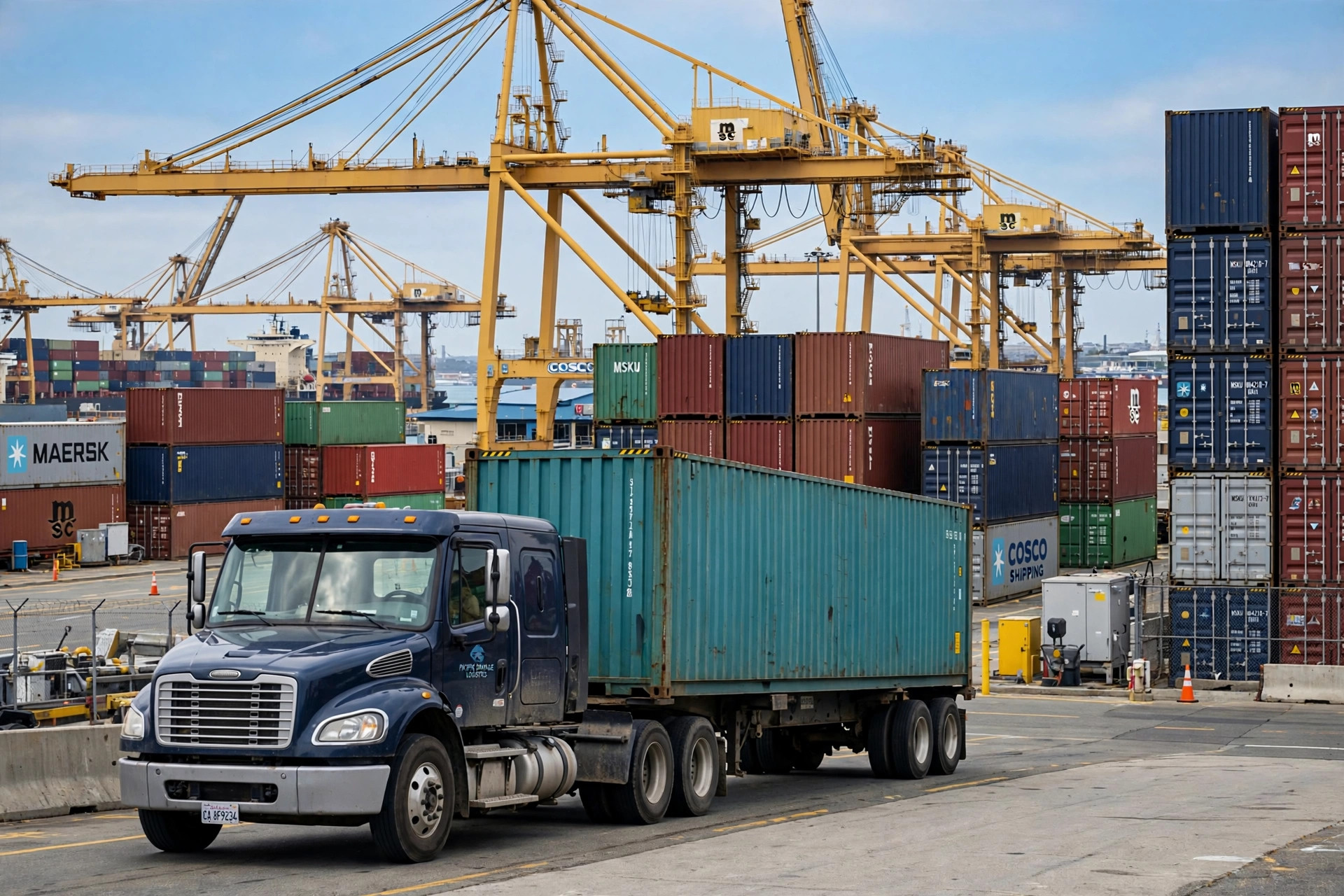
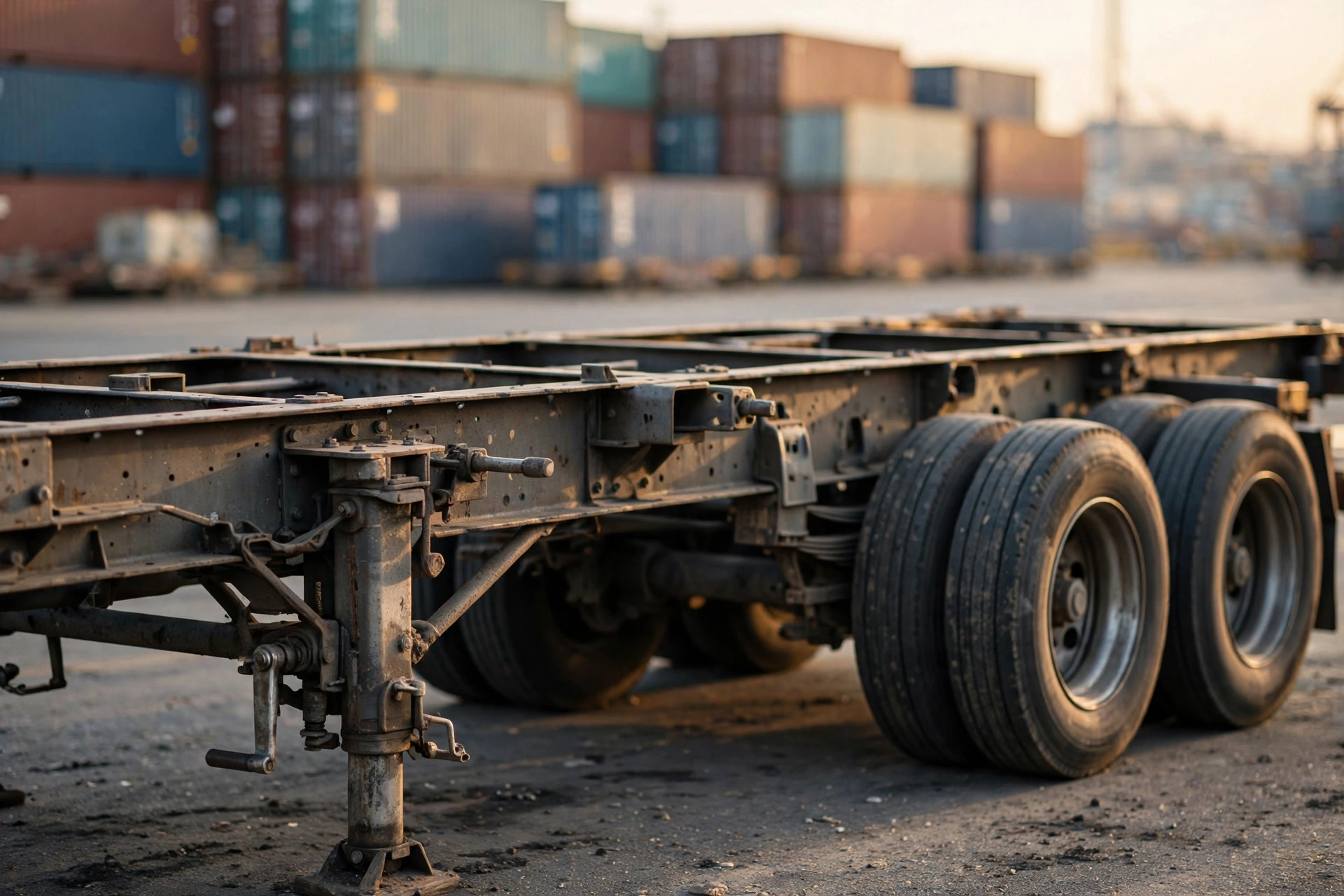
First, some plain talk. A chassis is the skeleton trailer a container rides on. The box comes off the ship, lands on a chassis, and the tractor hooks up and goes. The chassis is never free — it has its own three bills.
Line one: chassis usage, the daily charge. Plain talk: as long as that box is sitting on a chassis and hasn't been unloaded, the meter is running. The terminal and the chassis pool give you a few free days. After that, it's a daily charge. Looks small — until the warehouse is slow unloading or the appointment gets pushed, and three to five days stack up into hundreds of dollars. Here's what a lot of shippers don't realize: when a driver sits at the warehouse gate for half a day, you're burning two meters at once — driver detention and chassis rental. Both land on the shipper's invoice.
Line two: the chassis split. In a perfect world, the container and the chassis are in the same place — driver shows up, box drops onto the chassis, done. In the real world, the box is at the marine terminal and the pool chassis is at a depot a few miles away. The driver has to run empty to fetch the chassis, then come back for the box. An extra trip, an extra hour or two. That empty run is called a split, and it's billed on its own line. Back in the fall of 2024 I pulled a box out of Long Beach myself — rolled out at 6 a.m., bobtailed to the depot for a chassis first, then got in the terminal line. Forty-some minutes round trip, fuel and time, all cost. If the split isn't on the quote, it'll introduce itself on the invoice.
Line three: overweight chassis and the flip. A standard chassis has a legal weight limit. Go over it and you need a tri-axle chassis — an extra set of wheels to spread the load. It rents for more, it has to be reserved ahead, and there might not be one sitting around when you show up. A flip is different: inside the terminal, the box ends up on the wrong chassis — damaged, wrong size — and it has to be swapped right there. The terminal charges a handling fee, and the driver waits in line. The counterintuitive part: plenty of shippers think "my box isn't that heavy." But axle-weight enforcement in the U.S. is no joke — over is over. Don't declare a heavy box upfront, and when there's no suitable chassis on site, the appointment expires, you rebook, and there goes the whole day.
The Real Lesson: Chassis Charges Are a Function of Time, Not a Fixed Price
Cheap-looking drayage quotes that end up expensive almost always trace back to these three lines. Why? Because they aren't fixed prices — they move with time and with how messy the move gets. The longer the box sits on the chassis and the more running around the driver does, the bigger these three lines get. The linehaul is dead; the chassis charges are alive. That's the thing first-time importers misjudge most.
Let me break down a sample move the way quotes around Long Beach commonly read — a 40-foot high-cube, Port of Long Beach to Ontario, fifty-some miles. Fair warning: the numbers below are illustrative. Every carrier's accessorial tariff is different — get theirs in writing before you sign.
| Item | Sample amount | Notes | | Base drayage (incl. a few free chassis days) | $800 | Moves with the season | | Chassis usage past free time, per day | $45/day | 3 extra days = $135 | | Chassis split, per occurrence | $125 | When box and chassis aren't co-located | | Tri-axle chassis surcharge (heavy box) | $150 | Must be reserved ahead | | Terminal flip | $75 | Only if chassis gets swapped inside | | Driver detention (slow unload) | $85/hour | Burns alongside chassis rental |
See it? $800 base, and one unlucky box burns another three or four hundred on chassis lines and waiting. A smooth box? All three lines read zero. That's why old drivers say: read the first half of a drayage quote for the price, and the second half for the fine print.
Four Things I'd Tell Every Shipper and Warehouse
One: ask the carrier for their accessorial tariff before you book, and read every line. Focus on the chassis three: how many free days are included, whether splits are covered, how overweight boxes are priced. A carrier who won't hand over the tariff isn't cheap — he just hasn't started counting yet.
Two: declare heavy boxes with the real weight, upfront. No "abouts," no "roughlys." The chassis type gets reserved in advance; there's no swapping it at the gate. Under-declare, and the driver shows up to a box he can't legally pull, the appointment dies, you rebook, and the lost day costs ten times what the tri-axle surcharge would have.
Three: warehouses — hit your appointment windows and unload fast. A lot of warehouse managers think "the driver can wait a bit." He can, but you're burning double — detention plus chassis rental — and it all flows back to the shipper's bill. Do the math with your warehouse manager: the half day he saved on scheduling might be two or three hundred extra on the shipper's invoice.
Four: when a quote says all-in, ask "all-in to where?" To the warehouse gate? Or through unload and chassis return? The boundary of "all" is exactly where those three lines hide. Get it clear before you sign, so nobody's arguing at invoice time.
Fifteen years on the road taught me one rule: never sign a line on a quote you don't understand. A cheap price you understand is cheap. A cheap price you don't understand always turns out expensive.
By Shifu Zhao, Trucking Veteran (15 yrs)