I tell you, nobody looks twice at dock seals and shelters until the day they fail. And they always seem to fail on the busiest day, in the worst weather.
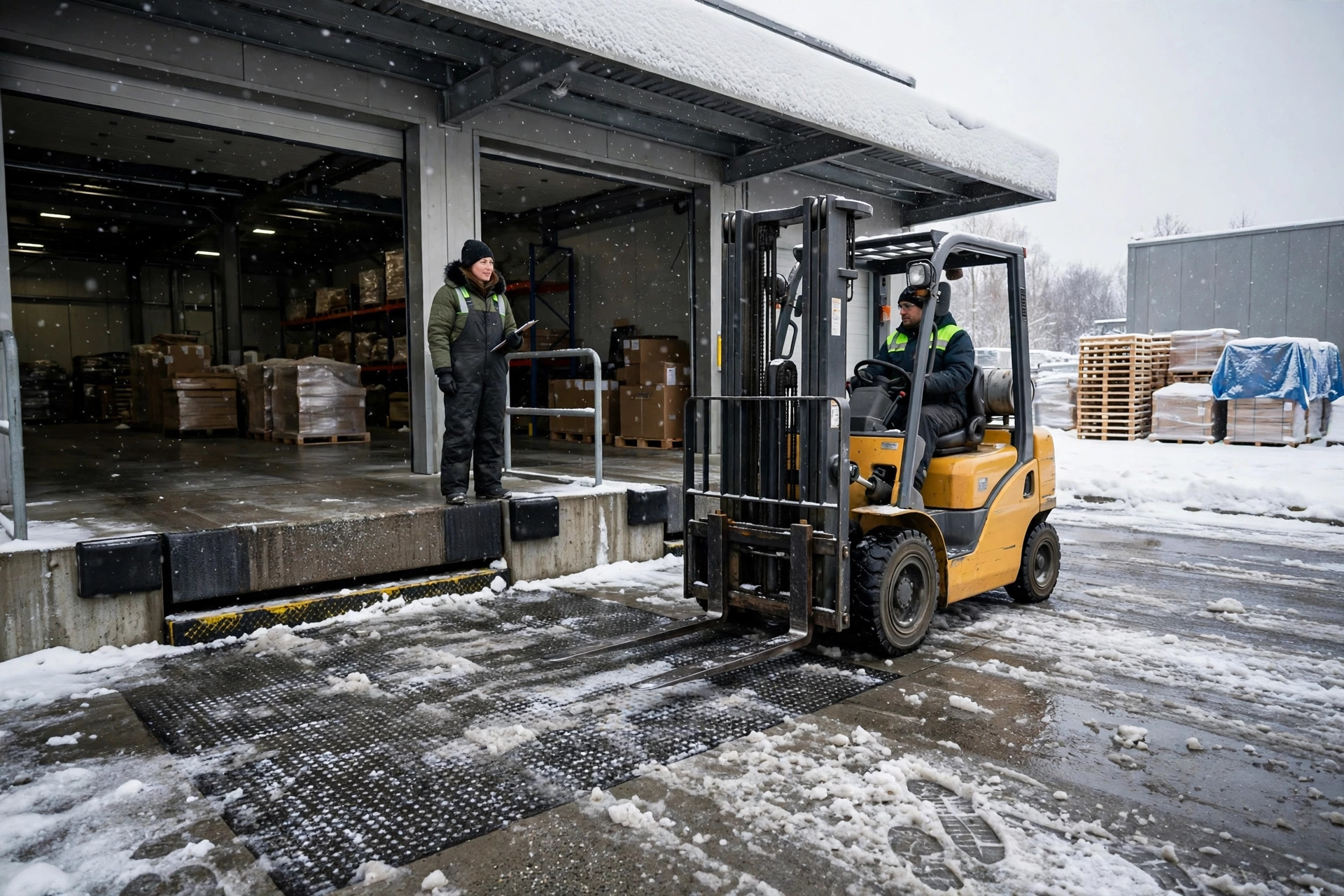
One cold winter morning, I backed into a warehouse in the Inland Empire with a full load. The trailer docked, the door went up, and cold air poured straight through the gap along the side of the trailer. Two guys inside were working in heavy jackets and still shivering. The forklift driver told me that door had been leaking air since fall, reported more than once, and nothing had been done about it. A job that should have taken about an hour stretched toward two, because cold hands move slow and everybody kept working around the draft. That was not a seal problem anymore. That was labor time being paid out as a fine.
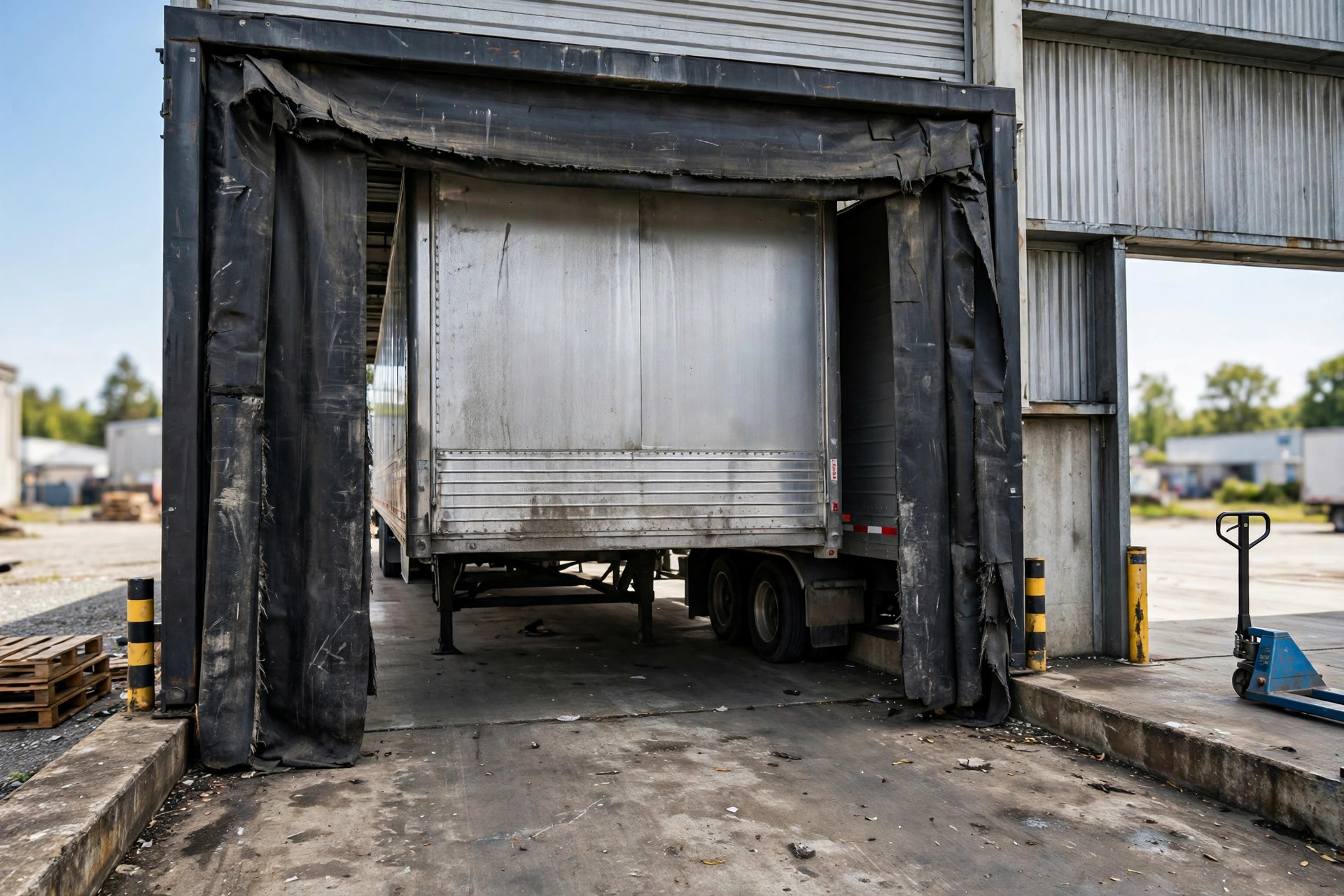
Another time it was summer, rain coming down, and I was delivering to a food warehouse. The dock shelter's top curtain had a tear in it, and rainwater ran down the side of the trailer and onto the dock floor. The forklift had to slow to a crawl, a worker followed behind with a mop, and the whole dock turned into a mess. Nobody's freight got soaked that day, but the dock supervisor just stood there shaking his head. He said the tear had been there since spring, and everybody figured it would hold a little longer. After all these years on the road, I have seen that story too many times: the thing that "still works" quits right when you need it most.
So here is how I look at it, no jargon, just what a driver sees from the cab and the dock.
Dock Seals: Check Three Spots Before Anything Else
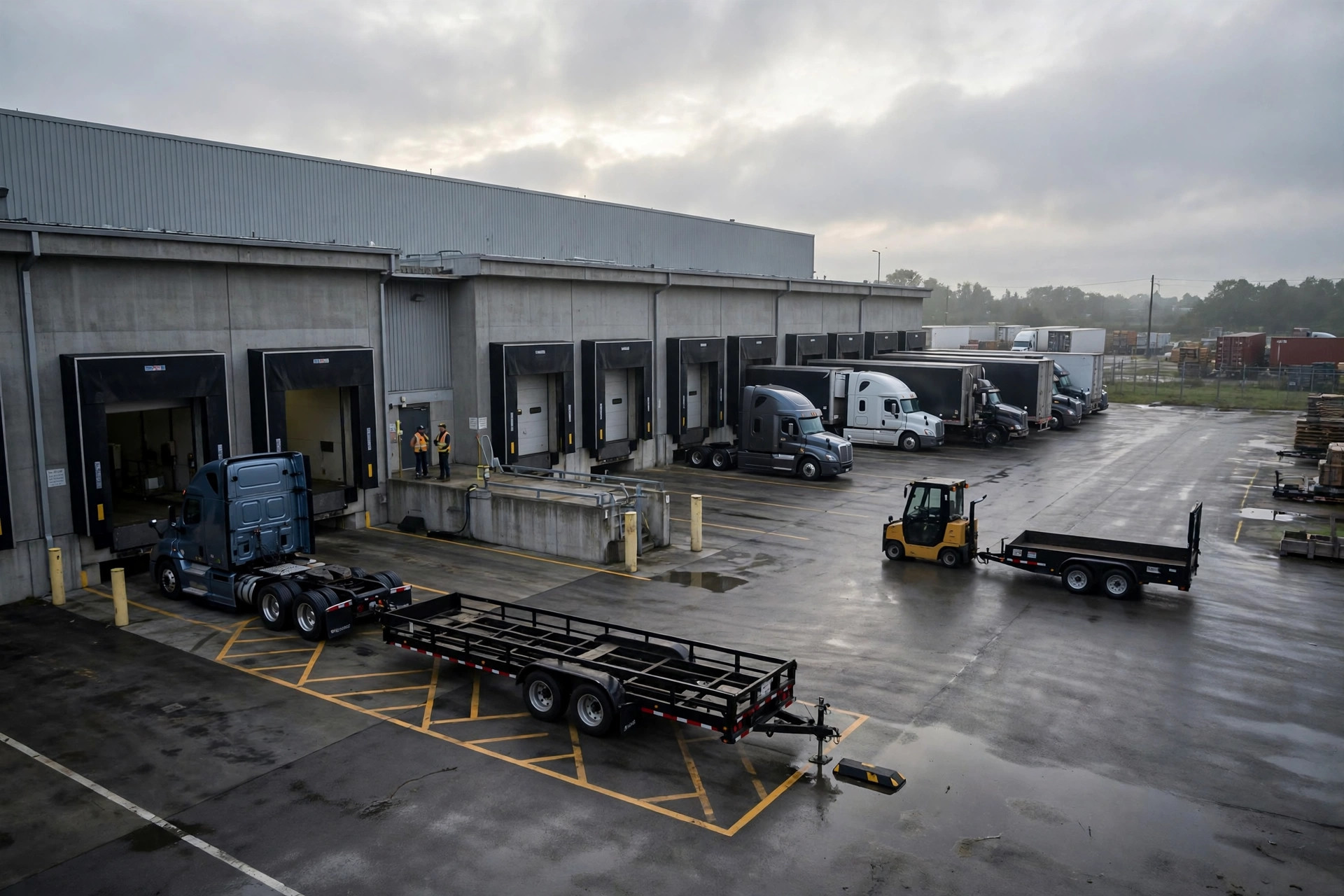
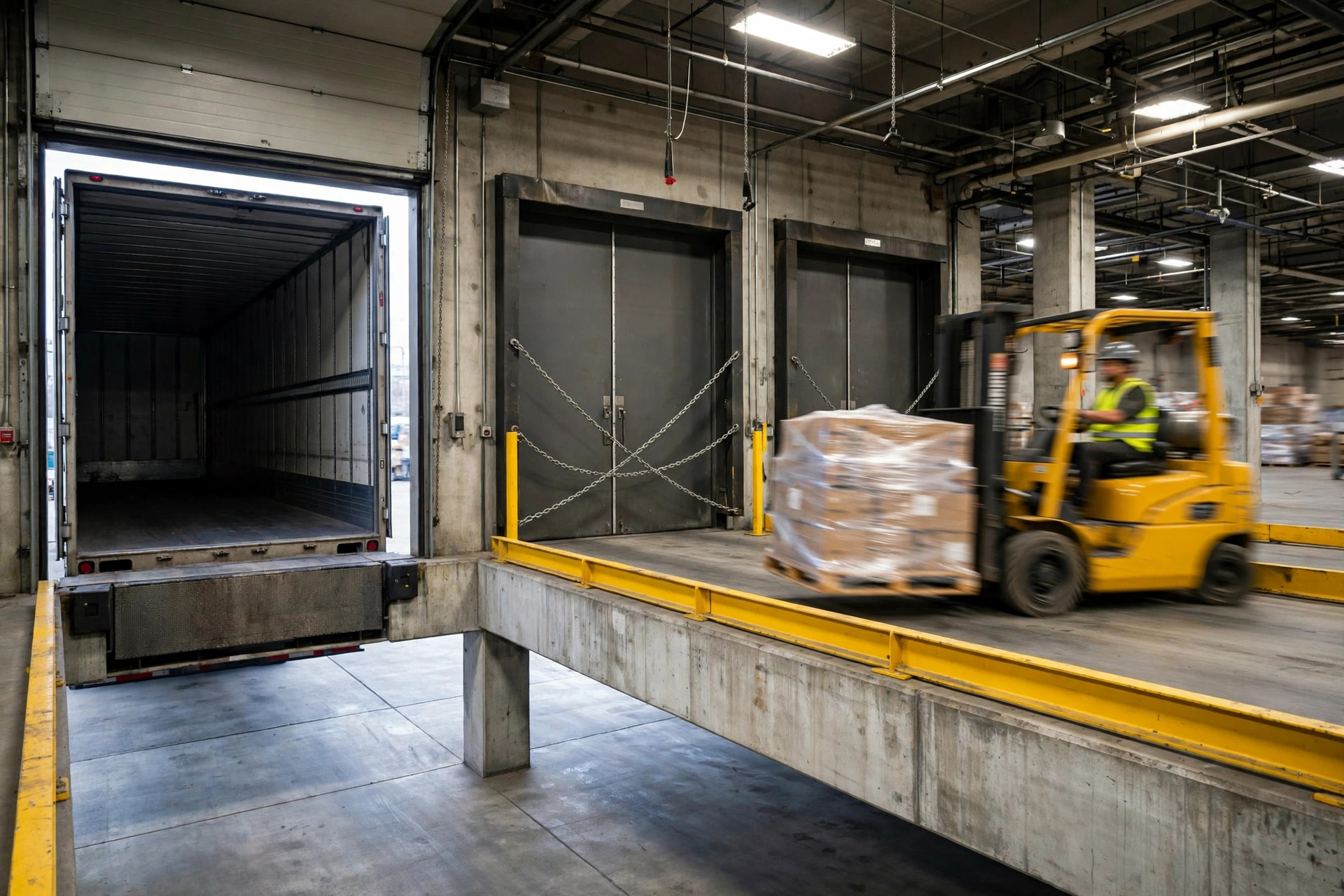
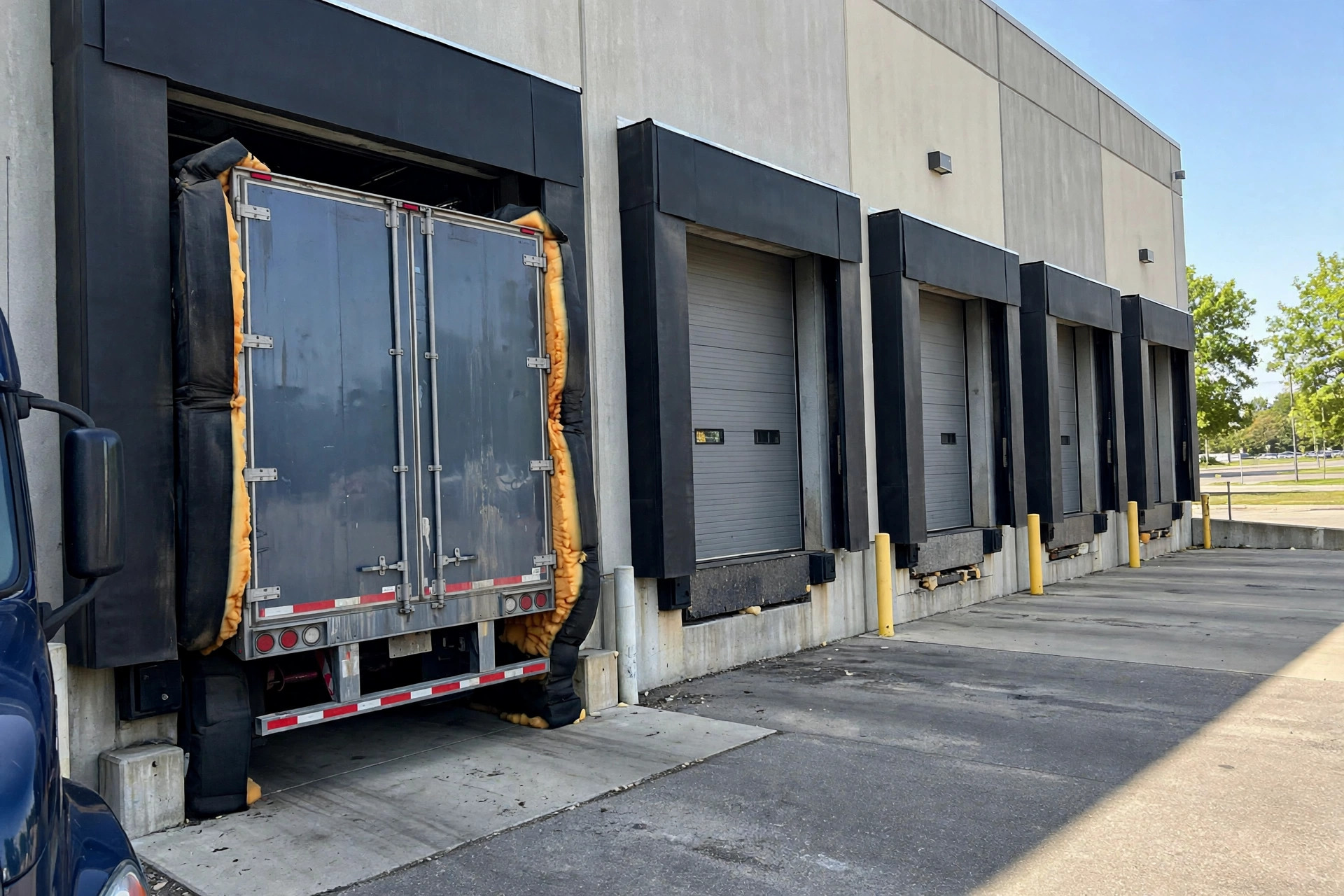
You do not need special tools. Once the trailer is docked and the door is open, stand at the edge of the dock and look at three places. First, the corners where the seal meets the trailer: any curling, fraying, or shiny worn patches. Second, the header curtain: cracks, sagging, or seams coming apart. Third, the fit itself: once the door is closed, step inside and look for daylight or feel for a draft along the edges. Where light gets through, rain and dust get through too, and heated or cooled air escapes right along with them.
I grade wear in three levels, and I write it down, because memory is a terrible maintenance system. Level one is surface scuffing and light fraying at the edges, with the fit still tight. Leave it alone and check it again at the next inspection. Level two is a visible crack, a section that no longer sits flat, or a draft you can feel. That one gets repaired, or scheduled for replacement on a quiet day, and it does not get carried past another season. Level three is a big tear, a bent frame, or a door that will not seal no matter how you dock. Take that door out of service and replace the seal or shelter. Most warehouses I visit do not have a grading problem; they have a nobody-looks problem, and everything stays "fine" until it hits level three.
Here is the counterintuitive part: tighter is not always better. If your fleet runs trailers of different heights, or a door frame is a little out of square, a seal that grips too hard wears out faster and tears sooner. Fit matters more than toughness. The right choice follows the trucks that actually use that door, which is why it pays to think through how to choose between dock seals and dock shelters for your own fleet and freight, rather than picking whatever looks good on a sample.
Dock Shelters: When Repair Stops Making Sense
Seals are about contact; shelters are about cover. A shelter's two enemies are an aging curtain and a bent frame. A small split in the curtain can be patched. But when the fabric turns brittle, the split keeps growing, or the material crumbles when you pull at it, patching is just postponing the same job. A bent frame is worse, because no curtain will hang straight on it, wind catches the loose side, and rain drives in through the crooked edge.
I ask three questions before deciding: does it still seal? Does it still keep rain out? Is the frame straight? One "no" puts it on the replacement list. Two "no" answers mean stop waiting for the budget cycle. This matters most for food, fresh produce, and consumer goods, where a leak is not just a wet floor. Wet packaging, damp cartons, and a slippery dock floor can each cost more than a new shelter.
One more thing drivers notice: do not replace the curtain and ignore the frame. A new curtain on a bent frame will never sit right, and it will tear again before long. On the other hand, if the frame is sound, replacing just the curtain is often enough, and there is no need to tear out the whole unit. I have seen both mistakes, the full replacement pushed on a warehouse that only needed a curtain, and the cheapest curtain slapped on a frame that was already done. Both are money thrown away.
What It Really Costs to Wait
People think replacing dock seals and shelters costs money, and waiting saves money. I tell you, that math is upside down. Let me lay out the bill for waiting. First, there is the drip of small repairs: a patch here, a glue job there, and after enough rounds you have spent a good part of a replacement without getting one. Second, there is lost time: a drafty or leaky door slows unloading, drivers and dock workers work around the problem, and queues build up. Third, there is freight and safety risk: rain on the dock means damp packaging and slippery floors, and one small accident wipes out any savings. Fourth, there is the door itself: a bad seal left in place puts uneven stress on the frame and hinges, and sooner or later the door needs work too.
So my way of doing the math is simple. Do not compare the price of a new seal alone. Compare the total cost of one more quarter of waiting, small repairs plus slow work plus risk, against the cost of replacing it now. Looked at that way, waiting is usually the expensive option. That is not a theory. That is what I have watched happen door after door, warehouse after warehouse.
Two pieces of practical advice, then I will leave it there. If you are a shipper, take one look at the seal and shelter when you dock. If it does not sit right, say so to the warehouse. It is your freight passing through that door, and speaking up is not rude. If you run a warehouse, walk your doors once a month, half an hour is plenty, and grade every door level one, two, or three. Schedule the level twos, and never let a level three wait for peak season. An old saying from the road fits here: a small hole ignored becomes a big hole that costs you. Do not wait until the wind is whistling through to remember the door.
By Shifu Zhao, Trucking Veteran (15 yrs)