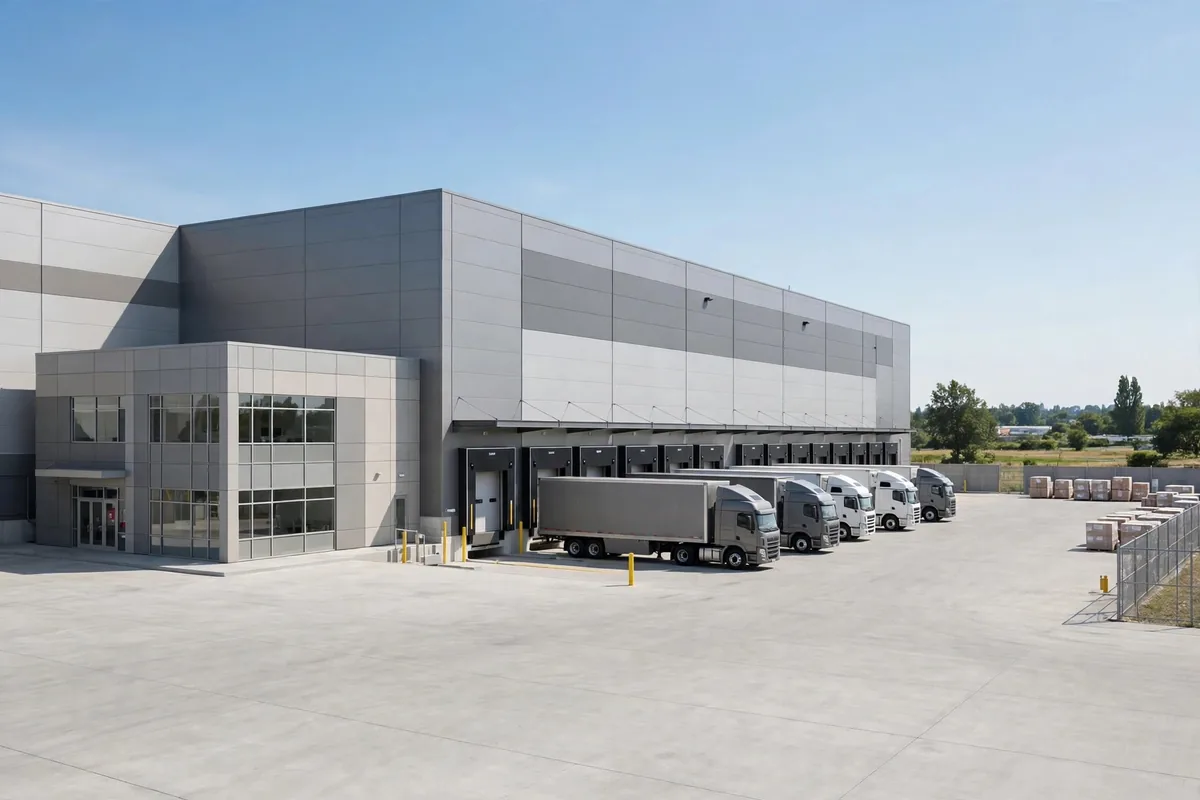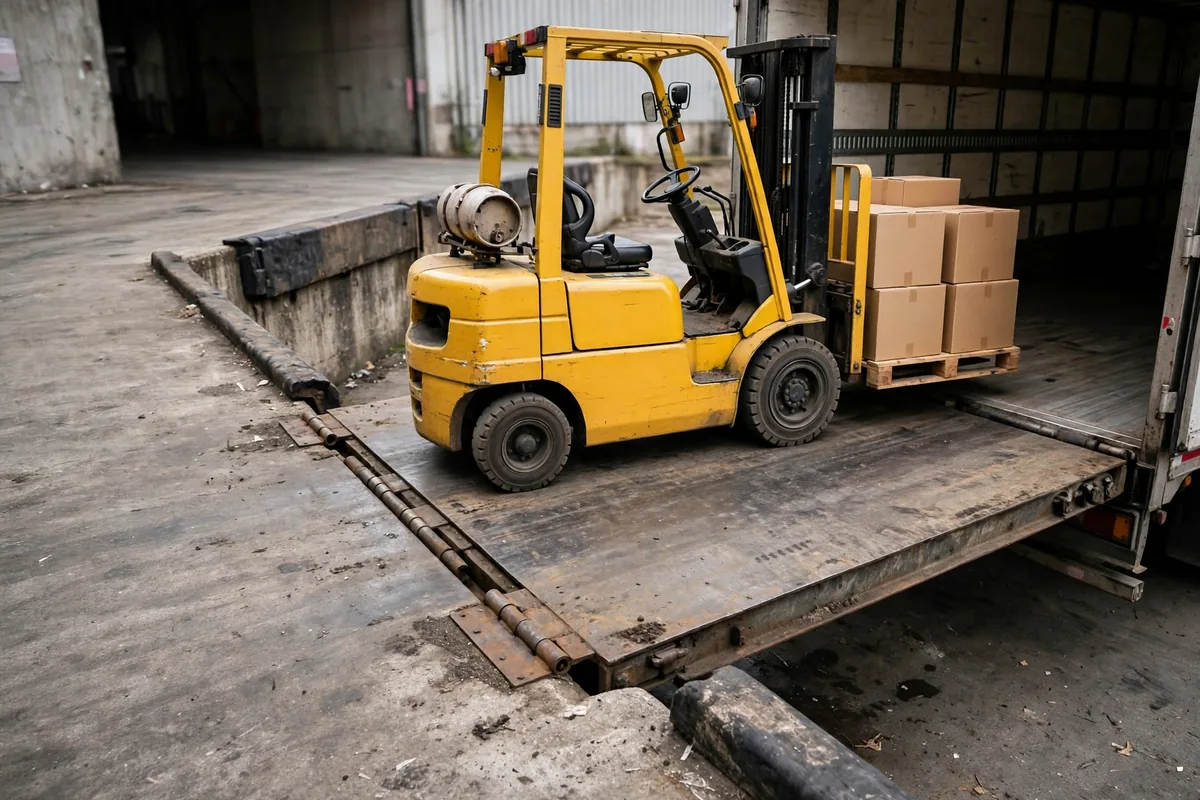
Last October I was walking a 3PL facility in Ontario, California, on an equipment inspection when a forklift crossed a dock plate and the whole dock answered with a dull clang. The steel plate had sagged in the middle and the hinge had cracked on one side. The driver stopped halfway across. The warehouse manager ran over, and his first question wasn't "how do we fix this plate?" It was "can we still use this dock today?" That is the right question. Dock plate maintenance is never really about the repair bill. It is about the downtime clock.
First, Know Your Dock Plate: Maintenance Starts with the Right Definition
Before anyone picks up a wrench, get the terminology straight, because fixing the wrong thing is how this story usually starts. Under ANSI MH30.2-2022, dock plates and dock boards are both portable dock leveling devices, but they are built for different loads. A dock plate is light-duty, designed for foot traffic and hand trucks. A dock board is the heavy-duty version, built for forklifts. They look similar. They are not interchangeable.
Think of it this way: using a plate under a forklift is like plugging an industrial welder into a household power strip. It works right up until it doesn't. You can think of the plate as the deck of a footbridge and the board as the bridge itself. Walk on the deck all you want — just don't drive a truck over it.
I have seen the cheap version of this mistake play out. A warehouse trying to save money used aluminum dock plates as forklift boards. Within three months the deck had cracked and a hinge seat tore clean off (illustrative scenario). The rework cost enough to buy three proper boards, and the dock sat idle for two days in between. Before you repair a plate, read the capacity marking on it. The standard requires portable leveling devices to be marked with their maximum safe load. If the marking has worn off, restore the marking before you talk about repairs.
In-House Dock Plate Repair: The Only Thing You Save Is Labor
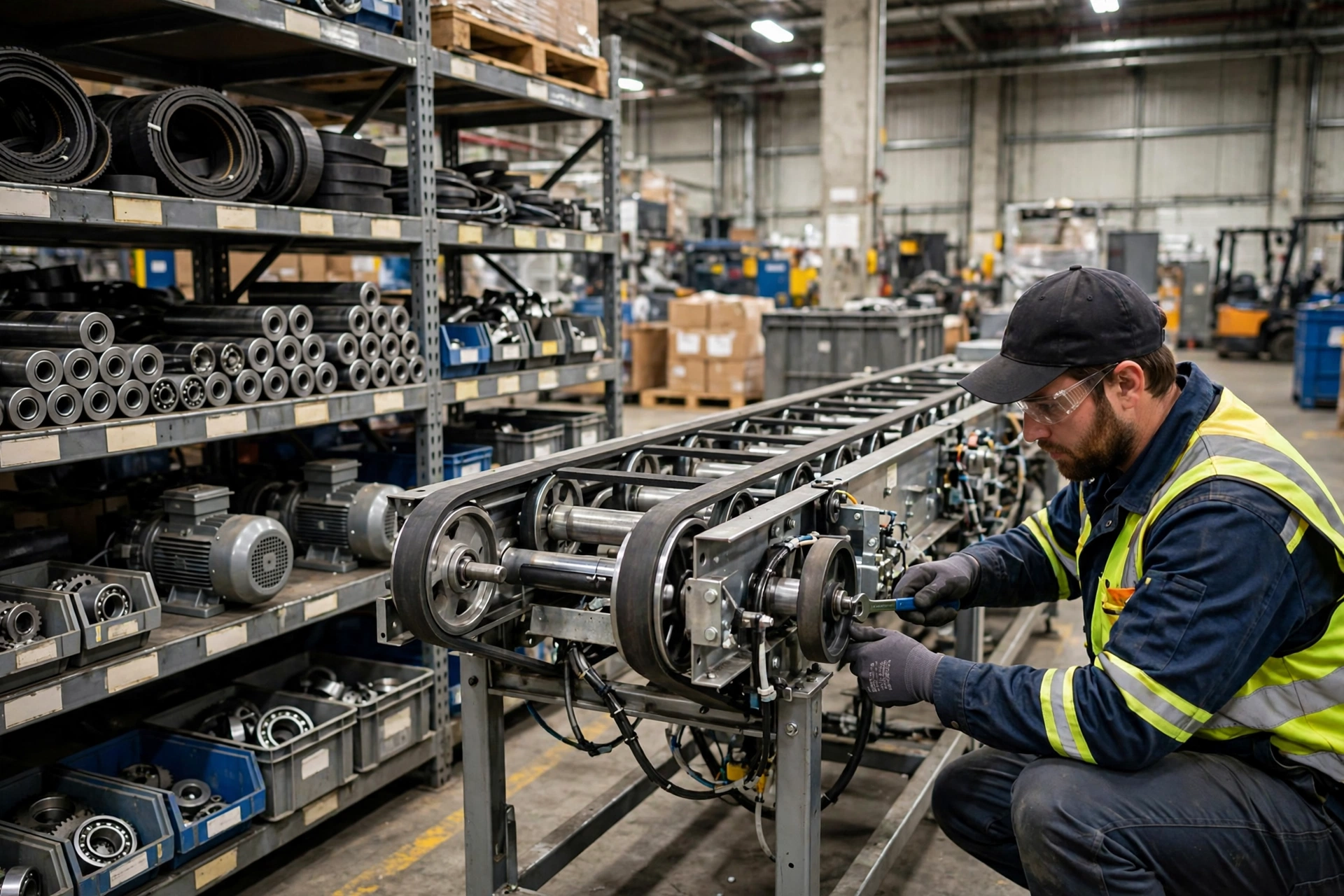
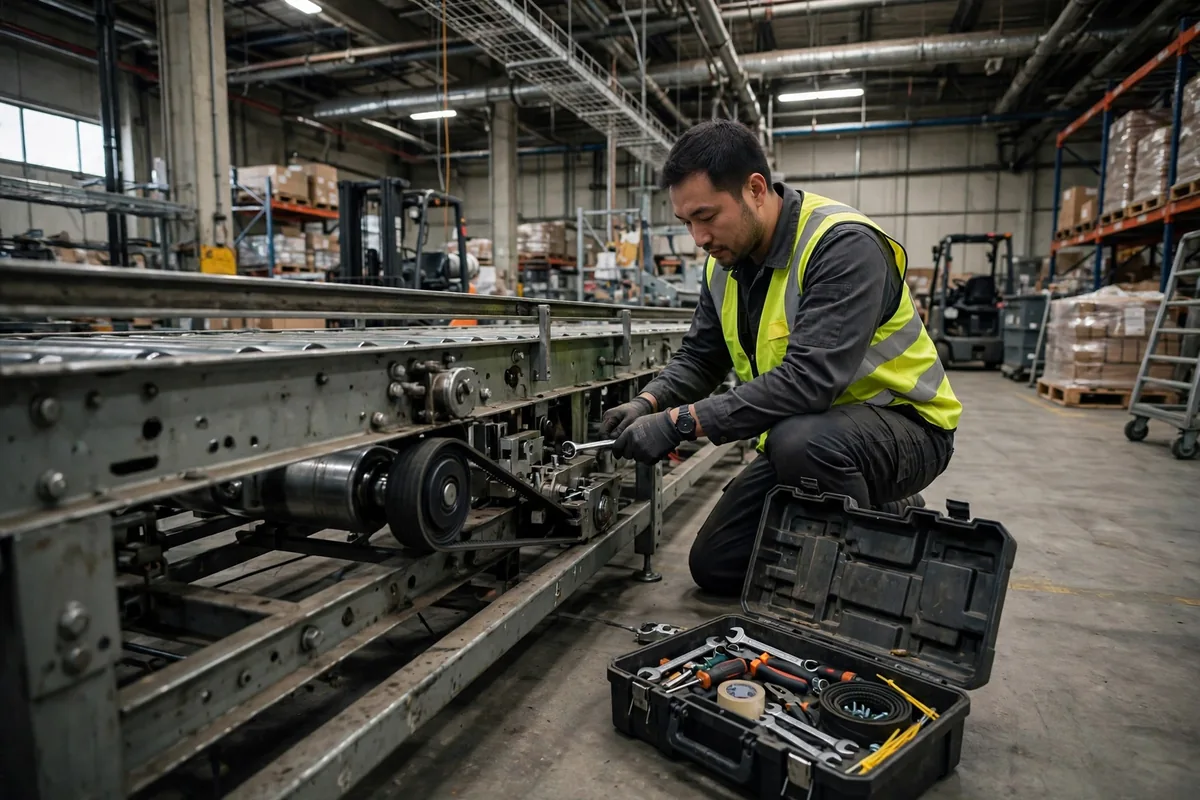
In-house repair is fine — for the right jobs. Replacing a traction strip, tightening hinge bolts, clearing debris from under the plate, touching up paint: these are 15- to 20-minute jobs that any warehouse with basic tools can handle. The cost is a few dozen dollars in consumables and half an hour of labor. Keep a torque wrench, spare hinge pins, and replacement capacity labels on hand, plus an inspection log for every plate.
Two red lines, though. First, never weld a load-bearing seam yourself. Without a qualified welder and a proper procedure, the weld may look solid and still crack under the next forklift — and at that point it is a safety incident, not a maintenance issue. Second, don't try to repair structural deformation. A deck sagging more than a few millimeters or a cracked hinge seat means replacement, not repair. Patching it just hands the risk to the next shift's forklift driver.
The real cost of in-house repair isn't labor. It's judgment. If nobody in the building can tell at a glance how fatigued a hinge is, you saved $200 in labor and bought an unknown failure date. The engineering lead has to be honest about that trade.
Outsourcing Dock Plate Repair: You're Not Buying Labor, You're Buying Response Time
Learn to read an outsourcing quote. Per 2026 published rate surveys, commercial dock service typically runs a $95–$225 trip charge plus $95–$175 per hour for labor, with after-hours and weekend work at 1.5×–2× the standard rate. A single repair with parts usually lands between $500 and $3,000, and a full replacement installed runs $5,000–$15,000 or more. Rates vary by region — confirm the latest pricing with your provider before signing.
Outsourcing comes in three tiers, and the difference is response, not craftsmanship. On-call service is cheapest but can leave you waiting a day or two at peak season. A mid-tier contract with a four-hour response commitment costs more. An annual plan costs the most but includes scheduled inspections: quarterly for high-traffic docks, twice a year for moderate use, once a year for low-traffic docks, with each preventive visit taking roughly 15–20 minutes per unit.
Here is the counterintuitive part: the most expensive tier is often the cheapest overall, because downtime is billed by the hour. Save a few hundred dollars on the service contract and lose a day of dock capacity, and you have paid for that saving several times over.
One related note: portable dock plates and fixed dock levelers do not share a maintenance logic, and hydraulic and mechanical levelers have different service priorities. That decision should be made at selection time, not after both fail at once. The comparison of hydraulic vs. mechanical dock leveler maintenance lays out how the two designs differ in upkeep — worth reading against your service contract before you sign, so you don't discover the contract only covers half your dock equipment.
Downtime Is the Real Ledger in Dock Plate Maintenance
Put the three options side by side and the picture gets clear. The table below uses illustrative figures for a single dock and a single failure:
| Option | Direct cost | Response | Downtime (illustrative) | Best for | | In-house | A few dozen dollars in parts | Immediate | 0.5–2 hours | Traction strips, loose bolts, small jobs | | Outsourced emergency call | $500–$3,000 | 4 hours–2 days | 4 hours–2 days | Structural damage, no in-house skill | | Outsourced annual plan | ~$75–$200 per visit, amortized | Within 4 hours | 2–4 hours | High-traffic docks that can't stop |
Now run the downtime math — all figures illustrative. One dock down for four hours: two forklift drivers idle, one truck stuck at the dock, 40 outbound orders pushed to the next day. At an assumed internal cost of $600 per hour, that's $2,400 — enough to pay for four emergency service calls. Published industry estimates put a single dock's downtime at roughly $1,200 per hour, which is the same order of magnitude. The few hundred dollars of repair cost is not the main character in this story.
So my verdict is this: the most expensive part of dock plate maintenance is neither the part nor the labor. It is the two hours you spend standing in front of the broken plate, deciding. When a plate fails, ask what an hour of downtime is worth before you ask what the repair costs. Get the order right.
Whether the money is worth it comes down to one number: what is one hour of downtime on that dock worth to you? Work it out, write it on the whiteboard next to the dock, and the next time a plate fails, nobody needs a meeting. Just follow the number.
By Da Liu, Automation Engineer