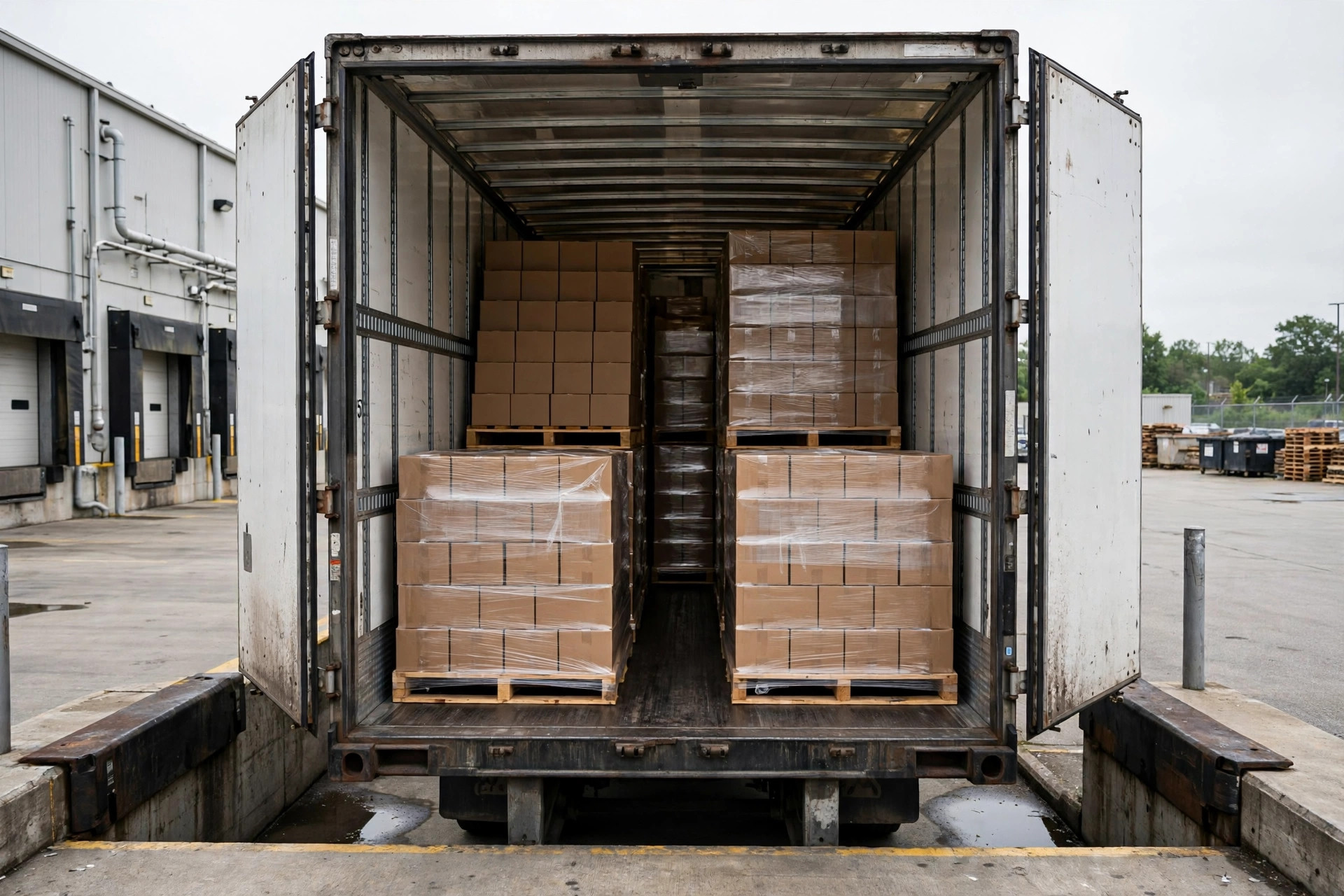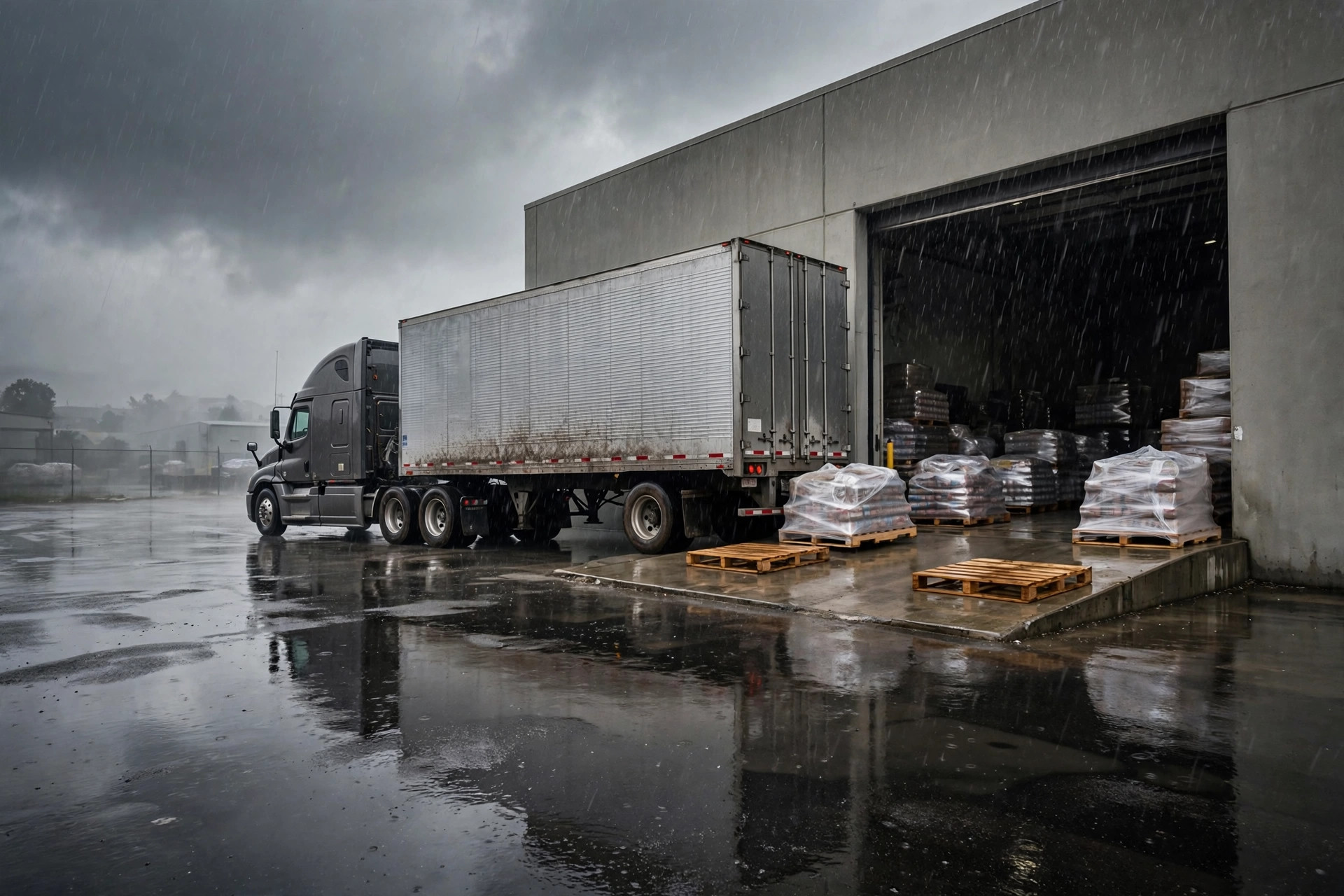
Let me tell you something. Fifteen years behind the wheel, and the thing I dread most isn't the long night haul. It's pulling up to a dock with no canopy just as the sky turns ugly.
A few summers back, I was hauling a load of home textiles into a warehouse outside Savannah, Georgia. Old building, bare dock, not a scrap of cover over the doors. It was clear when I rolled out that morning. Half an hour after I arrived, the clouds piled up and the rain came down like somebody upended a bucket. The warehouse guys said, "Let's wait for it to ease up." So I waited. Two hours, sitting in the cab with the AC running, rain hammering the roof, fuming the whole time. There goes my morning.
When the rain finally let up, we started unloading. Pallets came out of the trailer, and then the rain came back in waves. The forklift driver sloshed back and forth through puddles. The outer cartons were soaked through. The receiving crew dragged pallets inside, bottoms sitting in standing water, moisture wicking up the boxes layer by layer. My stomach dropped. This freight was in trouble.
Sure enough, the shipper's inspection found a dozen-plus cartons of fabric on the bottom layers damp and spotted with mildew. Half a pallet got rejected. That day taught me a line I never forgot: a dock with no canopy is a money fire in rainy season.
Here's what that story tells you. A missing dock canopy looks harmless on a dry day. But in rainy season, one good storm can torch half a small warehouse's profit for the quarter. I've seen it too many times in fifteen years. Today I'll walk you through the math, line by line.
I've also seen the other side. Last summer in Memphis, Tennessee — same kind of downpour, but the dock had a canopy. I backed straight under it, the forklift ran dry trips back and forth, and we were unloaded in forty minutes flat. The receiving kid even joked, "Rain all it wants, brother, none of our business." Same rain, canopy or no canopy — two completely different days.
What One Rainstorm Really Burns: A Rainy-Season Receiving Loss Breakdown
Let's use that Savannah day as the example and add up what one storm really costs. These are real dollars, not scare talk.
| Loss item | How it adds up | Roughly |
|---|---|---|
| Damaged freight | Two pallets of home textiles soaked, bottom dozen-plus cartons scrapped; about $2,000 in goods per pallet | $2,000–$3,000 |
| Idle labor | 4 workers standing around for 2 hours; US warehouse workers average about $18/hour (job-site data) | ~$150 |
| Driver detention | Industry norm is about 2 hours free, then $30–$75/hour; 2 extra hours at $50/hour | ~$100 |
| Equipment water damage | Forklift ran in the rain all afternoon, one small electrical repair | $300–$500 |
| Total | $2,500–$3,500 |
See that? One storm, two to three thousand dollars gone, easy. And that's before the unmeasurable stuff: the shipper's opinion of your warehouse just tanked, and whether they send you the next load is an open question. Drivers like me will avoid a canopy-less dock next time — waiting out the rain costs us money nobody reimburses.
One more honest word on detention pay. In theory, you're owed money after the free two hours. In practice, plenty of small shippers just refuse to pay it, and the driver stares at the ceiling. So that cost usually lands on the driver and the carrier anyway.
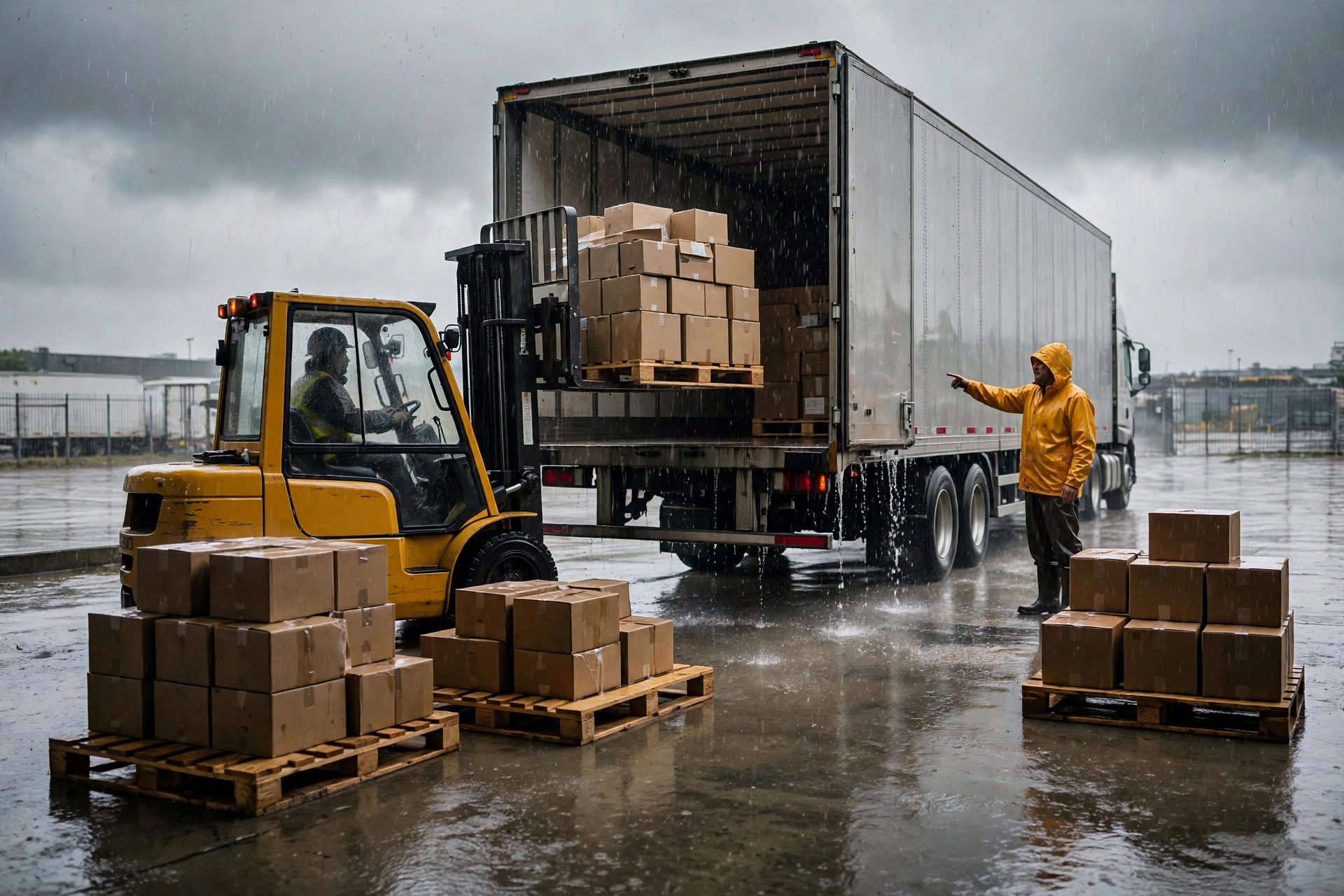
How Much Does a Dock Canopy Actually Cost?
The moment you say "canopy," people hear "expensive." I'm telling you, it's not — not next to what one storm costs. I asked around and got real US price ranges (they swing a lot with size and material, so treat these as ballpark):
| Option | Rough cost | Fits |
|---|---|---|
| Retractable dock shelter per door | About $2,000 per dock door | Small docks, install per door |
| Canopy frame kit | $2,300–$2,750 per kit | Temporary covered work area outside the dock |
| Fabric canopy structure | $15–$35 per square foot | Full coverage over the whole loading zone |
Do the middle math: a 6-door dock, six shelters, about $12,000 all in. And one storm burns $2,500–$3,500. That means four or five bad storms pay for the entire canopy. In the Southeast or along the Gulf Coast, how many downpours do you get in a rainy season? You can do that math yourself.
The Uncomfortable Truth: A Canopy Is Insurance, Not Decoration
Plenty of folks treat a canopy as a vanity project — "we already pay rent, why spend more on a roof?" Here's the contrarian take: a dock canopy is the cheapest insurance a warehouse can buy.
Think about it. You buy cargo insurance, right? Thousands a year in premiums. A canopy is a one-time spend that lasts the better part of a decade and guards against the single most frequent receiving risk: rain. That's not decoration. That's risk control.
And here's the sharper one: even a rented warehouse is worth negotiating over. Plenty of small operators lease and think, "not my building, why gift the landlord a canopy?" Wrong. Go talk to the landlord — either they pay and amortize it in rent, or you pay and get a credit when you move out. Landlords aren't dumb: a dock with a canopy leases faster and sits empty less. They want it as much as you do. The real loss is never asking.
I once saw a Texas operator take the cheap way out: a dozen big tarps thrown over pallets whenever it rained. Did it work? The wind ripped them off and the freight got soaked anyway. He told me he was "making do." I told him, "Brother, you replace those tarps twice a year. Three years of that buys you a real shelter — and you get to stop holding your breath every storm."
One Question Every Shipper Should Ask
If you're the shipper, ask the warehouse one question before you sign anything: "Does your dock have a canopy? What's your rainy-day receiving plan?"
That single question filters out half the sketchy operators. A warehouse that won't make this small investment — do you really think they'll treat your freight right in a storm? Dream on. I'll happily pay 5% more for a warehouse with a canopy — one storm's avoided damage earns that 5% back and then some.
Don't just stare at the per-pallet rate on the quote. Ask two follow-ups: what's the rainy-day receiving procedure? How do you handle freight that gets wet? Is there a backup plan? Three questions, and the good ones reveal themselves instantly.
Three Straight Answers for Warehouse Operators
First: run the loss math before you decide. Add up last rainy season's ruined freight, idle labor hours, and detention you paid out. Compare that number to a canopy quote. Nine times out of ten, the quote is cheaper than you think.
Second: install before rainy season, not during it. Every year it's the same: once the rains come, every installer is booked solid and prices climb. Install in the dry season — cheaper, faster scheduling, and you pick your day.
Third: write it into the receiving procedure. Rainy-day rules: truck backs under the canopy first, pallets never sit in standing water, wet pallets get isolated and inspected separately. A canopy with no procedure is the same as no canopy.
Fifteen years, close to a thousand docks. Here's my honest take: warehousing comes down to details in the end. A canopy is the kind of small thing nobody praises you for — until rainy season arrives, and then the difference is obvious.
There's an old saying where I come from: fix the roof on a sunny day, or don't complain when it leaks in the rain. Get this done before rainy season. Don't wait for a storm to burn your money before you remember what old Shifu Zhao told you today.
By Shifu Zhao, Trucking Veteran (15 yrs)