We have a client who ships building materials and everyday goods into Ethiopia. When he first called me, his request sounded perfectly reasonable: "Get me a warehouse right by the Port of Djibouti, as close as possible. I don't want delays on the road." By the time we had walked through djibouti corridor warehouse ethiopia logistics end to end, he changed his own mind. Keeping everything at the port, he realized, might mean keeping it in the wrong place.
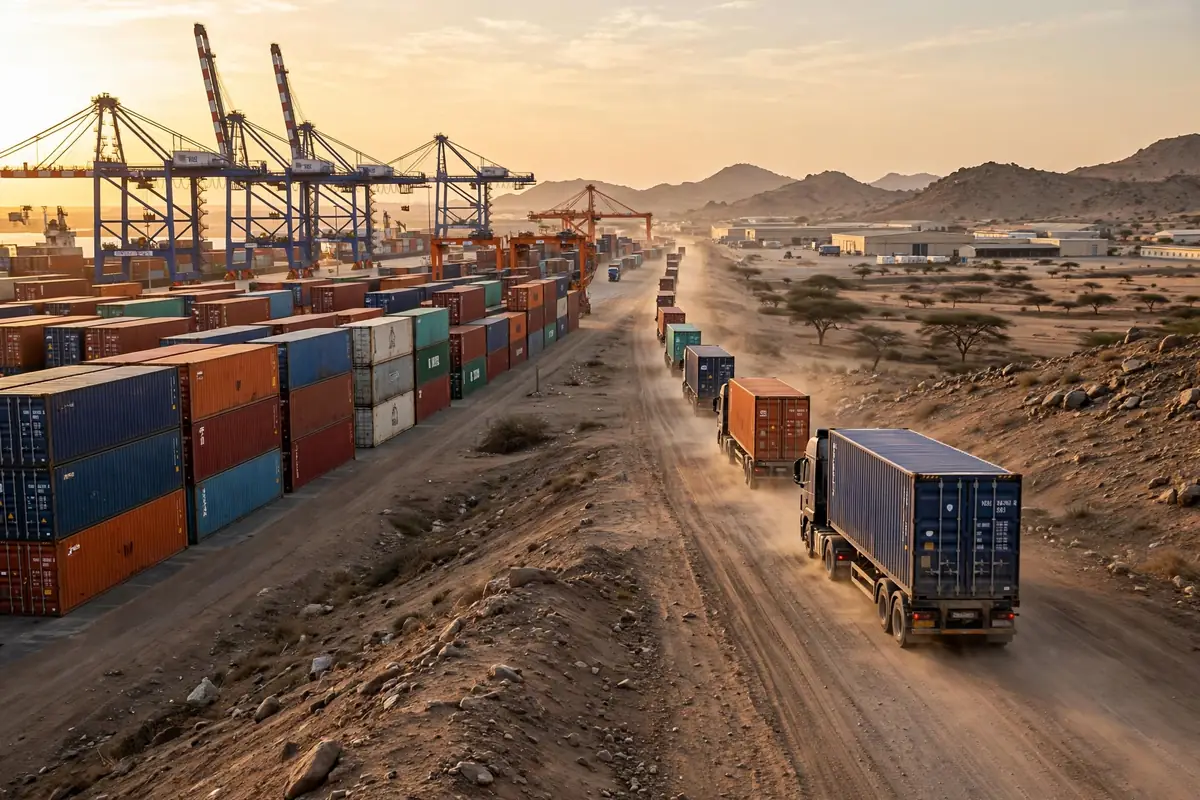
Corridor business is not local warehousing. With a local warehouse you count rent and labor. On a corridor you count three stretches: how long cargo sits at the port, how long it travels inland, and how long clearance holds it up. If nobody owns one of those stretches, your freight just lies there burning money. He did not believe me at first, so we talked about his own cargo.
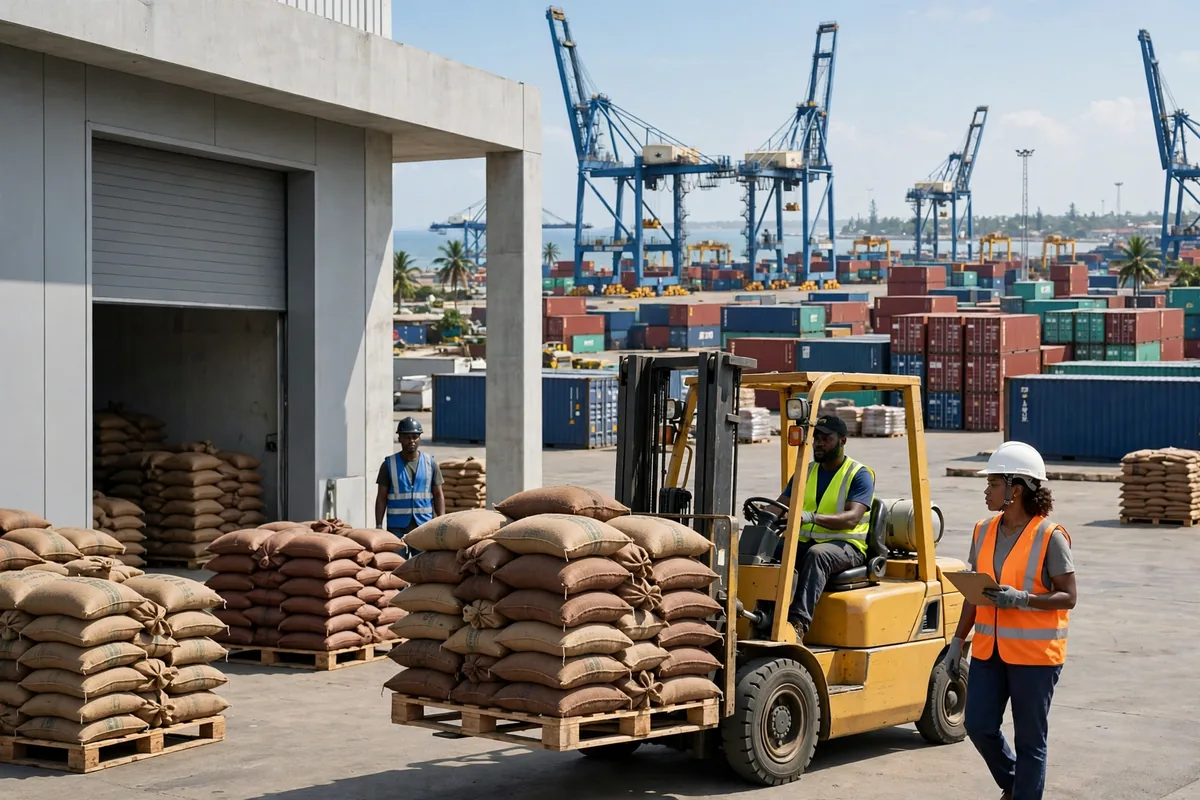
His trial shipment was a run of containers with tiles and sanitary ware meant to reach job sites around Addis Ababa before the busy season. Everything was broken down and distributed from a port-side warehouse. Then one origin detail on the paperwork failed to match the packing list, and the whole batch sat at the port for more than an extra week. A port-side warehouse reacts fast because it sits next to the vessel. That is also its weakness. It is a transfer point, not a place to store cargo for long. The longer freight stays, the uglier the storage and delay bill gets, and those charges always follow the latest official and carrier quotations, which is why I never lock a number verbally outside a contract. For a week, he called me every day asking where his goods were. My answer never changed: nothing is lost, it is stuck on paper.
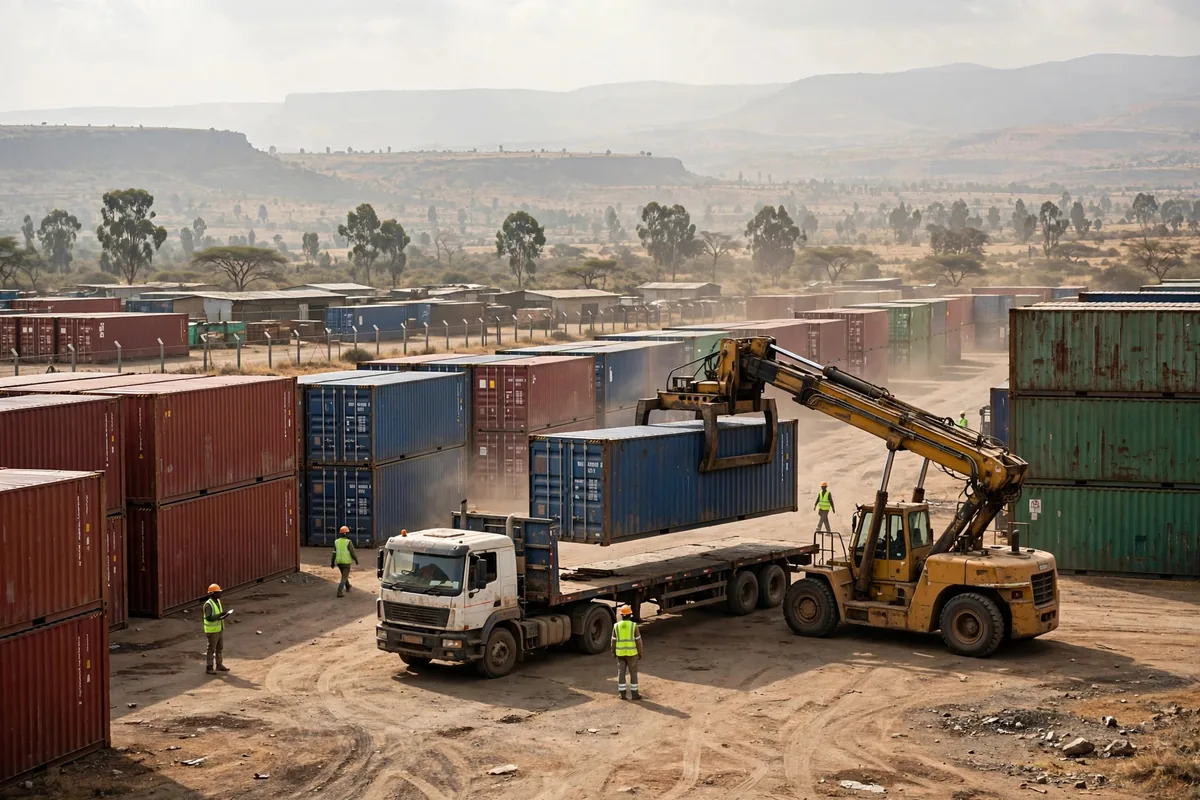
On the next shipment we flipped the plan. Steady, high-volume freight moved inland as early as practical toward a dry-port distribution point in the direction of Modjo, closer to the end market, where it could be split and delivered regionally. The port kept only a small buffer of fast-moving stock. That split is the heart of this corridor, so let me break it down.
Djibouti warehouse or Ethiopia dry port: how the split actually works
Here is the counterintuitive part: the warehouse closest to your cargo is not necessarily closest to your customer. Many buyers hear "inland dry port" and picture something remote and slow. For a country like Ethiopia, where demand concentrates inland, the opposite is often true. The earlier freight completes the long haul and gets near the market, the shorter your final delivery radius becomes and the easier last-minute reallocation gets. Port-side space suits receiving against unstable vessel schedules, consolidating and deconsolidating, and short holds while documents come together. A dry port suits planned, batch freight that can move straight into regional distribution on arrival.
Another client, an agricultural machinery parts dealer, proved the point from the other side. His shipments were small, mixed, and urgent, and pushing everything inland with no port buffer would have left small orders waiting for a transfer his dealers could not accept. We settled on a small port-side buffer for fast movers and inland storage for bulk lines, reconciled under one inventory view. He later told me his real fear was never rent. It was the two sites disagreeing on stock while his sales team promised freely up front. Exactly, I told him. Choosing corridor space is not about distance. It is about which stretch of the journey fits your cargo profile.
This is the comparison table I use in negotiations. I deliberately leave numbers out, because fees follow the latest official and carrier quotations. Read the structure, not a price:
| Factor | Port-side warehouse in Djibouti | Inland dry port, Modjo direction |
|---|---|---|
| Distance from vessel | Short dray after discharge | Requires rail or road long haul |
| Best-fit cargo | Fast movers, consolidation, document holds | Steady batches close to end demand |
| Main risk | Cost build-up on long stays, port congestion | Transit time variability, local fleet dependence |
| Inventory play | Small, high-frequency buffer | Bulk break and regional delivery |
| Contract focus | Free time and overstay terms | Transit clock start and receiving acceptance |
Once you see the table, djibouti corridor warehouse ethiopia logistics stops being a question of where the warehouse is. The real divide is how long cargo dwells in each stretch and who is responsible for pushing it. Before choosing, lay out your own shipping rhythm: Are batches steady? Are documents clean? How urgent is the end customer? Answer those three and the choice mostly makes itself.
Where corridor logistics paperwork actually stalls freight
On a corridor, freight gets stuck on paper, not on the road, eight times out of ten. In the files I have handled, three patterns repeat. First, inconsistent documents: one field that fails to line up across the bill of lading, packing list, invoice, and origin information can send clearance into a correction loop while cargo waits at the port. Second, broken handoffs: the ocean leg ends before the inland leg's paperwork is ready, and each carrier waits for the other to move first. Third, incomplete receiving details: contacts, tax-related information, and delivery appointment requirements at the inland end were never confirmed, so the truck arrives and cannot get in.
One more detail catches people out. Peak seasons and public holidays do not align at both ends of the corridor. One side is closed while the other is chasing freight, and document flow slows by half a beat. A client of ours lost several days to exactly that, waiting on a single signature for uncomplicated cargo because the holidays fell out of step. Since then, every corridor client gets the same advice from me: pre-check the full document pack before the vessel sails, not when it docks. Obvious, and almost nobody does it.
So when you buy djibouti corridor warehouse ethiopia logistics services, do not start with rent and freight rates. Ask three things first: Who pre-checks the documents? Who watches the handoff between legs? When something breaks, who answers first in the group chat? If a provider cannot answer those, I would be careful no matter how low the quote looks. On a corridor, much of what you pay for is certainty, not distance.
The corridor clauses your contract must spell out
Now the part I actually do for a living: the contract. The worst corridor contracts read like separate islands, ocean with ocean, warehousing with warehousing, inland with inland, so when something fails, everyone says it is not theirs. Before you sign, pin down at least four things.
First, the transit clock. Do not accept one total number of days. Define when each leg starts and ends: from discharge or from complete documents, and whether arrival means at the port warehouse gate or checked in at the inland site. Without that, even an argument about delay goes nowhere. Second, custody handover points. State who holds the cargo on each leg, who signs for it, and who carries loss or damage, with an actual signed handover, not an assumption. Third, the fee boundary. Say clearly what the quote includes and what it does not, especially overstay, document amendment, and re-transfer charges, and whether those settle at the latest official and carrier quotations, as incurred, or under a cap. Fourth, exception reporting. How quickly must a delay be reported, to whom, and does the provider owe you an alternative plan? Written in the contract, that clause is worth more than a dozen phone calls later.
Run the illustrative numbers and it sharpens. The same batch, held entirely at the port, saves inland coordination but gives the savings back, and more, after a week of extra dwell charges. Moved inland promptly, it pays for one more transfer leg and saves the dwell plus repeated terminal delivery trips. Neither plan wins in the abstract; it depends on whether your cargo can afford to sit.
Next time you negotiate, remember to ask these three questions: When exactly does the transit clock start? If documents stall, whose delay is it? And during the gap when nobody has signed for the freight between legs, whose name carries the risk? Treat djibouti corridor warehouse ethiopia logistics as one continuous line of responsibility instead of three cheap segments stitched together, and your freight is already most of the way to safe.
By Susan, 3PL Sales Director