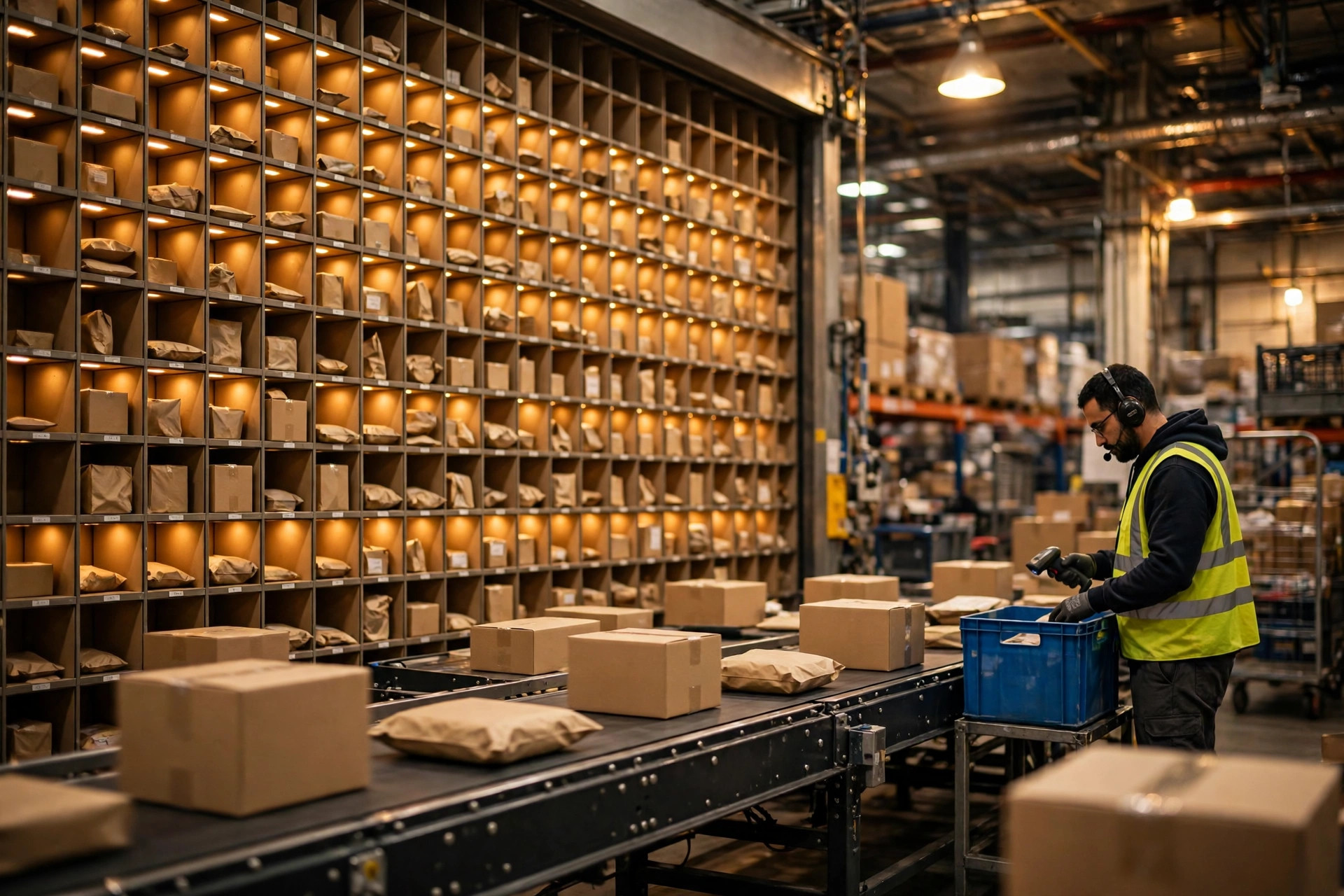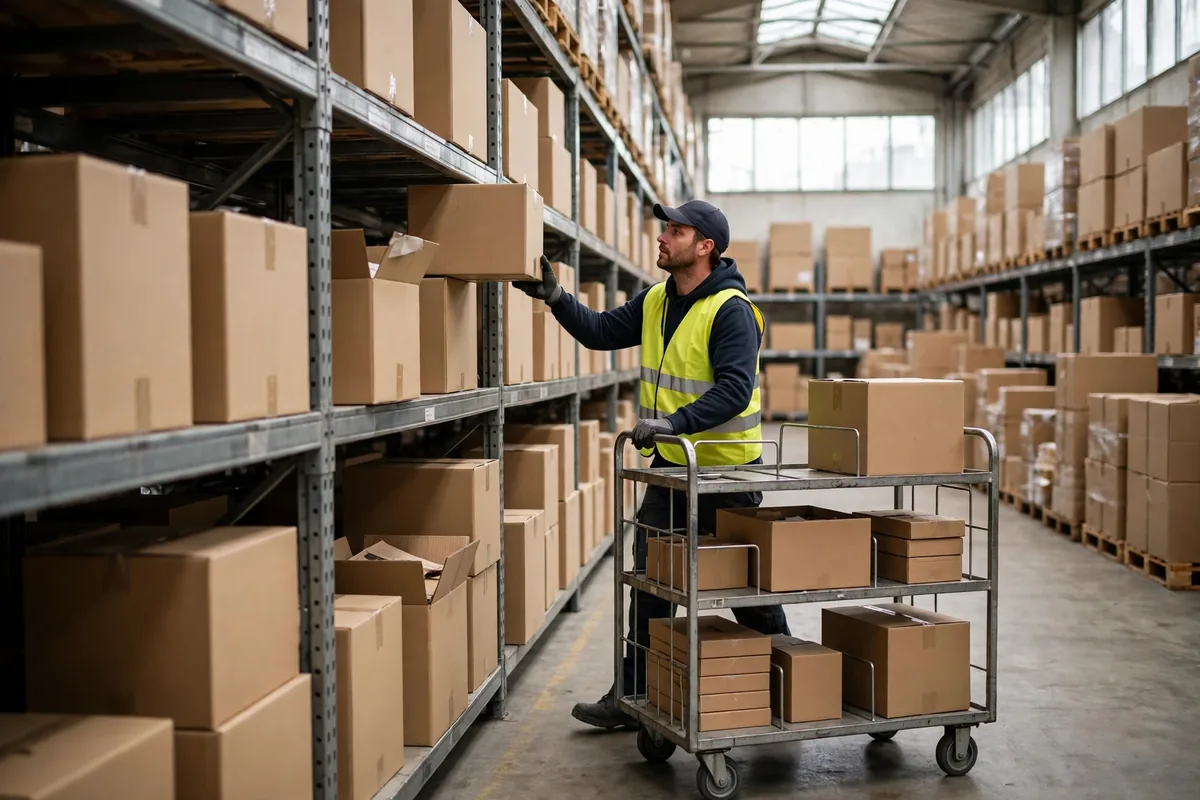
We run a small warehouse, and we cannot afford expensive mistakes — in money or in tuition fees. In our first year, I heard that batch picking was the advanced way, so I converted the whole warehouse to it in one go. That was my first lesson in discrete vs batch picking: order volume did not keep up. Pickers walked back and forth between racks, and the packing bench piled up with orders waiting to be sorted. Every day I kept doing the same math: does walking cost more, or does sorting cost more?
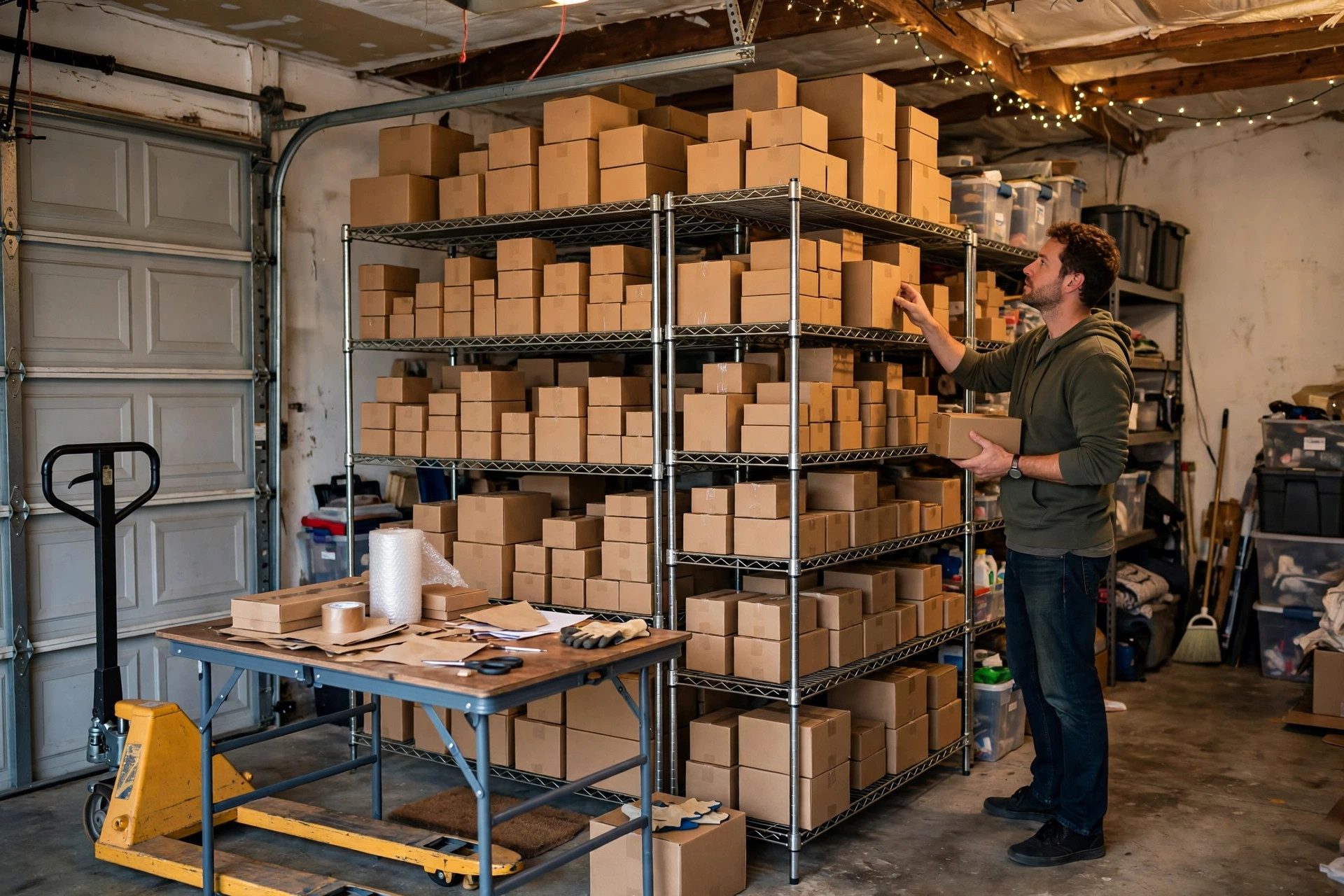
Our warehouse is 3,000 square meters with six pickers, and daily volume floats around 120 orders. To a big warehouse that barely counts as a warm-up, but for us every order's labor is real money. I used to look down on discrete picking as a crude method for shops without a system. It took a painful month to learn that the crude method has its own logic.
Discrete vs Batch Picking: The Mess We Made
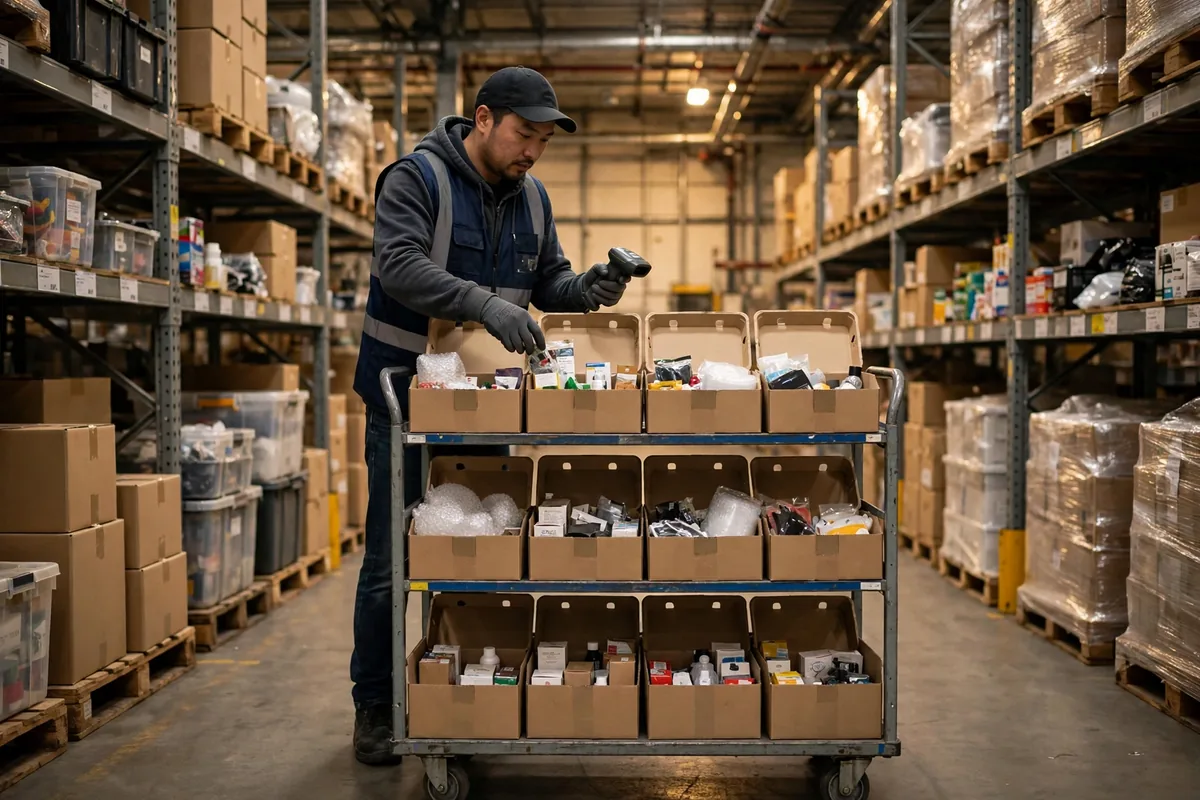
Here is the hole we dug ourselves into. In March 2025, a new client pushed us to 260 orders a day, and I switched to batch picking: 20 orders per run, then sort everything at the packing bench. The first two days looked beautiful — one trip brought back plenty of goods. By day three, the problems arrived together. Half the orders were single-item orders, so sorting 20 orders meant splitting goods across 20 bins, and one wrong bin meant reworking the whole batch. Worse, half the client's goods were home items in wildly different sizes, so the cart could not hold a full batch and needed two trips.
Our error rate more than doubled that week, and the packing bench worked until 11 p.m. Our packer complained that sorting until his eyes blurred meant misreading one digit on a bin label and sending the whole order to the wrong customer. Returns made it worse: one returned item meant searching three bins to find the original order. I did the math: the walking time batch picking saved was eaten up by sorting and rework, plus overtime pay on top. A small warehouse has its own way of surviving, and a big warehouse's advanced practice is not automatically advanced for us.
Discrete vs Batch Picking, Decided by Volume
The dividing line is not in a textbook. It sits in your daily volume and your order mix. I laid out our own numbers — assuming 30 yuan an hour for a picker and the same for a packer — and the picture was clear:
| Mode | 120 orders a day | 260 orders a day | | Discrete picking | 14 orders per picker-hour, no sorting, few errors | 11 orders per picker-hour, walking time explodes | | Batch picking | 12 orders per picker-hour, sorting eats the savings | 18 orders per picker-hour, scale finally pays |
See the pattern? At low volume, discrete picking is actually faster, because it skips the sorting step entirely. Only when volume climbs does batch picking's scale effect outweigh its sorting cost. The decision framework is three questions: does daily volume pass 200 orders? Do single-item orders pass half of all orders? Are your goods wildly different in size? Two yes answers mean batch picking is worth a trial; three no answers mean stick with discrete picking.
Here is the counterintuitive part: discrete picking is not backward — for a small warehouse it is a moat. When single-item orders dominate, discrete picking means pick-and-check in one motion: goods pass through one pair of hands from rack to packing bench, and errors stay low. Single-item orders are 60 percent of ours now, and our discrete picking error rate holds below three per thousand, with fewer customer complaints than during our batch experiment.
Our Scrappy Fix: Mix the Two
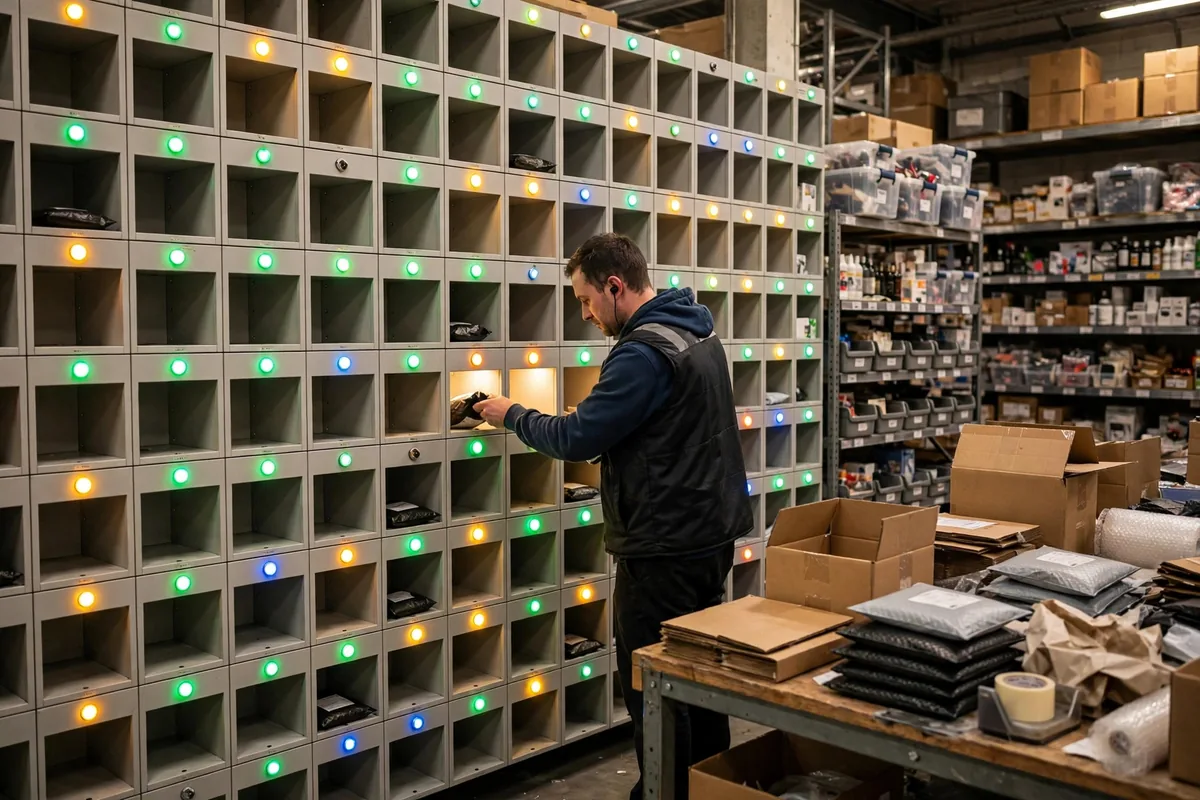
Our current method sounds crude, but it works: single-item orders go discrete, with the picker walking straight to the rack and on to the packing bench; multi-item orders run in batches of 10, sorted on a simple put wall. We built the put wall ourselves from rack dividers for under 500 yuan, with order numbers taped on each bin, and the packer sorts against them with almost no mistakes. The wall stands right beside the packing bench, so a picker coming back does not walk extra steps — drop the goods, turn around, and take the next order. When bins run short, we add two cardboard boxes as temporary bins; ugly, but it gets us through peak season.
Take one day in September 2025: 210 orders, 130 single-item and 80 multi-item. Single-item orders ran discrete at 15 orders per picker-hour; the multi-item orders finished in 8 batches, and sorting took only 40 minutes. All six of us finished by 5 p.m. with zero overtime. After three months of this mix, our cost per order ran about 20 percent lower than during the pure batch period, and the error rate stayed put.
Shifting Gears When Volume Climbs
Volume does not stay still, so the moment to shift gears deserves thought in advance. Our rule: when daily volume passes 200 orders for two straight weeks, we raise multi-item batches from 10 to 15 orders; when it passes 260 for a full month, we consider pulling the single-item category with the highest repeat rate into batches on its own. Never shift everything at once — change one category, run it for a week, and watch three numbers: orders per picker-hour, minutes spent sorting, and orders gone wrong. Only expand when all three look good. The reverse applies too: when volume falls, shrink the batch, because holding a big batch means sorting time outweighs the walking saved, and that is just inventing work for yourself. In the slow season we even take down half the put wall — fewer bins, faster sorting. It sounds backwards until you do the math. do not worship the big warehouse playbook — count your own daily orders first; when single-item orders pass half, discrete picking is the answer; and if you want batch picking, trial it on one product category for two weeks, let the data decide, and roll back if it fails. During those two weeks, write down three numbers every day: orders per picker-hour, minutes spent sorting, and how many orders went wrong. Put the three numbers on the table and the better method shows itself without anyone needing to argue for it. Systems can come later. Win today's battle with the scrappy method first.
A small warehouse has its own way of surviving, and forcing batch picking before volume earns it is just picking a fight with your own wallet. That is the whole lesson of discrete vs batch picking for us: let the order count decide, not the fashion.
By Xiao Ma, Small Warehouse Owner