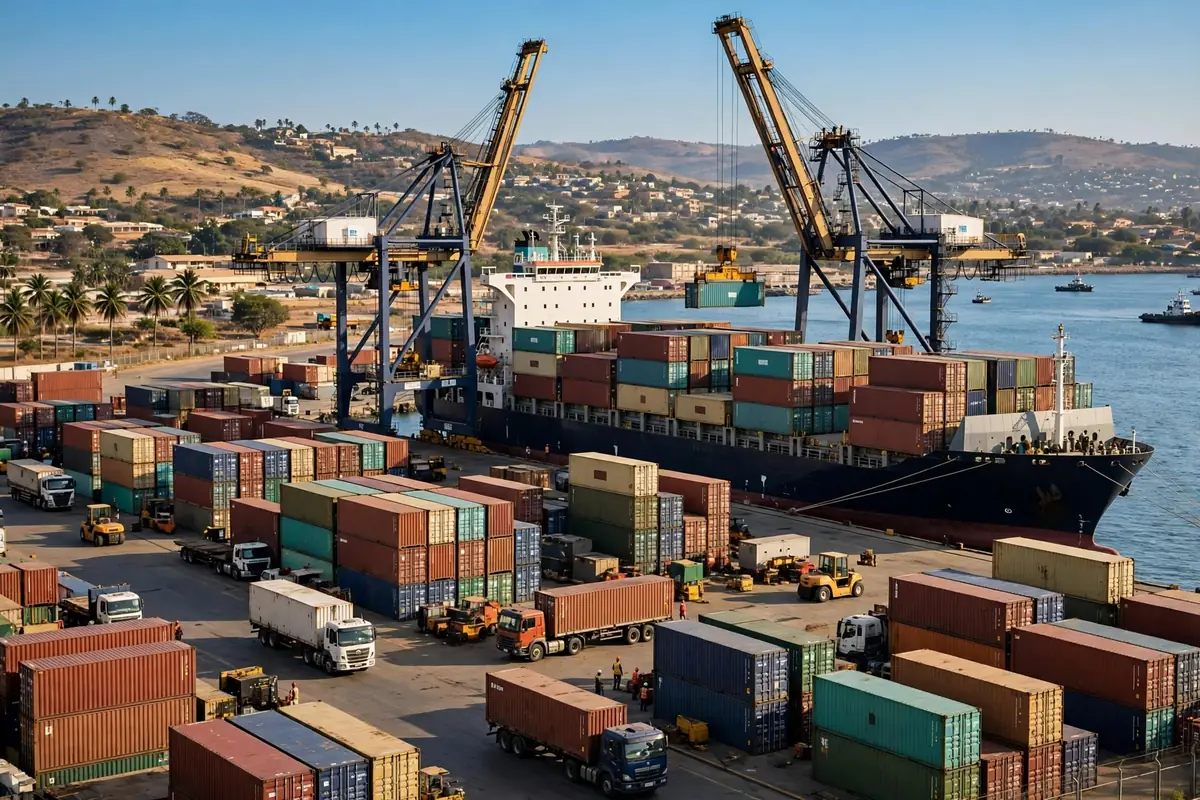
We had a client shipping mining equipment spares, and his Dar es Salaam port warehouse plan fell apart in the first month. The vessel berthed, the boxes came off in three days, and then the cargo sat for the best part of a month — queuing for pickup, waiting in a warehouse, crawling toward the Zambian border — while the mine site waited for parts and the downtime bill climbed. He called me furious, asking whose fault it was. I told him the honest answer: the port has genuinely got faster, but "the port got faster" and "the cargo got faster" are two different things in East Africa. The port is only the first link. After it come the dry port, the border, and the inland highway, and every one of them can eat the time the port just saved.
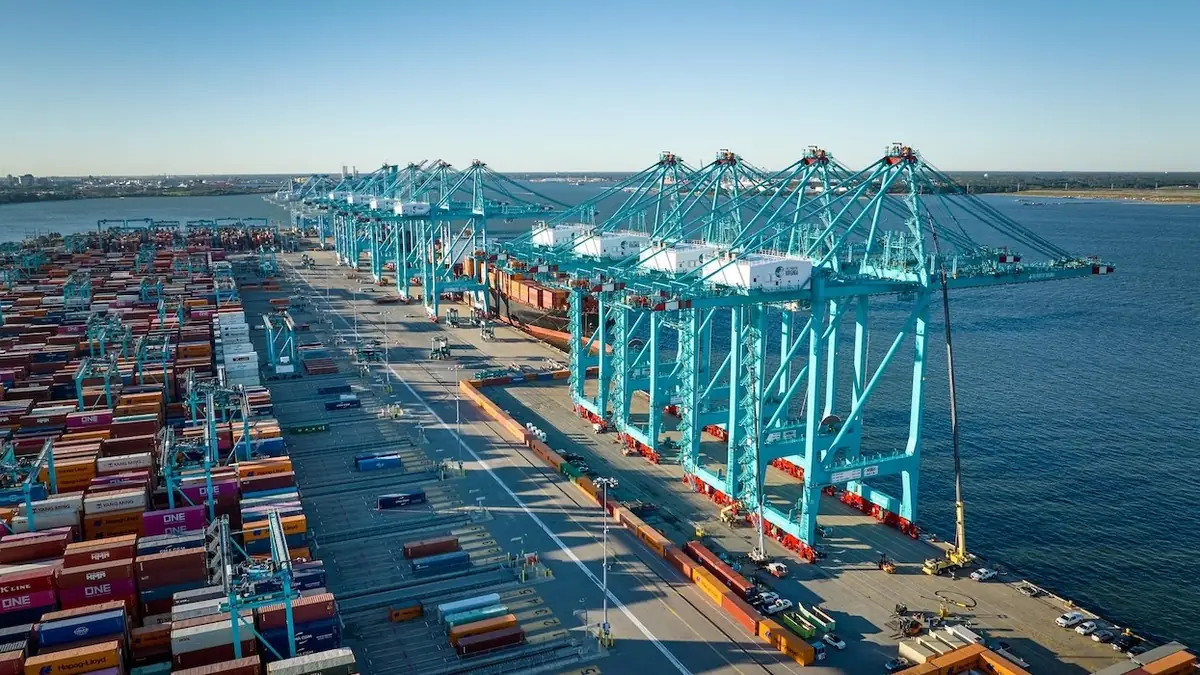
Start with what has actually changed at the waterfront. The Tanzania Ports Authority reports Dar es Salaam handled 27.7 million tonnes in 2024/25, up from 23.69 million the year before — about 15% growth, a record. This is the gateway that carries more than 95% of Tanzania's seaborne cargo. The driver is DP World's 30-year concession, with USD 250 million invested in the first phase and total investment potentially reaching USD 1 billion. A container vessel that used to take ten days to service can now turn around in about three, and single calls have grown from around 15,000 tonnes to as much as 50,000. In the 2025/26 financial year throughput rose further, to 33.7 million tonnes. Monthly container volumes have grown from roughly 700,000 TEU to 1.3 million TEU in three years — and all of that pressure now lands on getting cargo out.
The Dar es Salaam Port Warehouse Problem: Faster Port, Same Cargo
That mining spares client is the perfect example. Boxes off in three days, then a queue to pick up, a full yard, trucks waiting to get into the port, and once out, congested city roads before the cargo even reached a warehouse for stripping and reloading. The worst part was the border: the Tunduma/Nakonde crossing between Tanzania and Zambia is chronically saturated, with trucks routinely dwelling 24 to 72 hours in customs yards. Every day the mine waited cost more than the faster ocean leg had saved.
Another client of ours moves consumer goods for distributors in Rwanda and the Democratic Republic of Congo. Transit cargo through Dar es Salaam in 2024/25 ran to nearly 6 million tonnes for the DRC, 3.5 million tonnes for Zambia, and 1.7 million tonnes for Rwanda — inland cargo is now a huge share of the port's business. His lesson pointed the other way: he chose the cheapest warehouse right by the port, and in peak season the pickup queues, an extra round of handling, and demurrage cost him three times what the cheap rent had saved. Cheap rent, expensive everything else.
Dar es Salaam Port Warehouse Choices: Port-Side, Dry Port, or Destination
Cargo arriving at Dar es Salaam today basically has three places to go, and I've watched clients live with all three. The first is a port-side warehouse: closest to the quay, fastest to pick up from, but hardest to get in and out of when the port area congests, and the hidden costs of queuing and double handling are the highest. The second is the Kwala dry port, about 90 kilometres from the quay at Vigwaza, on a 502-hectare site connected to the standard gauge railway. It can hold about 3,500 containers at a time and handles an average of 823 containers a day; the ports authority estimates it can cut congestion at the port by about 30%. The DRC, Zambia, Malawi, Burundi, Rwanda, and Uganda have all been allocated space inside it, so inland cargo can be cleared and broken down there, then moved north by rail or road. The third option is a bonded warehouse near the destination — the cargo goes straight through to Lusaka or Kigali and is stripped there. That suits a shipper with one destination and large, regular volumes.
The table below is an illustrative scenario. The figures are my own workings for comparing cost structures, not any warehouse's or carrier's real quotation. Get rates confirmed in writing before you sign, and check current policy on the official sites.
| Option | Best for | Storage cost | Transport and transfer | Transit time | Biggest risk |
|---|---|---|---|---|---|
| Port-side warehouse | Cargo turning around within two weeks | Low rent; high queuing costs in peak season | Short pickup, but congested port exit | Fastest pickup after discharge | Yard fills up; demurrage spirals |
| Kwala dry port | Multi-country inland distribution needing clearance and break-bulk | Mid-range; rail into the dry port saves trucking | Rail transfer, road onward north | 1–2 days more than port-side | Dry port capacity lags; queues form twice |
| Destination bonded warehouse | Single destination, large regular volumes | Destination rent priced separately | One haul, no mid-route stripping | Most controllable end to end | A problem en route is far from help |
The conclusion is counter-intuitive: now that the port is faster, the last thing you should fight for is the warehouse nearest the quay. When a vessel clears in three days instead of ten, a wave of cargo hits the port-side warehouses and the port roads at the same time, and the congestion peak gets higher, not lower. Kwala's value isn't that it's cheap — it's that it moves clearance and break-bulk out of the port area, puts cargo on rail, and routes around the city traffic. The government is also planning a four-line freight railway to a hub outside the city, new berths 12 to 15, and 62 million tonnes a year by 2031. Those plans are years away, but the direction is clear: the port's future capacity sits outside the fence, not inside it.
Before You Negotiate, Cost the Whole Chain for the Client
In 3PL sales, what I fear most is a client who only compares headline rent — the least important number in the contract. What decides total cost is free storage time, the demurrage rate after it, who pays for transfer, and who carries border delays. For Dar es Salaam cargo, four things have to be written down in black and white: first, how many days of free storage you actually get, and whether the clock starts on discharge or on the day the cargo is available for pickup — one day's difference is one day's money. Second, who pays for the transfer between a port-side warehouse and the dry port, and who is liable if cargo is lost in transit. Third, how demurrage and storage are split when the border queues for three days — how much sits with the carrier, how much with the warehouse. Fourth, whether the warehouse has any priority pickup arrangement in peak season, or whether it's simply first come, first served.
And here's something only the sell side usually knows: signing a port-side warehouse doesn't lock in transit time at all, because the biggest variable isn't the warehouse — it's the port roads and the customs systems. The Kurasini Logistics Park, 25 hectares with 700,000 tonnes of annual handling capacity, is being built precisely to relieve port-area congestion, with operations expected during 2026. A shipper who only haggles over rent is negotiating about a third of the cost. The people who negotiate well cost the whole chain — discharge, pickup, transfer, clearance, border, delivery — with responsibility and money assigned at every step, so peak season doesn't turn into a blame game.
Next time you're negotiating a contract, remember to ask these three questions: first, how many days of free storage do we really get, and how is the overtime rate written; second, who pays for the transfer between the port-side warehouse and the dry port, and who carries the liability; third, when the border queues for three days, who pays the demurrage and the storage.
By Susan, 3PL Sales Director