The package that made me write this article was a shoebox. It came off a 90-degree belt curve in a Memphis-area parcel hub, sailed a good six feet through the air, and landed in the aisle where a forklift was turning. Nobody got hurt, but the shoebox did not survive, and neither did the sorter's on-time numbers that shift.
If you run conveyors, you have a curve that drops packages. Maybe not every shift, maybe just during peak when the line is running hot. Here is what twenty years of standing next to those curves taught me: the curve is almost never broken. The radius, the speed, and the guard rails just were never matched to each other.
What a curve actually does to your boxes
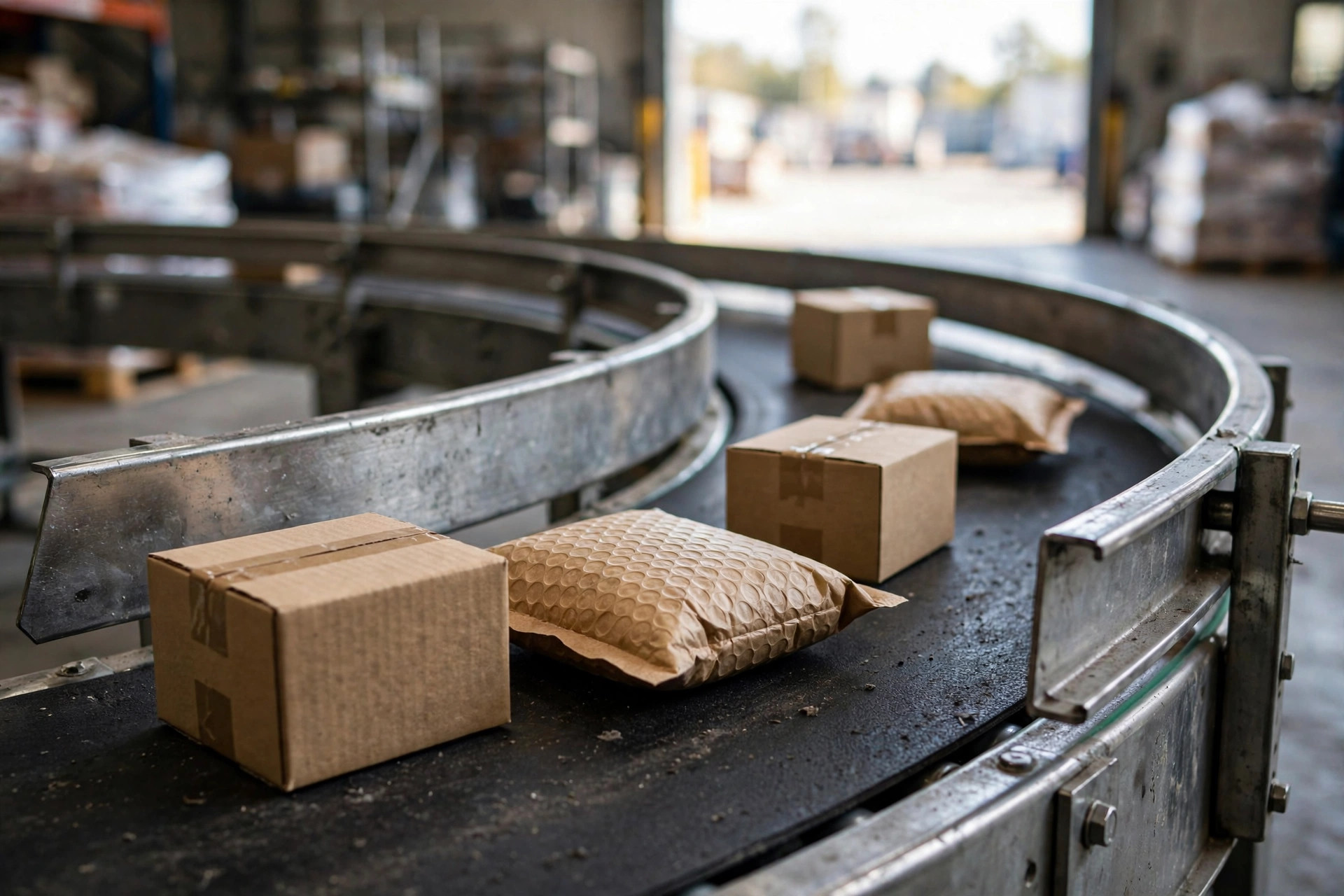
A package entering a curve gets flung outward. The force scales with the square of belt speed and inversely with turn radius: halve the radius, double the outward push. That is the whole physics lesson, and it explains most of what you see on the floor.
Catalog belt curves come with inside radii from about 24 inches up to 98 inches, and rated speeds up to around 400 feet per minute. Those are the manufacturer's numbers, and they describe what the machine can do, not what your packages can survive. A 24-inch-radius curve at full speed is fine for a heavy, square carton with a low center of gravity. Run a 2-pound polybag through the same curve and it becomes a projectile. The machine did not fail. The application was wrong.
This is the trade-off nobody prices honestly during layout. A tight radius saves floor space — a 90-degree turn on a 24-inch inside radius eats roughly half the footprint of the same turn on a 48-inch radius. For a small facility, that space is real money. But the payback math has to include the cost of the jams, the rework labor stationed at the curve during peak, the damaged goods, and the mis-sorts. In my experience, the floor space "saved" by undersized curves gets repaid with interest in exception handling.
Three levers, in order of cost
Cheapest first: guard rails. Rails are available in heights from about 3.5 inches up to 24 inches, which tells you height was always meant to be a design decision, not an afterthought. The rule I use is simple — the rail must cover the package's center of gravity with margin. For polybags and soft packs, that means going tall, 8 inches or more. Also check the gap between the rail and the belt. If you can slide two fingers in easily, small items will squeeze through. A skirt or brush strip on the inside of the rail fixes it for almost nothing.
Second: speed matching. The curve and the straight sections feeding it should run at the same belt speed, within about 5 percent. I have seen plenty of systems where the curve and its infeed were driven by different motors, drifting 10 percent apart, and nobody noticed because nobody measured. The package feels that difference as a yank at the exact moment it is already fighting centrifugal force. Put the curve on its own variable-frequency drive so you can trim its speed independently instead of slowing the whole line.
Third, and most expensive: radius. If the rails are tall and the speeds match and packages still fly, the radius is too small for what you are conveying. Upsize it. For 180-degree turnarounds the problem doubles — the package spends twice as long under outward force — so a U-turn that "works on paper" with a tight radius will eat you alive in peak season.
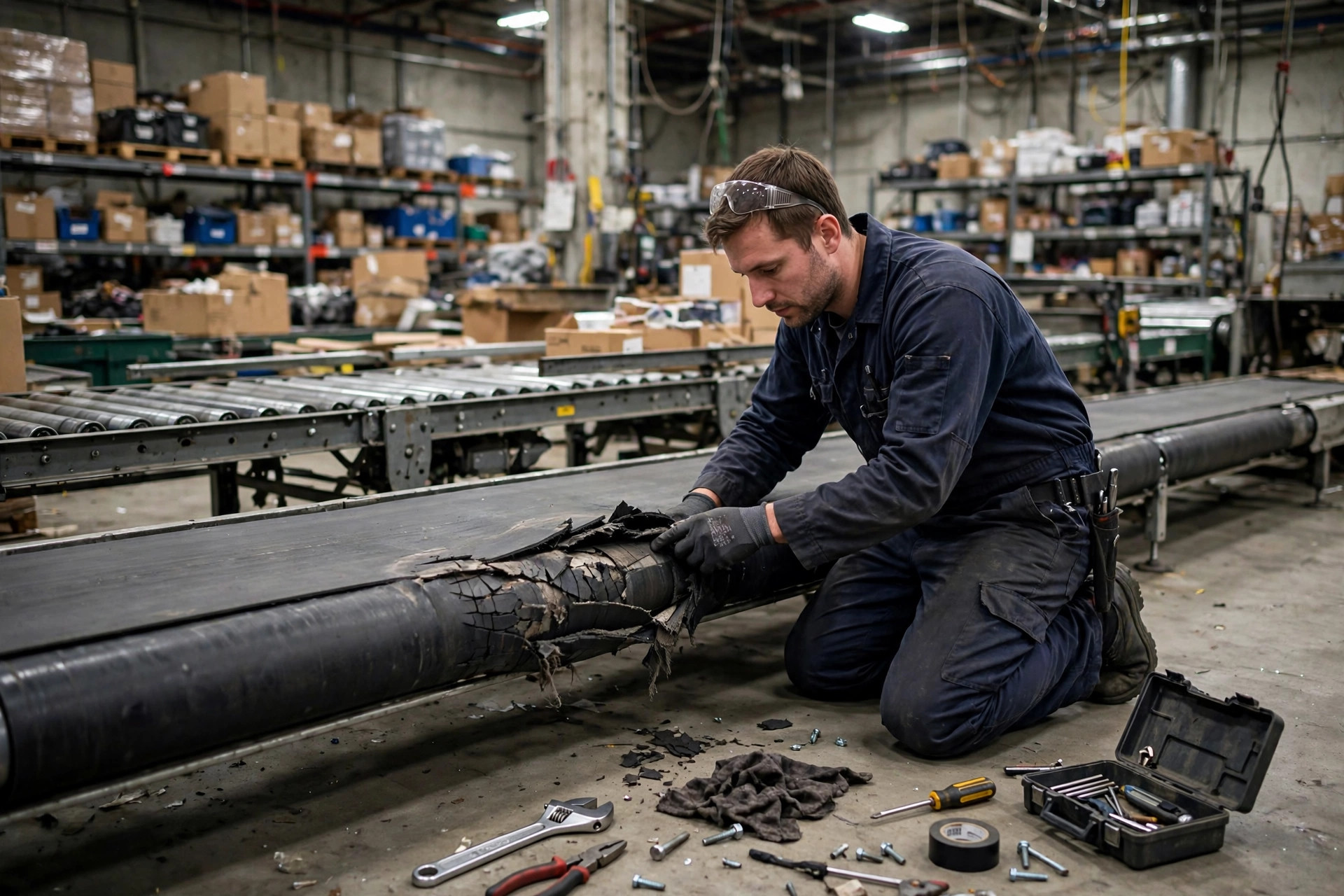
One more thing that fools people: belt condition. A curve belt runs its inner and outer edges at different speeds, compensated by the tapered profile of the rollers or the belt itself. When that taper wears flat — common on curves older than three years — the speed compensation goes wrong and packages start rotating mid-turn. If drops suddenly get worse on an old curve, check the belt profile before you blame the layout.
The field checklist I actually run
When a site calls me about curve drops, I stand at the worst curve for one peak wave and work this list:
First, where do the packages land? Past the exit — speed mismatch. On the outside of the curve — radius or rails. At the entrance — check the transfer gap between the curve and the straight section; oversized gaps make small items hop and tumble.
Second, measure the rails against your actual packages, not the spec sheet's assumptions. Then check the belt-to-rail gap with the two-finger test.
Third, measure real belt speeds on the curve and both adjacent straights. A tachometer is ideal; counting packages past a fixed point with a stopwatch works. More than 10 percent difference on light product means guaranteed flyers.
Fourth, look at belt tracking and tension. A belt that has walked half an inch outward has effectively shrunk your radius.
Five questions for the conveyor vendor before you sign
If you are buying new, do not let the curve line item just say "belt curve, qty 4." Get these five answers into the technical spec:
What is the actual inside radius, per curve? Make them write the number. The price difference between a 24-inch and a 40-inch inside radius is small; the drop-rate difference is not.
What rail heights are available, and is the rail adjustable? Spec the rail for your tallest package, not your average one.
Does the curve get its own VFD? Without one, any speed trim slows the whole line. With one, you can run the curve a touch slower and lose almost no throughput.
What is the belt's surface friction? Curves hate slick belts. Ask for a measured coefficient, not the word "anti-slip" in a brochure.
Who supplies the adjacent straights, and who owns the transfer gaps? If the curve and the straights come from different vendors, the contract must name who is responsible for gap width, height match, and speed match at every handoff. Drops cluster at handoffs, and so do finger-pointing disputes.
Ask those five and the vendor will know they are dealing with an operator. The proposal that comes back will have a lot less water in it.
Twenty minutes at the curve during a peak wave will locate roughly eighty percent of drop problems. And here is the question I always leave with the operations manager: is your worst curve a 90 or a 180? The answer usually tells you whether you need a bigger radius or just a speed adjustment — before you spend a dollar.