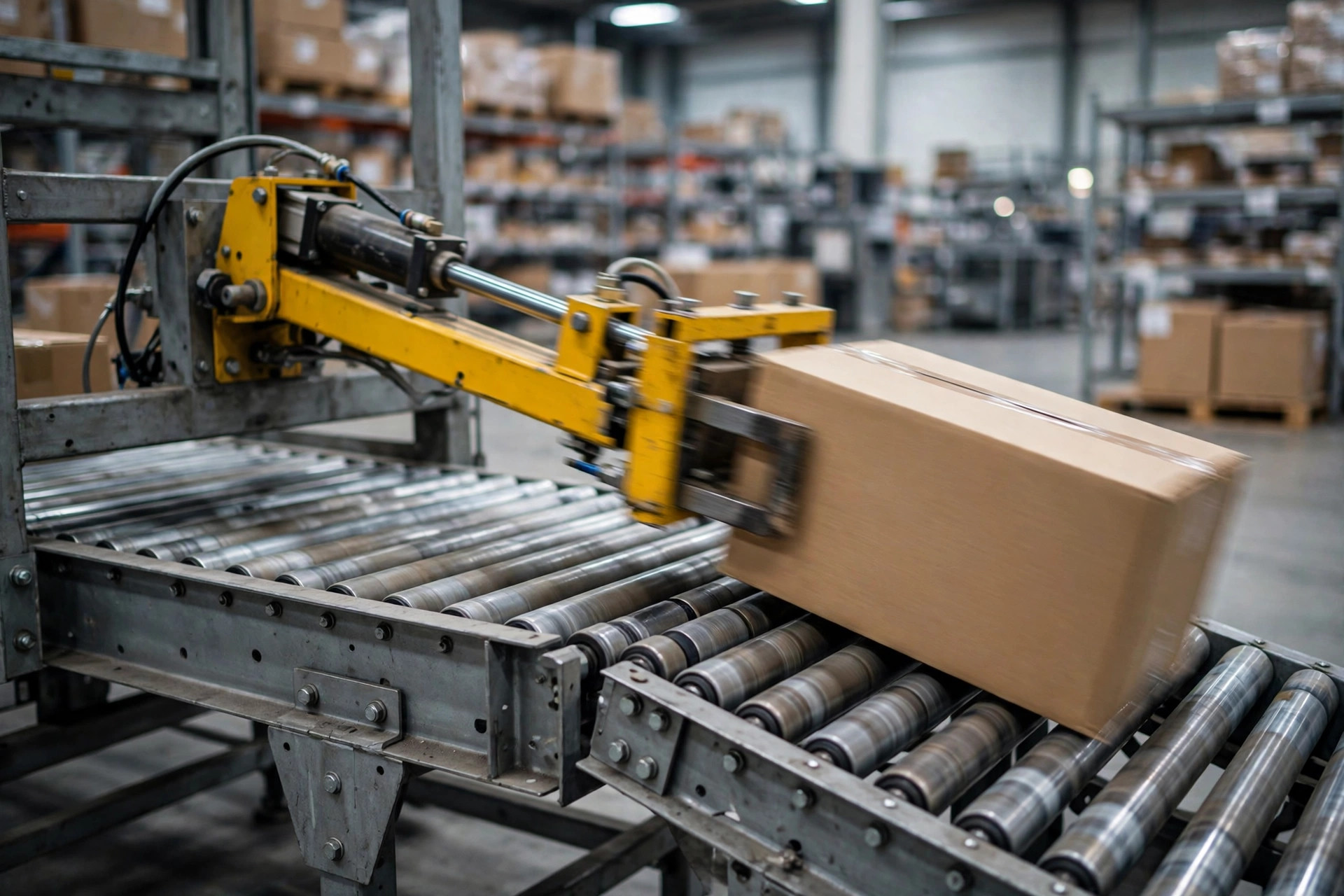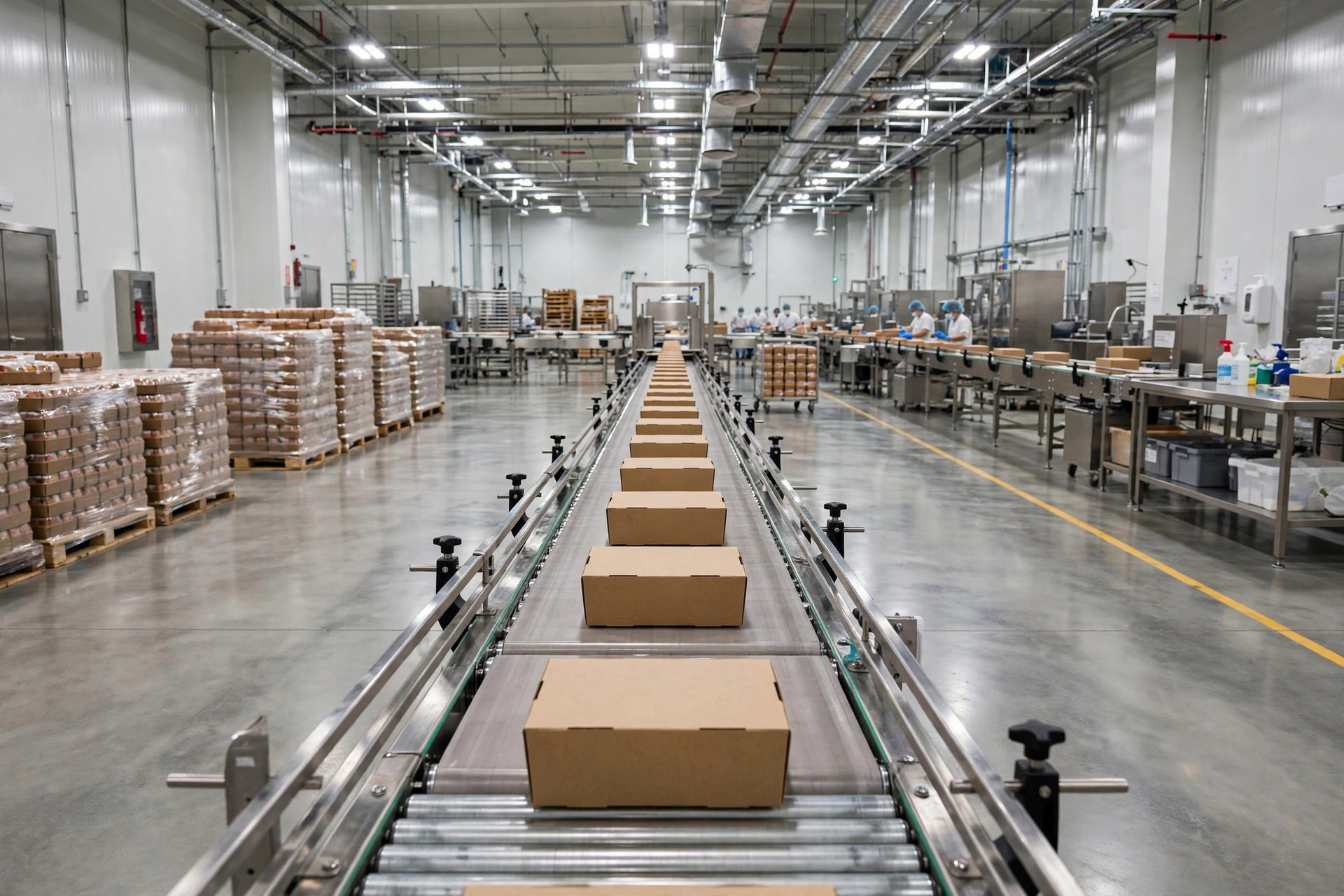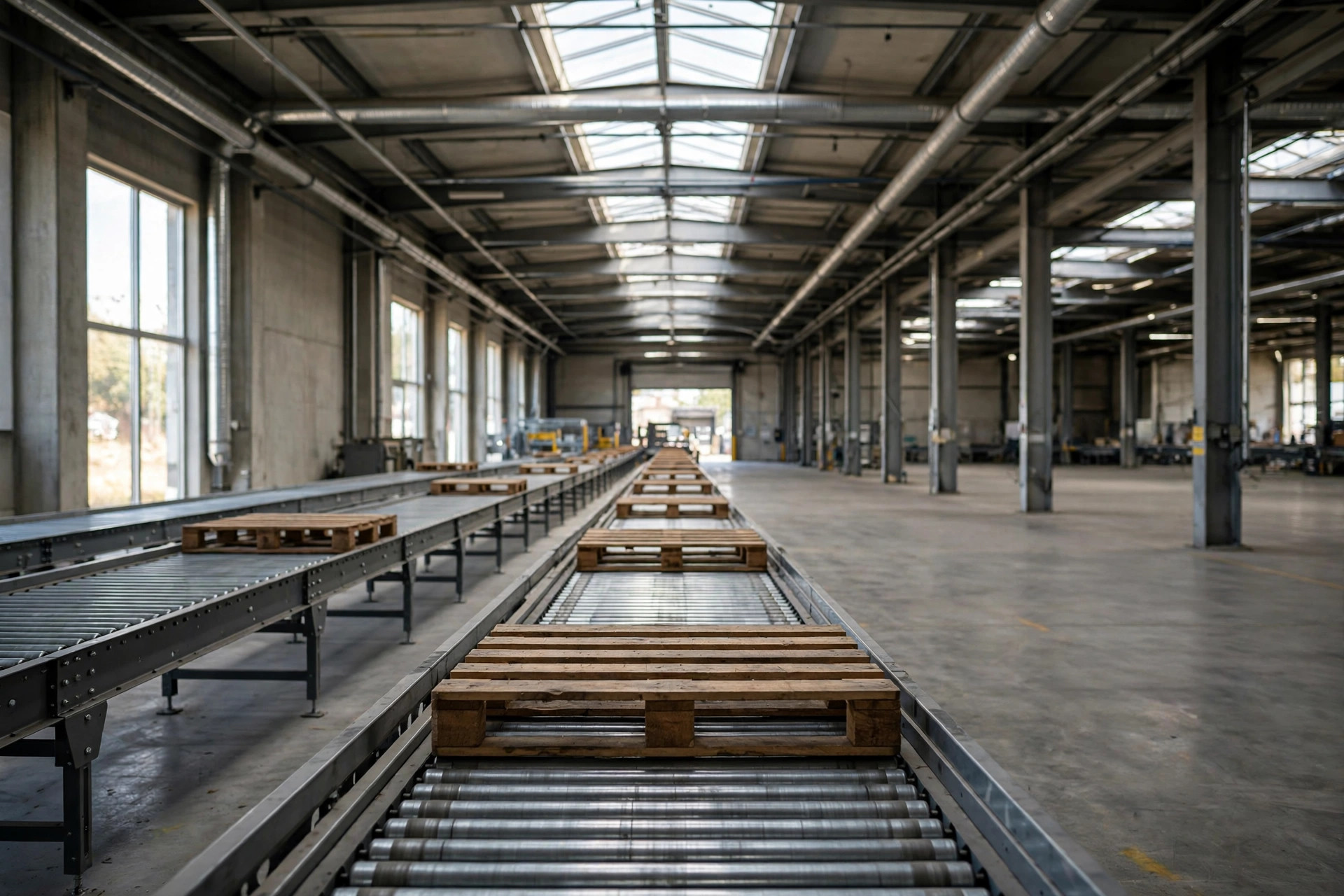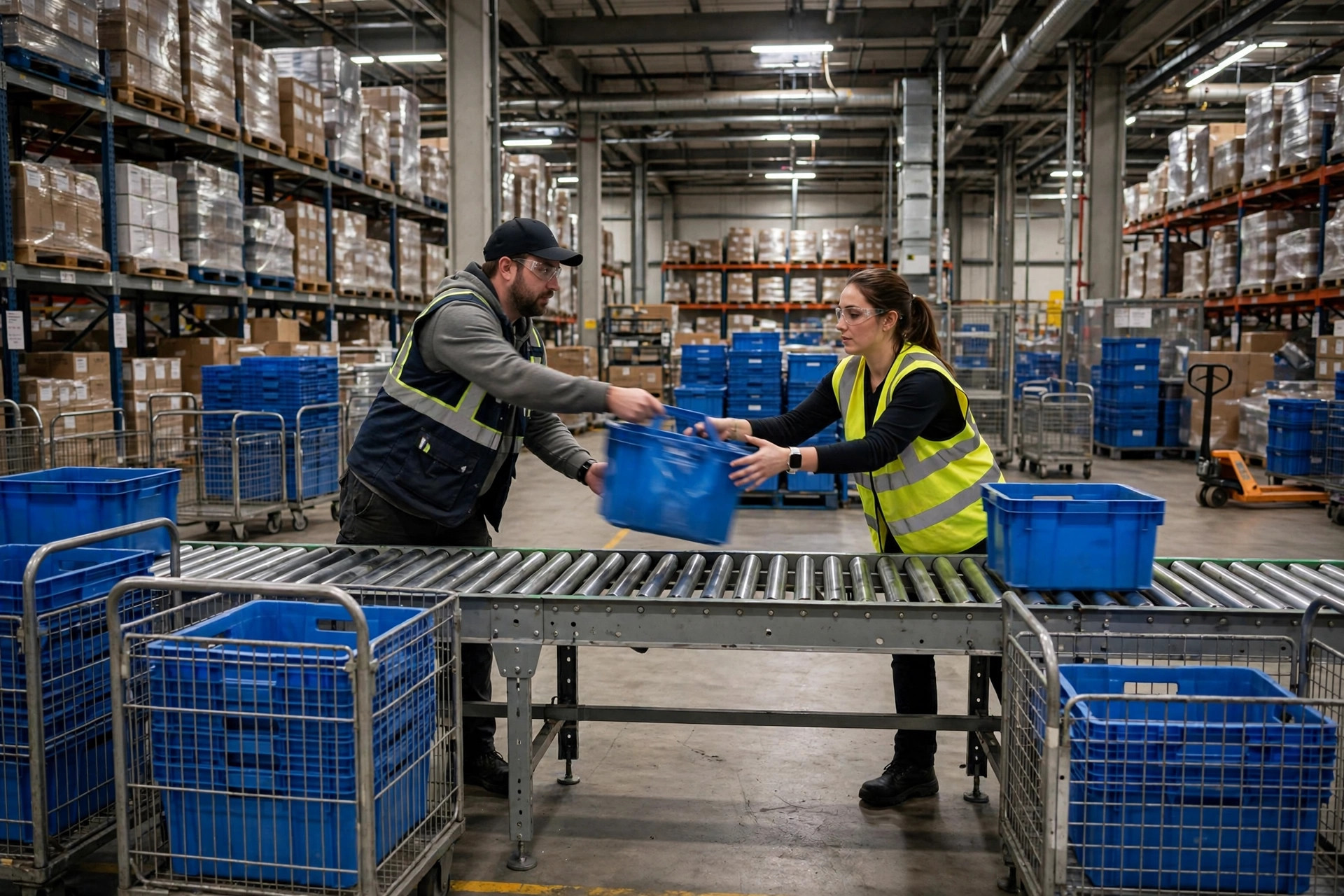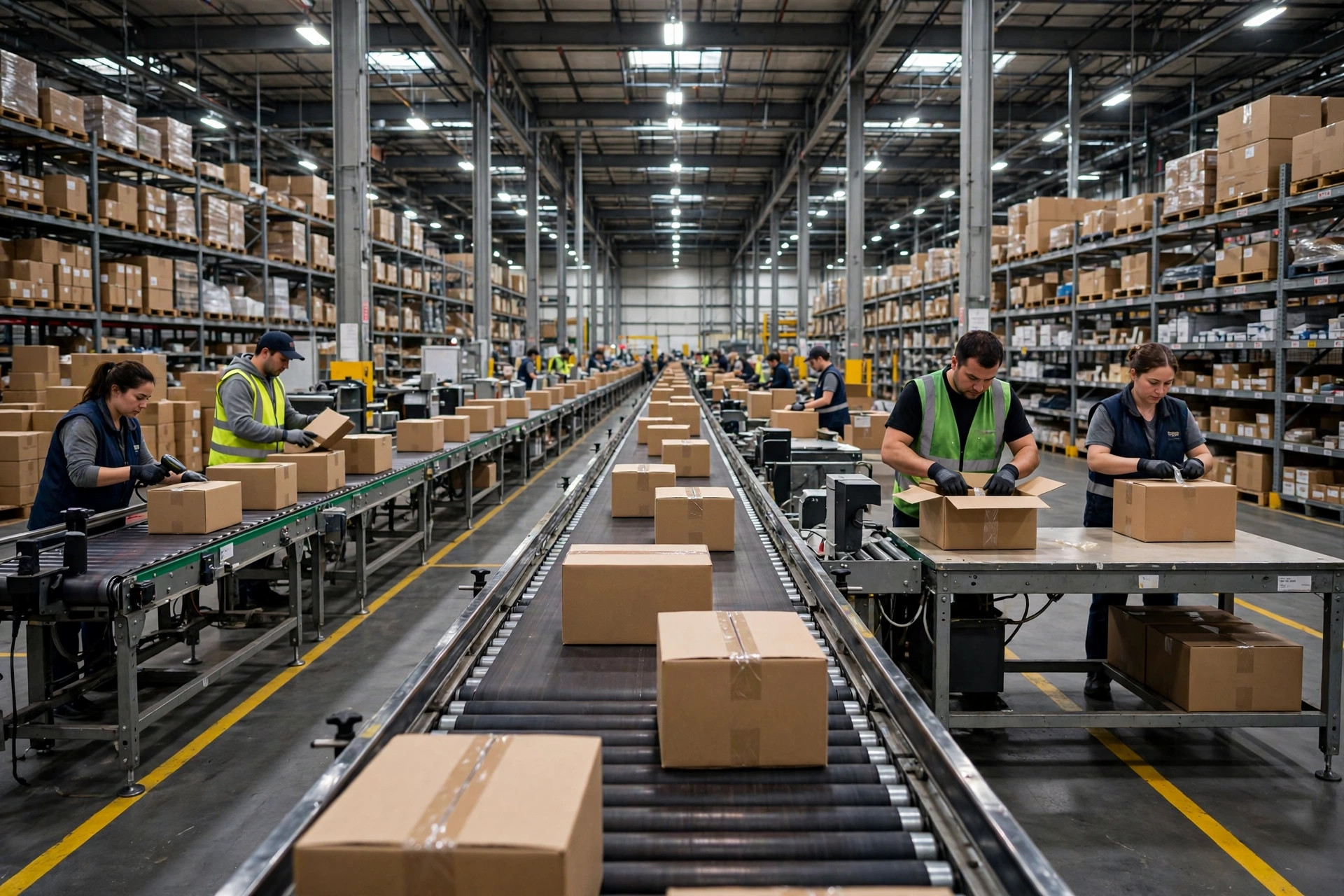
A conveyor is a metronome, not a race car. Set the line speed to your pickers' real pace, or every meter per minute you add just buys you a bigger traffic jam.
Last fall I walked a 120,000-square-foot 3PL in Columbus, Ohio that handles auto aftermarket parts. The ops manager took me along 300-plus meters of conveyor, pointed at a section where cartons had piled into a solid wall, and said: "We just sped this line up from 18 to 24 meters a minute. Throughput went down."
I knew the problem in one look. The belt was faster; the pick stations weren't. Cartons arrived at each workstation quicker than anyone could work them. The upstream boxes kept shoving in, the downstream couldn't clear out, and the whole section choked until someone hit the stop button.
This is a trap I see over and over: treating a conveyor like a highway where faster is always better. A conveyor's real job isn't moving boxes fast — it's keeping a steady rhythm. Line speed has to match three things: the pickers' actual pace, the rhythm of inbound feed, and the throughput of pack-out downstream. If any one of those is out of sync, more speed just makes the mess arrive sooner.
Where the bottleneck really lives
Conveyor speed is usually measured in meters per minute. The same line can happily run 20–30 m/min on a transport section, but it needs to slow way down at pick stations — not because the motor can't handle it, but because people can't.
Watch a seasoned picker work a station: scan to confirm, locate the pick, grab it, drop it in the carton, push it on. I've timed this motion dozens of times. Single-unit picking settles at 35–50 seconds per carton; a pack-and-check station runs 40–60 seconds. That works out to 70–100 cartons per picker per hour.
Now do the math on a 24 m/min line feeding stations spaced the usual 1.5 meters apart: that's a new carton slamming into each station every 3.75 seconds — roughly 960 cartons an hour. Your picker clears 80. That's not efficiency; that's a crash scene in slow motion. The constraint is always the human, never the motor.
So step one: stop reading motor specs and start reading people. Measure the real pace at each station first, then work backward to line speed.
Measuring the pace, then setting the speed
The measurement method is primitive and it works. Stopwatch in hand, during a normal peak-season shift, time one station through 30 consecutive orders. Throw out the 5 fastest and 5 slowest, average the rest. That's the station's steady-state takt. Off-peak measurements are worthless — with nothing urgent to do, people look faster than they are.
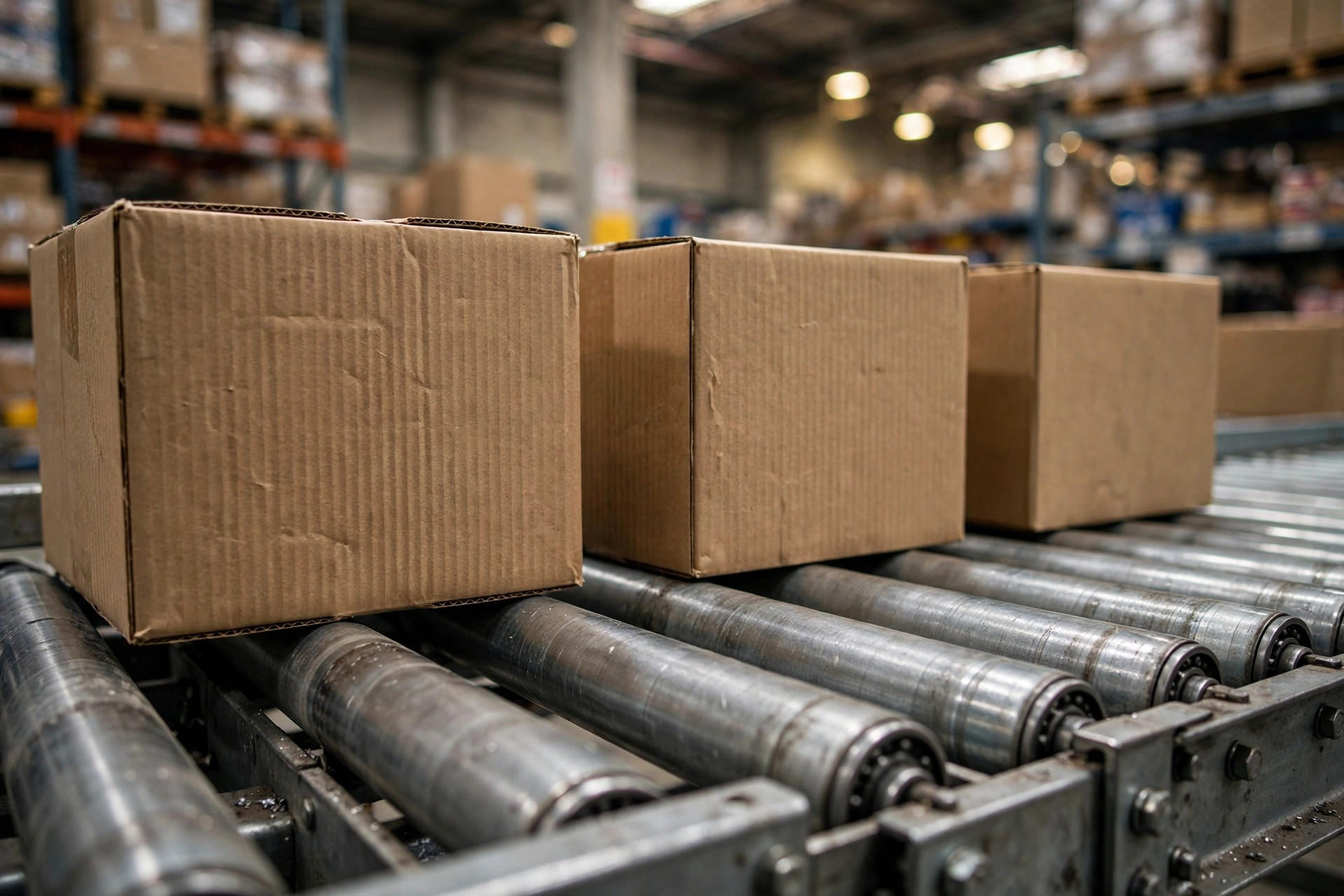
The line-speed formula is simple: line speed = station spacing ÷ station takt. Say stations are 2 meters apart and steady-state takt is 45 seconds per carton: 2 ÷ 45 ≈ 0.044 m/s, about 2.7 m/min. Sounds absurdly slow, right? But that's the correct speed for a pick section — each carton arrives just as the picker finishes the last one. No pile-up, no waiting.
Here's the key move: transport sections and pick sections run at different speeds. Transport just moves boxes from point A to point B — 20–30 m/min is fine. Pick sections get the formula treatment, usually landing at 3–6 m/min. Between them, put a zero-pressure accumulation section as a buffer: cartons queue up without pressing against each other, and each station always has work within reach.
Variable frequency drives (VFDs) exist for exactly this. Same line, different motors, different speeds per section. The tuning routine I use:
Start every section at a conservative speed and run it for a week, logging where cartons stack up and where stations starve. Then adjust only the pick sections, in 0.5 m/min increments, watching for two days after each change. Tune transport last, keeping 2–3 cartons queued in the accumulation section at all times. Those 2–3 cartons are your cushion: more than that means upstream is too fast, fewer means downstream is too slow.
One detail people always miss: ramp times on the drives. If a carton jerks from fast to slow at a section handoff, light boxes skate out of position and heavy ones slam the box ahead. Set acceleration to 3–5 seconds. Smooth beats fast, every time.
Peak season: should you touch the speeds?
Yes — but not blindly.
Peak season changes the order profile: more units per order, which naturally slows pickers down. Leave the line speed alone and the backlog creeps upstream from the pick section. The right move is to remeasure steady-state takt about two weeks before peak, using the forecasted order profile, and recalculate the line speed from it.
There's also a classic mistake: throwing temp labor at peak. More hands raise total throughput, but new hires have unstable pace — fast one hour, slow the next. Counterintuitively, you want more conservative line speeds during the first couple of weeks of new staff, to absorb that variance. Once their pace stabilizes (usually 2–3 weeks), dial the speed back up.
How did the Columbus site fix it? Pick sections came down from 24 to 5 m/min, transport stayed at 22 m/min, and they added a 12-meter zero-pressure accumulation section. The retrofit cost under $20,000 — mostly VFDs and one roller conveyor section. Peak-season volume held at 16,000 orders a day, and line stops dropped from 4–5 a day to essentially zero. They slowed the line down and output went up.
Pre-shift checklist
- Have you measured steady-state takt at every pick and pack station (30 consecutive orders at peak intensity, trimmed average)?
- Are transport and pick sections on separate speed control (VFD per section)?
- Does the accumulation section hold a steady 2–3 cartons of queue?
- Are drive ramp times set to 3–5 seconds?
- Did you remeasure takt and recalculate line speed two weeks before peak season?
- Are line speeds running conservative during new hires' first two weeks?
One line to remember: your conveyor is a metronome, not an accelerator. Get the rhythm right and the whole line falls into step.