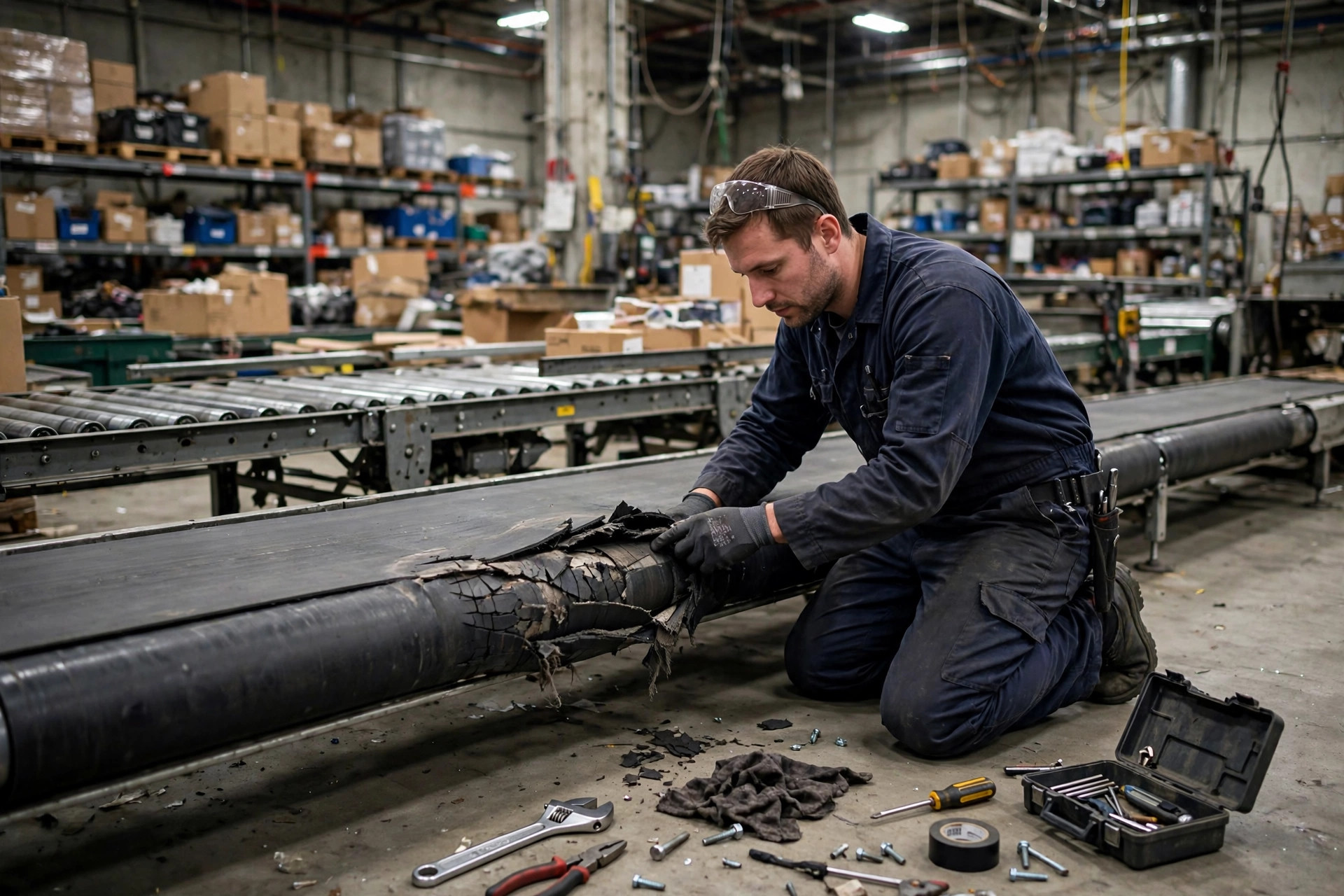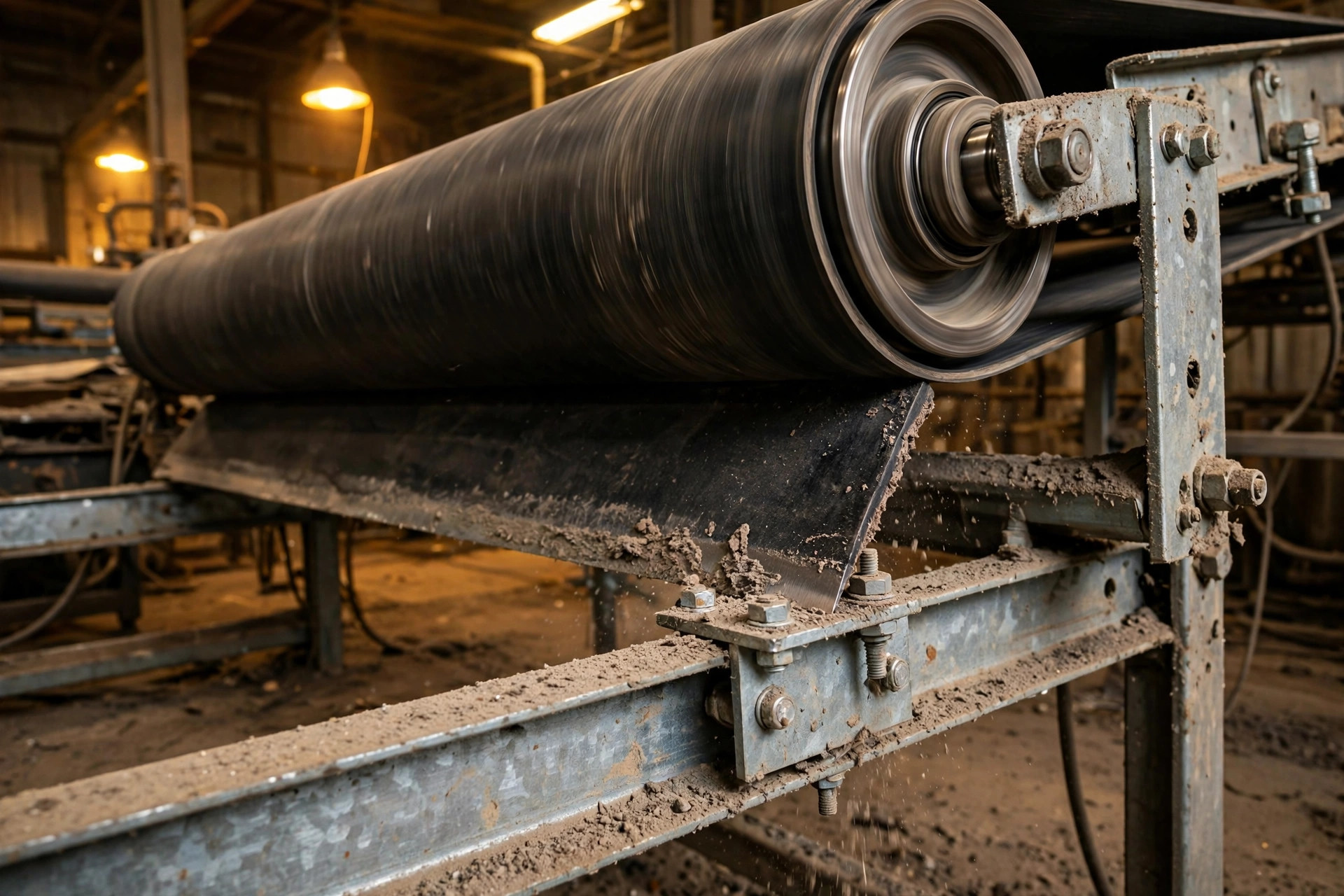
"Belt's walking again — come adjust it." I heard that sentence more times in my first years in this industry than I can count. You tweak the training idlers, the belt centers itself, everyone's happy — and three days later it's hugging the same side of the frame, fraying at the edge. The third time they called me, I told the maintenance lead: stop adjusting. Adjust it again and the belt is scrap. Let's figure out why it keeps running that way.
A mistracking belt is almost never "out of adjustment." Nine times out of ten, something is forcing it off. Adjusting idlers without finding the cause is treating a headache with aspirin. Over the years I've boiled it down to three real causes, in a specific check order. Whatever you do, don't start by cranking the training idlers — that's the last step.
Rollers and Idlers First: Where Two-Thirds of Cases Die
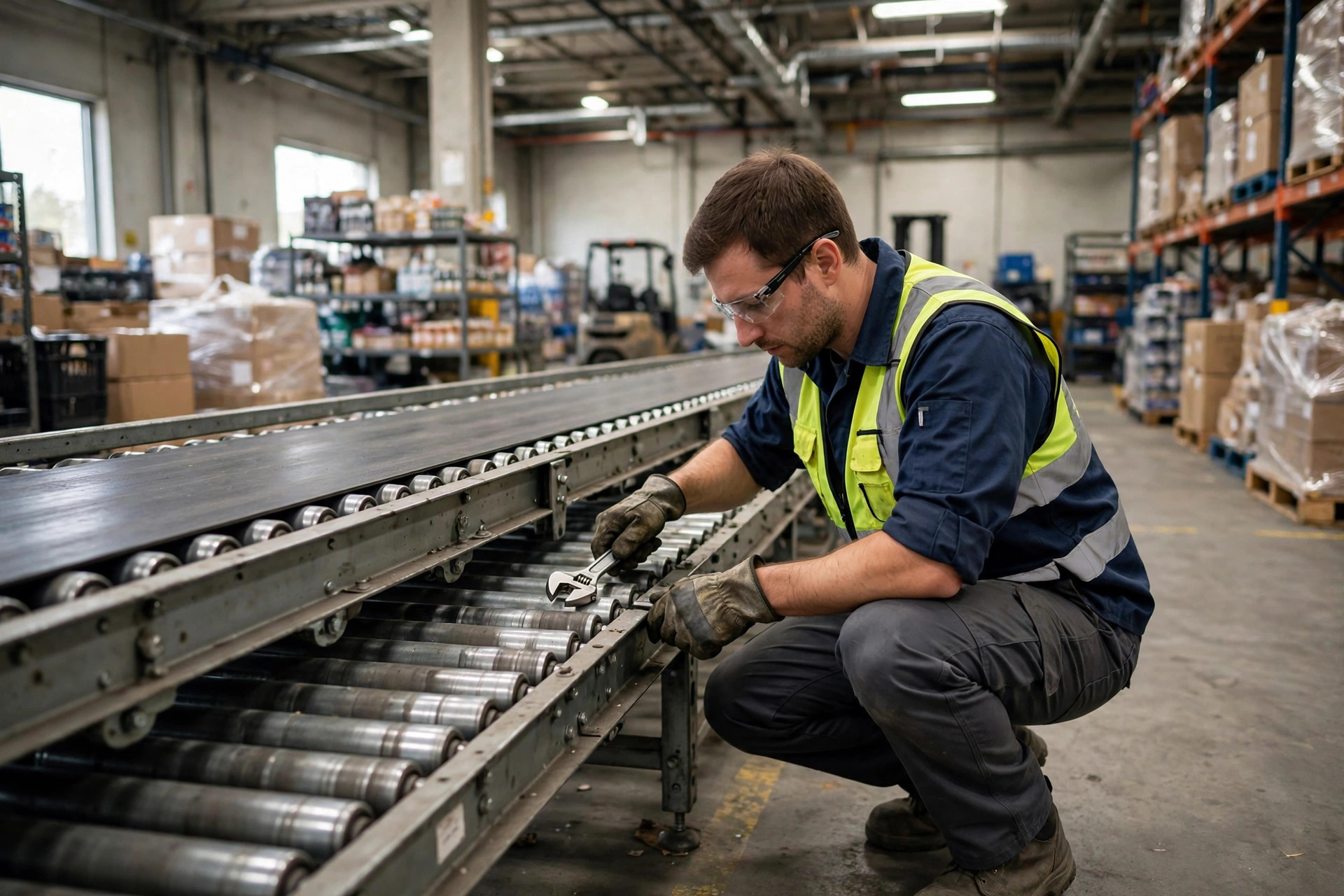
Step one: lock it out, grab a flashlight, and walk the belt. The most common find is a seized idler — the bearing froze, the roller became a fixed shaft, and the belt drags across it with friction high on one side and low on the other. Of course it walks. Spin each idler by hand; the one that won't turn is your suspect.
Next, check whether the pulley lagging wore unevenly. The herringbone lagging on a drive pulley is supposed to steer the belt toward center; once one side wears down, it becomes a pusher shoving the belt sideways all day. Also check pulley shafts square to the frame — some were installed crooked from day one, a birth defect no amount of idler tweaking will ever fix. That one needs the pulley re-squared.
I ran into a textbook case in 2016 at a food distribution center in Chino: a sortation line mistracked weekly, and the techs adjusted it for two months before someone found an idler bracket bent 3 degrees by a forklift. Invisible to the eye — a level finally exposed it. Straighten the bracket, and the belt ran true for three years. So don't just check whether idlers spin; check whether the brackets themselves are straight. Forklifts, pallets, even a janitor's mop can knock a bracket out.
One more that's easy to miss: bearing housings at different heights on the same pulley. One side shimmed, the other not, and the pulley sits tilted — the belt slides downhill all day. Usually a leftover from a past bearing change. Measure both housing heights against the frame with a tape; more than a couple millimeters of difference is suspicious.
Tension Second: Uneven Beats Loose
Most people think a loose belt mistracks. A uniformly loose belt is actually fine — the killer is one side tighter than the other. With screw take-ups, one side cranked further than the other, the tight side pulls and the whole belt slides toward the slack side. The check is dead simple: measure exposed thread on both take-up screws. More than about 5 millimeters of difference, re-level them.
On gravity take-ups, check whether the counterweight box is binding. A client once had a pallet splinter jammed in the take-up guide rails — weight riding high on one side, belt mistracking for a month, three sets of training idlers swapped for nothing. Clearing that splinter took five minutes. Cleaning gravity take-up guides belongs on the PM checklist; it earns its place.
Another trap: a crooked splice on a new belt. If the splice was cut at an angle, every revolution gives the belt a little sideways kick — the mistracking comes and goes on a rhythm, very distinctive. Don't adjust that; send it back to the belt shop. A bad splice will defeat adjustments until the end of time.
Loading Point Last: The Invisible Killer
If rollers and tension both check out and the belt still walks, look at how product lands on it. An off-center loading point means material keeps hammering one side of the belt — a constant sideways push. Mixed parcel lines with chutes are the classic victims: a worn loading skirt, a missing deflector plate, and freight lands off-center all day.
The diagnostic is clean: tracks fine empty, walks under load — that's a loading problem. Square up the skirt so product lands dead center, and it disappears. Memorize this rule: empty-belt drift means equipment, loaded-belt drift means loading. It'll save you half your troubleshooting time.
The Ultimate "Fixed It Again" Trap
Finally, the most common trap of all: the training idlers themselves. Self-aligning training idlers exist to handle temporary deviation, not to serve as a permanent fix. The worst line I ever saw had eleven sets of training idlers installed — and the belt still walked, because the real cause was a pulley out of square. All those idlers were just arm-wrestling the actual problem.
The order is always: rollers and idlers, then tension, then the loading point. Only touch the training idlers after all three check out. And after adjusting, watch it for a full shift — don't walk away after five good minutes. Plenty of mistracking only shows up after half an hour of warm running.
A belt is like a person: mistracking is it telling you something hurts. Understanding what it's saying beats knowing how to adjust. At tomorrow's shift handoff, tell the techs to hold off on the idler wrench and walk the three steps first — I'd bet more than half of your "chronic drifters" have their real cause in steps one or two.
Prevention Is Cheaper Than Troubleshooting
One last thing: seventy percent of mistracking is preventable with routine checks. Half an hour a month does it — spin the idlers and listen for bad bearings, clear buildup from the take-up guides and idlers, glance at the belt edges for fraying. Replace worn belt scrapers on time; carryback on the return side is the number one idler killer. A belt replacement runs into the thousands in material and downtime; half an hour of PM labor costs a fraction of that. You can do that math yourself.