Here's my conclusion up front: most container yards zone their slots backwards — by box owner. Frankly, who owns the box doesn't matter. What matters is how often it moves. Boxes that move constantly go nearest the gate; boxes that sit go highest in the stack. That one rule sits behind every slot plan I've drawn in a dozen-plus years around US ports, and it's the rule your YMS should be enforcing.
Zone by movement, not by owner
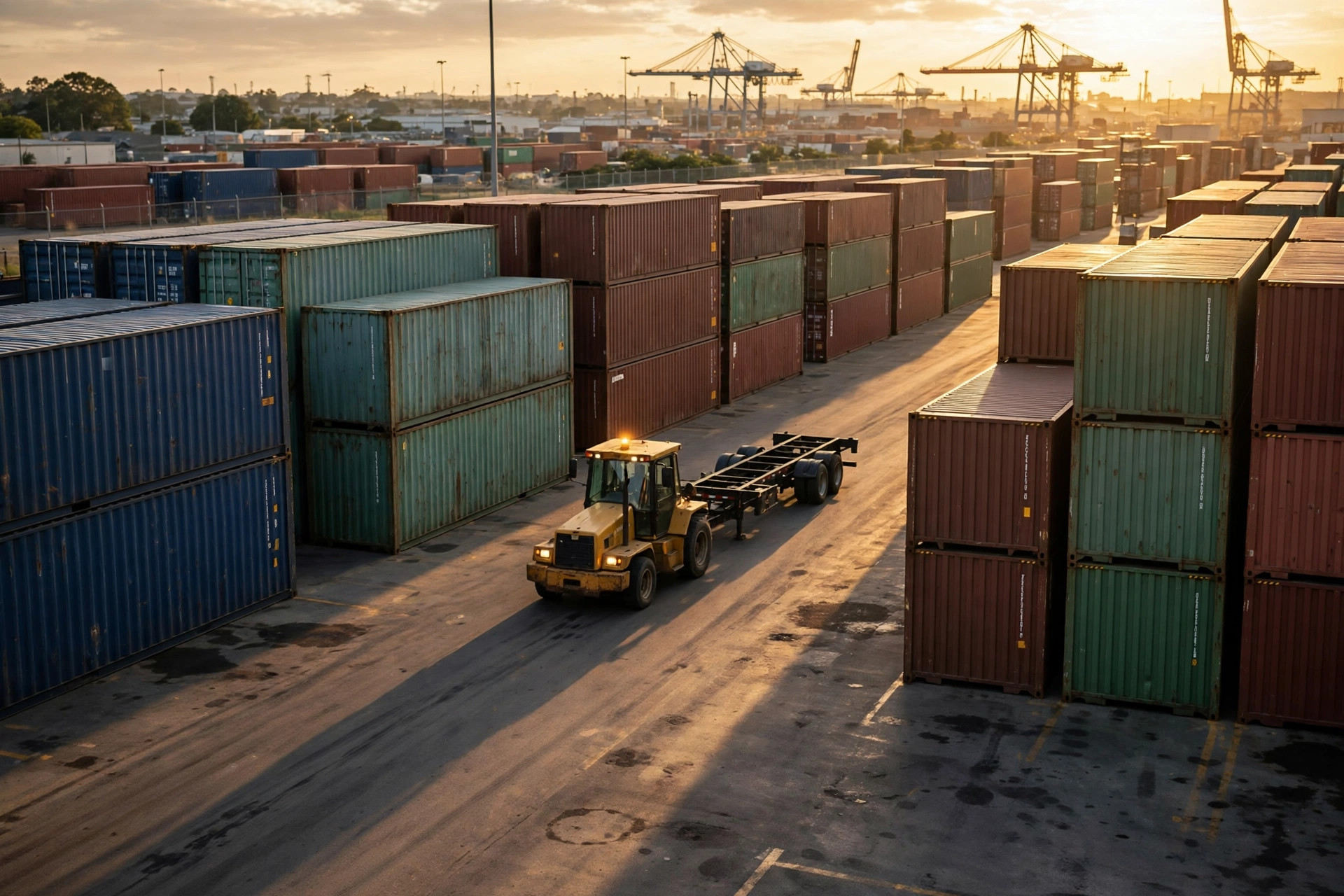
There are two sides to this. Zoning by owner looks tidy on paper: the yard crew knows which block belongs to which carrier, and handoffs are simple. The cost? One owner's empties, laden boxes, and reefers all pile into the same block. The laden boxes turn over several times a day, the empties haven't moved in months, and the reefers need their own power drops. So to pull one laden box, you dig out the empties sitting on top of it, then stack them back. Do that dozens of times a day.
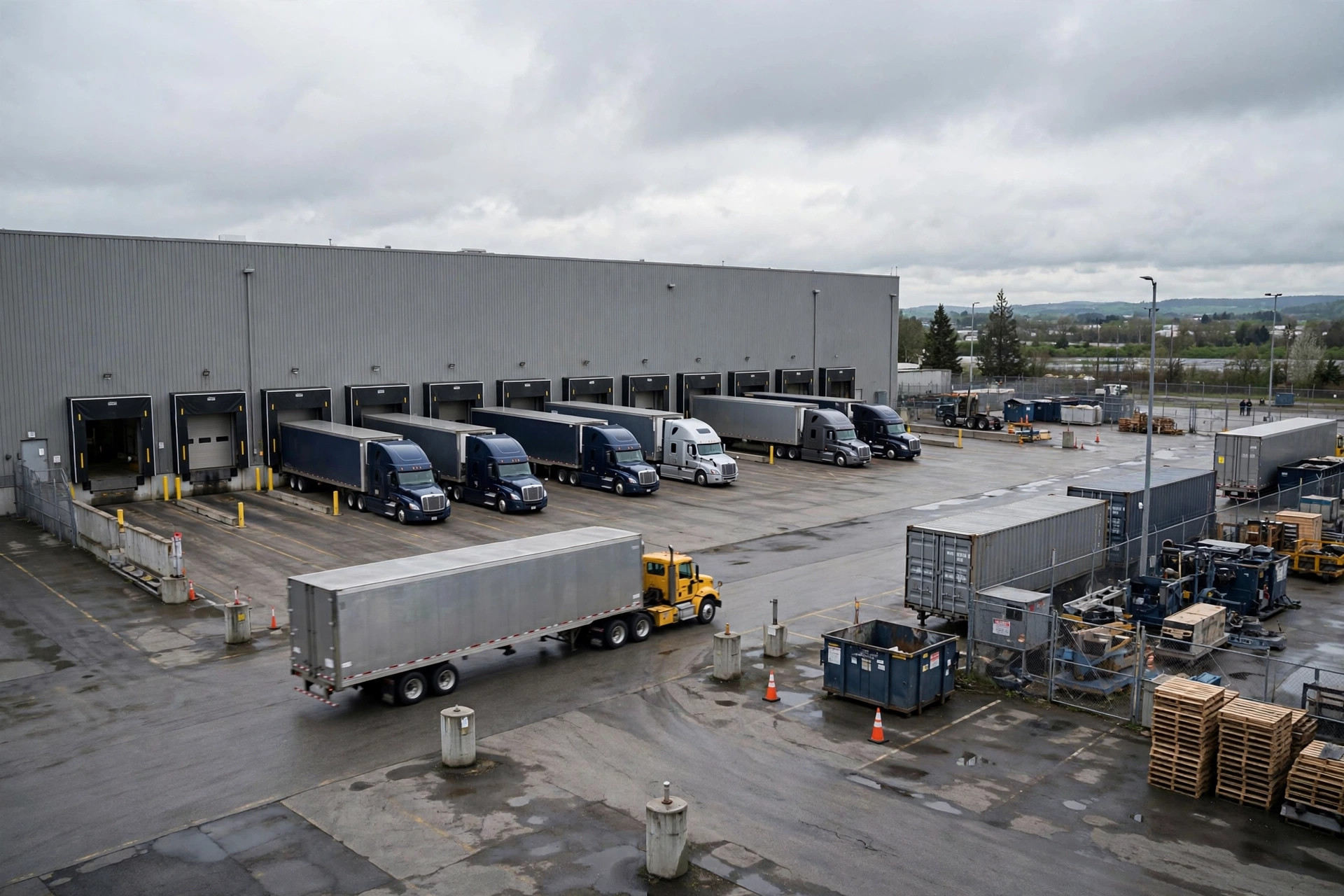
I've seen too many yards where the gate line stretches around the block, and the root cause isn't the gate — it's the slot zoning. Every re-handle burns diesel on the reach stacker, keeps a driver waiting, and keeps the trucks behind him waiting. Pure cost, zero revenue. A yard makes its money by re-handling less. That's the whole game.
So my rule is simple: sort boxes by how often they move first, then decide where each group lives. Owner comes second.
The mistake I watched happen: repair boxes squatting in the export block
Around 2019, I spent time at a small yard near the Port of Los Angeles — a couple hundred slots. They mixed repair boxes and export laden boxes in the same block. The owner's reasoning: "We're small, can't afford to split it up."
Here's what that looked like in practice. The repair crew drove a forklift through the stacks every day, shifting boxes around to find their work. The displaced boxes had nowhere to go, so they ended up in the travel lanes. Outside, drivers waited two to three hours for a pickup. The carrier complained the yard was too slow and threatened to cut their handling fees. The owner spent every day firefighting, and it only got worse.
The fix was exactly one thing: they carved out a corner at the far end of the yard and called it the "hospital zone." Every box needing repair or inspection went straight to the hospital at gate-in — not one prime slot touched. Fixed boxes moved to the empty block; unfixable ones got photographed and sent to the owner for a decision.
Bluntly put, repair boxes are the patients of the yard, and patients belong in the hospital. Let patients occupy the emergency room beds and the ER stops working. That single change cut the yard's monthly re-handles by nearly half — I didn't count precisely, but driver wait times dropped from two-plus hours to under thirty minutes, and that's written in the gate logs.
Four kinds of boxes, four ways to park them
This table is where I start every yard slot plan. Each box type gets its zone based on dwell time and move frequency:
| Box type | Dwell time | Move frequency | Where it goes | How high | Key point |
|---|---|---|---|---|---|
| Export laden | Short, 1–3 days | Very high | Closest to the gate | Low, 2–3 high | Sub-zone by vessel and voyage |
| Import laden | Short, 1–3 days | High | Near the pickup lanes | Low, 2–3 high | Separate by bill of lading, don't mix |
| Empties | Long, weeks to months | Low | Farthest corner | High — empties are light, stack them | Sort by size before owner |
| Reefers | Medium, about a week | Medium | The power zone | Low, 1–2 high, easy plug access | 24-hour temperature monitoring |
| Repair boxes | Varies | Very low | Dedicated "hospital zone," away from main lanes | By repair stage | Move fixed boxes out; don't let them linger |
| Hazmat | Per regulation | Low | Isolated area | Per regulation | Fire lanes stay clear — non-negotiable |
A few of these deserve more than a row in a table.
Export laden: vessel and voyage are your second-level zoning. Boxes for the same vessel and voyage sit together, so loading is one clean pull instead of a yard-wide scavenger hunt. Get this wrong and 48 hours before sailing, the whole yard flips boxes to find the right ones. I've watched too many yards do an all-night re-handle before the port cutoff — that's what burning money looks like.
Empties are where the trade-offs pile up. Zone by owner and finding boxes is fast, but in the slow season one owner's empties can eat half the yard while other owners have nowhere to park. Zone by size (20s, 40s, 45s) and you stack tight, but finding a specific owner's box takes extra walking. My call: size first, owner second — because re-handling an empty is cheap, a few extra steps don't hurt, and the density saves real money on land. Two sides to it, no perfect answer, just the cheapest answer for right now.
Reefer slots are decided by power outlets, not by paint on the ground. 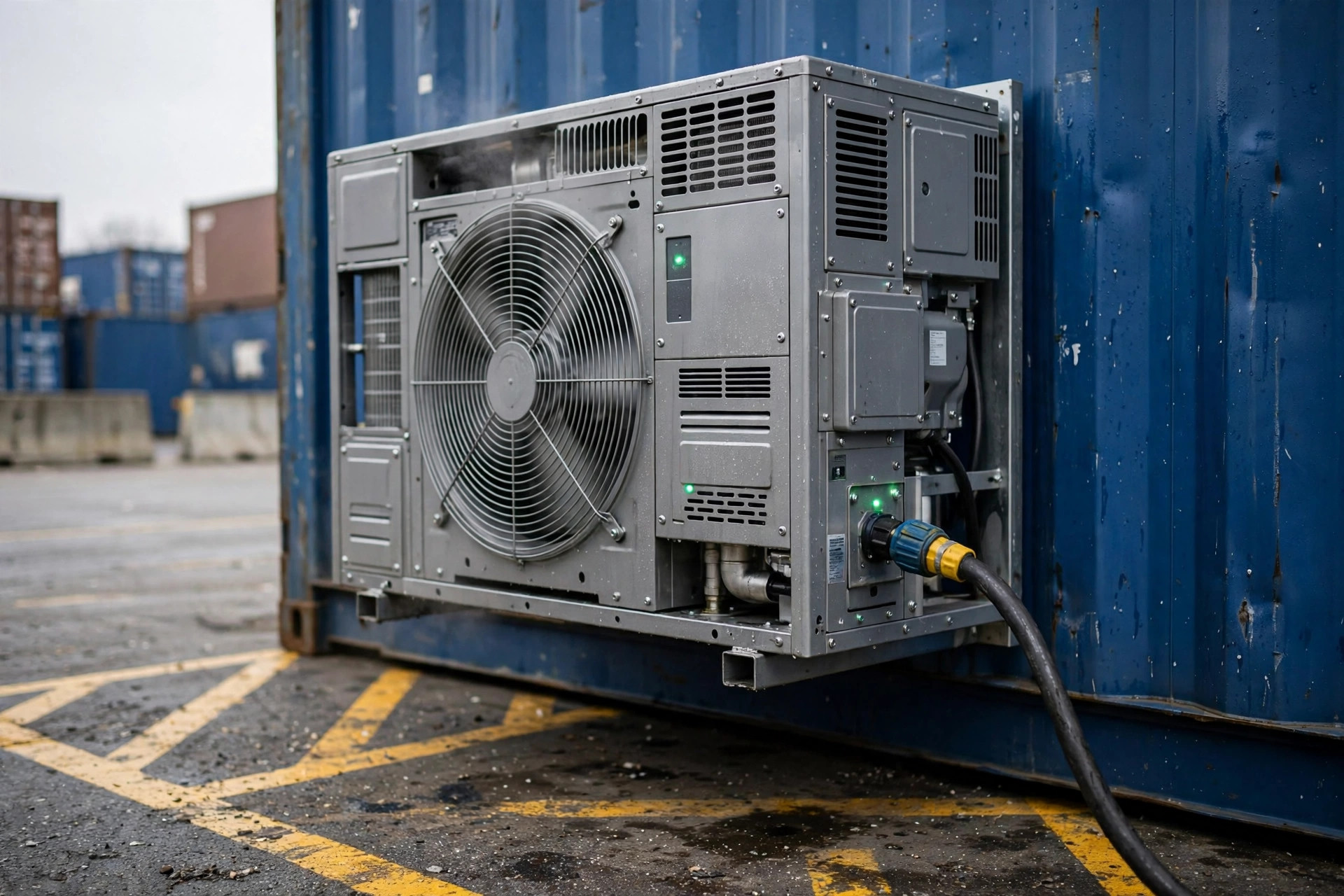 A reefer must stay plugged in around the clock. However many plugs you have is your reefer capacity ceiling — paint a hundred slots all you want, it changes nothing. I saw a yard that planned 60 reefer slots but only installed 40 plugs. Peak season hit, and the extra 20 boxes ran on diesel generators with cables snaking across the travel lanes. Safety inspection showed up, and the whole yard shut down for remediation. Whatever they saved on the electrician, they paid back double. Two sides again: reefers pay premium rates, but they're expensive to babysit — temperature logs watched 24 hours, and half an hour without power can kill a full load. Before taking reefer business, count the plugs. That order doesn't reverse.
Hazmat gets its own paragraph. With hazmat, you don't optimize for efficiency — you optimize for compliance. Separation, spacing, fire lanes, placards: whatever the regulation says goes. There's no trade-off to debate here. One incident and the yard is done.
Slots are managed by the system, not memorized by people
Past three to five hundred slots, no human remembers where anything is. At that point a YMS (yard management system) isn't a "should we" question, it's a "when" question. Live slot maps, handhelds telling the crew exactly which block and bay to hit, every gate move and temperature reading logged — re-handles drop, and when the carrier asks questions, you have records.
But one piece of advice: the system executes your zoning logic, it doesn't replace it. Bad logic in, faster mistakes out. I've seen too many yards buy the software and keep zoning by owner — that's money down the drain. Get the "zone by movement" logic right first, then talk systems. That order doesn't reverse either.
Closing thought
Bluntly: the most expensive thing in a yard isn't the rent, it's the re-handle. Go count how many times your yard re-handles a box in a day — the answer is sitting right there.
By Lao Mi, Supply Chain Veteran (20 yrs)