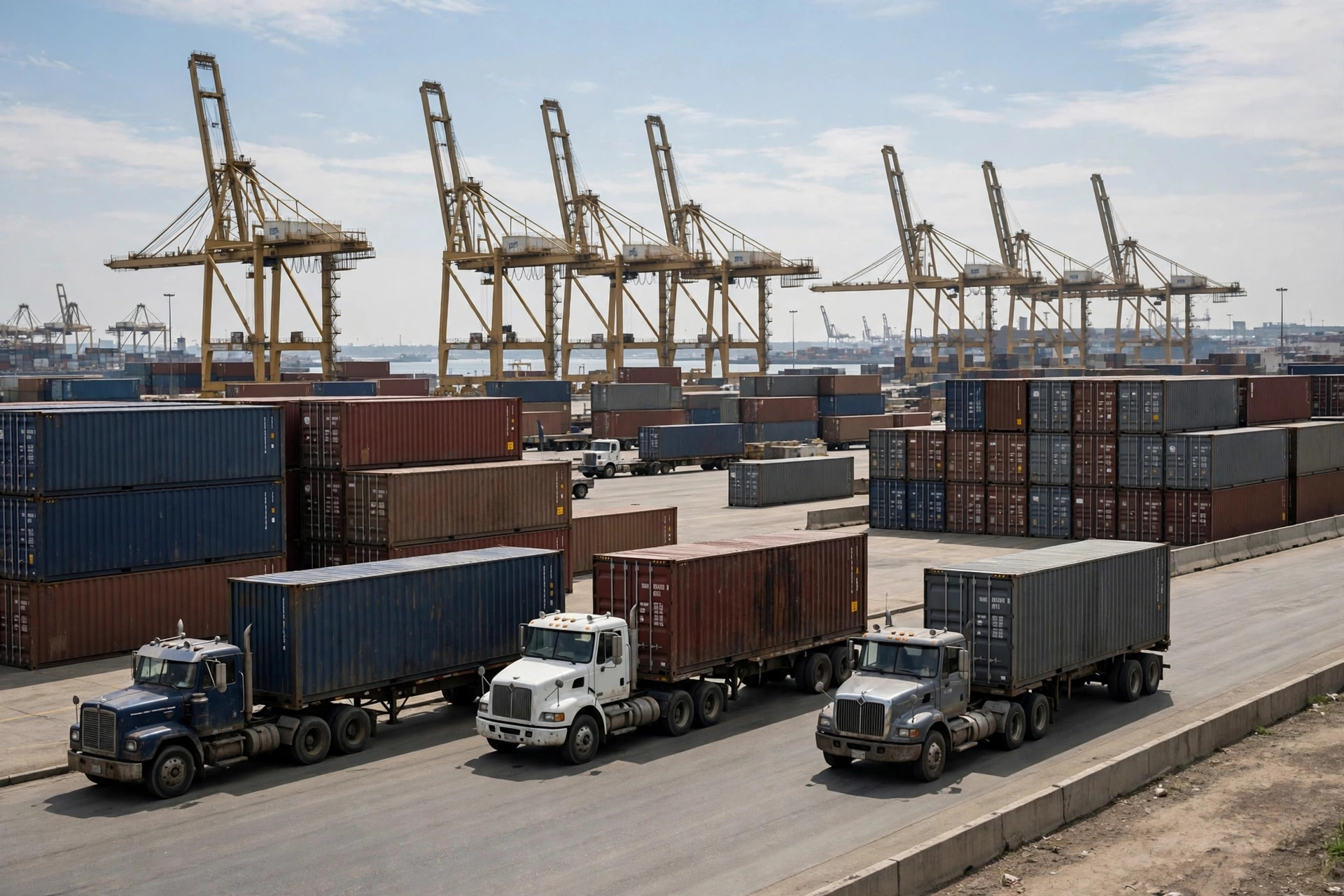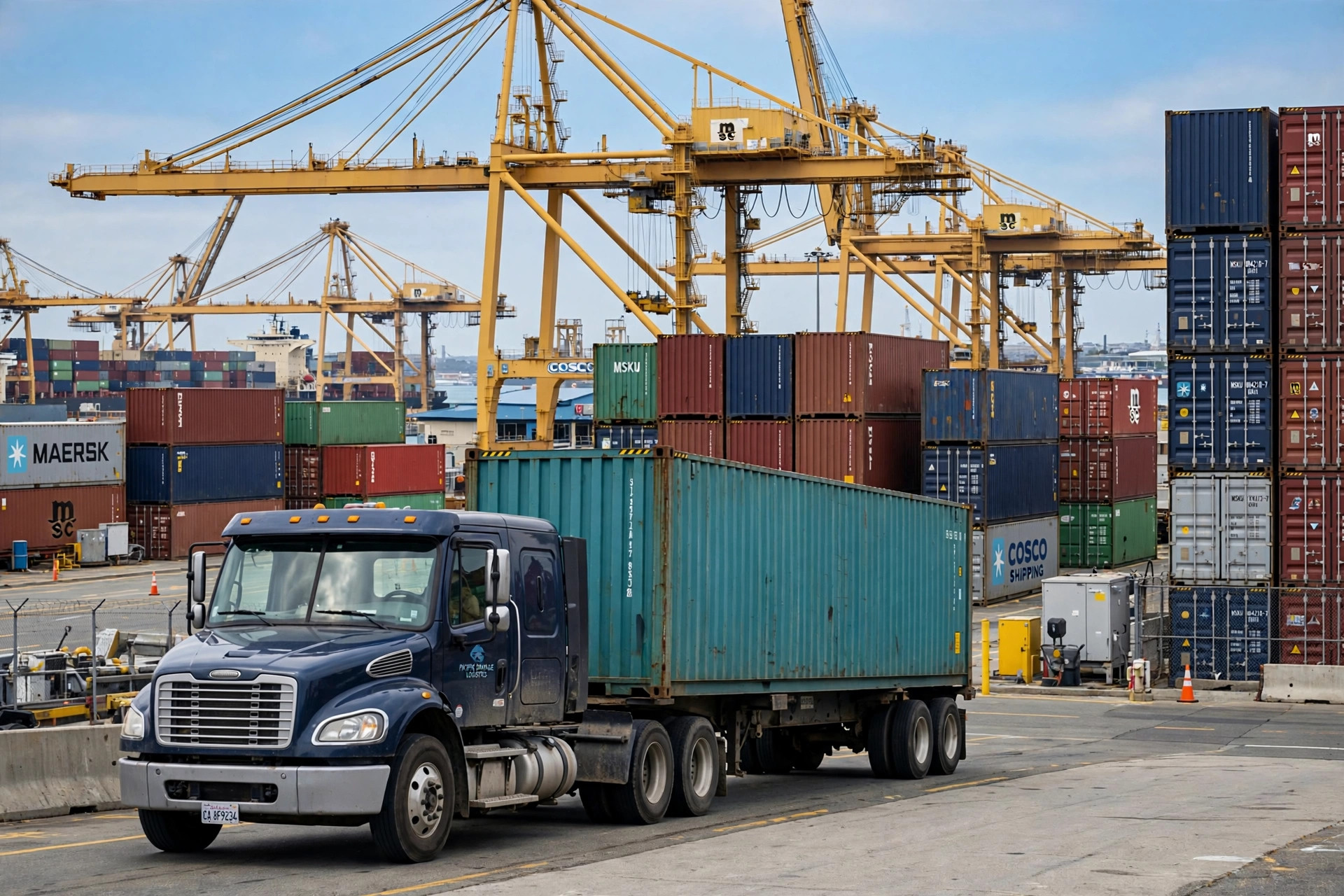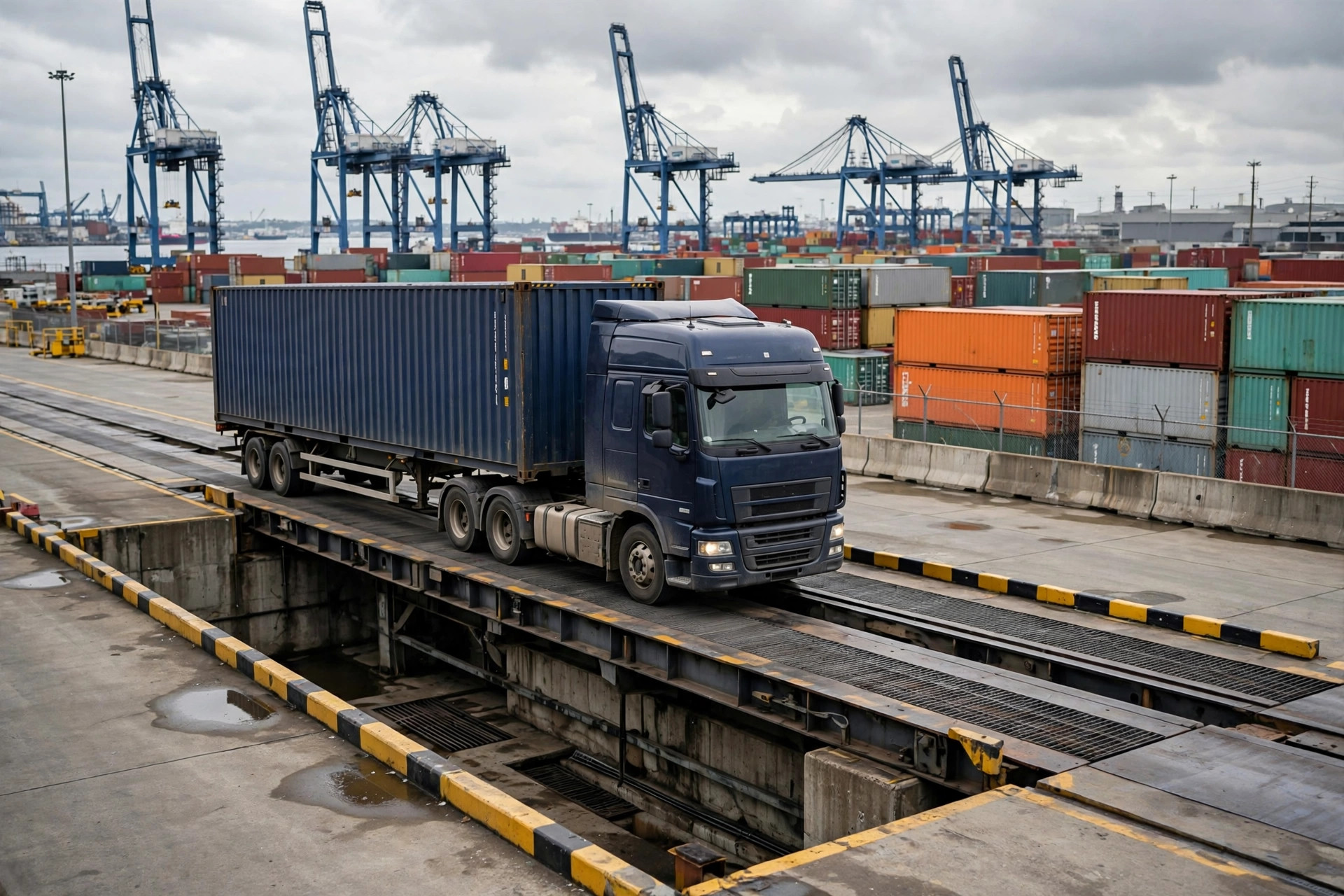
Let me tell you what happened in July 2023. My apprentice Xiao Li was heading north on I-5 in California when the CHP waved him into the weigh station. He was pulling a 40-footer out of the Port of Los Angeles, and the shipper had sworn on the phone: "It's not heavy, don't worry." The scale said otherwise. Li called me on the spot, voice shaking. Between the ticket and the lost time, that one trip cost the better part of ten grand. After that day, our fleet made it an iron rule: no matter what the shipper says, the container gets weighed before it rolls.
After all these years on the road, here's what I've learned about overweight loads: shippers think in volume, drivers think in feel, and nobody wants to do the math on weight — until the math gets done for them, in the form of a citation.
Every state's scale weighs different
Here's something they don't teach you in orientation: federal law caps trucks at 80,000 pounds gross on the interstate system. That's the ceiling, and nobody gets to go through it. But each state writes its own rules underneath that ceiling — different axle-weight formulas, different bridge laws, some states clamping down harder on certain corridors or seasons, some states funneling every truck through the scales at the state line while others just spot-check. My rule after all these years: don't drive Texas on California experience, and don't drive this year on last year's rules. When in doubt, check the latest on that state's DOT website. That's not me being polite — that's me saving you money. When the ticket is being written, "I thought" doesn't count. Only the number on the scale counts.
Route planning matters too: some state-line weigh stations run 24/7 with every truck rolling through, others are random spot checks. Veteran drivers check the stations along their route before a long haul. Rookies get burned by assuming "nobody checks this road" — whether they check is their business; whether you're overweight is yours.
Three chances to weigh — don't count on just one
First, the scale at the port gate. Pulling out of big ports like LA and Long Beach, you'll usually cross a scale on the way out, and if you're wildly over, they won't let you leave. But don't bet everything on this one — smaller ports and inland rail ramps don't all have it.
Second, a certified third-party scale. You know the ones at truck stops and fuel stations — a few dozen bucks, ten minutes, and you get a legally recognized weight ticket. If you do get flagged overweight down the road, that ticket is your proof that you did your due diligence. A few dozen dollars for insurance? That's the cheapest policy in trucking.
Third — and this is the one that matters most — know your weight at loading time. Shippers' declared weights have... let's call it optimism. Anyone running drayage knows. VGM, the verified gross mass rule, has been international law since 2016: under-declare, and the steamship line, the terminal, or the highway patrol will eventually do the math for you. Fudge it at the source and every step after is a landmine. Drivers have one more old-school trick before rolling: glance at the data plate on the container door. A 40-footer is rated for a maximum gross of roughly 30 metric tons — subtract the tare weight and you've got a yardstick in your head. Compare that against the shipper's declared number; if it's way off, don't move the truck until someone explains it.

What one overweight trip really costs
Early 2024, Port of Savannah: a warehouse tried to save the cost of one container by stuffing a 40-footer to the roof. The terminal scale showed it over by more than two tons. Container impounded, unloaded, reloaded — three days gone, and a missed sailing. Let me lay it out:
| Weigh it first | Get caught overweight | |
|---|---|---|
| Cost | A few dozen dollars, half an hour | Ticket in the thousands, minimum |
| Time | Done before you roll | Impound + unload, days not hours |
| Aftermath | A weight ticket and peace of mind | On your record — your insurance can go up too |
The ticket is just the opening act. Demurrage ticks by the day, the unload-reload labor and forklift time bill separately, and we haven't even counted the customer's claim for the missed sailing. Everything that "saved" container was supposed to save didn't cover a fraction of it. Penny wise, pound foolish — in this business, that proverb cashes in several times a year.
Straight talk for shippers and warehouses
Three things for shippers. One: declare the real weight. Your "estimate" gets paid for with the driver's citation. Two: leave 5–10% headroom when loading — don't pack to the limit. Roads bounce, scales disagree with each other, and the overage lands on you. Three: heavy cargo belongs in a 20-footer, not stuffed into a 40.
And here's the counterintuitive part most people miss: they don't just ticket gross weight — axle weight gets you too. Stack all the freight at the back of a 40-footer and your drive axles go over while the gross stays legal. Ticket just the same. The truck's fine; the wheels aren't — still a fine. Watching gross weight but ignoring axle weight is like locking the front door and leaving the back open.
Two things for warehouses: spot-weigh before the container leaves, and write the actual weight on the loading sheet — not "approx." Hand the weight ticket to the driver at handoff. That protects the driver, and it protects you. When something goes wrong, paper doesn't argue.
One more for my fellow drivers: spend five minutes before you roll — check the data plate, compare it against the shipper's declared weight, eyeball your axle distribution. Five minutes buys you a whole trip of peace of mind. Don't call it a hassle. The tickets have already called it a hassle for everyone who skipped it.
All these years, I believe one thing: better to spend half an hour at the scale than a few thousand on the ticket. Slow and steady wins the race — and "looks light enough" has never been a legal defense.
By Shifu Zhao, Trucking Veteran (15 yrs)