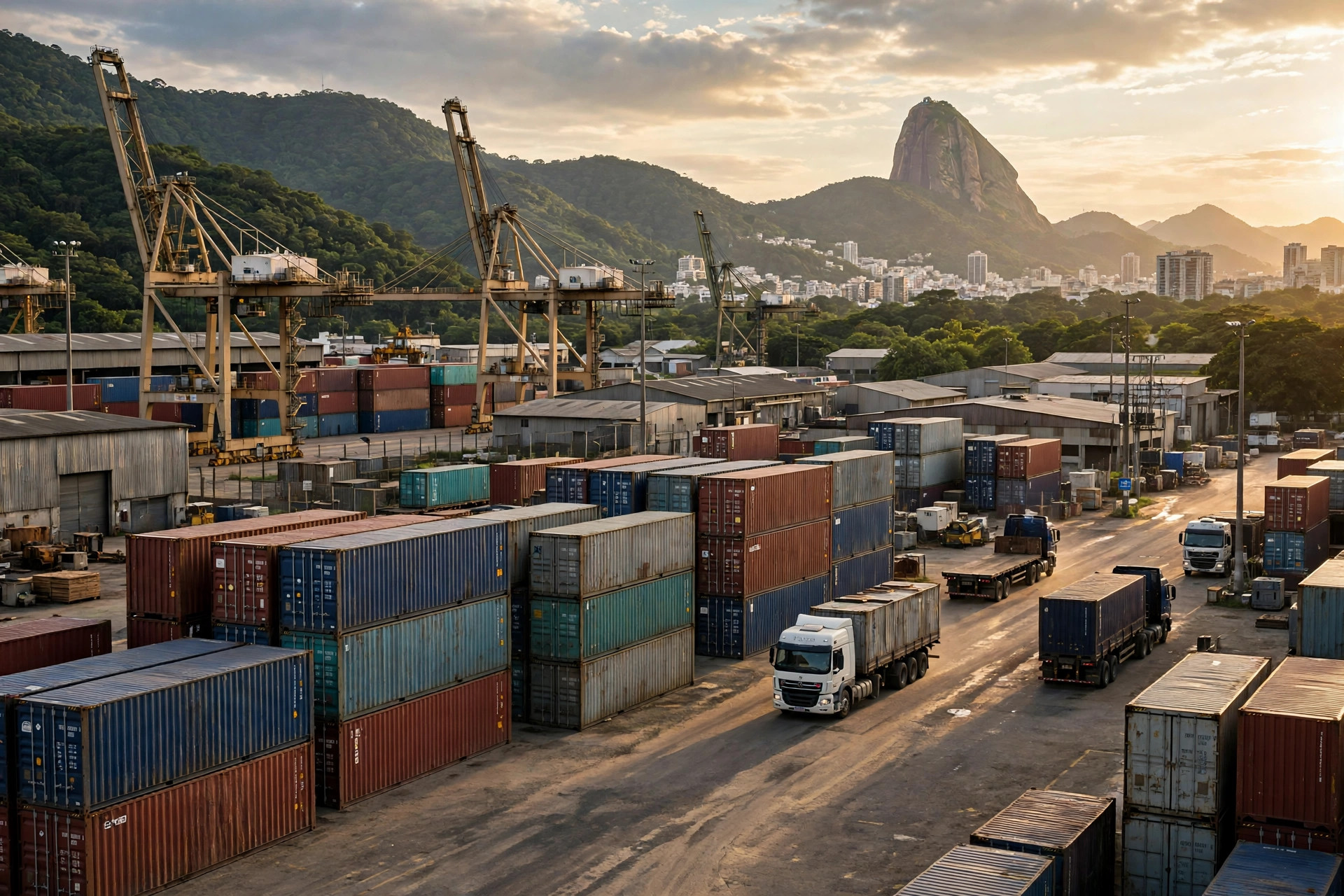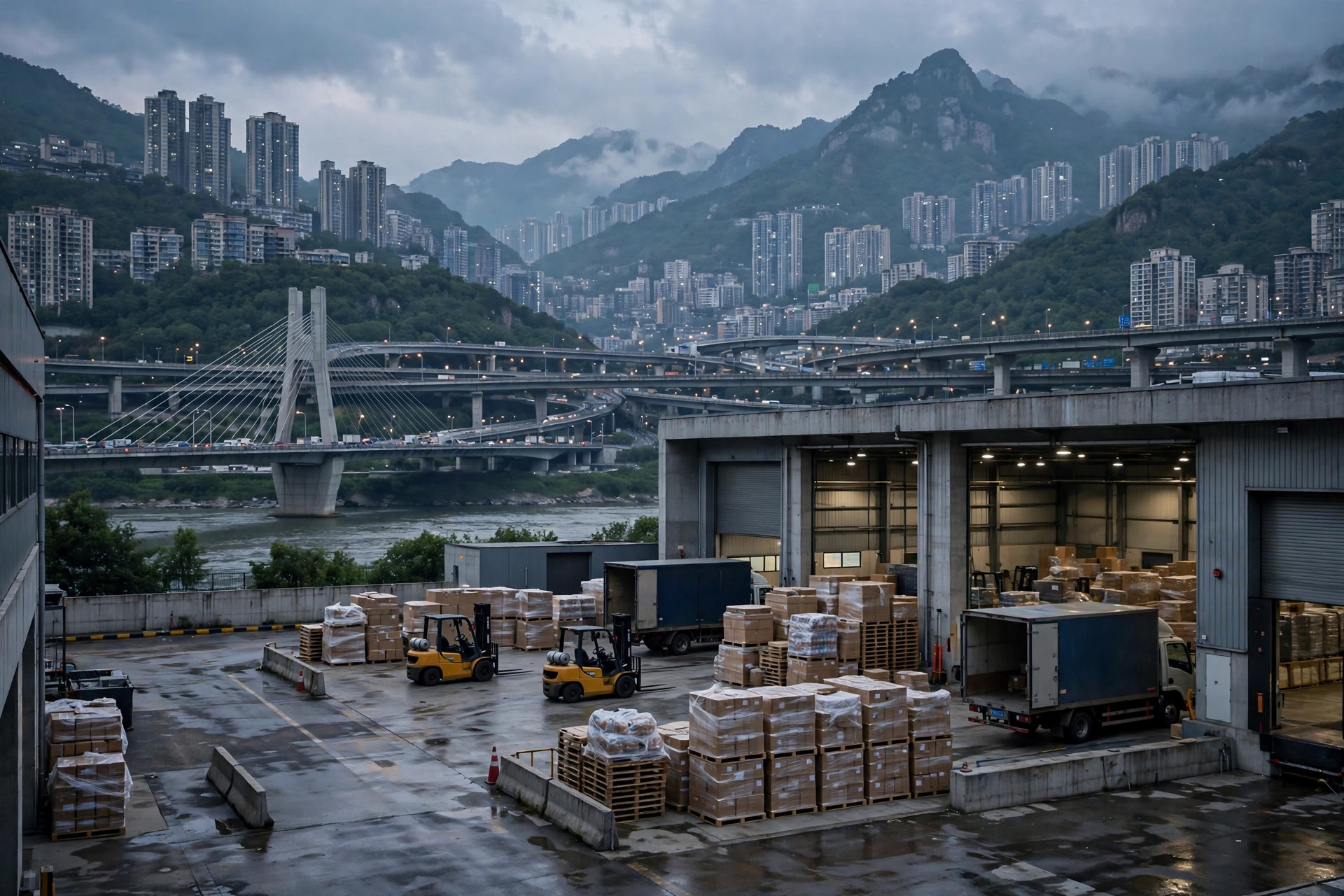
In October 2025, a seller of small home appliances moved his stock into a Chongqing warehouse, convinced that being closer to his main buyers would cut freight costs. Three months later he asked me to look at the numbers. Freight per order had dipped slightly, but late-delivery penalties were up, and his drivers complained every day about steep slopes, river crossings, and restricted driving windows. That is the honest starting point for any Chongqing warehouse decision: rent is rarely the hardest number. In this mountain city, cost hides in gradients, bridges, and time windows.
Chongqing Warehouse Locations: Liangjiang, Western Logistics Park, and the Airport Zone
An engineer's instinct applies here: match the site to the flow of goods before you fall in love with a building. The Liangjiang New Area suits high-value, high-frequency, small orders that need fast picking and dispatch. Its industrial base and support services are strong, but the space tends to be smaller, so the operation must run on a tight rhythm. The Western Logistics Park is built for trunk haulage and consolidation: large inbound volumes, full-truck collection, and a warehouse big enough to breathe. The trade-off is distance from some urban delivery points. The airport zone fits light, bulky, time-critical goods that connect to air freight; ground delivery from there needs an extra leg in the plan.
The classic mismatch I keep seeing is a seller putting large, slow-moving stock into a small warehouse near the city center because it feels close to customers. Full trucks struggle to get in, replenishment becomes constant, and the warehouse turns chaotic. The reverse is just as bad: high-frequency small orders served from a distant mega-warehouse, where every urban round trip eats the rent saving in fuel and driver hours. The rule is simple: order volume and frequency should decide whether your warehouse sits near the trunk network or near the customer. A site that tries to do both usually does neither well.
Use the comparison below as a working scorecard. It ranks fit, not absolute price. Rents and vacancy rates move fast in this market, so check the latest local market reports before signing anything; the point here is the relative trade-off, not a quoted rate.
| Decision factor | Liangjiang New Area | Western Logistics Park | Airport zone |
|---|---|---|---|
| Best for | Frequent small orders, high value | Bulk volume, full-truck consolidation | Light, time-critical, air-linked goods |
| Trunk connection | Strong industrial support | Deep trunk and distribution base | Close to air cargo |
| Urban delivery | Smooth city coverage | Some districts need a longer run | Ground leg needs extra planning |
| Biggest trap | Small site choking on bulk stock | Distant site dragging down frequent orders | Air focus forgetting ground delivery |
Chongqing Warehouse Costs on the Road: Slopes, Restrictions, and River Crossings
The second bill to calculate is the road itself. Heavy trucks hate steep gradients: they climb slowly, wear brakes and tires faster, and need longer safety margins in rain. Driving restrictions cut the working day into windows, so the number of trips a driver can complete drops. River crossings are the real bottleneck. A bridge or tunnel that looks clear at noon can add dozens of minutes at peak hours. If a large share of your deliveries cross the river, you are betting daily service levels on two or three crossings.
Before the 2026 Spring Festival, I rode along with a local supermarket supplier running out of a warehouse on the Jiangbei side. Three vans left at 7 a.m. for stores in Yuzhong, Nan'an, and Jiulongpo. The Nan'an van hit congestion at the river crossing and arrived 40 minutes late, nearly missing the store's receiving window. On the way back, the driver ran into a restriction window and waited an hour at the roadside. The whole shift delivered just 28 orders, with 2 late. Small numbers, but the logic is unmistakable: delivery cost in Chongqing is not measured in straight-line distance. It is measured in gradients, crossings, and windows.
Three hard practices follow. Run real delivery shifts for a week before promising any delivery time; never promise next-day delivery based on a map measurement. Schedule cross-river orders as a separate wave with its own buffer, not mixed in with same-side orders. And split heavy goods from light, bulky goods across vehicles: heavy loads suffer on slopes, bulky loads suffer on detours, and mixing them punishes both.
Before signing a lease, do your own road test. Drive the longest cross-river route at morning peak from the warehouse gate and log the real time and choke points. Repeat it in rain and watch how gradients and braking distances change. Talk to a driver and ask which hour and which junction he dreads most on that route. Those three runs tell you more about a site than any brochure ever will. Money saved at the negotiating table is often lost on roads nobody bothered to drive.
Chengdu-Chongqing, the Yangtze, and China-Europe Rail: Do Not Treat Chongqing as an Island
Here is the counterintuitive judgment: many operators set up in Chongqing, serve only Chongqing, and end up with a warehouse that is too small to be resilient. Freight flows constantly between Chengdu and Chongqing. If your goods have steady demand in both cities and trunk services can support replenishment, one Chongqing warehouse can cover both markets. A single-city warehouse is exposed to every local demand swing; a two-city warehouse lets peaks and troughs partly offset each other, and utilization ends up steadier.
The Yangtze River and China-Europe freight trains are a different kind of trade-off. River shipping suits large, non-urgent volumes with an attractive cost structure, but it is inflexible on timing, and sailing schedules and seasonal water levels need buffer time. Rail to Europe suits sellers with steady Europe-bound shipments, but the calculation must include customs, consolidation, and terminal time, not just the trunk leg. Do not treat river and rail as cheap substitutes for road transport. They are tools for different speed tiers: urgent goods go by road and air connections, unhurried bulk goes by river, and Europe-bound volume gets a separate rail assessment. Blending them into one average cost produces a number that looks tidy and means nothing.
One last trade-off is worth stating plainly. A bigger warehouse absorbs volatility; a smaller one stays flexible. In a fast-moving market, a new seller is better off starting with space that can expand or shrink, proving the routes, the crossings, and the two-city coverage first, and only then committing to a long-term large site. Get the route map right first, then lock in the floor area. In a mountain city, moving a warehouse after choosing the wrong site costs far more than a few months of rent difference.
In the end, the Chongqing warehouse calculation is not a rent comparison table. It is a route map: where goods come from, which crossing they use, how many rivers they cross, and which window they arrive in. Get that map right, and the choices about district, size, and transport mode largely make themselves.
By Da Liu, Automation Engineer