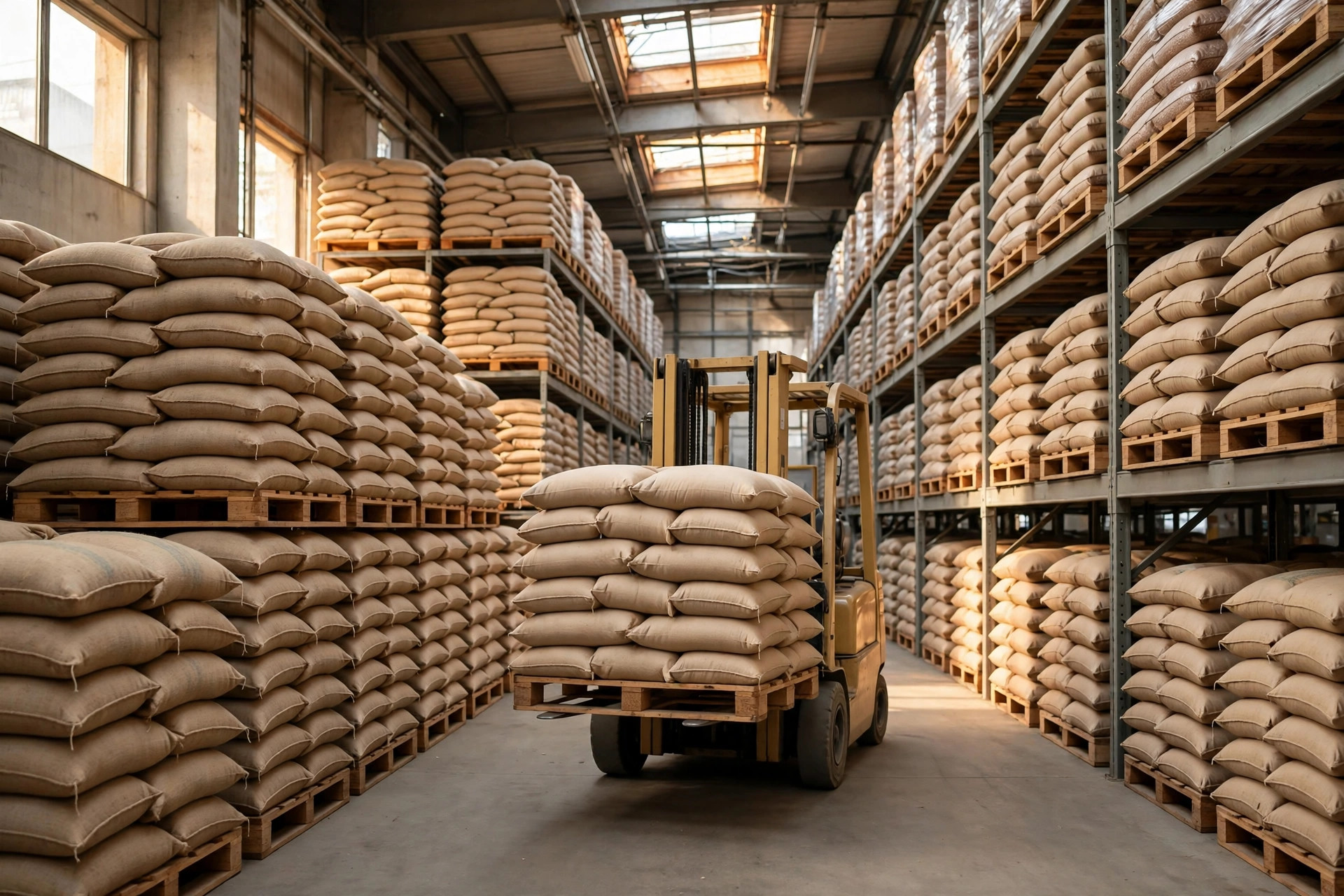
China garlic export warehouse logistics is where the money is won or lost, and I cannot afford to burn it. That is the first thing I told myself before taking on garlic export orders. My warehouse is 3,000 square meters, the cold rooms are few, the equipment is secondhand, and I can count the staff on two hands. Garlic looks tough, but it has a temper: too warm and it sprouts, too damp and it molds. Three months in storage and nine months in storage are two completely different businesses.
But the garlic trade smells too good to ignore. China is the world's biggest garlic exporter: about $3.15 billion in 2024, roughly 72.6% of global export value. Fresh or chilled garlic exports reached about 2.25 million tonnes in 2025, with Indonesia the largest buyer. Jinxiang county alone plants garlic on 600,000 mu year after year, harvests about 900,000 tonnes, and ships to more than 170 countries and regions. A slice of a pie that big is worth chasing — and a small warehouse gets its slice not with fancy equipment, but with scrappy methods and careful math.
China Garlic Export Warehouse Logistics: The Small Warehouse Dilemma
Every May, when harvest season starts and farmers haul garlic into the Jinxiang markets, my anxiety starts with it. Fresh garlic comes in wet. Leave it in an ambient warehouse and it holds for a month or two at most before it goes soft and starts sprouting. The research is blunt: garlic keeps only 1 to 2 months at 20 to 30 degrees, starts sprouting above 5 degrees, and once sprouting takes hold, weight loss runs past 9 to 11%. At 0 degrees, weight loss is only 3.6 to 5%. A 5% weight difference on a tonne of garlic is real money when you sell by weight.
That is the small warehouse dilemma: the cold rooms are always full, renting more means deposits and long contracts, and an empty cold room in the off-season still costs money. In August 2026, ordinary mixed-grade Jinxiang garlic was trading around 2.1 yuan per jin outside the cold stores (Mysteel market quote). Not high, not low. Buy and you risk sitting on stock; sit on stock at ambient temperature and the garlic sprouts. Last year I got greedy and bought an extra 40 tonnes at harvest, left it three weeks too long in the ambient warehouse, and opened the doors to find sprouts everywhere. It went off as processing-grade garlic at a discount (illustrative scenario). That one loss would have paid half a year of cold room electricity.
Harvest season has another lesson: grading. In the same lot, the uniform bulbs with clean skins go to export, the small and damaged ones go domestic or to processing, stored separately and sold separately. Mix them together and the export inspection picks out the rejects, dragging the whole container's grade down. Half a day of extra grading labor buys you the price gap between export and domestic. That math I know by heart.
The Scrappy Fix: Hold the Minus 1 to 0 Degree Line
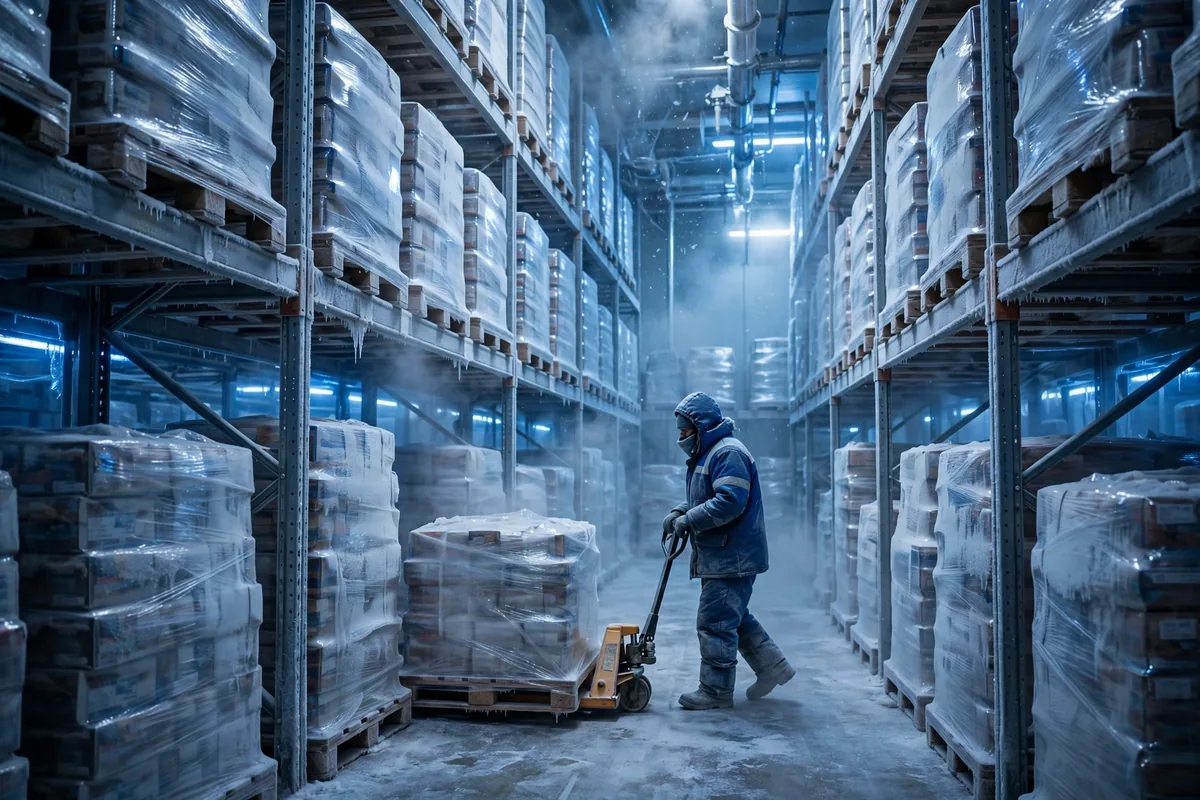
The golden rule for long-term garlic storage is settled science: minus 1 to 0 degrees, 60 to 70% relative humidity, and good ventilation. Kept there, garlic stores for 6 to 9 months. Too warm and the bulbs wake up; too cold and the cells freeze; humidity above 75% and mold throws a party; below 60% and the bulbs dry out and shrivel. The rule looks simple. Holding the line is the actual skill.
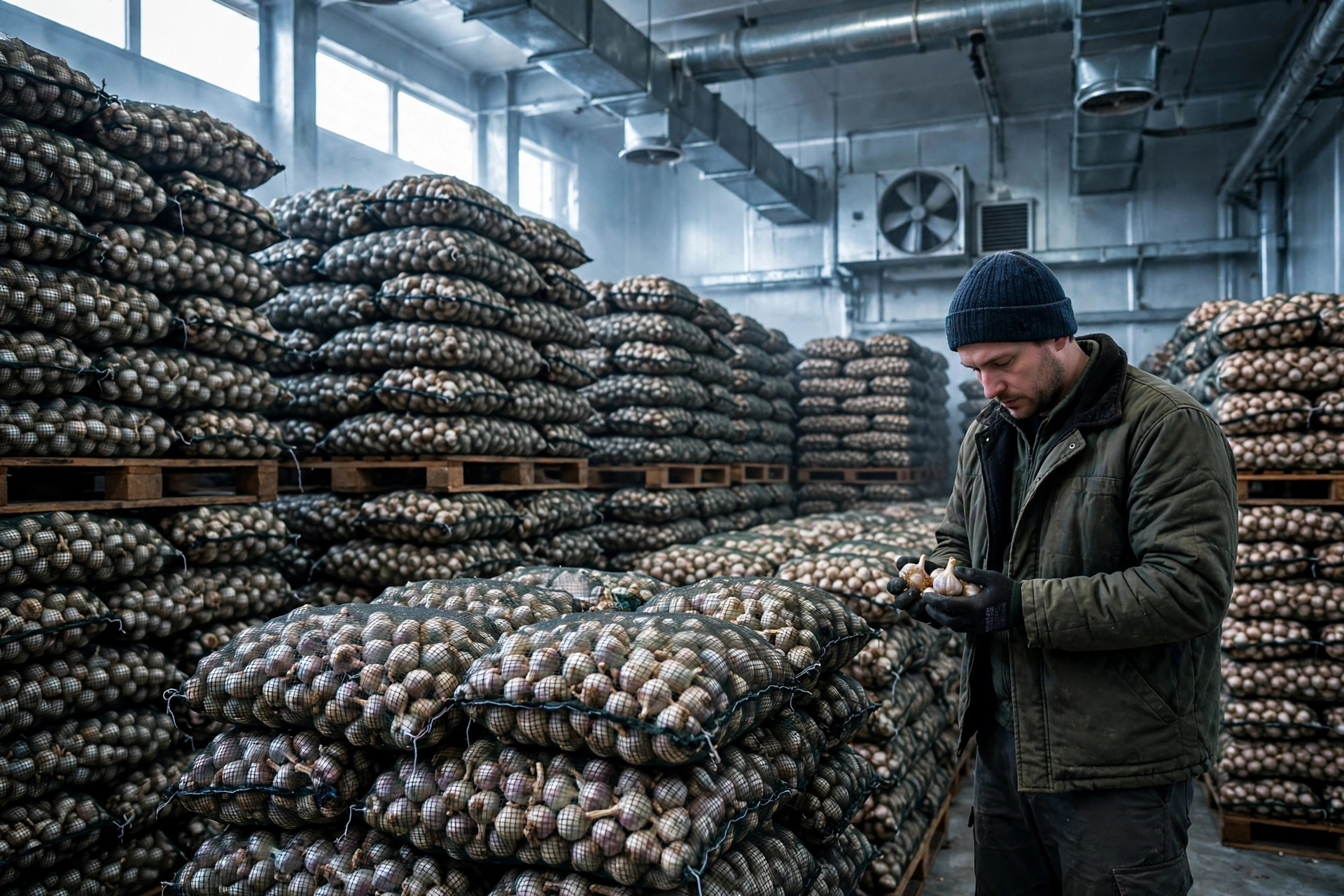
Our small warehouse has three scrappy tricks. First, staged intake: fresh garlic gets aired out to shed surface moisture before it ever enters the cold room. Wet bulbs never go straight in; they rest two or three days in a ventilated shed until the skins feel dry. Second, thermometers on every stack, not one per room. Workers log readings twice a day, morning and evening, and a half-degree drift gets adjusted the same day. Third, no sealed plastic bags. Mesh bags and ventilated crates only — condensation inside a sealed bag is where mold starts.
Does this low-tech approach actually work? It does. The garlic we stored this way last year came out after nine months with sprouting under control and moldy crates few enough to count on one hand. Cold room electricity cannot be avoided, but scrappy methods save the rework and the claims. Big companies rely on automation. We rely on sharp eyes, busy hands, and written records, and the results are not far off.
Here is a trick many people miss: do not store garlic at refrigerator temperature. Around 4 degrees is exactly the range where garlic loves to sprout. A cold room should sit firmly at minus 1 to 0 degrees, or do not store at all. Temperature swings are just as bad — every swing condenses moisture on the skins, and mold follows. My rule is simple: if the room drifts more than 1 degree, find the cause the same day.
Walk-throughs matter too. In peak season I walk the cold rooms twice a day, checking thermometers in the morning and sniffing the air in the evening. Before mold shows, the room picks up a dull sour smell, and a nose catches it first. Smell it, open the stack, check. And keep the door closed as much as possible — every opening lets warm, damp air in and gives the garlic one more reason to sprout.
I ran the electricity math too (hypothetical example): a small cold room costs several thousand yuan a month in power, which sounds scary until you divide it by the tonnes inside — a few dozen yuan per tonne per month. Hold the garlic one more month and sell into a better price, and two or three mao more per jin means 400 to 500 yuan more per tonne. Electricity is a visible bill. Sprouting and mold are the hidden loss. The visible bill looks expensive; the hidden loss is what actually kills you. China garlic export warehouse logistics, in the end, is a contest of who loses less to the hidden stuff.
The Shipping Math in China Garlic Export Warehouse Logistics
Good storage is only half the job. The other half is getting the container out. Fresh garlic ships under HS code 0703.20, and before export you confirm the destination's inspection rules — pesticide residue and fumigation requirements differ by country, and wrong documents mean the container sits at the port. Policy details should always be checked against the official source, not a forwarded message in a chat group.
Consolidation versus a full container is the same math problem as the cold room, and here is how I run it (hypothetical example):
| Option | Fits when | How it feels for a small warehouse | Biggest trap | | LCL consolidation | Less than one full container | Low entry cost, easy on cash flow | Waiting for the box, mixed cargo, paperwork fights | | Full container | One container or more | Lower per-unit cost, schedule under your control | Forcing a full load ties up cash | | LCL plus overseas warehouse | Steady repeat volume | Heavy upfront commitment | Wrong stocking call, rent eats the margin |
Take a 25-tonne lot of fresh garlic bound for Indonesia (hypothetical example): LCL costs roughly 10% more per tonne on freight and port charges than a full box, but holding stock an extra two weeks to fill a container costs more in cold room rent and tied-up cash than the LCL premium saves. Small warehouses run on thin cash flow. Waiting three to five days for an LCL sailing beats sitting on stock for two weeks.
Before loading, I inspect the goods myself: a few crates pulled at random from each stack, bulbs split open to check sprouts and mold, weight loss logged before dispatch. The buyer checks the same things at destination, so I check first and answer with numbers. A stack that fails inspection does not ship — it goes domestic at a small loss. That protects the export customer's trust. A big company loses one customer and has ninety-nine left. We lose one and that is ten percent of the business gone.
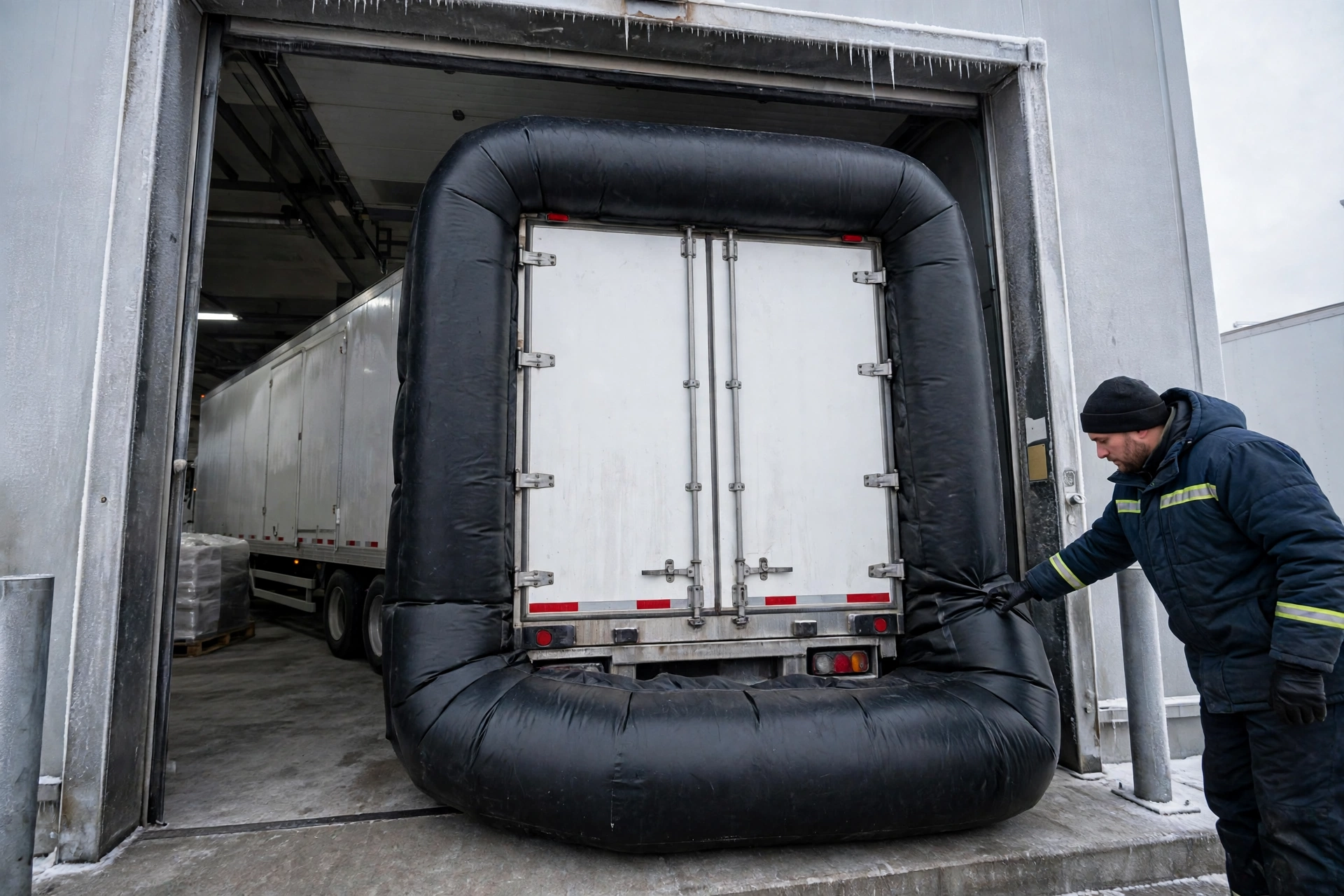
One more consolidation detail: garlic smells strong. Before loading, always ask what else shares the container. Anything odor-sensitive or moisture-sensitive is a hard no. On loading day I ask the warehouse for three photos: the empty container inside, the half-loaded container, and the seal number after closing. The seal number goes to the customer the same day. If the seal does not match at destination, responsibility is clear in minutes. And the documents — product name, net weight, production date — one wrong letter can hold a container, so I check them line by line before departure.
Small warehouses have their own way of surviving: small cold rooms mean staged intake, cheap equipment means busy hands, small volumes mean consolidation. The garlic export game rewards scale for the big players and care for players like us. Get temperature, humidity, and consolidation right, and a small warehouse can ship garlic overseas just as steadily as anyone else.
By Xiao Ma, Small Warehouse Owner