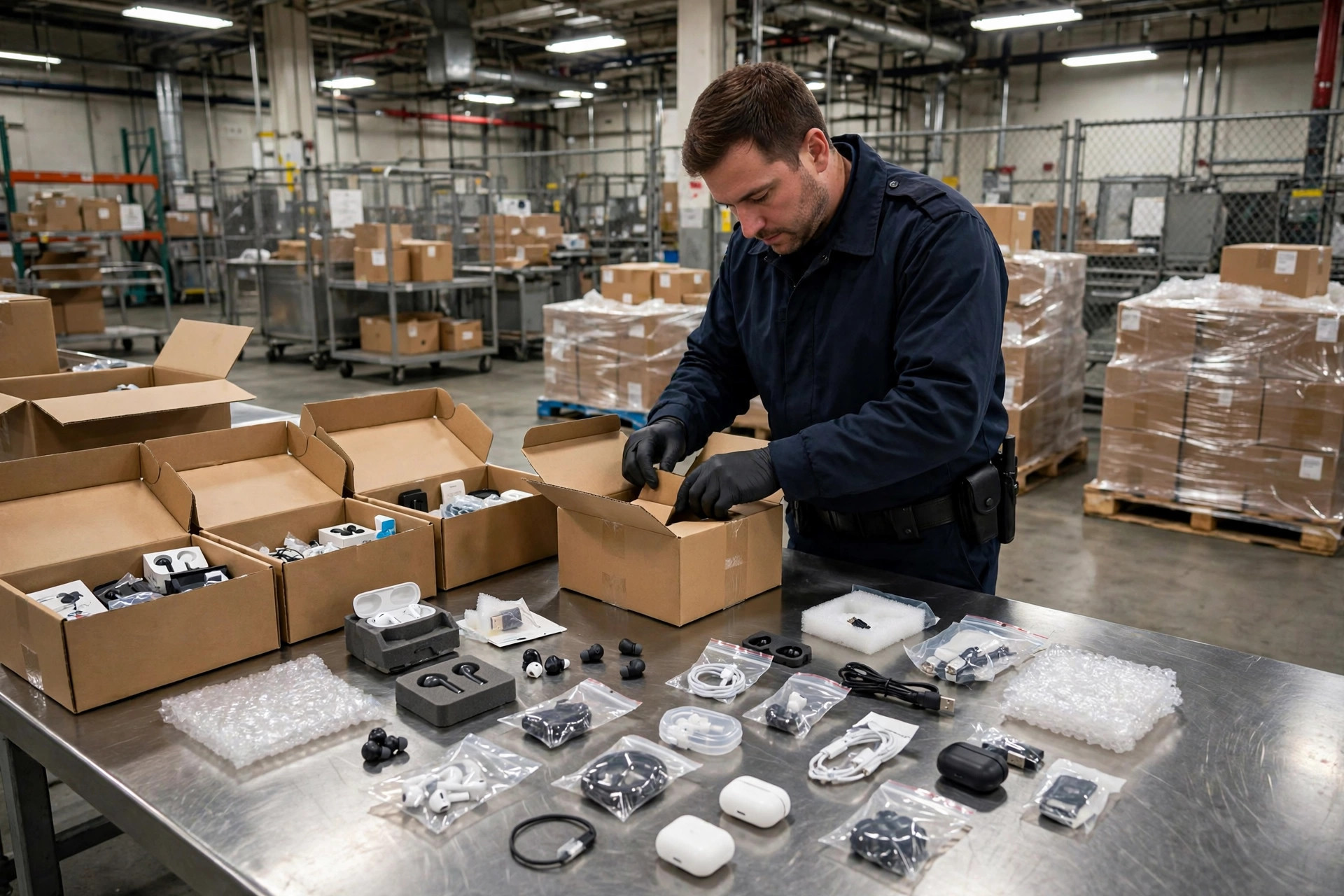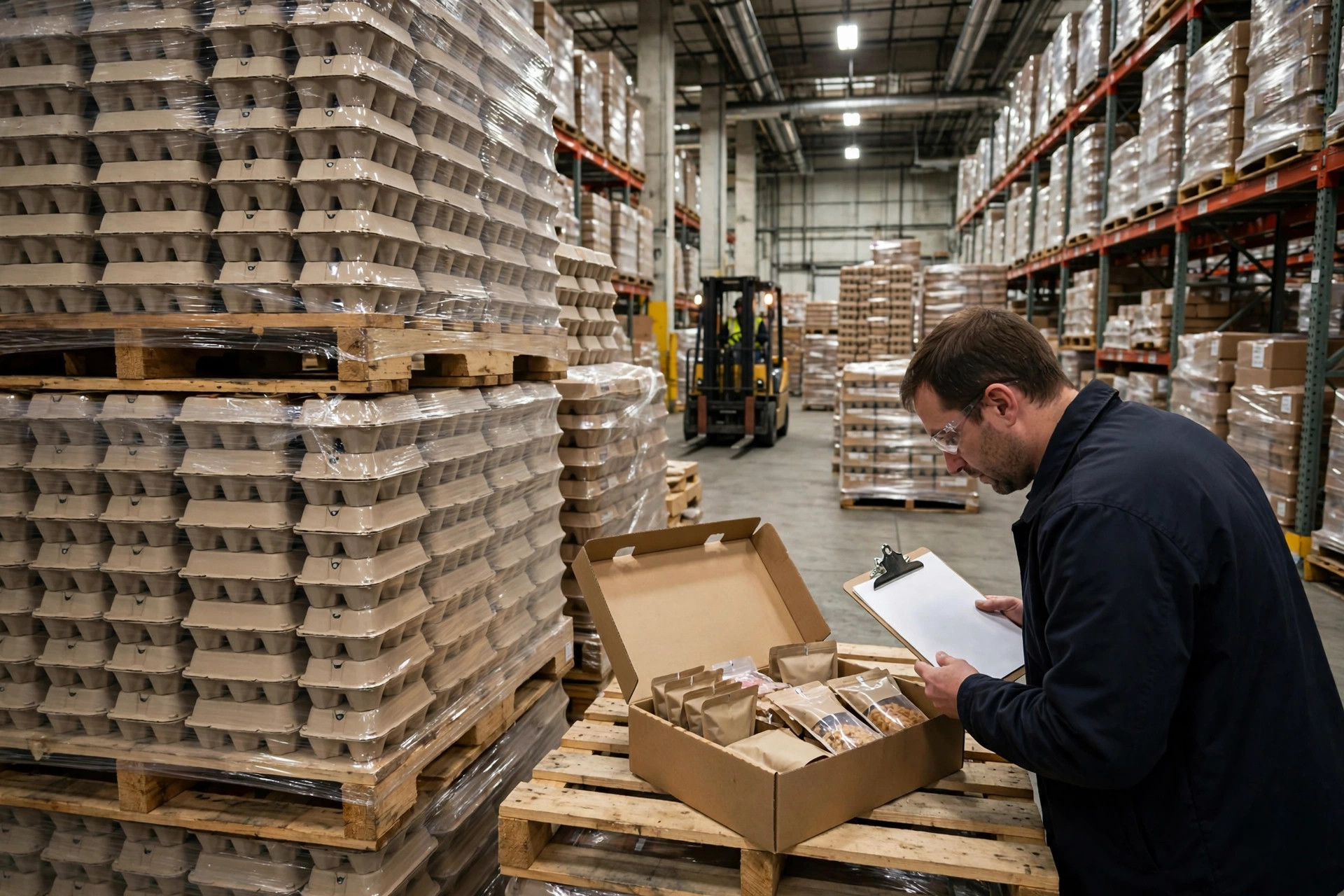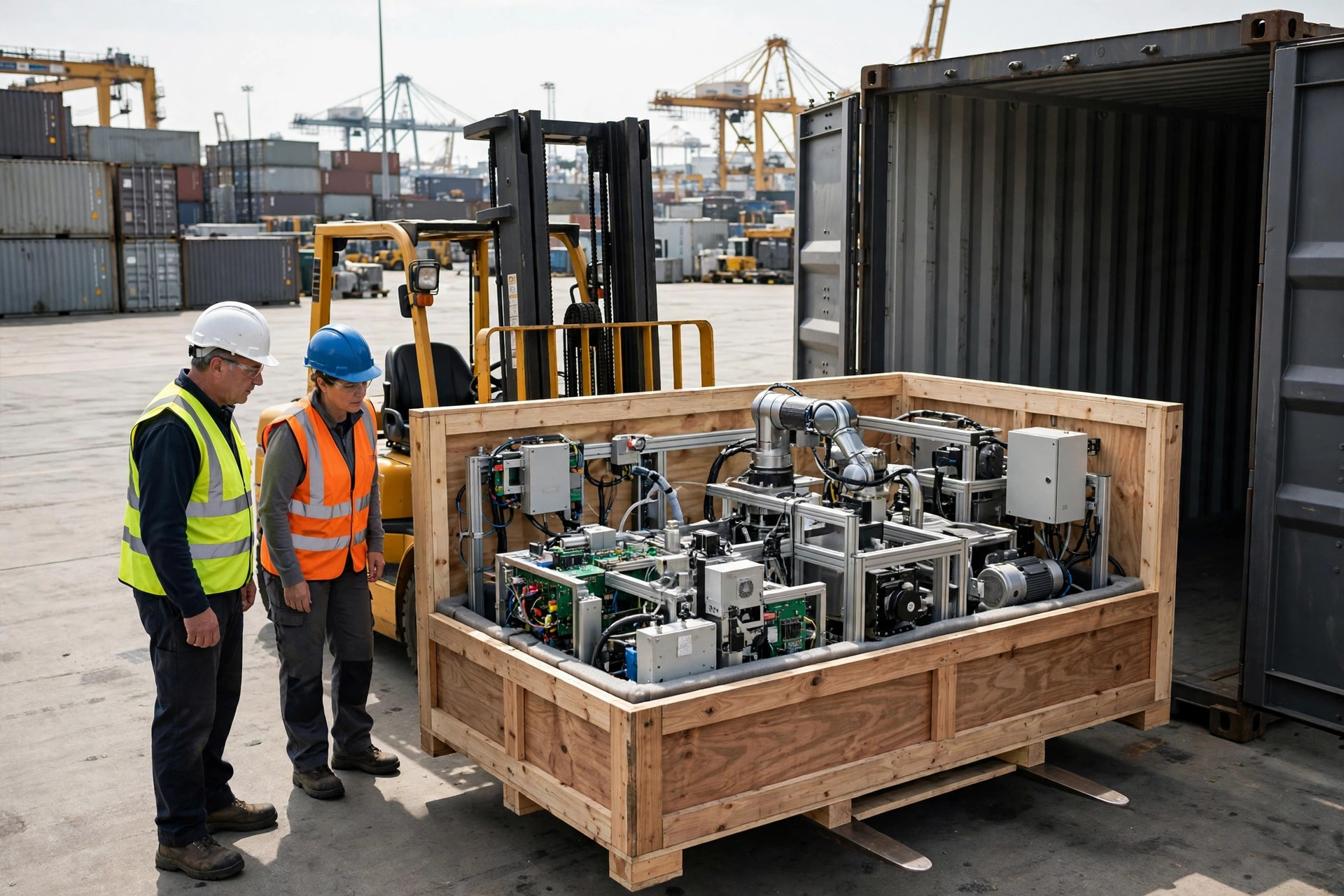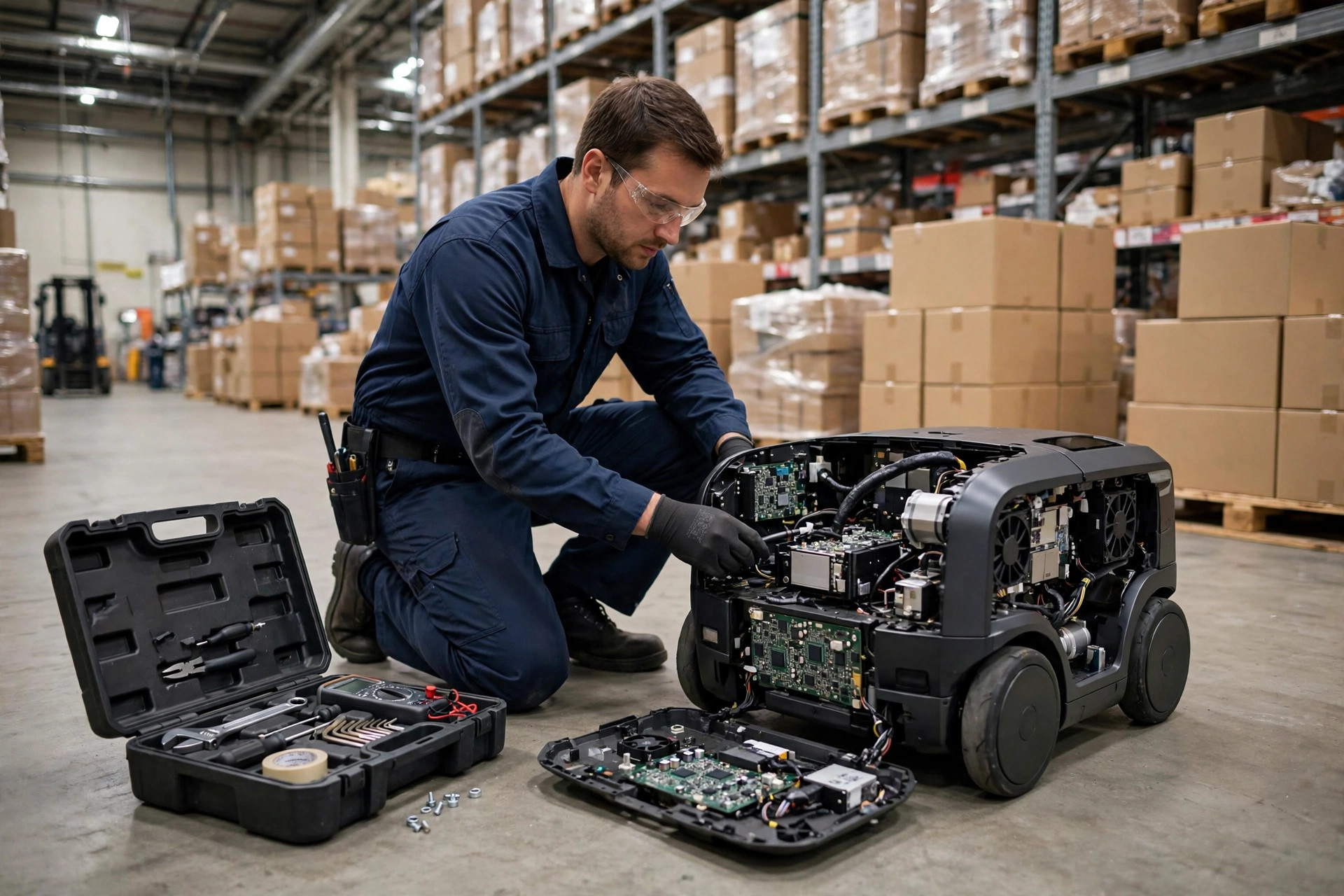
What does twelve days of downtime cost? During peak season, a sorter sitting idle means tens of thousands of parcels rerouted, temp labor hired in a panic, rental equipment rushed in, and penalty clauses triggered — all at once. The worst case I have seen was a 3PL warehouse in the American Midwest: three Chinese-built AMRs running a put wall, and all of it brought down by a single drive-wheel motor. A small part, a few hundred dollars. But with no service plan and no spares on hand, the machines sat dead for twelve full days. The equipment had cost thirty percent less than the American brand. One breakdown wiped out the entire saving, with interest.
The most expensive part of buying Chinese automation equipment is rarely the equipment. It is everything that happens after the equipment stops. Here is how to get the math right.
Option one: fly the factory engineer over
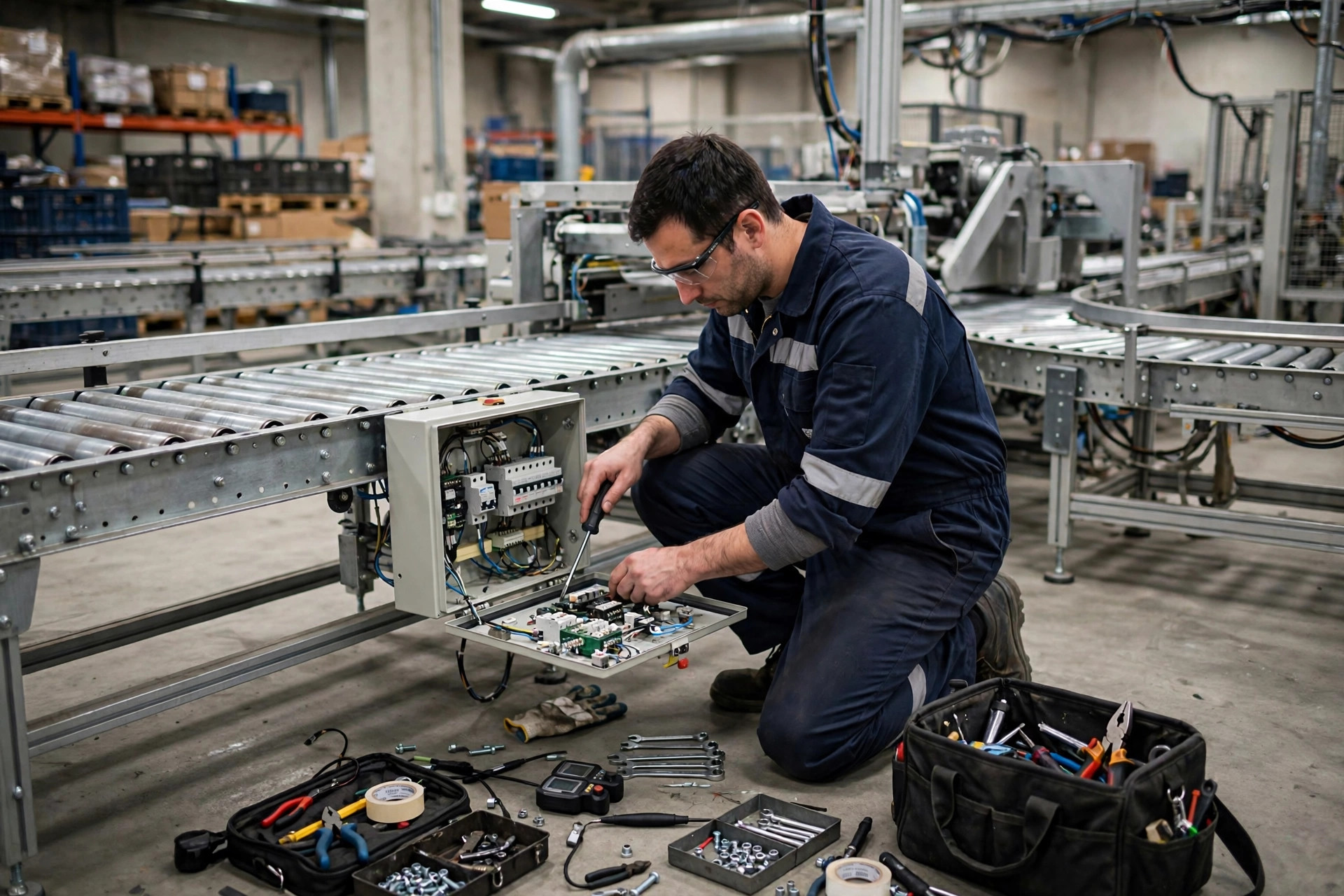
This is the default, and the easiest to get wrong. The usual sequence: you file a ticket, they diagnose remotely, they confirm someone must come on site, then comes the visa, the flight, the jet lag. Two weeks have passed before anyone touches the machine.
There are two kinds of failures. Some can be fixed with a part swap once identified remotely. Others require hands on the machine, tearing it down, tracing the fault in person. The second kind turns a two-week wait into a catastrophe. If your warehouse runs around the clock, this option is barely an option at all.
My read: factory engineers make sense during commissioning and the first year, when the equipment is new to your site and teething problems are frequent. Having the original engineer on the floor then is worth the airfare. Relying on it as your long-term service model is gambling.
Option two: hire a local third-party service firm
America has no shortage of equipment maintenance companies. They know OSHA site rules, they understand local electrical standards, and they usually show up same-day or next-day. The catch: they have never seen your machine.
The critical move is a proper handover before signing: electrical schematics, mechanical drawings, the fault-code list, access credentials for the BMS or control software — all of it transferred to the service firm, with a requirement that one or two named engineers own your account. Buyers who skip this discover that a different technician shows up every time, each one relearning the equipment from zero. That contract is worthless.
Also negotiate the spares channel: can the third party source genuine parts from the factory? Are pricing and lead times written into the agreement? Leave this vague and you will one day find a knockoff part installed in your machine. It runs — until something goes wrong and nobody knows whose fault it is.
Option three: hire your own technician
Sounds like the most expensive choice; often it is the cheapest. A competent electromechanical maintenance engineer in the US Midwest is not cheap, but one person covers every machine in your building, not just the Chinese ones.
The math hinges on scale. With one or two machines, hiring your own does not pencil out. With three or more, or with expansion planned, your own technician beats the other two options starting in year two. And the real value of an in-house person is not repair — it is prevention. Daily inspections, belt tension, sensor cleaning: the small rituals that cut major-failure probability in half.
The hybrid path works well: use factory and third-party support in year one while you hire, have the factory engineer train your person through two major service cycles, then go in-house in year two. Most mature 3PLs I know arrived exactly this way.
How many spares: two categories, two formulas
Spares are where buyers swing between two failures — a shelf of parts gathering dust, or one missing part shutting down the line. Split everything into two buckets:
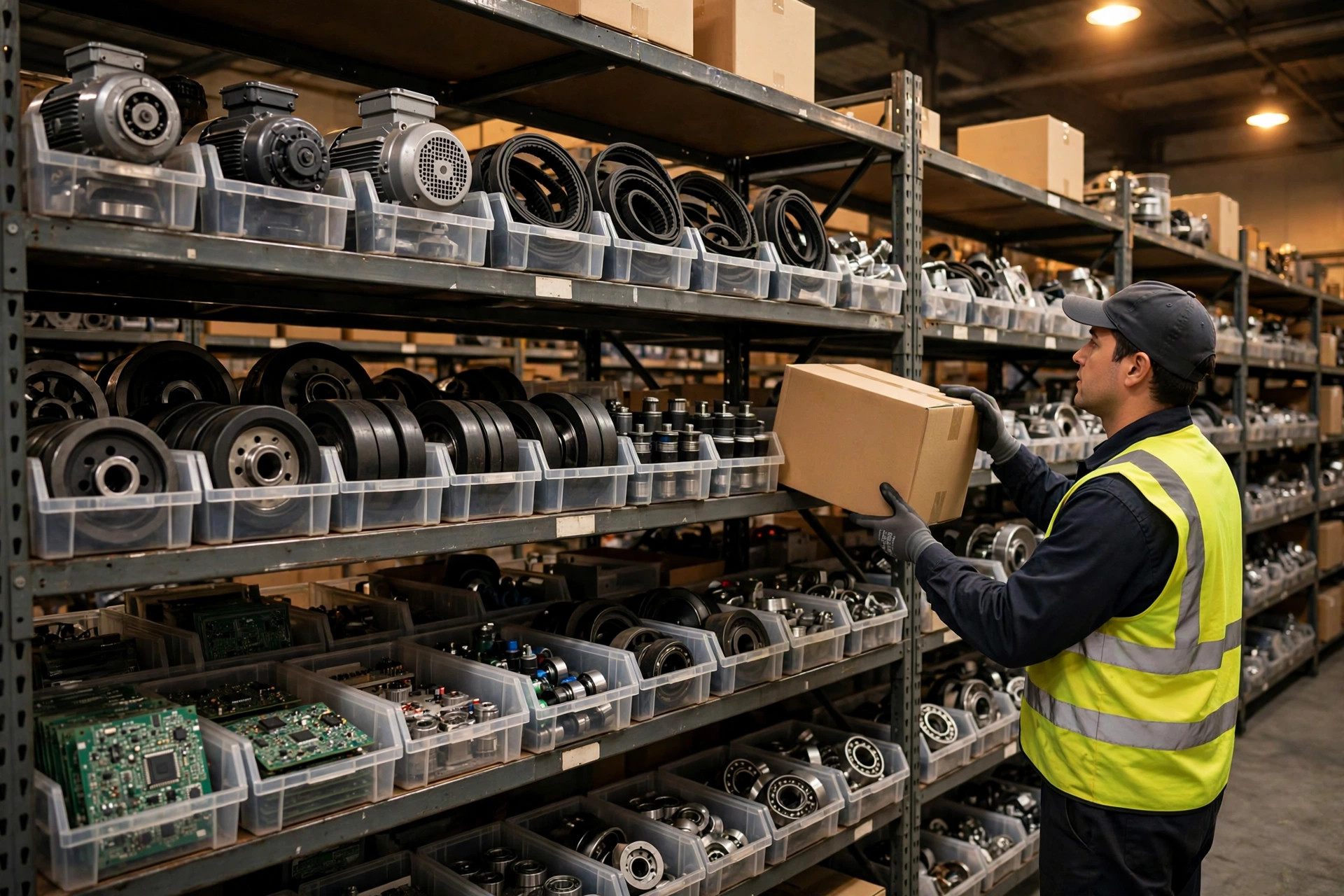
Critical parts: anything whose failure stops the line and takes long to source — main control boards, drives, proprietary motors, LiDAR units. The formula is blunt: keep at least one full set on site, whatever it costs. Its stockout cost is a dead line, which is in a different universe from the part's price.
Wear parts: belts, rollers, casters, sensors, fuses. The formula: take last year's consumption and stock 1.5 years' worth. These are cheap and compact; overstocking costs nothing, while a shortage nags you weekly.
Everything generic — screws, cables, standard bearings — needs no stock; you can buy it locally same-day. Review the spares list once a year: promote anything you emergency-ordered twice, demote anything you never touched. The list gets smarter every cycle.
Five clauses that must be in the contract
Whichever service model you choose, if these five are not written down, you have not bought service:
- Response times: remote response within how many hours, on-site arrival within how many days — tiered by severity (line-down versus non-critical).
- Parts delivery times: maximum days from order to delivery for critical parts, with penalty terms for misses.
- Remote diagnostics: the equipment must support remote access, and the vendor must provide a real support channel across time zones. "Time difference" is not an excuse.
- Training: the factory trains your people at least once a year — on site or by video — on routine maintenance and first-level fault handling.
- Parts price lock: cap annual parts price increases in the contract. This blocks the classic play — cheap machine, then price-gouged spares. Price adjustments follow whatever the contract specifies.
The total bill: where the thirty percent goes
Let us run the numbers. Everything below is a labeled hypothetical; the method is what matters, and you should plug in your own figures.
Assume a Chinese-built sorter costs thirty percent less than the American brand, saving $60,000. One critical-part failure with no local spares: seven days waiting for the factory to air-freight the part, five more days for the engineer to arrive. Twelve days down. During those twelve days, temp labor runs $2,000 a day, and delay penalties plus customer fallout run another $3,000 a day — $60,000 total. The saving evaporates in a single incident.
Now the alternative: you spent $8,000 on a critical-parts set and signed a local service firm at $15,000 a year. That same failure costs you one day of downtime and $5,000 in losses. The difference was never in the equipment price. It was in the number of down days.
So the purchasing decision should never compare equipment quotes. Compare equipment price plus three years of service plus one critical-parts set — total cost of ownership. Run it that way and Chinese equipment is usually still cheaper, but the discount shrinks from "thirty percent" to "a bit over ten." That shrunken number is what you actually pocket.
Before you sign, run this checklist
- Picked a service model (factory / third-party / in-house) matched to your machine count
- Listed critical parts and stocked one full set on site
- Stocked wear parts at 1.5× annual consumption
- Walked through all five contract clauses line by line
- Computed total cost of ownership as equipment + three years of service + critical spares
Check every box before placing the order. Tape this list to the buyer's desk — it is worth more than any service promise.