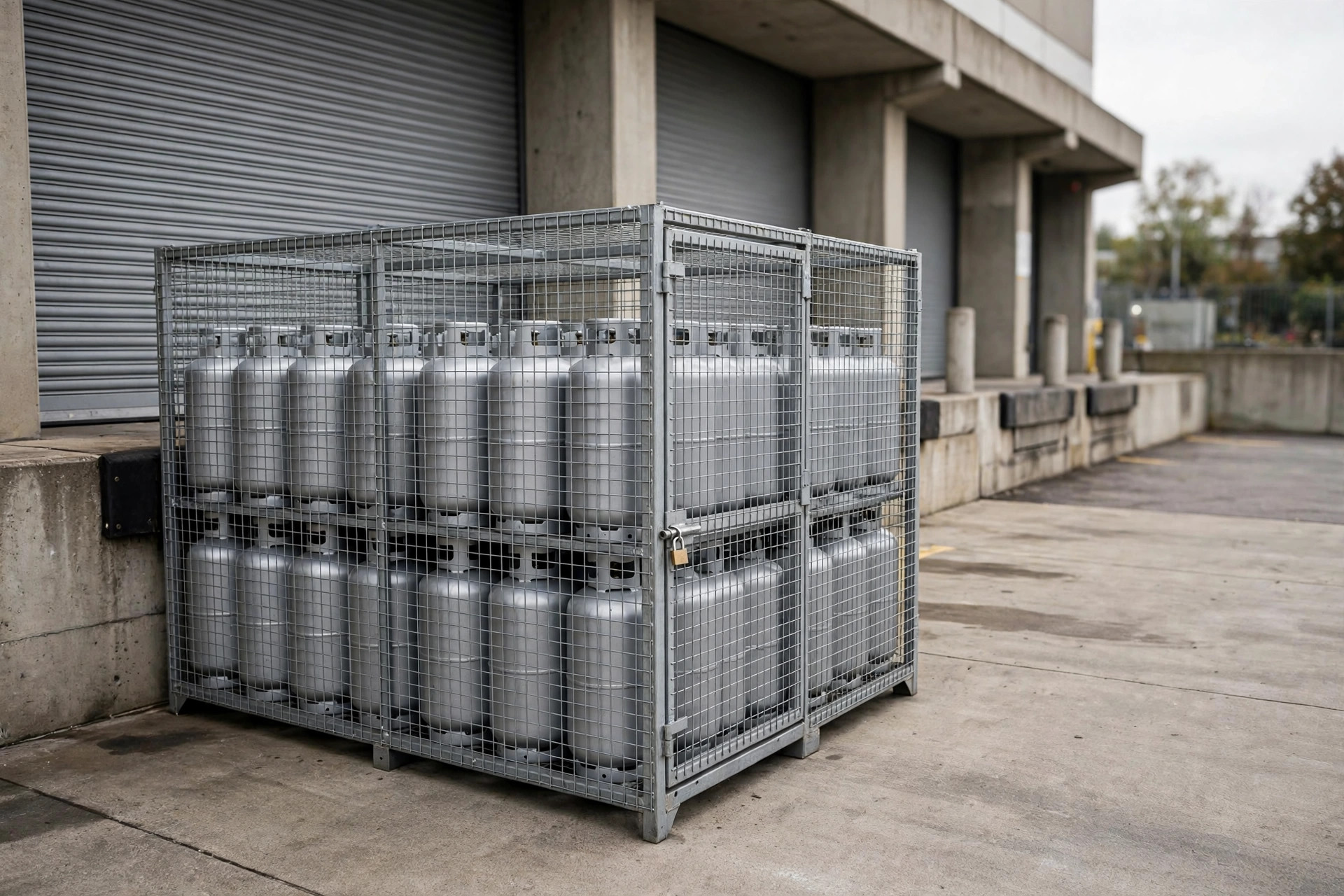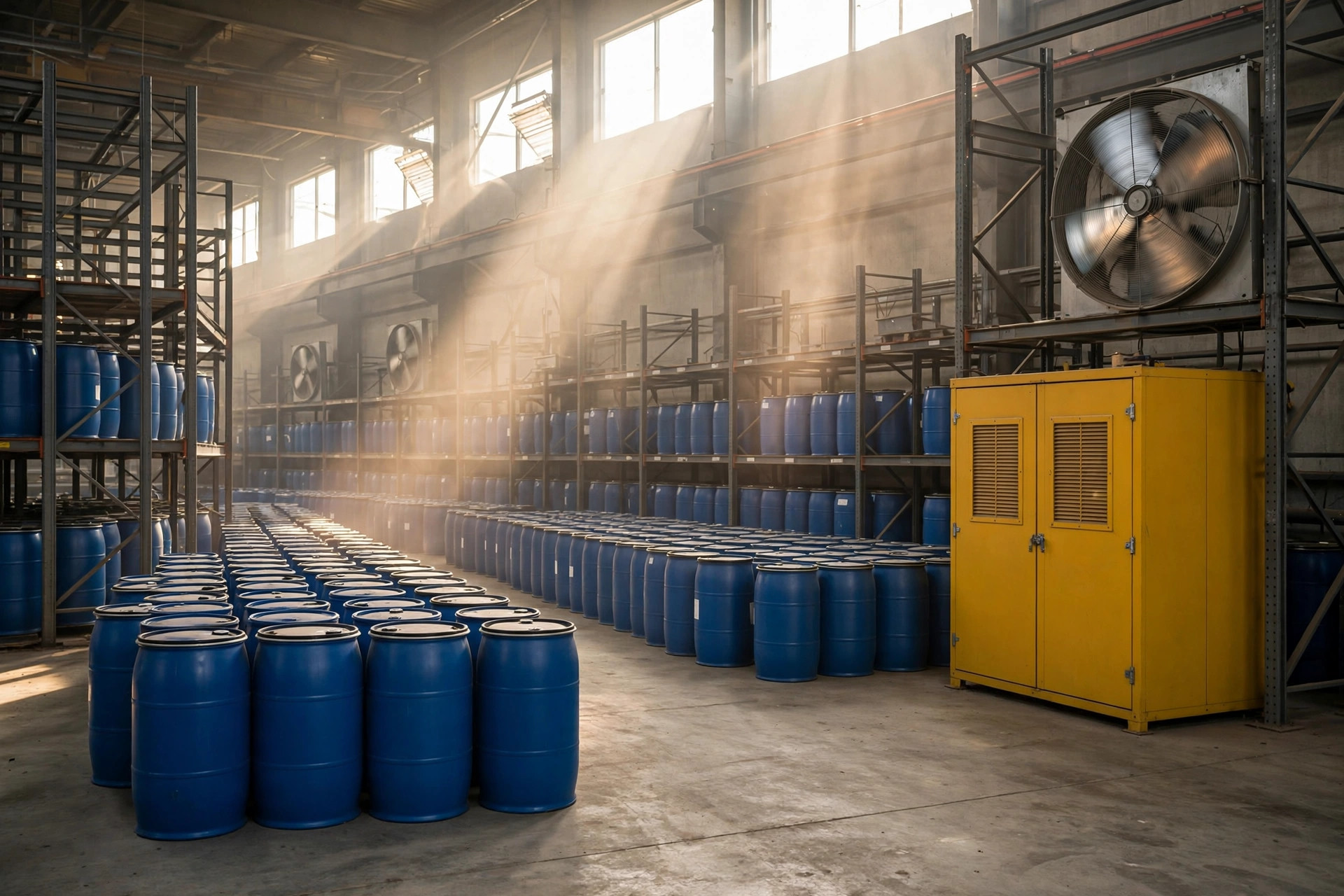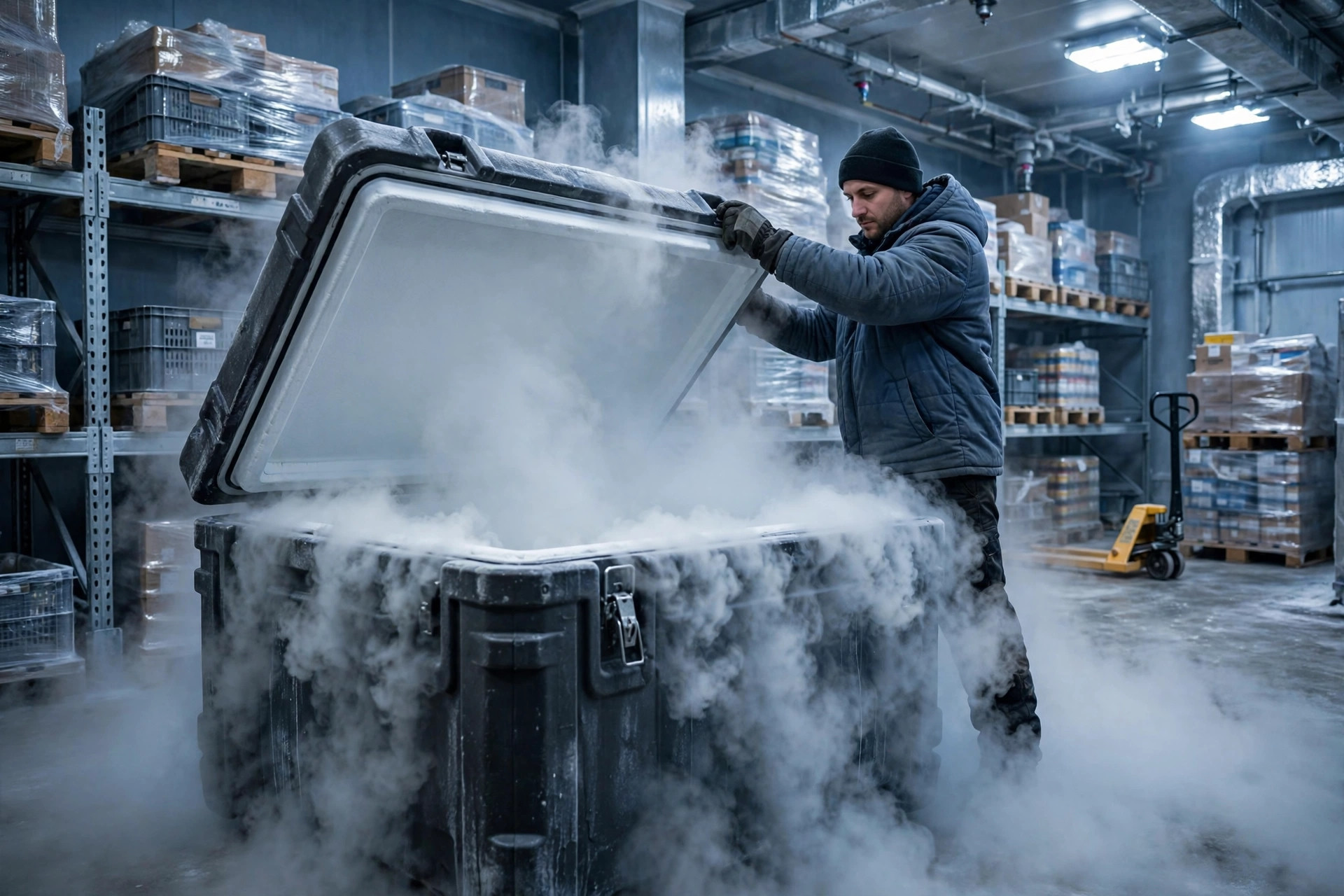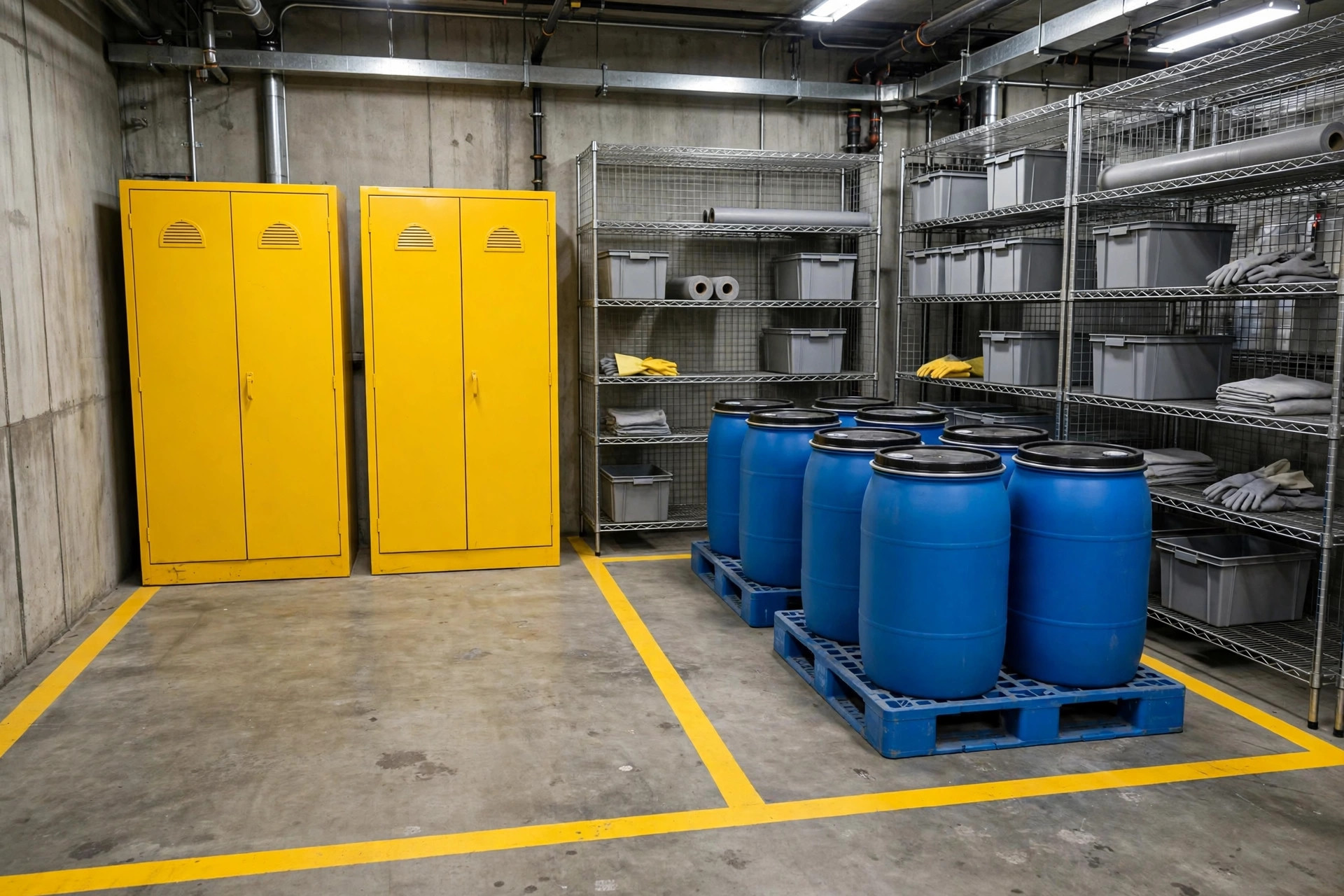
Quick quiz: there's a blue, red, yellow, and white diamond on the drum sitting on your rack. The blue quadrant says 2. What does that mean?
I open interviews for warehouse supervisors with that question. Fewer than a third get it right. Of those, maybe one in five can explain the difference between a 3 in the red quadrant and a 2 in the yellow one. This isn't trivia. It's the closest thing to a life-or-death question your floor team will ever face on a normal Tuesday. A chemical label nobody can read is just expensive wallpaper.
I've spent 20 years in US warehousing, running hazmat areas from a 5,000-square-foot cage to a 20,000-square-foot dedicated chemical building. In 2019, at a 120,000-square-foot 3PL in Ontario, California, I watched a new forklift driver stage a drum of industrial cleaner—skull-and-crossbones pictogram and all—right next to a stack of cardboard boxes. A fork tine clipped it, the drum tipped, and liquid seeped into the cartons. We lost an entire afternoon to cleanup and downtime. When I asked him afterward whether he'd looked at the label, he said yes. He just couldn't read it. The label was complete. The SDS was in the filing cabinet. Nobody had ever taught him what that red-bordered diamond was actually saying.
Nine little pictures, each one a warning
The GHS system—Globally Harmonized System of Classification and Labelling of Chemicals—uses nine pictograms: flame, flame over circle (oxidizer), gas cylinder, corrosion, skull and crossbones, exclamation mark, health hazard (the exploding chest silhouette), environment (dead tree, dead fish), and exploding bomb. Black symbol on white, red diamond border. That look is fixed by regulation; nobody gets to improvise. In most warehouses you'll see flame, corrosion, and the exclamation mark constantly. The moment a skull and crossbones shows up, you're dealing with acute toxicity, and the storage and handling rules change immediately.
A GHS label carries three more things besides the pictogram: the product identifier, a signal word, and hazard statements. There are exactly two signal words: DANGER and WARNING. One product gets one signal word, and the more severe hazard takes DANGER. Some suppliers get lazy and stamp WARNING across their entire product line, whether the drum holds diluted solvent or concentrated acid. That's a misused signal word, and it's one of the most common defects I catch at receiving. If the signal word doesn't match Section 1 of the SDS, reject the shipment. Don't negotiate. The label is the supplier's responsibility, but once that drum crosses your dock door, whatever happens is yours.
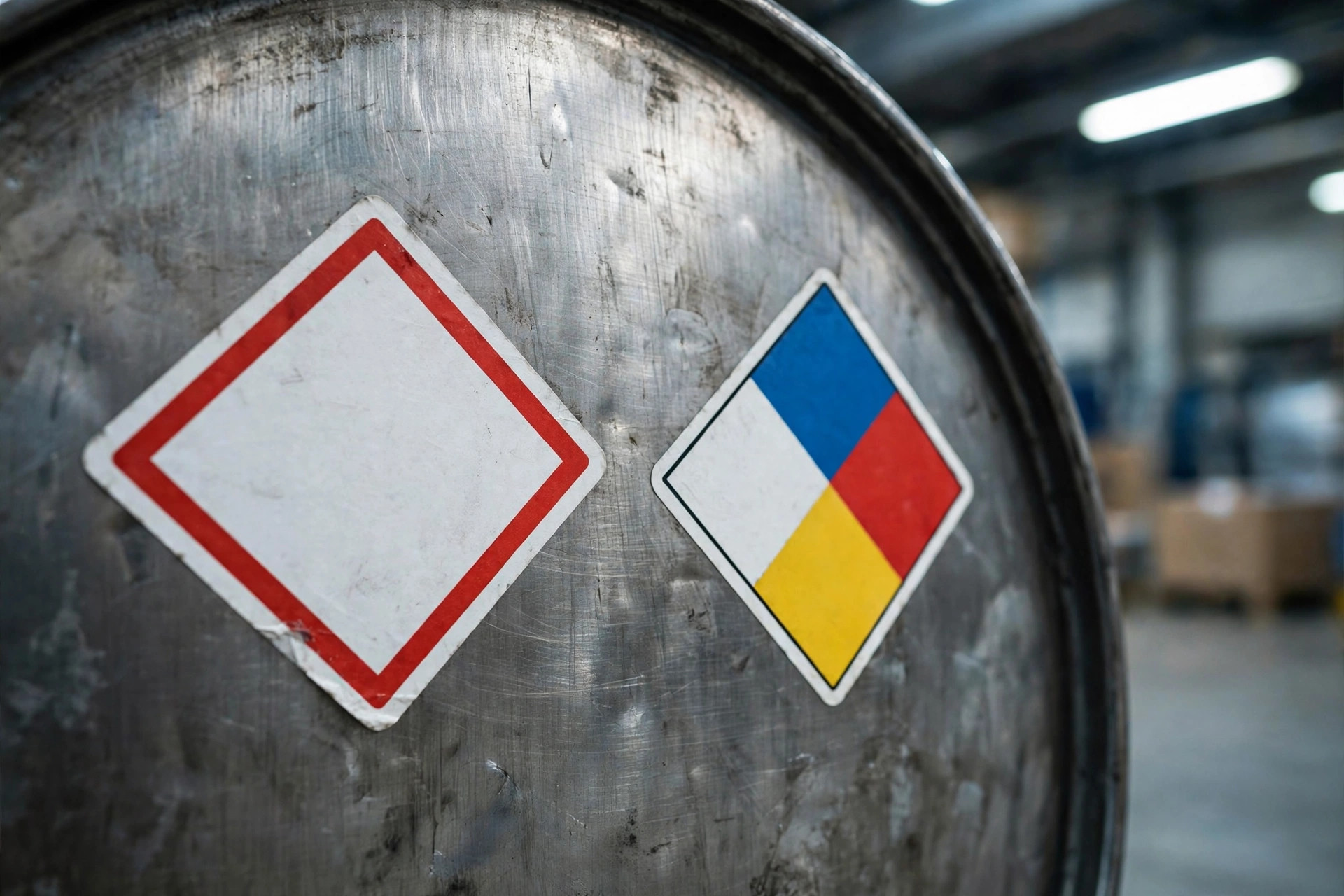
The blue-red-yellow-white diamond is for firefighters and floor staff
Now the NFPA 704 diamond—the one from my opening quiz. Blue is health hazard, red is flammability, yellow is instability/reactivity, white is special hazards. Each quadrant scores 0 to 4; higher means worse. Blue 2 means intense or continued exposure could cause temporary incapacitation. Red 3 means a flammable liquid with a flash point below 73°F (23°C)—one spark and it's gone. Yellow 2 means violent chemical changes are possible under heavy shock or heating. The white quadrant is the one people skip, and it's the one that keeps me up at night: W means water-reactive, OX means oxidizer. If those two show up in the same storage zone, the fire crew's first reaction will be a sharp intake of breath.
Here's the distinction that matters: GHS tells you what the hazard is; NFPA 704 tells the people on the scene—your team and the fire department—how to deal with it when something goes wrong. GHS is what you check at receiving and putaway. NFPA 704 is what you plan your zoning around. When I lay out a chemical storage area, I sort by the NFPA numbers: anything red 3 or 4 goes into a fire-rated zone, away from cardboard and wood pallets. That's non-negotiable.
The 10-minute receiving check
My rule for the receiving team: chemical label inspection takes 10 minutes, no more, no less. First, check the outer packaging for damage or leaks and confirm the label is actually there. Second, verify the product name and signal word against the SDS—and make sure it's the current SDS, because an expired SDS is the same as no SDS. Third, check that the pictograms aren't scuffed off and that they sit on the most visible face of the container. Fourth, sanity-check the NFPA numbers against Section 5 of the SDS (firefighting measures). If the SDS lists a flash point of 59°F and the red quadrant says 1, that label is wrong.
In 2021, at our Rialto facility, we caught a shipment where the supplier had swapped labels between two cleaners—red quadrants reading 2 and 4 on the wrong drums. A driver had already staged the "2" drum in general storage. We caught it the same day, nothing happened, but the whole shipment went back at the supplier's expense. After that I added one more rule: labels get checked against the SDS line by line, and the checker signs off. That rule catches two or three bad shipments a year. Worth every minute.
An unlabeled decant bottle hands your compliance to the inspector
The biggest compliance hole in a warehouse isn't the 55-gallon drum. It's the decanted bottle. OSHA's Hazard Communication standard is explicit: when you pour a chemical from a bulk drum into a smaller container—a spray bottle, a jug, a measuring cup—and it's used in the workplace, that secondary container needs a full label: product name, signal word, pictograms, hazard statements. All of it. The label on the original drum covers the original drum only. The moment you pour it into a spray bottle, that's a new container, and it needs its own label.
I've walked through too many warehouses where the janitor's closet has a row of blank spray bottles and the answer is always "everybody knows what's in them." An inspector doesn't care what everybody knows. During an internal audit at our Corona site in 2023, we found more than 30 unlabeled secondary containers in one sweep. The shift lead spent that evening labeling every single one. Penalty amounts change—check OSHA's website for the current figures—but I can tell you the number is painful enough to ruin a small 3PL's quarter. Gambling that on a few sheets of label stock is a bad bet.
Two more mistakes I see constantly. First, pictograms in the wrong place: the red diamond has to go on the most visible face of the container, not half-hidden behind a handle or a strap, and never on the lid—a lid gets swapped, and your label walks away with it. Second, transport labels fighting GHS labels: some freight forwarders slap shipping pictograms over the top, covering half the GHS label. Peel them back and verify at receiving. It's annoying. Do it anyway.
Don't lecture new hires on labels. Hand them the drums.
I never teach chemical labeling with slides. My drill is dead simple: pull five real SKUs off the rack, set them in front of the new hire, and ask three questions about each one. What hazard is this? If it catches fire, what's your first move? If it leaks, do you touch it? If they can't answer, they read the label—the answer is right there. Run all five, then run them again. Twenty minutes total, and it beats a two-hour slide deck ten to one. After we rolled out this drill at the Corona site, label-related near misses among new hires in the chemical area dropped to zero within 30 days. People don't fail to learn this stuff. They fail to be taught with real objects in their hands.
So here's your homework: at tomorrow's morning huddle, grab three SKUs and have the crew read the labels out loud, on the spot. Anyone who gets one wrong opens the SDS and finds the answer right there. Do it for a month, and your chemical area won't be the same place.