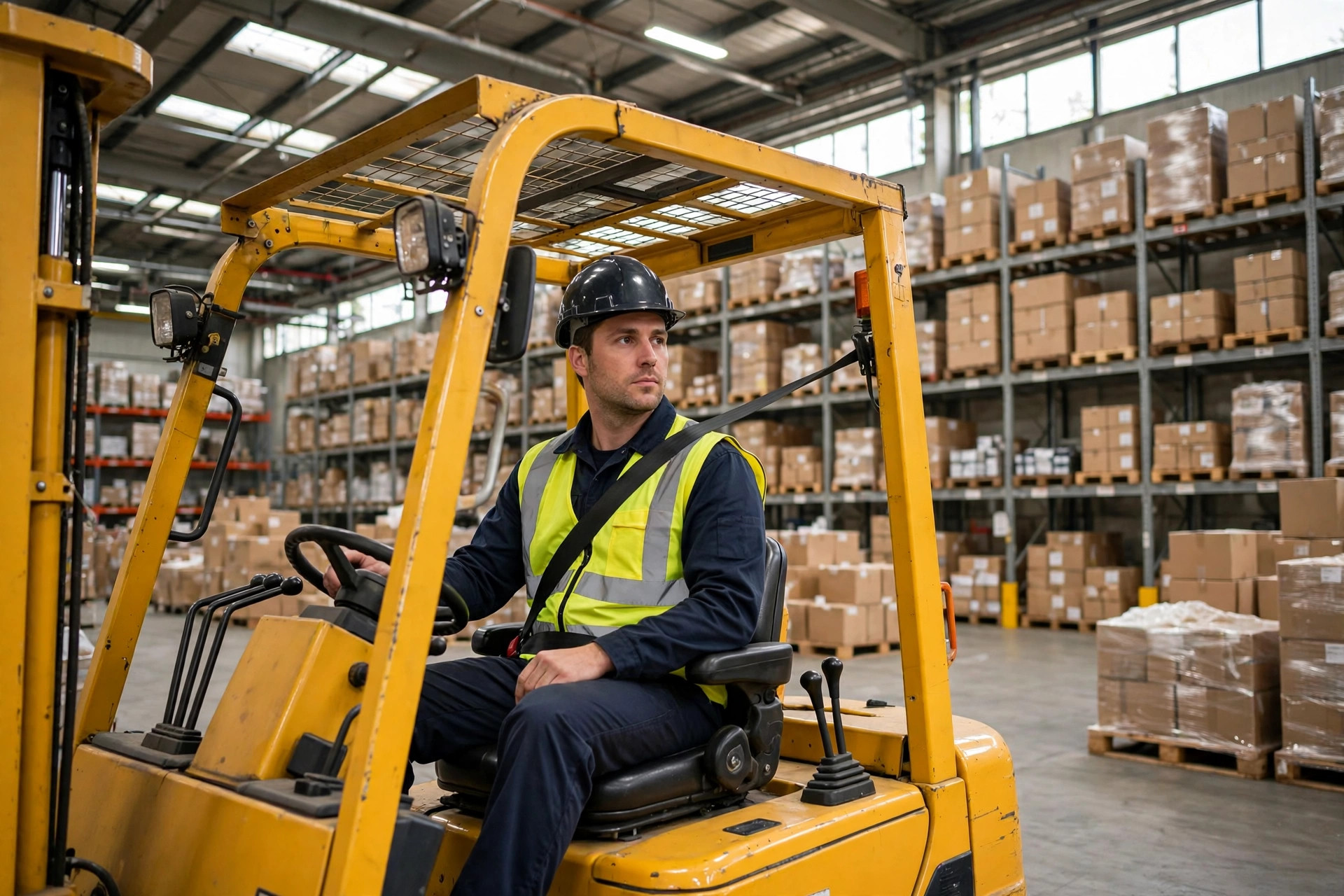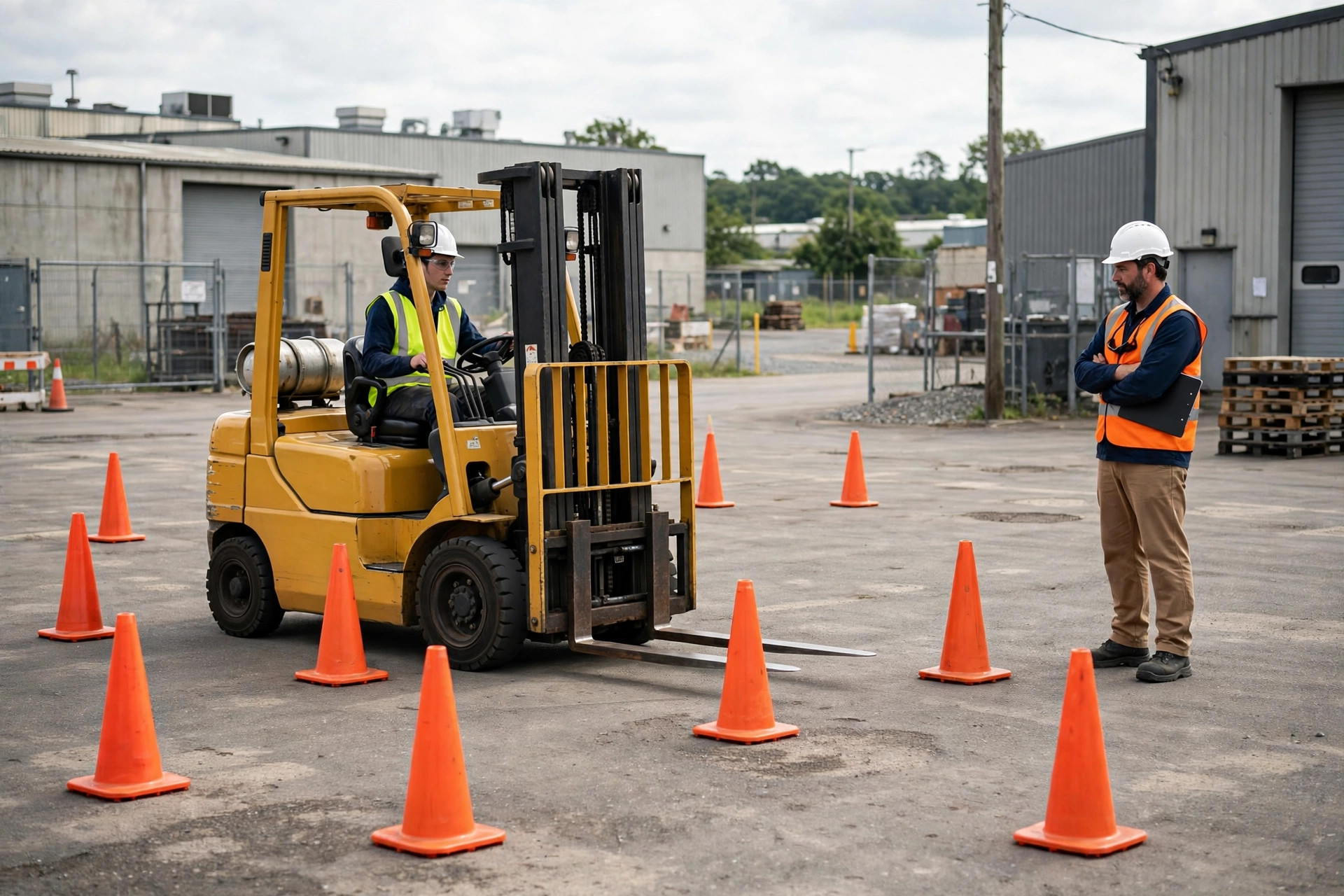
Let me give you the conclusion first: in China, you get the license before you touch the forklift. The full name is the Special Equipment Operator Certificate, category N1 — forklift operator — issued by the market supervision administration, with a review every 4 years. Put bluntly, the certificate is the legal threshold. Real skill still comes from hours behind the wheel.
I've spent 20 years in US supply chain, and this issue has two sides. The US has no government-issued "forklift license." OSHA's rule (29 CFR 1910.178) puts it on the employer: train your operators, evaluate them, refresh every 3 years — the liability sits entirely with the company. China runs a government licensing system: national standards, unified exams, licensed to operate. Which is better? I've seen the best and worst of both, and honestly I can't declare a winner — but one thing holds on both sides: certified doesn't mean competent.
I've Seen Too Many "Veteran Drivers" Wreck
A few years back at a 3PL warehouse in California, a "veteran" with a decade-plus behind the wheel was backing into a narrow-aisle slot in a hurry. Didn't look back. A picker happened to be walking past with a cart. The freight survived; the person nearly didn't. OSHA came in, pulled the training records: an evaluation form from three years prior, no refresher done. The citations stacked up, and the boss's face went white on the spot.
Put bluntly, the problem with the US system isn't the standard — it's enforcement. When the employer gets busy, the refresher becomes "next time."
Looking back at China's system, the bar is clear and uniform, but there's a pitfall on the other side: I've heard from peers in China about people who passed the exam fine but drive rough in real life — they drilled the test maneuvers, then fell apart facing real racking at real pace. The license keeps you legal. It doesn't keep you safe.
That's the trade-off: government licensing stops unlicensed operation, but can't stop licensed-but-sloppy operation; the employer-responsibility model is flexible, but the moment the employer relaxes, everything relaxes. Different problems on each side — same lesson: no certificate can practice for you.
Where to Get the N1 and How the Exam Works
No beating around the bush — here's the practical stuff. Details vary by locality, so always go by your local market supervision administration's latest policy.
Who issues it, where to apply
The N1 is issued by the Administration for Market Regulation. You generally don't apply to the bureau directly — you go through a qualified local training institution. In many places individuals can't book the exam themselves; the institution files and schedules everything as a batch. Pick an accredited institution, and don't believe anyone selling "get certified without the exam" — those are all fake.
Eligibility
Three hard requirements: age 18 to 60; at least a junior-high education; physically fit with no conditions that would impair forklift operation. A medical exam form is part of the application package.
What the exam covers
Two parts: theory and practical, 100 points each, 70 to pass. Theory is computer-based, randomly drawn from the official question bank — forklift structure and principles, safety procedures, daily maintenance, accident case studies. The practical is on a designated course: starting, driving, turning, stacking, unloading, parking, scored item by item. Fail theory and you don't even get into the practical exam room.
How long it takes
Training institutions typically combine theory question-bank drilling with concentrated hands-on practice. For a complete beginner, getting certified in 20–30 days is the common pace. Don't believe "guaranteed pass in three days," but don't fear it as impossibly hard either — follow the instructor's program and pass rates are decent.
The N1 4-Year Review: Don't Let It Lapse
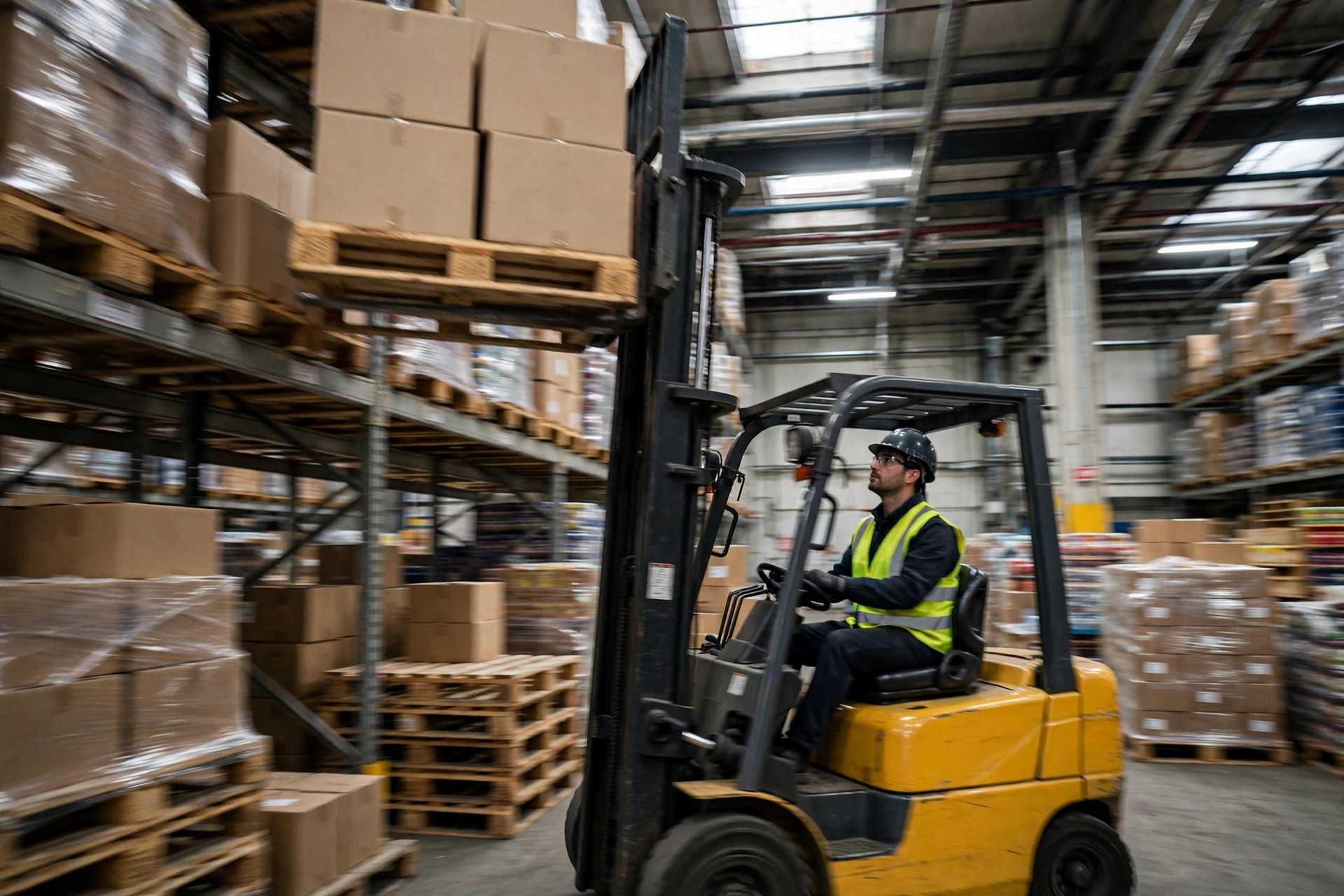
The N1 is valid for 4 years. In the 3 months before expiry, you must apply for review. Miss the window and the certificate simply lapses — want to drive again? Re-register and re-take the exams from scratch.
I've seen too many people trip on this: certificate earned, tossed in a drawer, and four years later they discover it's expired right when they need it. If you run even a small warehouse, keep a ledger — certificate expiry dates and review windows logged, review scheduled three months ahead. Low-tech version: two phone calendar alerts, one at 100 days out, one at 90.
The Cost of Operating Without a License
Some small shops cut corners: "the old hand shows him the ropes for two days, then he's on the truck." Let me run the numbers:
| Licensed operation | Unlicensed operation | |
|---|---|---|
| Certification cost | Training + exam fees, one-time — ask local institutions for quotes | 0 |
| If inspected | — | Fines (per the latest local policy) |
| If there's an accident | Insurance pays per policy terms | Insurer may deny the claim; the boss carries joint liability |
| Hidden risk | The review cycle forces periodic safety refreshers | Nobody corrects the blind spots — it's a matter of time |
Put bluntly, certification money is small money; one accident is big money. Getting caught unlicensed, the fine is the light part. If someone gets hurt, the insurer says "unlicensed operator" and denies the claim — who do you argue with? And the boss who hired unlicensed operators doesn't escape liability either.
Three Pieces of Advice for Warehouse Managers
First, hire in two steps: check the certificate, then do a driving test. The certificate is the threshold; the test shows real skill — backing down a narrow aisle, stacking at height. Ten minutes tells you everything about their touch.
Second, manage veteran employees' certificates centrally. Schedule reviews three months before expiry. Don't wait until it's lapsed — during the gap, that operator counts as "unlicensed."
Third, don't rush new hires into solo operation. A certificate only proves "can pass the exam." Have them shadow a veteran for two weeks, learn your rack heights, aisle widths, and floor conditions, then go solo.
A license keeps you legal. It doesn't keep you accident-free. The skill behind the wheel still has to be earned, lap by lap. Fair enough?
By Lao Mi, Supply Chain Veteran (20 yrs)