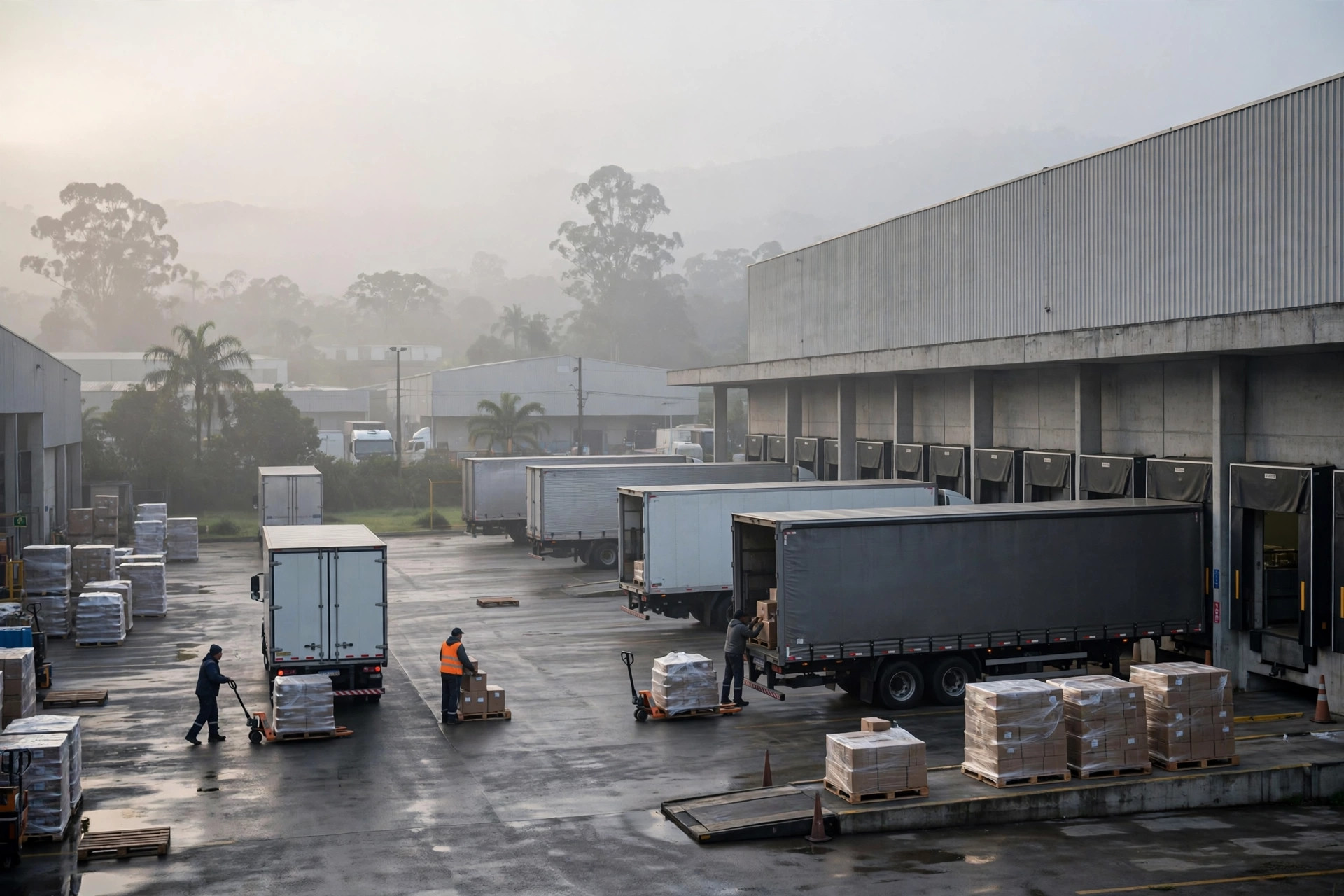
At 3 a.m., my phone rang. It was the night-shift lead at a cross-dock warehouse south of Budapest: the cross-border trucks for the next day were ready, drivers checked in, but two pallets still had not been picked. Nobody was slacking. Two extra Central Europe orders had landed that afternoon, and picking and dispatch ended up fighting over the same floor space. Folks, after years on warehouse floors, I can tell you this is the scene that tells the truth about a city. If you want to understand the Budapest warehouse market, do not start with a brochure. Start with a night shift.
Budapest sits in a useful spot, and that is the whole story in one sentence. The Danube runs through it. Roads and rail run west toward Austria and Germany, and east and south toward Romania, Serbia, Croatia, and beyond. For Central European distribution, the city works like a crossroads: freight comes in from Western Europe, gets broken down and recombined here, and fans out to neighboring countries. That is the opportunity. The catch is just as real. When cross-border peaks hit, a jammed border crossing or a clogged motorway entrance can throw the whole warehouse schedule out the window. So when I look at a warehouse here, I do not just look at the building. I look at which main road it sits on, which hub it feeds, and whether there is a second route when the first one jams.
The Budapest Warehouse Market, District by District
I think in districts, not in square meters. The area around the airport suits time-critical freight: air cargo coming in, high-value small batches, fast transfers. But that work swings hard. One delayed flight and the night shift plan has to be rewritten on the spot. The southern ring-road belt is better for bulk cross-dock work and cross-border fleet assembly: the yards are more open, big trucks get in and out more easily, and it fits an operation sending trucks in several country directions at once. The northern Danube side and the outer suburbs work more like regional distribution warehouses, serving local stores and nearby cities. Their rhythm is steadier, but their cross-border character is weaker.
I learned to pick districts the hard way. On an earlier project we chose a site because it was close to the customer, but it had only one access road in and out. During peak season, delivery trucks queued outside the gate while our people waited inside, and everybody just stared at each other. Since then I ask three questions before anything else: can big trucks enter and leave in both directions? Will the gate jam at peak hours? Is there somewhere for an extra truck to park? If a site cannot answer those three, I do not sign, no matter how attractive the rest looks. On rents, wages, and taxes, I will only say this: check the latest local listings and official policy before you budget. Anybody quoting you last year's numbers as this year's budget is selling you a story, not a plan.
The Budapest Warehouse Market: People and Rosters Are the Real Bottleneck
To be honest, in the Budapest warehouse market, what keeps me up at night is not equipment. It is people. Let me give you an illustrative example from one of our own internal peak-season exercises, not a published statistic: one Tuesday afternoon, extra cross-border orders worth about one and a half normal shifts landed at once. The night shift was rostered for 14 people, but only 11 showed up, a gap of 3. We tried two fixes. First, we kept 2 day-shift people on overtime to cover picking. Second, we reordered dispatch so the farthest-direction trucks left first. The trucks left on time, but the next day 2 day-shift people called in sick, so we had simply moved the gap to the following day. Overtime does not solve a staffing shortage during peak. It just moves it.
Here is a second illustrative example, also from our own exercises. One Friday, trucks for three country directions were all booked to arrive at 10 a.m., but the dock had only 6 doors. Drivers, paperwork, and forklifts all collided in the same hour. We fixed it without spending anything: we staggered the appointments. The farthest-direction trucks came an hour early, and local delivery trucks were pushed back half an hour. Suddenly the dock flowed. But that only works if somebody owns the appointment book. Late drivers, early drivers, phone calls, rescheduled slots — somebody has to handle all of it, every day. Plenty of warehouses are not short of equipment. They are short of one person watching the whole floor.
So when I assess a warehouse in Budapest, I ask about labor and rostering first: can you add temporary staff at peak? How are night and weekend shifts rostered? When a driver arrives, who greets them and who checks the paperwork? Ask these on day one, not after signing. Cross-border work adds one more detail. Different countries mean different paperwork requirements, so keep one fixed person on document checks. Do not let pickers double up on paperwork. That is exactly where mistakes creep in.
Budapest Warehouse Choices: A Checklist to Take on Site Visits
The table below is the checklist I carry on site visits now. It is not a scoring sheet. It is a gap finder. Every cell needs an answer, and every unanswered cell is a risk.
| Site question | Airport area | Southern ring road | Outer regional warehouse |
|---|---|---|---|
| Best for | Time-critical, small batches | Bulk cross-border distribution | Local store replenishment |
| Truck access | Depends on the road; peak jams likely | Relatively smooth; good for fleet assembly | Smooth, but far from cross-border routes |
| Roster flexibility | Swings hard; night plans change often | Overtime demand concentrates at peak | Steady rhythm; less overtime |
| What scares me most | Flight delays wrecking the night shift | Border congestion wrecking dispatch | Narrow scope; hard to absorb peak overflow |
Walking a site with this table stops one bright spot from blinding you. A site near the airport? Then ask whether night staffing can handle flight swings. A site with a big yard? Then ask whether trucks get in and out smoothly at peak. Here is the counterintuitive judgment I have landed on: most people pick a warehouse by size and clear height. I now pick by the road outside the gate and the people on the night shift. You can add overtime shifts or rent temporary space when floor area runs short. You cannot buy back a lost dispatch window when the road is jammed and the crew is short.
One more thing about morale, and do not dismiss it. After ten straight days of night shifts at peak, people are not machines. Errors creep in toward the second half of the run: one pallet scanned wrong, one label stuck on the wrong carton, and the rework eats more time than you saved. Our rule now is simple. The peak roster goes up two weeks early, in writing, showing who works consecutive days and who rests, and any change needs the shift lead's sign-off. No casual changes in a group chat. A stable roster keeps people steady, and steady people make fewer mistakes. That sounds like management talk, but on a night shift it is pure capacity.
My reminder to fellow managers is this: Budapest can work well as a Central European distribution base, but do not imagine one warehouse covering all of Central Europe. The practical move is to take one site, run one or two country directions properly, get rostering, appointments, and paperwork solid, and only then talk about a second site. A warehouse serves people first. When the people side runs smoothly, the freight follows.
By Chen Feng, Warehouse Operations Manager