Since 2025, Chinese warehouse automation vendors have been looking at Brazil with growing interest — and nearly every team running its first Brazilian project stumbles at the same place: INMETRO certification. This is not a document that can be arranged after the fact. It is a statutory precondition for market access. Electrical and industrial equipment without the INMETRO mark generally cannot even clear customs, let alone be sold, installed, and commissioned locally.
The Phenomenon: A Door Opening Wider, With a Higher Threshold
Brazil is Latin America's largest economy. E-commerce penetration keeps rising, and the expansion of cold-chain logistics and third-party logistics (3PL) is directly driving demand for automated storage and retrieval systems, conveyor and sortation lines, and AGV/AMR fleets. On the supply side, Chinese manufacturers hold clear advantages in price, lead time, and customization — and Brazilian project wins have been accumulating in recent years.
Yet a widening gap is emerging: winning the order is getting easier, while getting equipment into Brazil compliantly is getting harder. Cases of equipment detained at port for a missing INMETRO certificate keep recurring, with some projects stalled for months. The problem is not product quality — it is that most teams entering Brazil for the first time never put certification at the front of the project timeline. INMETRO certification is not a customs formality; it is the precondition for delivery itself.
The Data: What INMETRO Regulates and What It Demands
INMETRO, Brazil's National Institute of Metrology, Quality and Technology, administers the country's mandatory product certification regime. Electrical and industrial equipment falls under compulsory certification: products must bear the INMETRO mark together with the mark of the issuing certification body before they can circulate in Brazil.
For warehouse electrical equipment, the most common route is the internationally recognized Model 5 scheme: product type testing, factory quality management system audit, and post-certification surveillance audits on 6-, 9-, or 12-month cycles. Certificates must be maintained through annual surveillance.
The sequence runs as follows. First, appoint a Brazilian local representative — mandatory; nothing else can start without one. Second, apply to an INMETRO-accredited product certification body (OCP), such as TÜV SÜD or UL Solutions. Third, prepare the technical file: existing CE/ISO certificates, product drawings, and a user manual in Portuguese. Fourth, sample testing at a Brazilian-accredited laboratory — ILAC-accredited laboratory reports can be partially transferred, never fully. Fifth, a factory audit of about five working days. Sixth, certificate issuance.
On timelines, simple products take roughly 8 to 12 weeks; complex products 3 to 6 months, sometimes longer. Costs vary widely — always work from the latest quotation issued by the certification body, and treat any "guaranteed fixed price" circulating in the market with skepticism.
Two details are most commonly missed. First, Brazil's plug standard is NBR 14136; NEMA plugs were phased out starting in 2009, so power interfaces must be designed to NBR 14136 from the outset. Second, Chinese vendors usually already hold CE reports, which genuinely reduce some duplicate testing — but Brazilian OCPs typically add designated test items, especially around electromagnetic compatibility and local grid adaptation. A CE report is not an exemption.
Case One: Discovering the Missing INMETRO Mark at the Port
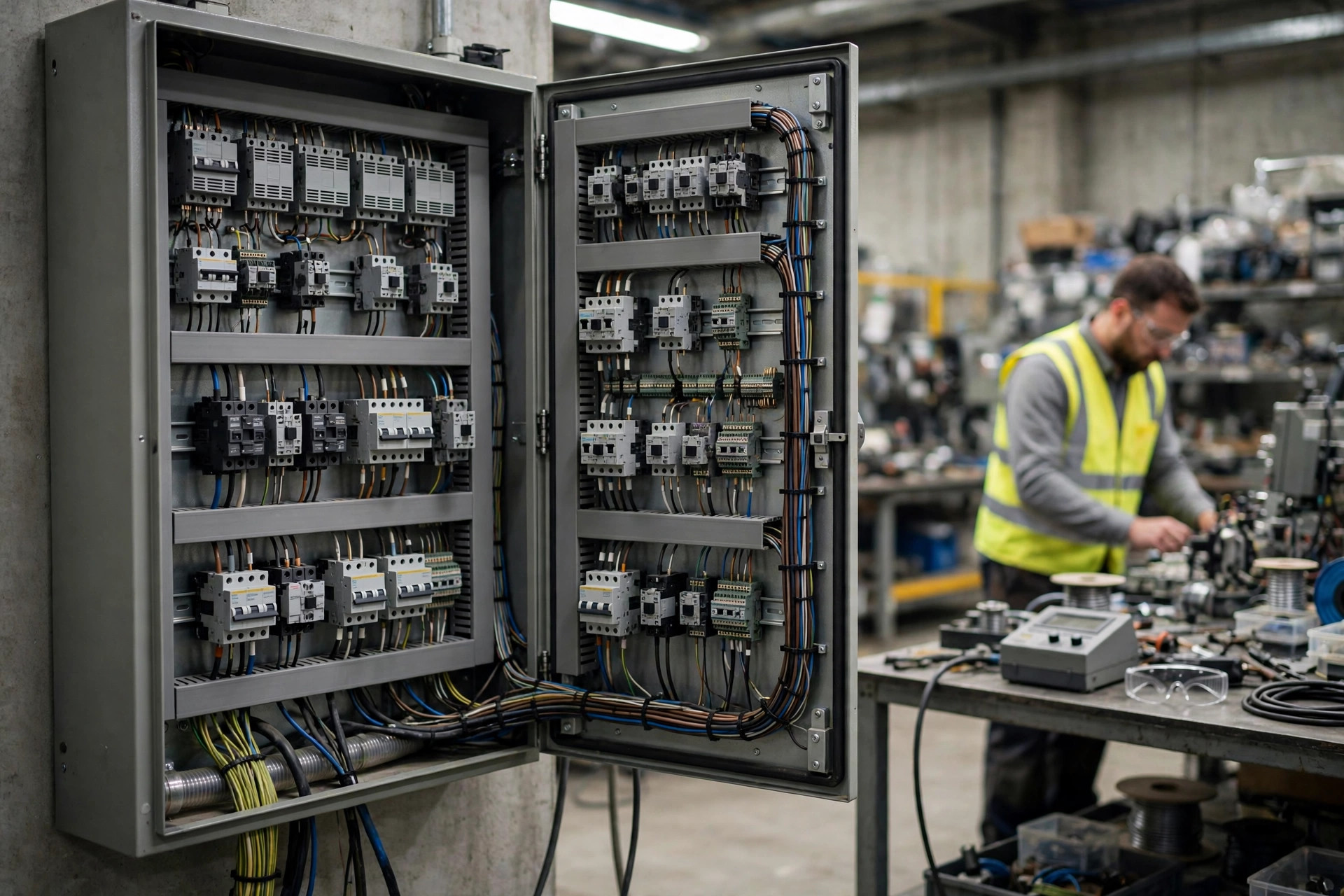
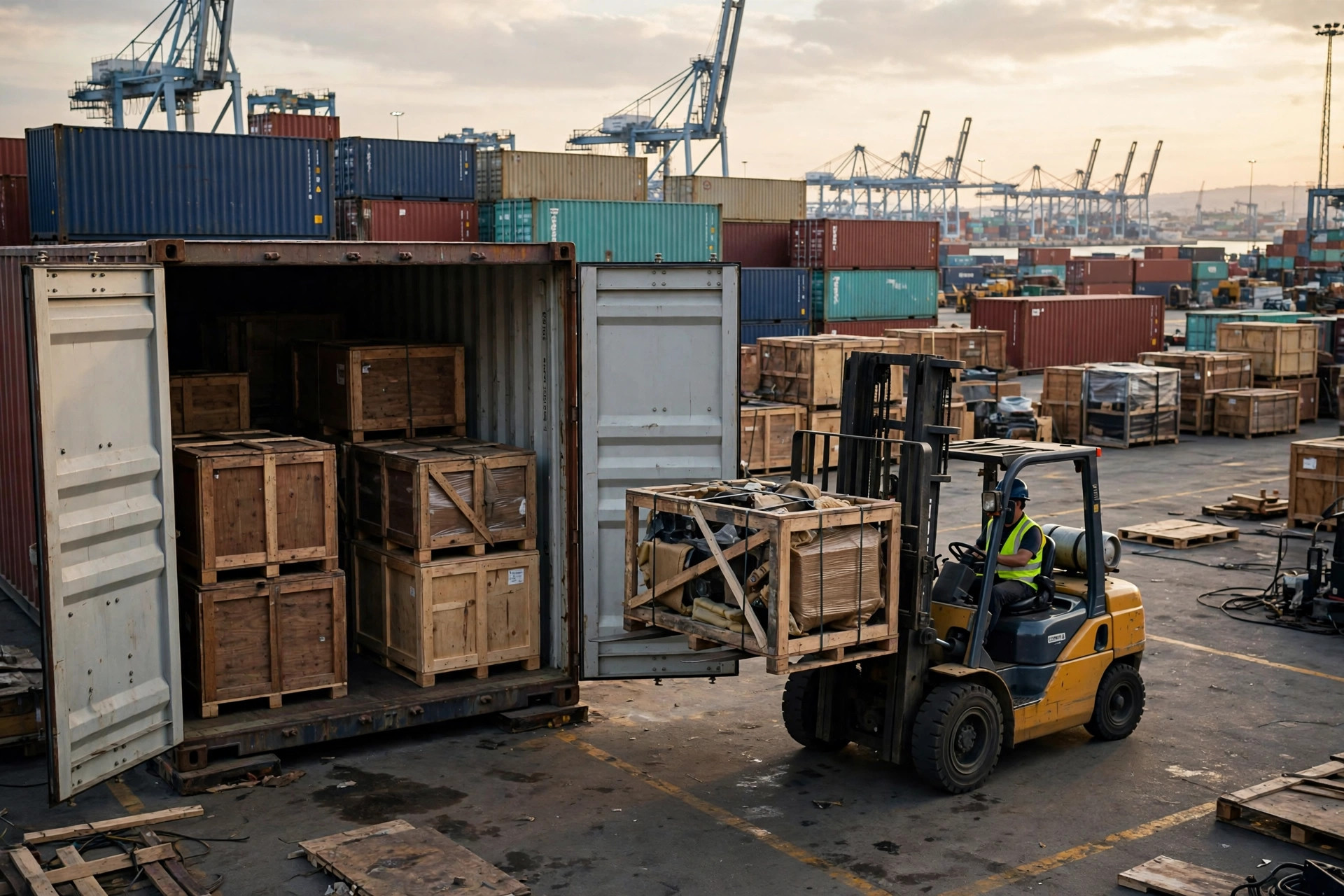
A Zhejiang-based manufacturer of four-way shuttle dense storage systems won a distribution center project for a 3PL in the state of São Paulo in late 2024. The equipment shipped on schedule and arrived at the Port of Santos — where customs inspection demanded the INMETRO certificate. The team then discovered two problems: the entire electrical control system carried no INMETRO mark, and the control cabinets' power interfaces followed European design with no NBR 14136 compatibility.
The remediation was long and entirely reactive: urgently appoint a local representative in Brazil, file the OCP application, run supplementary sample testing, replace the power interfaces and re-verify them, and complete the roughly five-working-day factory audit before the certificate was finally issued. The project slipped by months, and the lesson is blunt: INMETRO certification must be completed before shipment — it cannot be fixed at the customs stage.
Case Two: Assuming CE Reports Transfer Directly
A Guangdong conveyor and sortation equipment vendor held a full set of CE reports and allocated less than two months for certification in the project schedule, assuming direct reuse. In practice, the OCP accepted some of the safety test items but added electromagnetic compatibility and local-grid adaptation tests. The technical file's manual existed only in English and had to be provided in Portuguese. The factory audit also surfaced gaps between the company's quality documentation and Brazilian requirements.
Certification was eventually obtained, but the timeline far exceeded expectations and the delivery schedule had to be renegotiated. The case shows that a CE report at best reduces some duplicate testing — test scope, document language, and audit criteria all have to be re-mapped against Brazilian requirements. Nothing transfers by assumption.
INMETRO Certification vs. the EU CE System: A Decision Framework
Many teams with European experience instinctively apply CE logic to Brazil, and that is precisely where the misjudgment begins. The two certification logics are fundamentally different:
| Dimension | Brazil INMETRO (Model 5) | EU CE |
|---|---|---|
| Access nature | Mandatory third-party certification | Self-declaration allowed under most directives |
| Local representative | Mandatory | EU authorized representative required only under some directives |
| Factory audit | Mandatory, about five working days | Usually none |
| Post-certification surveillance | Yes, on 6/9/12-month cycles | Usually none |
| Typical timeline | 8 weeks to 6 months | Self-declaration can take weeks |
| Product marking | INMETRO mark + OCP mark | CE mark |
One operational conclusion follows from this table: budget certification for a Brazilian project at two to three times the timeline of a CE project, and move certification work to the contract-signing phase rather than waiting for equipment to roll off the line. A workable reverse schedule looks like this: confirm whether the product is in the compulsory catalog before signing → appoint the local representative immediately after signing → prepare the Portuguese technical file in parallel → run sample testing and the factory audit → confirm the certificate is in hand before shipping. For costs, always work from the latest OCP quotations, and get at least two OCPs to compare test plans and timelines.
Why the Threshold Cannot Be Bypassed
Understanding the path is only half the work; the other half is understanding why the system exists. Based on publicly available policy analysis, Brazil's insistence on mandatory third-party certification rests on three layers. First, protection of domestic manufacturing: compulsory certification objectively raises the compliance cost of imported products, giving local producers breathing room. Second, standards sovereignty: through the INMETRO system, Brazil turns its own technical norms — such as NBR 14136 — into de facto market-access barriers. Third, an enforcement loop: customs inspection and market surveillance operate together, so uncertified products can neither clear the port nor be sold. Bypassing the system costs far more than complying with it.
Here is the counterintuitive judgment: most people assume product testing is the hardest part of INMETRO certification. In practice, what usually decides a project's fate is the very first step — the Brazilian local representative, who bears joint legal liability. Who to choose, how to structure the agreement, who absorbs the risk if a quality issue arises — these questions are far more complex than swapping a plug. A failed test can be re-run; a wrongly chosen representative can force the entire certification effort back to square one.
That creates a genuine trade-off: finding or developing a local agent yourself keeps upfront costs low but leaves the timeline and risks uncontrollable; paying a specialist firm with Brazilian project experience costs more but delivers process certainty. For teams entering Brazil for the first time, the value of that certainty usually exceeds the premium — because the cost of project delay almost always exceeds the price difference between certification service options.
Trend Assessment: Hard to Ease Short-Term, Variables Long-Term
Pulling the analysis together, a few evidence-backed judgments emerge. In the short term, Brazil's mandatory certification regime will not loosen in any meaningful way. The pattern of "partial acceptance of CE/UL reports plus designated additional tests" will persist, and local standards like NBR 14136 are not going anywhere. Equipment vendors targeting Brazil should treat INMETRO certification as a fixed project cost, not as a variable to be optimized.
The long-term variables are three: whether Brazil expands its participation in international certification mutual-recognition schemes; whether growing capability at Brazilian-accredited laboratories shortens testing timelines; and whether deepening China–Brazil economic cooperation brings certification facilitation arrangements. None of the three currently has a clear timetable.
One open question to close with: if Brazil ever accepted international laboratory reports for direct certificate conversion, what would today's path — local representative, OCP application, testing, factory audit — turn into? Should equipment vendors prepare for localized production, or stick with the "made in China plus Brazilian certification" model? The answer depends on each vendor's assessment of the Brazilian market's scale — and that assessment deserves to be made before the first project starts, not during it.
By Dr. Chen, Supply Chain Researcher