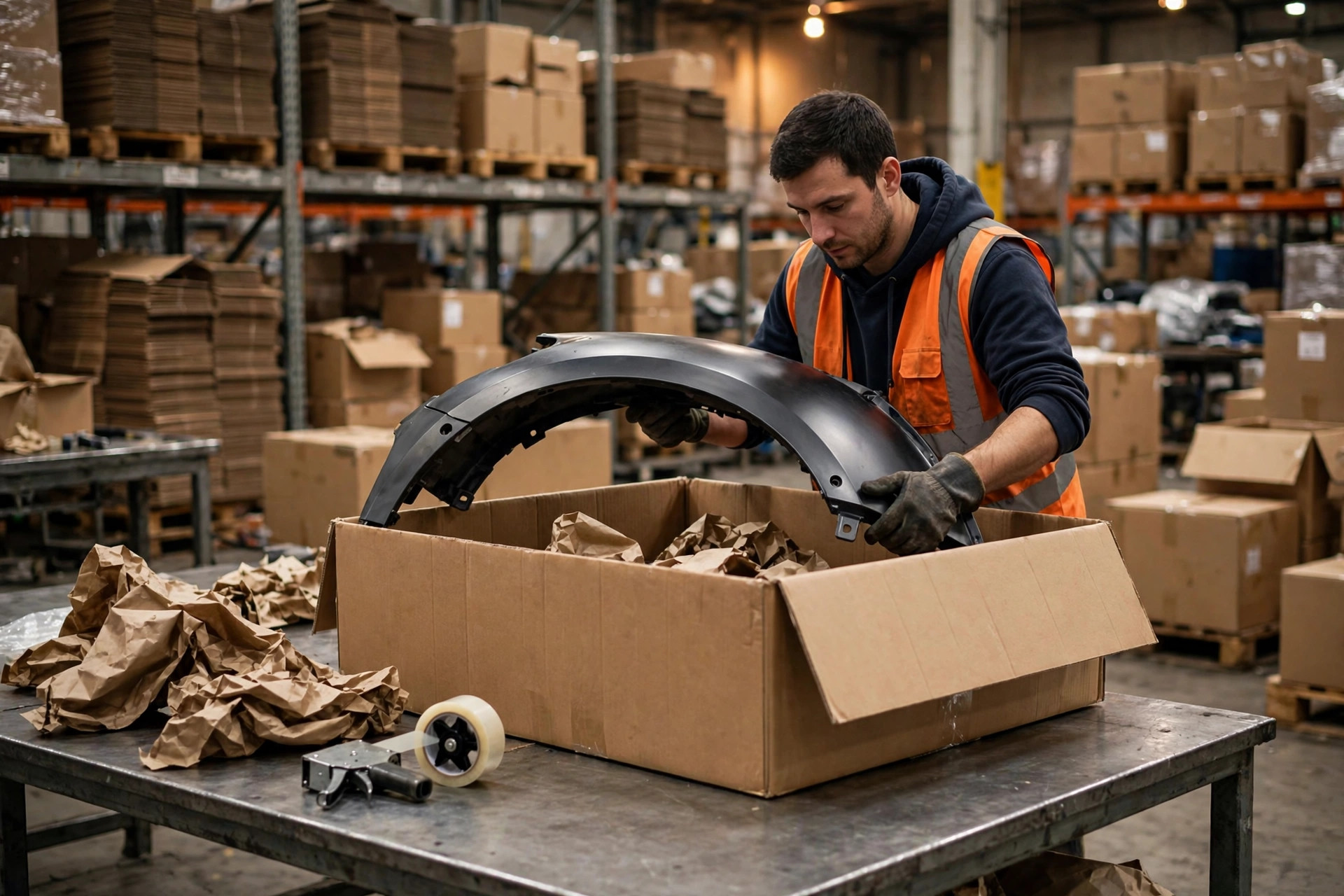
A seller who moves auto body parts asked me the other day: "Lao Mi, I'm shipping a fender in a 36-inch carton that's half void fill. The carrier bills dimensional weight at nearly 150 pounds — the fender itself weighs twenty-something. Custom cartons? I've got 300-plus SKUs; I can't touch the minimums. A box-on-demand machine? I saw the quote and my stomach dropped. How do people actually solve this?"
It's a good question, and I've run the numbers for plenty of sellers — lighting, auto parts, oversized home goods. The root cause is always the same: irregular products going into over-regular boxes. So let's break it into three separate accounts.
Account one: void fill costs more than the paper
Most people only count the cost of the paper. That's the smaller half.
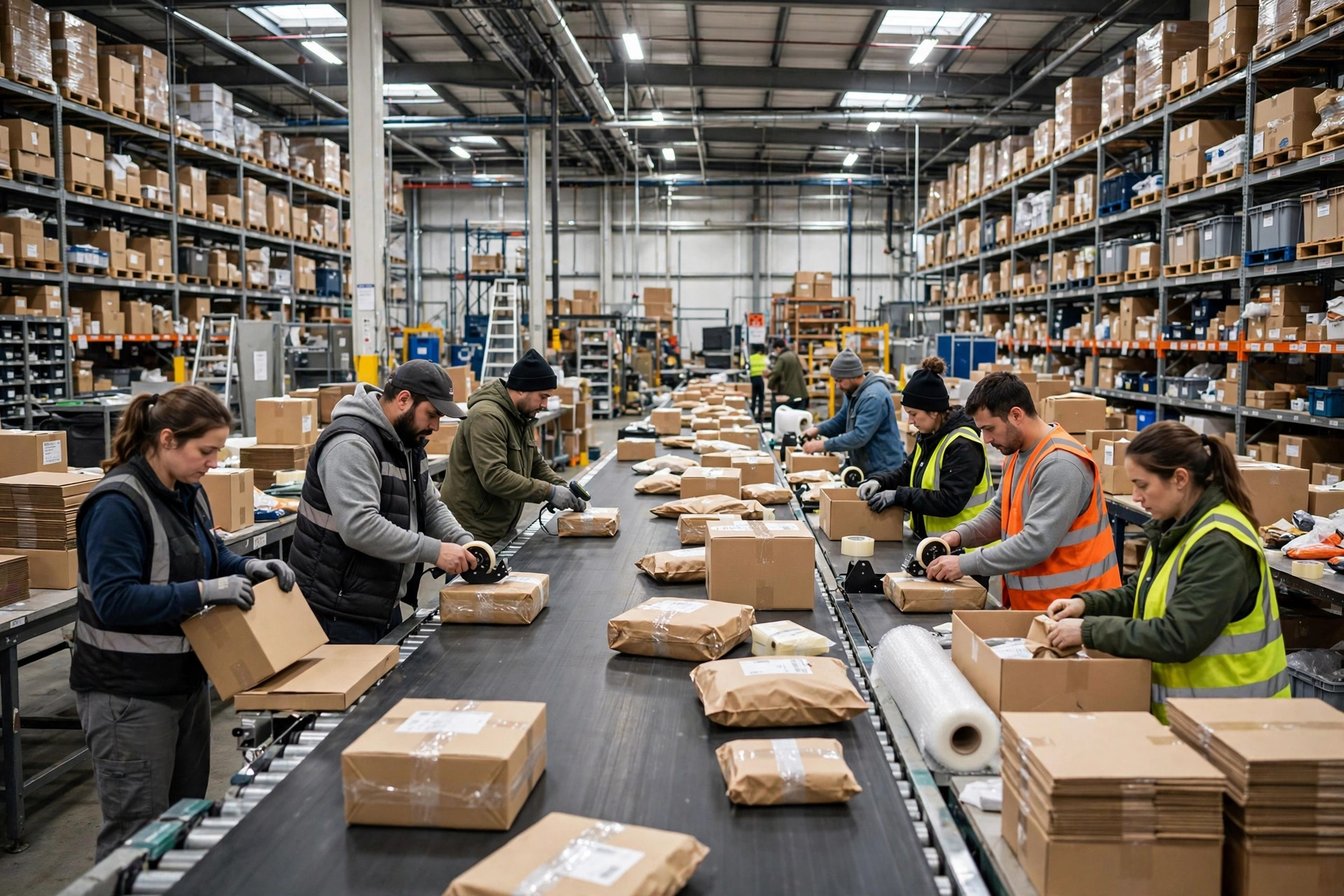
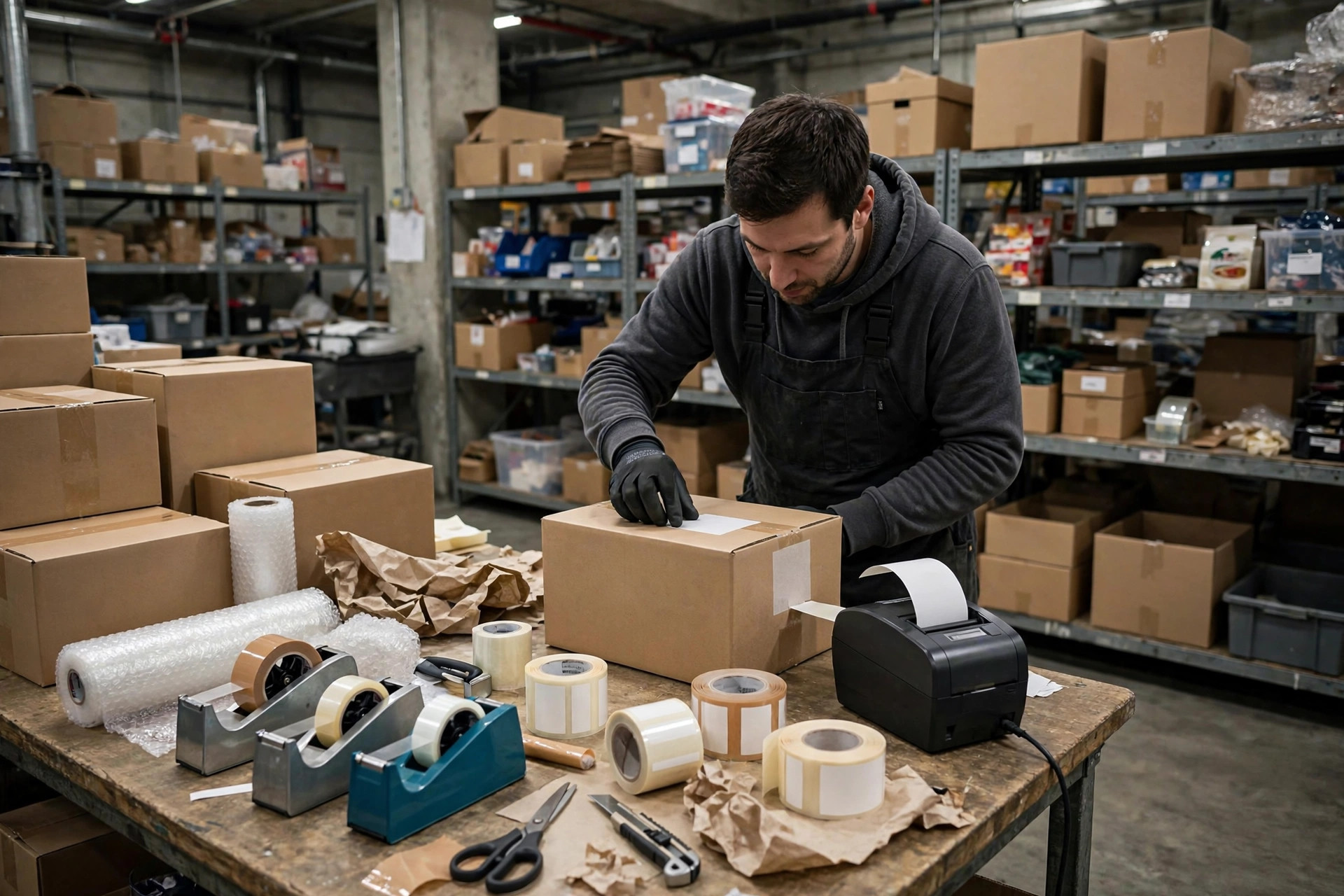
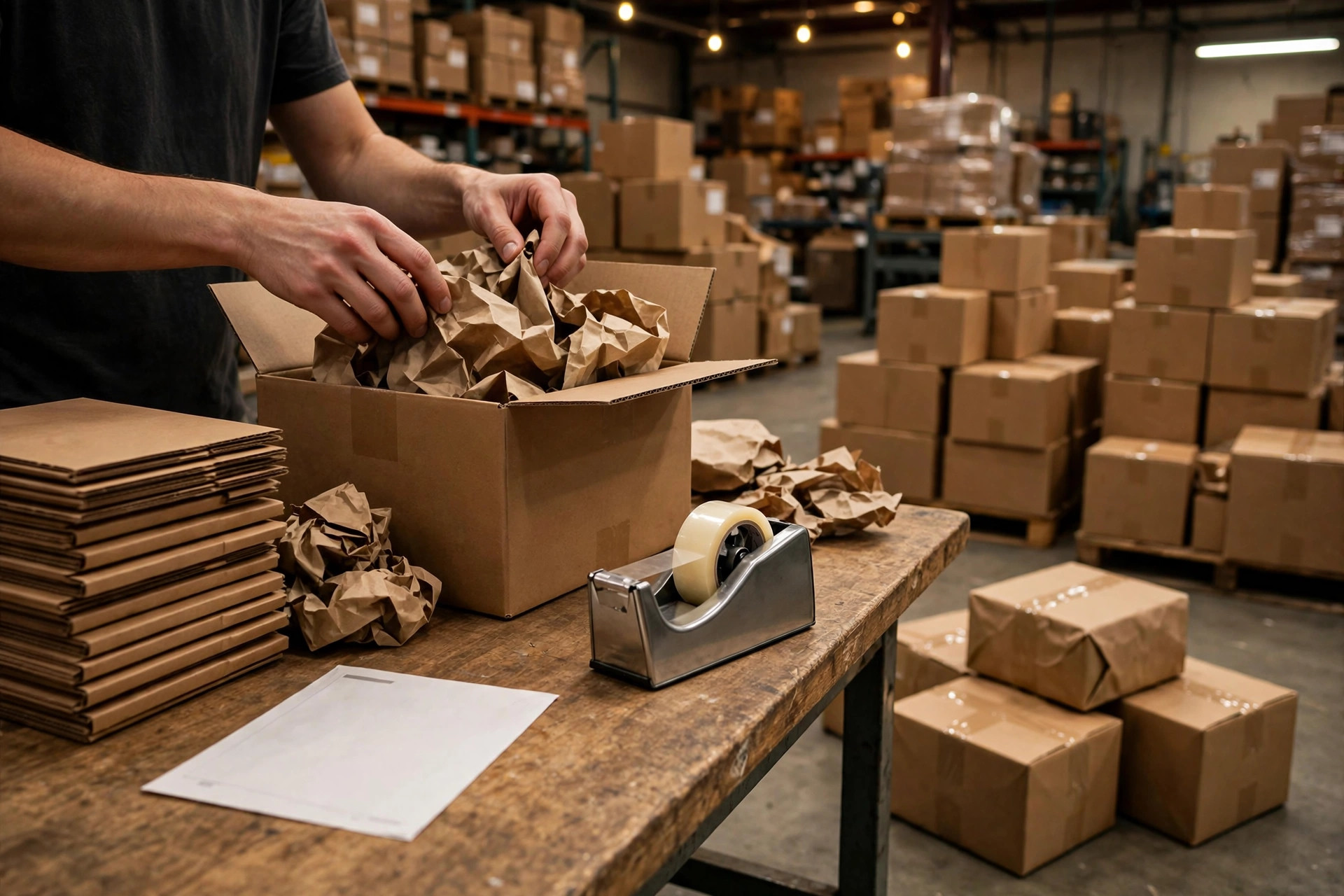
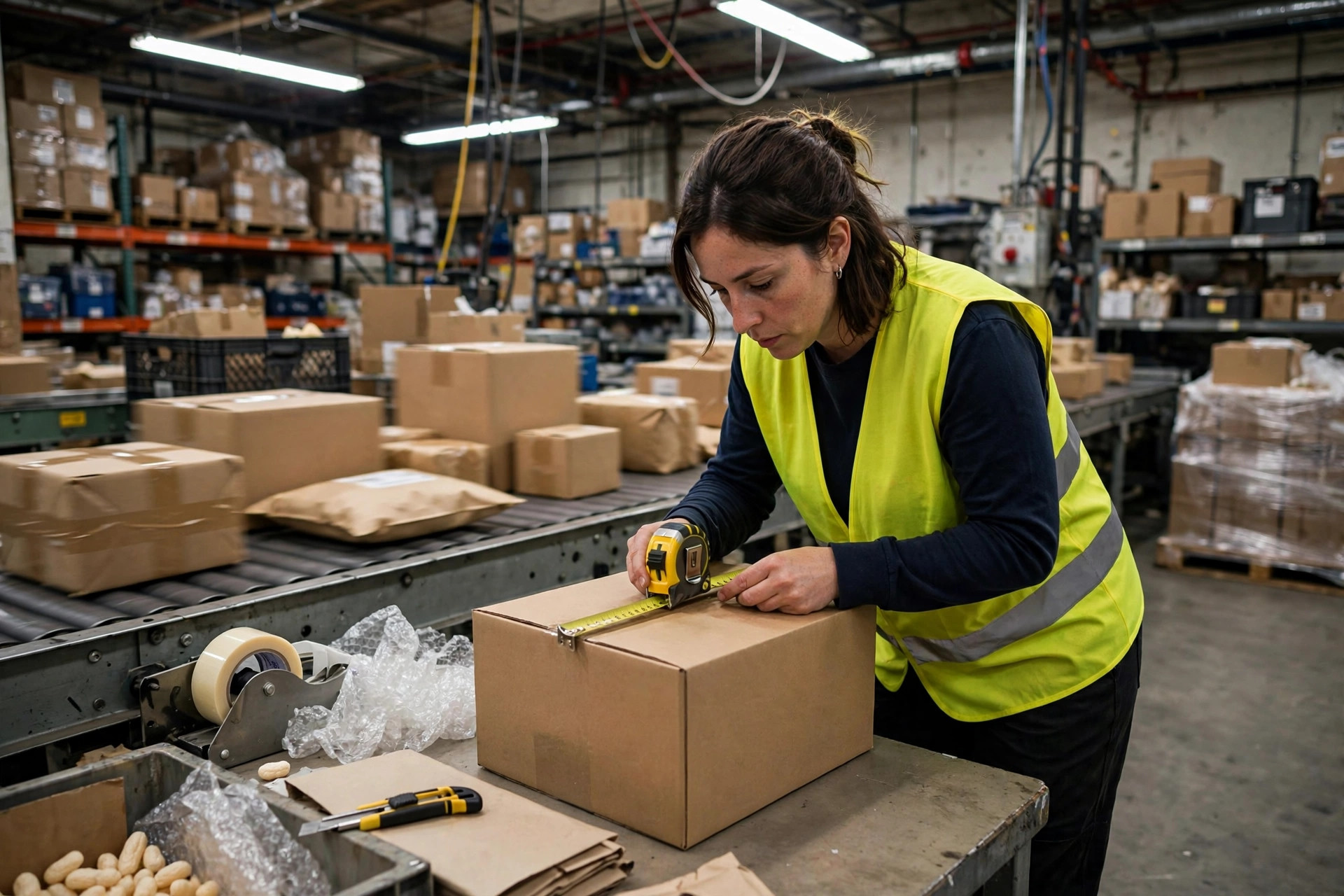
In 2024 I visited a 60,000-square-foot 3PL in Ontario, California that specializes in auto parts and bulky home goods. I stood at the pack station for half an hour and timed it: one worker packing a fender — pick the box, test-fit, cut paper, stuff the voids, tape it shut — averaged over three minutes a parcel. The same building packs standard small items in just over a minute. Odd-shaped packing more than doubles your labor cost per order, silently, until the month-end labor report hurts.
The fill material itself — kraft paper, bubble, honeycomb — ran about a dollar a parcel at that site (their own measurement; yours will differ). But the real trap is damage: too little fill and a curved panel like a fender rattles and chips paint in transit; too much and the box bulges, and the carrier measures the bulge. One damage claim wipes out the savings of a whole roll of kraft paper.
So account one reads: void fill cost = material + extra labor + damage claims. Haggling over paper prices while ignoring the other two is picking up pennies.
Account two: dimensional weight eats irregular shippers alive
This is the big one, and the most underestimated.
Here's the 2026 math: DIM weight (lb) = length × width × height (in) ÷ 139. That's the divisor on UPS and FedEx domestic account rates, and USPS moved from 166 to 139 on July 12, 2026 — all three carriers now run the same formula. Carriers bill whichever is greater, actual or dimensional, and they round every fractional inch up. A bulging box gets measured at its widest point, so pack it tight or pay for the bulge.
Take a real order from that seller: a 22-pound fender in a 36×24×24-inch carton. DIM weight = 36×24×24÷139 = 149 pounds billed. Put the same fender in a right-sized 34×20×10 — fenders are long and flat; that 24-inch height was pure air — and DIM weight = 34×20×10÷139 = 49 pounds billed. Same shipment, 100 pounds of billable weight gone.
What does 100 pounds mean in money? He pulled three months of invoices and we went through them together: at his zones and discounts, that kind of oversized parcel ran $4–6 more per shipment than it should have. Your carrier mix and zones will differ — check your own invoices before you quote me on that. At 400-plus odd-shaped parcels a day, he was knocking on $50,000 a month paid to ship air. That's the real pain.
A side note: plenty of sellers tell me "custom cartons need big minimums and I have too many SKUs," so they keep stuffing big boxes year after year. But run your own numbers — 80% of your volume usually comes from 20% of your SKUs. Nail the dimensions of your head SKUs first, and the custom-carton math gets a lot friendlier.
Account three: does a six-figure machine ever pay back?
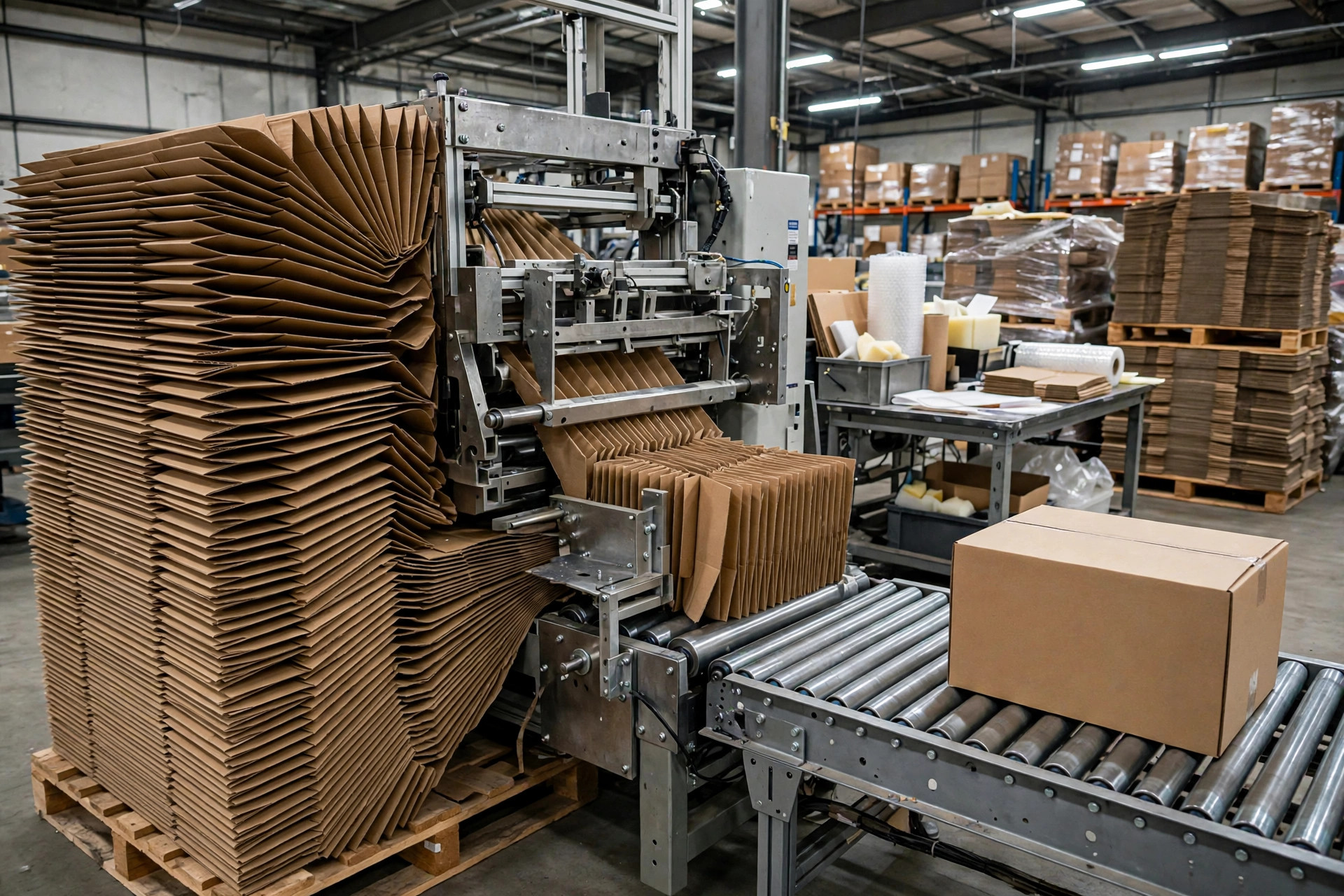
Box-on-demand is simple in principle: the system sizes the optimal carton per order in real time, and the machine cuts, creases, and folds fanfold corrugated into a made-to-measure box on the spot. Less fill, less DIM weight, less labor. The price tag matches the promise — low-to-mid six figures depending on configuration. I won't quote a number; the spread between configurations is too wide. Get a real quote.
Payback is one formula: payback months = machine investment ÷ monthly savings, where monthly savings = fill saved + DIM freight saved + labor saved.
My rule of thumb is blunt: at 800–1,000+ odd-shaped parcels a day with clear DIM overpayment, it's worth talking to vendors seriously. At two or three hundred a day, don't look at machines yet — the savings won't cover depreciation and maintenance. Why buy yourself a problem?
If you do go shopping, judge vendors on four things and ignore the sales gloss.
First, throughput. Boxes per minute must match your order cadence. If the machine can't keep up at peak, the pack line queues up and everything you saved evaporates.
Second, board width and caliper range. Can it make your biggest item? Does it waste board on your smallest? Bring your ten largest SKUs' dimensions to the vendor — not their "theoretical maximum."
Third, dimensional accuracy. A box that's still two inches too tall bleeds DIM weight just the same. Every extra inch in the formula's numerator is money.
Fourth, consumables and maintenance. Is fanfold supply stable, what's the unit cost, how often do blades and creasing wheels get replaced and at what price? Vendors love to "forget" this part of the quote. Ask first.
Not there on volume yet? There's a scrappy interim play that saves real money. Three moves: one, map your SKU dimension distribution and standardize on three carton sizes — large, medium, small — covering 80% of shipments, instead of juggling a dozen sizes. Two, buy a box scorer, a few-dozen-dollar tool that lets the pack station cut down over-tall cartons and re-crease them on the spot — DIM weight drops immediately. Three, put a packing card at every station: which size for which dimensions, how many handfuls of paper. New hires follow it and they're up to speed in a week.
That costs almost nothing, but it turns "pack by feel" into "pack by standard." Most warehouses don't have an equipment problem — they have a standards problem.
One thing you can do this week: have the pack station log five days — product dimensions, carton dimensions, and fill used for every odd-shaped order. In five days you'll have your first void map: exactly which SKUs are burning money. Take that sheet to the carton vendor to negotiate minimums, or to the equipment vendor for a quote, and you'll negotiate from strength. In this game, data always comes first.