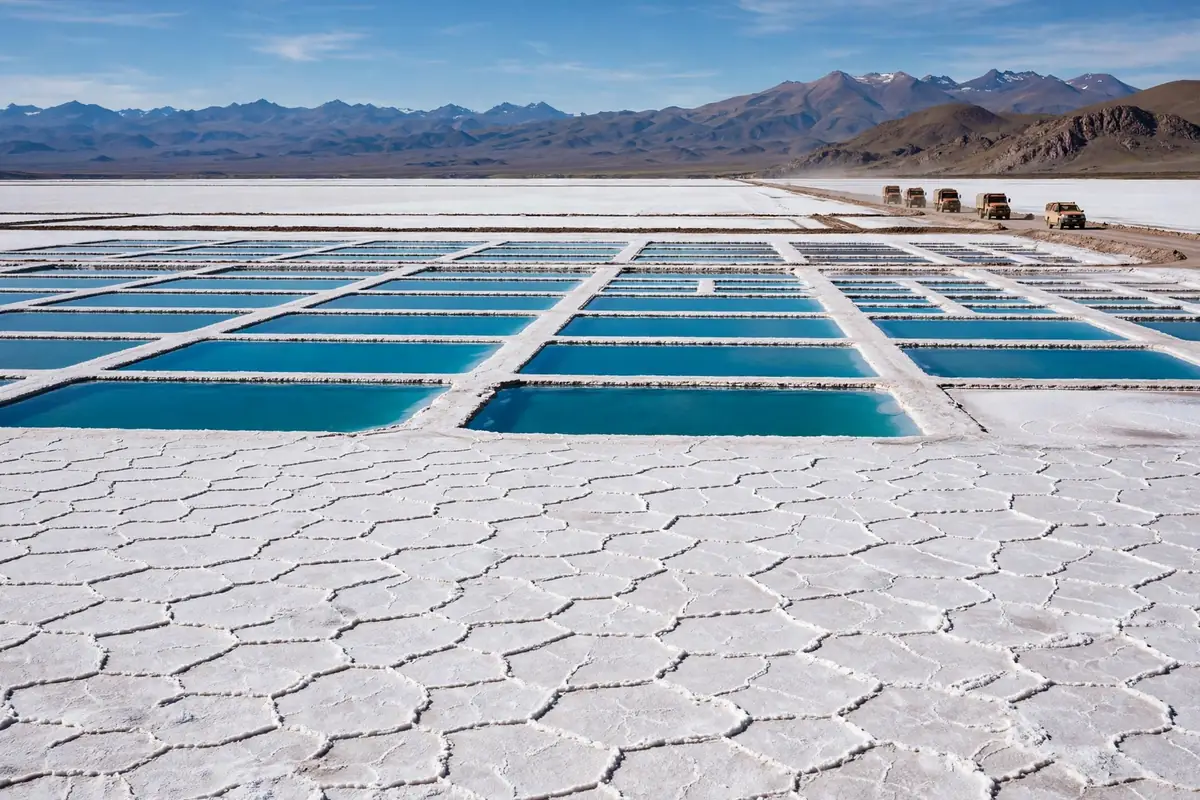
I have driven mountain roads for fifteen years, and Bolivia lithium export warehouse logistics is the kind of problem that looks fine on a map and still eats your whole day. I first heard about the Salar de Uyuni from a driver who had run the high plateau in Bolivia. He said, "Shifu, there is a salt lake up there big enough to get lost in, and underneath it sits enough lithium to change the world — but the trucks still cannot get the stuff out." That sentence stuck with me, because in this business, having the goods and moving the goods are two different jobs.
Bolivia sits on a treasure it cannot ship. According to the US Geological Survey's 2025 figures, the country holds about 21 million tonnes of lithium resources — roughly 20 percent of the world's known total — and most of it lies under the Salar de Uyuni, a salt flat of about 10,582 square kilometres, the largest in the world. Walk on it and the ground is white salt crust as far as your eyes can see. And yet the country produces only about 2,000 tonnes of lithium carbonate equivalent a year, less than 0.1 percent of global output. Twenty percent of the resource, less than a tenth of a percent of the production. If that is not a logistics story, I do not know what is.
Bolivia Lithium Export Warehouse Logistics Begins in a Salt Pond, Not a Warehouse
Here is the part most people get wrong. Lithium in Uyuni does not come out of a mine like coal. It comes out of brine — salty water pumped from under the salt crust into shallow evaporation ponds, where the high-altitude sun slowly dries it out. The "warehouse" is a pond the size of a small town. The inventory sits outside, under the sky, for months.
And the brine is stubborn. The magnesium-to-lithium ratio runs as high as 10:1 to 20:1, which makes evaporation slow and the chemistry hard. It rains when it should not. The ponds flood, the concentration drops, and the schedule slips by months. A warehouse manager can lock his doors against the rain. A pond manager cannot. That is the first lesson for anyone who wants to store and ship this stuff: your stock is weather, and weather does not sign contracts.
Then there is the state company, YLB, which holds a monopoly over the resource. The Llipi lithium carbonate plant, the country's flagship, ran at only about 14 percent of capacity in 2024. A plant running at 14 percent is not a plant — it is a very expensive demonstration. At the end of 2024, a deal was signed with China's CBC worth about 1 billion dollars to build direct lithium extraction, targeting 35,000 tonnes a year. In June 2025, a local court halted it. So the newest road out of the salt flat is, for now, a road that goes nowhere. Any shipper who plans around an announcement instead of a working plant will learn this the hard way.
The Hardest Leg of Bolivia Lithium Export Logistics: 3,600 Metres Up, No Sea in Sight
Bolivia is landlocked. That one fact shapes every warehouse and transport decision on this route. The salt leaves Uyuni by truck, climbing down from about 3,600 metres above sea level, and must cross into Chile or Peru to reach a Pacific port. There is no shortcut. No river, no rail line that carries the volume, no port of its own.
I have driven at altitude, and I can tell you what it does. Engines lose power in thin air. Brakes run hot on the long downhill grades. Drivers get headaches and short of breath, and a driver who is hurting makes mistakes. Tyres, fuel, spare parts — everything costs more up there, because everything has to be hauled up there first. A truck that does 800 kilometres a day on flat ground is doing well to do 400 on the plateau. Anyone costing this lane by the kilometre on a flat map is fooling themselves.
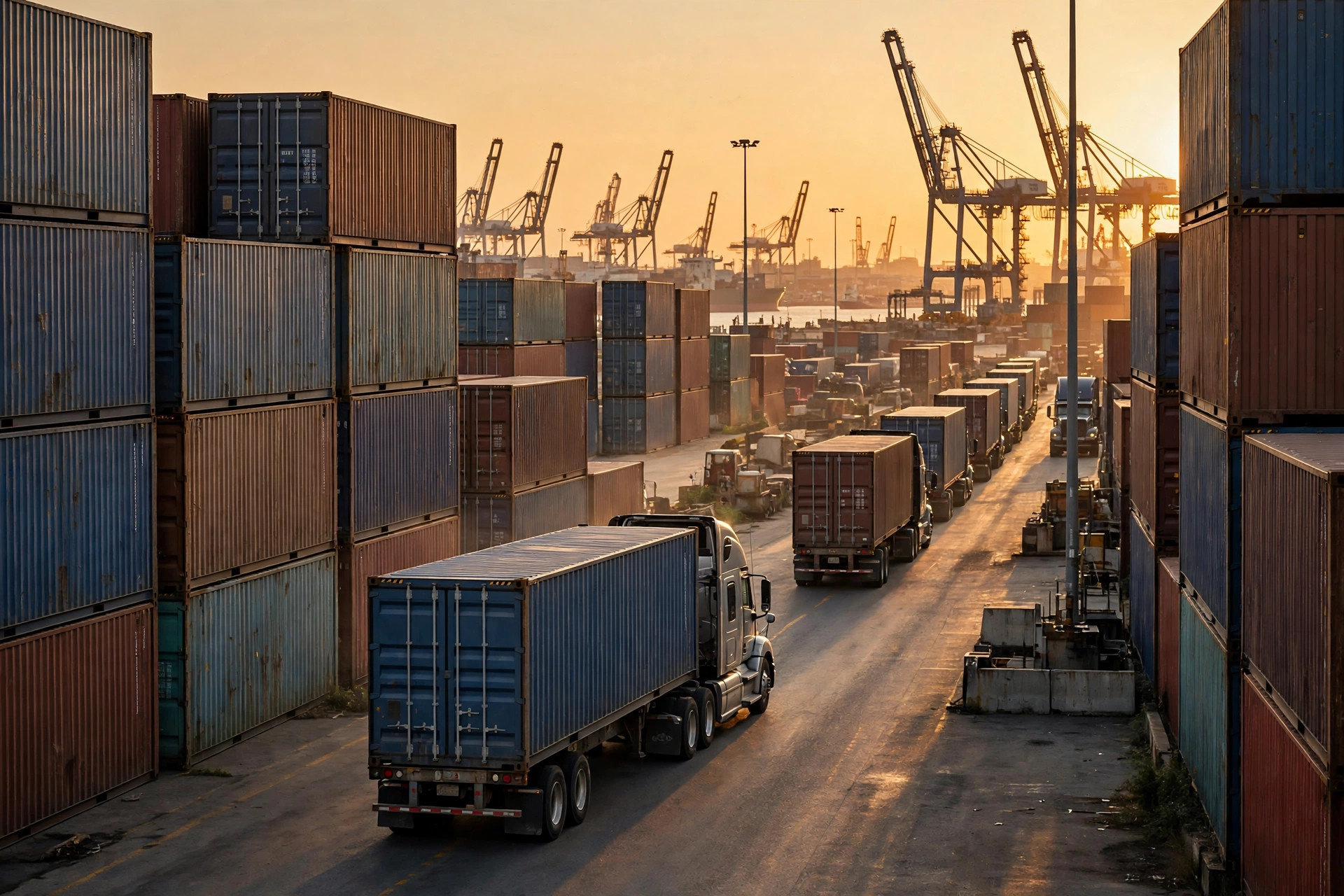
So picture the chain. Brine ponds in the middle of nowhere. A plant running at a fraction of its capacity. Bagged or drummed product stored in a thin-air yard. Trucks grinding down mountain passes to a foreign port, then customs, then a ship. Every handoff is a place where the cargo can sit, and sitting is the enemy, because a customer waiting on battery-grade carbonate does not care that your truck had a brake problem at 4,000 metres. He cares that the ship sailed without his cargo.
What I Would Tell a Shipper — and a Warehouse — on This Lane
If a client asked me to move this cargo, I would give him three pieces of advice, and I would not dress them up.
First, treat the pond as your warehouse and plan like it — that is the first rule of Bolivia lithium export warehouse logistics. That means buffer stock at the port side, not at the salt flat. Keep the working inventory where the ship is. A tonne sitting in Uyuni is a promise. A tonne sitting in a bonded yard near the port is a shipment.
Second, cost the road honestly. The numbers below are an illustrative scenario, not a quote — check current rates before you promise anything:
| Cost item (illustrative scenario) | Flat-land habit | High-plateau reality |
|---|---|---|
| Truck productivity | 800 km a day | About 400 km a day |
| Downtime for altitude and weather | A few percent | Budget double, then add a margin |
| Storage | A shed with a roof | Covered, ventilated storage near the port |
| Schedule buffer | One day | Three days, and do not promise the shipper less |
The trade-off is plain. You can pay for the buffer up front, in storage and spare trucks, or you can pay for it later, in missed sailings and angry customers. There is no third option where the mountain gives you a discount.
Third, never build a plan on a single plant, a single port, or a single court decision. The CBC deal being halted in June 2025 is not a footnote — it is the whole lesson. On this lane, your warehouse plan needs a second route and your shipping plan needs a second port. Chile and Peru are not interchangeable on paper, but on the ground, having both options is the difference between a delay and a disaster.
I will close with an old saying from the road: goods that cannot move are not goods, they are scenery. The Salar de Uyuni is beautiful — I would love to see that white crust stretch to the horizon one day. But beauty does not load a ship. Until the ponds, the plant, the trucks, and the ports all move at the same speed, Bolivia's lithium will stay mostly where it is: under the salt, waiting for someone to build a road that actually works.
By Shifu Zhao, Trucking Veteran (15 yrs)