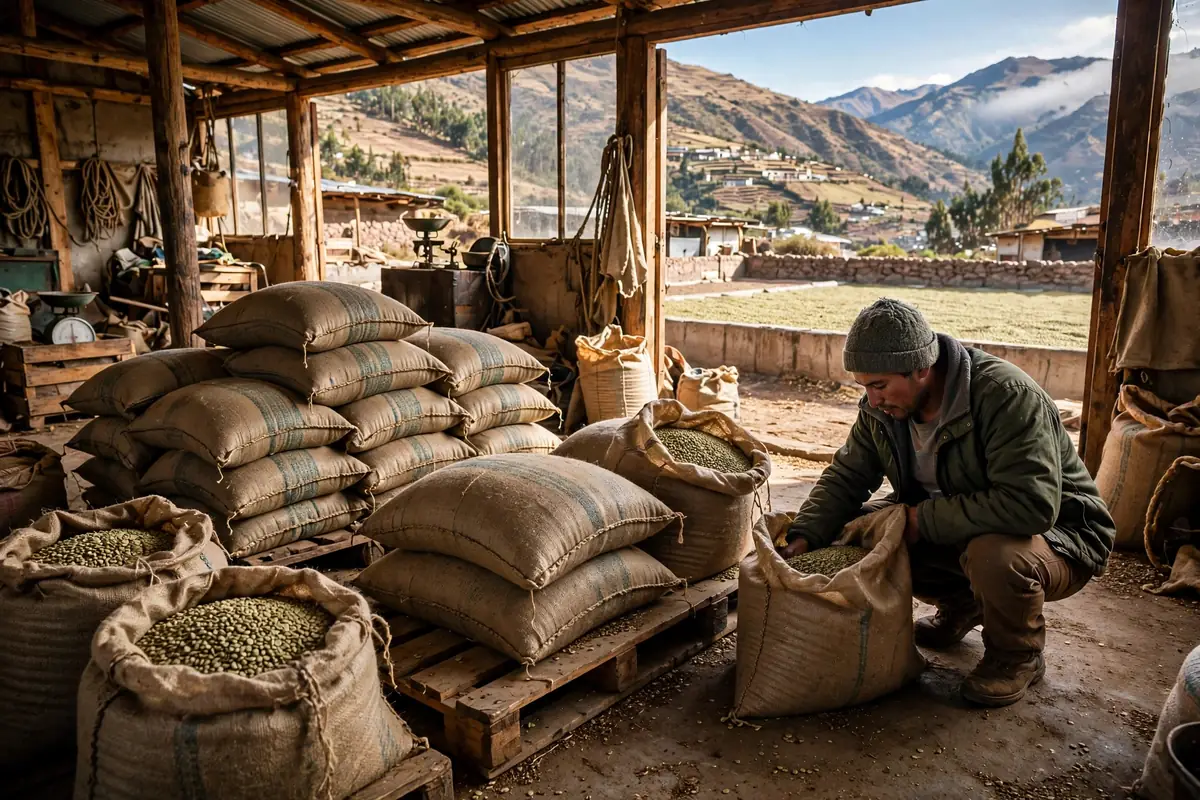
We had a client in the bolivia coffee export warehouse trade who bought a washed arabica lot in Caranavi in the autumn of 2024. The cupping score was lovely, the buyer in the United States was waiting, and everything looked fine when the bags left the mill. Then came the pre-loading inspection at the port of Arica, and the inner layers of the jute bags were damp, with a musty smell already coming through. The buyer rejected the whole container. The client said one thing on the phone that day, and I have remembered it ever since: the coffee did not die at sea, it died in the warehouse.
That is the sentence to keep in mind, because bolivia coffee export warehouse storage is a game decided before the ocean leg begins. Bolivia is a small origin. The US Department of Agriculture forecasts production of about 80,000 bags of 60 kilos for 2026/27, all arabica, with roughly 35,000 bags exported and more than half the crop drunk at home. When volumes are that small, every lot is precious and the tolerance for warehouse error is close to zero. A big origin loses a container and calls it an incident. A small origin loses a container and a cooperative can lose a year's income.
Bolivia Coffee Export Warehouse Storage Starts With Highland Humidity
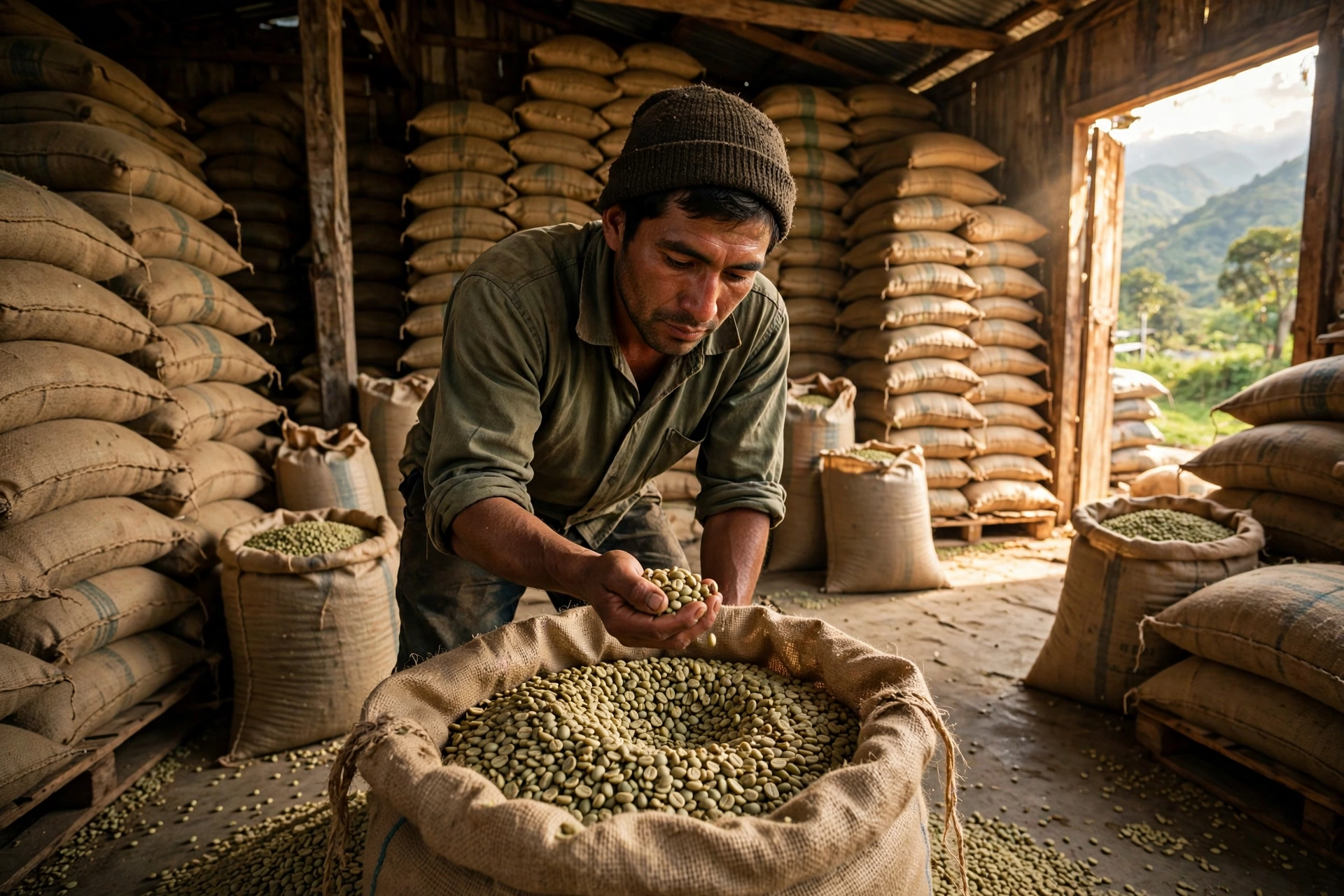
About 95 percent of Bolivian coffee grows in the Yungas, the steep, wet eastern slope of the Andes, and Caranavi is the best-known province inside it. Specialty lots grow at 1,200 to 2,000 metres, where rain and mist are part of daily life, and the beans leave the washing station carrying moisture with them. Green coffee is hygroscopic: it trades moisture with the air around it. The trade's accepted range is 10 to 12 percent bean moisture, a storeroom at 15 to 20 degrees Celsius, and relative humidity of 50 to 60 percent. In the Yungas rainy season, the air beside the drying patios routinely runs past that line, and three extra days in a mill warehouse can push a lot's moisture upward.
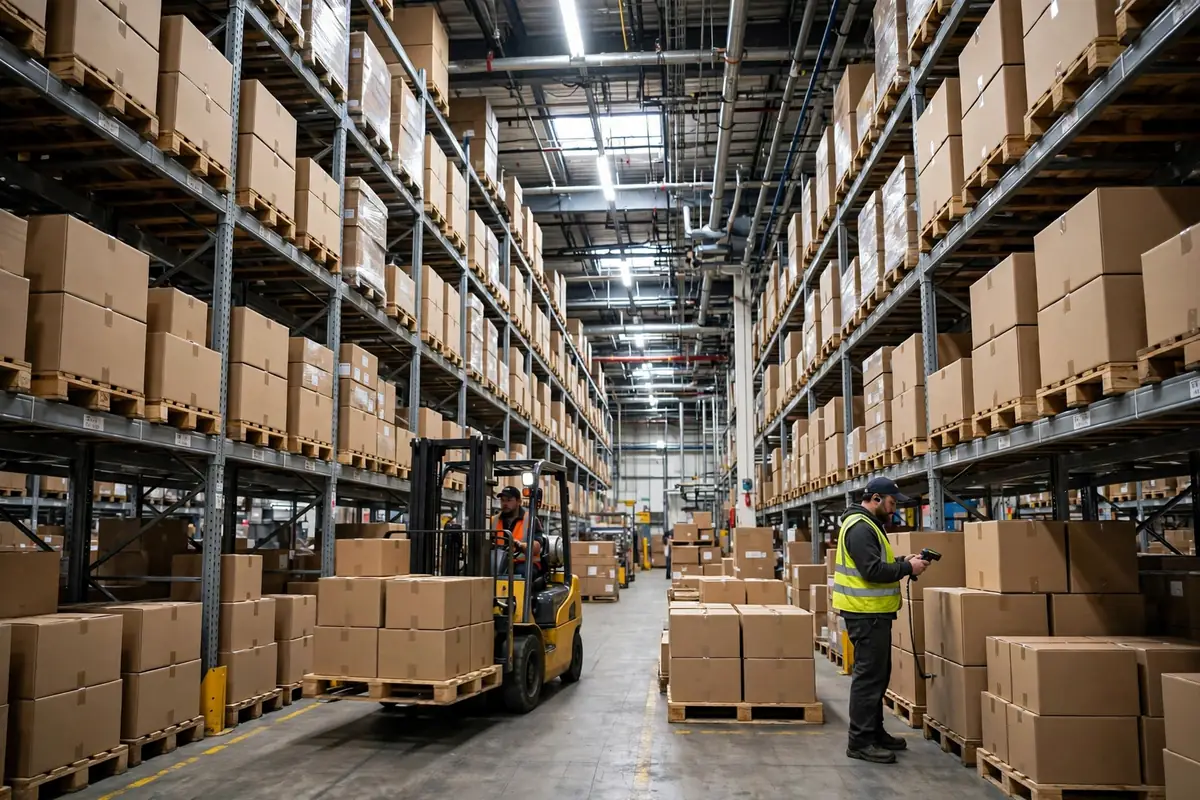
Our client learned this the expensive way. His mill warehouse had a tin roof and adobe walls. The roof baked in the daytime sun and cooled fast when the mountain wind came up at night, and the swing condensed moisture on the inside of the bags. Worse, the bags sat straight on a concrete floor, so the bottom layer wicked up ground damp that nobody could see from outside. The inspection probe went into the inner layers and the damage was done. We later changed three things for him: every bag went onto pallets, off the floor and away from the walls; two dehumidifiers and a hygrometer went into the warehouse, with temperature and humidity logged morning and evening; and no lot left the warehouse without a moisture reading, with over-wet lots spread out to dry even if it meant missing a sailing. None of those three things is expensive. Missing any one of them makes the cupping score irrelevant.
There is a detail that buyers' agents routinely overlook: coffee absorbs odours. If a mill warehouse also holds fertiliser, diesel, or spices, the beans will take on those smells, and the buyer will open the bag at destination to something nobody can quite name. A storage contract should state whether the warehouse is dedicated, what was stored there before, and how ventilation works. A verbal promise on this point is worth nothing.
Grading Decides Whether You Sell Beans or a Story
The same Caranavi coffee, graded and ungraded, is effectively two different products. A specialty lot is about uniformity: screens separate the large beans from the small, the broken, and the hulled, so the buyer's roast curve stays stable. An ungraded mixed lot tells the buyer at the first handful that no care went into it, and the first cut in the price negotiation lands right there.
Bolivia exported 1,810 tonnes of coffee in 2023, about 30,000 bags, according to the Bolivian foreign-trade institute IBCE. That is a rounding error in the world market, and that is exactly the opportunity. Bolivia cannot compete with Brazil on scale, so it has to compete on the completeness of the story: which cooperative, which hillside, which processing batch, traceable all the way through. The grading warehouse is where that story is written. Every lot is logged on arrival with its origin, grower, processing date, and moisture reading. After grading, each batch is stored separately, labelled clearly, and loaded against the buyer's order without ever mixing two batches into one bag. Buyers pay a premium for that certainty, and whether the premium reaches the seller depends entirely on how carefully the warehouse keeps its books.
Here is the counterintuitive part: finer grading does not necessarily mean higher storage cost. A mixed lot looks cheaper because it skips the grading labour, but it is far more likely to be held, downgraded, or claimed against at destination, and a single claim can swallow the grading cost of ten batches. In export warehousing, the account has to run all the way to the destination port's inspection bench, not just to the warehouse door.
Bolivia Coffee Export Warehouse Storage and the Consolidation Bill
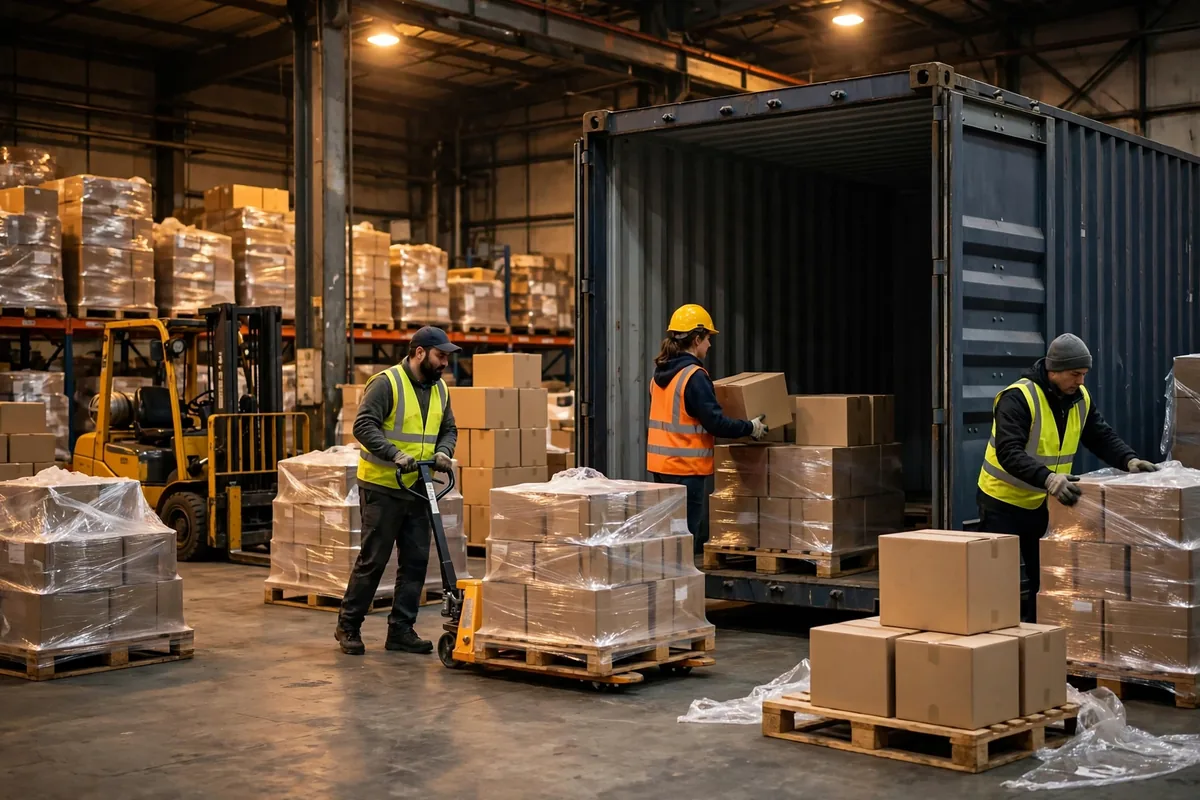
Most Bolivian exporters ship small volumes. A cooperative that fills two or three containers a year cannot afford to book a container alone, so consolidation is the norm. Consolidation is a trust exercise: several sellers' coffee shares one container, and if any one seller's lot is over-moisture, insect-damaged, or tainted, the whole container can be caught up in it. So before you consolidate the cargo, consolidate the standard. Every lot entering the container needs a moisture certificate, a grading record, and origin documents. A lot missing any one of those does not go in.
This is the comparison I walk clients through. The figures are an illustrative example, meant to show the structure rather than any real quotation:
| Approach | Storage and testing cost per lot | Risk | Suits whom |
|---|---|---|---|
| Store separately, consolidate at the last minute | Low, but no common testing | One bad lot drags the whole container down | One-off sellers with no history |
| Common intake testing, batches stored separately | Medium, one extra testing fee | Responsibility traceable to the batch | Cooperatives working together long term |
| Full-container booking, hermetic liners throughout | High, liners and dehumidifying cost extra | Most stable quality, fewest claims | Exporters with locked-in long-term buyers |
Many buyers' agents balk at the cost of hermetic liners, and I understand why, but look at the route. The coffee crosses the Andes and ships from the Chilean port of Arica; in February 2024, 97 percent of Bolivia's coffee exports left through the Arica route. Mountain road plus ocean voyage means temperature and humidity swinging back and forth for days, and beans without a liner travel naked through all of it. My rule is simple: specialty lots always get a liner, and ordinary lots at least get the warehouse stage done properly. Spend the money where it protects the value.
The Three Sentences Worth Most in the Contract
There is one last gate before the port: the export paperwork. Certificate of origin, phytosanitary certificate, export declaration — if any one of them does not match, the cargo sits in the bonded area at Arica, racking up storage charges and missing sailings. The contract has to fix who issues each document, who checks it, and who pays the demurrage when something is wrong. Most disputes are not about the coffee at all. They are about paperwork nobody owned.
Next time you negotiate a contract, ask these three questions. First, how many times a day is warehouse temperature and humidity logged, and who acts when it goes out of range? Second, can grading and testing records be traced back to the batch, and who answers for them if something fails? Third, on the leg from the mill to Arica, who owns the documents, the insurance, and the demurrage? Get clear answers to those three, and the bolivia coffee export warehouse storage account is one you have actually understood.
By Susan, 3PL Sales Director