Here's my verdict up front: if you're setting up urban delivery in Bogotá, your first lesson isn't Spanish — it's the restriction calendar. Bring the timetable that works in the US, and your on-time rate will teach you humility within a month.
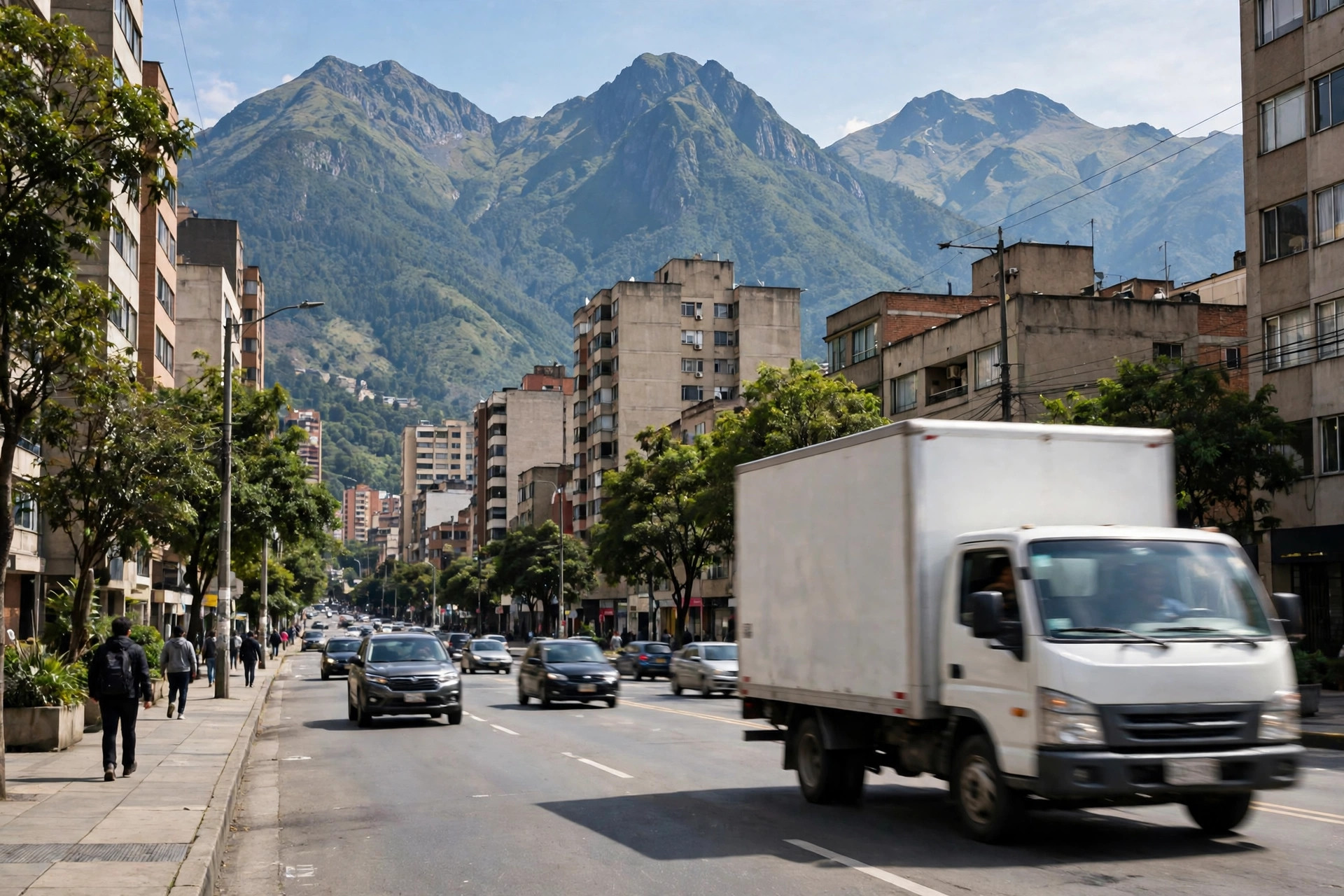
Two sides to this city. Bogotá is an 8-million-person consumption hub; put a distribution center here and you cover the whole central Andes. The location is unbeatable. But the city sits in a high plateau basin at over 2,600 meters. The traffic jams are real, the driving restrictions are enforced for real, and security costs real money. Those three stack up, and the cost structure looks nothing like the US.
I've seen this too many times: the American timetable, airlifted to Bogotá
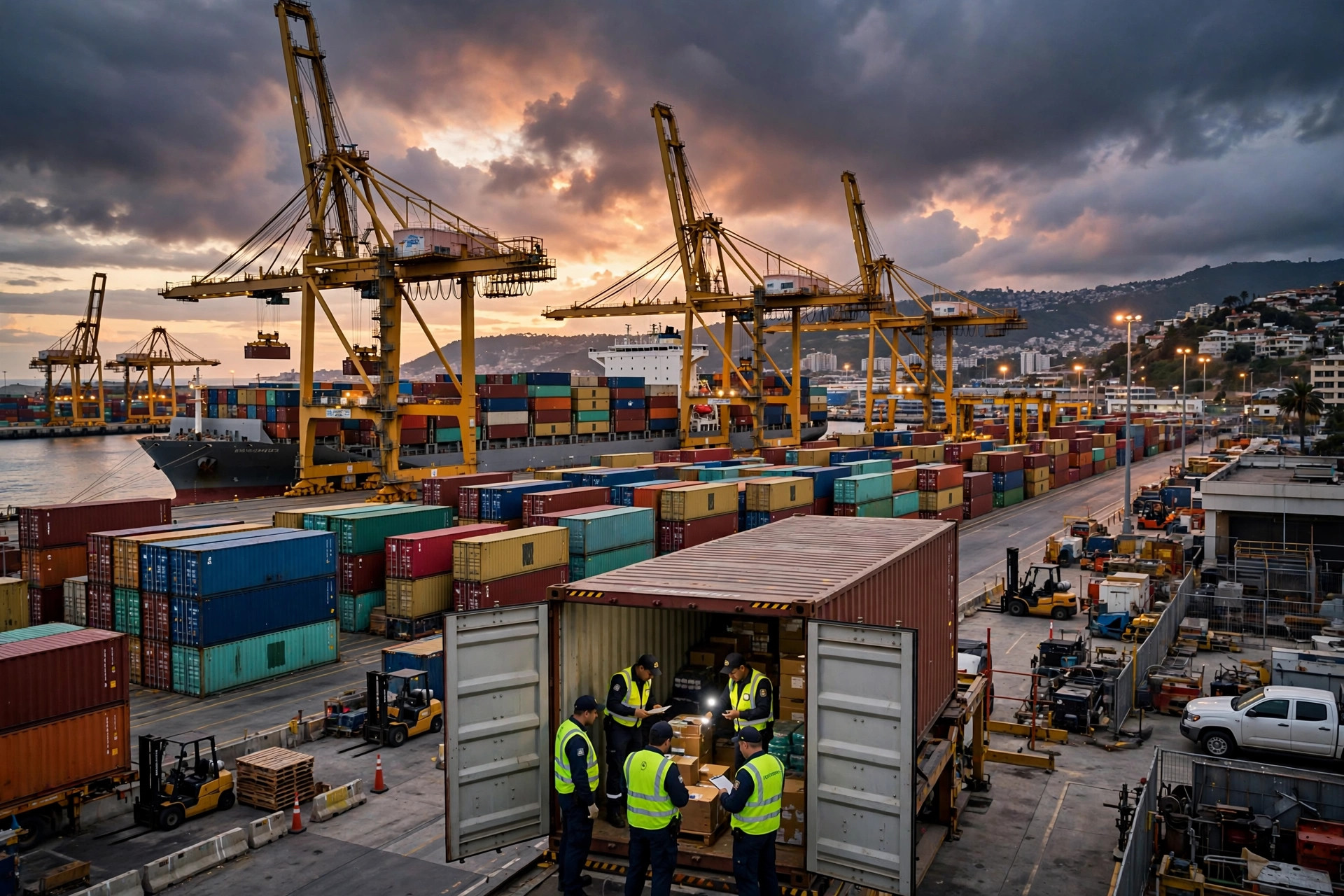
In 2024, a consumer-goods distributor leased a cross-dock south of Bogotá to cover supermarkets and mom-and-pop stores across the city. The fleet plan was decided back in the US: ship over a batch of used box trucks, all over 20 years old. Cheap was the logic.
Week one was a disaster. Bogotá's pico y placa for trucks comes down hard on old vehicles: Monday through Friday, 6:00–8:00 AM and 5:00–8:00 PM, trucks older than 20 years are banned regardless of plate number; Saturdays are worse, 5:00 AM–9:00 PM by plate digit. Their fleet landed squarely on the wrong side of the 20-year line — the entire morning and evening peaks wiped out, trucks baking in the warehouse lot. First-month on-time performance dropped by roughly a third, and supermarket complaint calls overwhelmed customer service.
The post-mortem took one sentence: read the restriction rules before you plan the fleet. That's not advice. That's tuition.
Bogotá's truck restrictions: play by the official rulebook
Let me spell out the rules so nobody pays that tuition twice. Per the Bogotá mobility authority's published policy (October 2026 edition — always check the city's latest release):
Trucks older than 20 years: restricted Monday–Friday 6:00–8:00 and 17:00–20:00, plate digit irrelevant; Saturdays 5:00–21:00 by plate digit; no restriction Sundays and holidays.
Two details matter. First, this rule specifically targets old trucks — fleet renewal is itself a compliance strategy. Second, the penalty bites: currently 15 daily minimum wages per violation (about 875,000 pesos at 2026 levels), plus the vehicle gets impounded. One fine buys you a month of serious route planning.
Bottom line: Bogotá's restrictions aren't suggestions. They're hard constraints on the timetable. Step one of route planning is subtracting the restriction windows from available capacity, then discussing everything else. The American instinct — "short on trucks, run overtime" — doesn't work here, because the overtime hours are exactly the restricted hours.
At 2,640 meters: both trucks and people pay an acclimation tax
Bogotá's roughly 2,640-meter elevation is the most underestimated cost line in its urban delivery.
Start with the trucks. Naturally aspirated diesels lose power noticeably up here; a fully loaded climb is visibly sluggish. Brakes fade faster on long descents, so maintenance intervals have to shrink. I've watched fleets ship their old US trucks down and discover within half a year that the repair bills exceeded what newer trucks would have cost.
Then the people. Drivers transferred in from lower altitudes mostly deal with some altitude sickness in the first two weeks, and loading productivity dips — that's normal. Night shifts at altitude fatigue people faster than at sea level. That's physiology, not attitude.
Three countermeasures, each costs money, each cheaper than a breakdown or a late penalty: spec turbocharged or electric trucks and stop pretending altitude doesn't matter; shift more volume to night delivery to dodge both restrictions and daytime congestion; give transferred drivers an acclimation period instead of a full route load in week one.
Security and fulfillment: localization is the only answer
Highway cargo robbery — piratería terrestre — is a long-standing problem in Colombia. I won't invent statistics, but everyone doing South American distribution knows the risk profile: high-value goods, fixed routes, fixed times.
The framework-level playbook: run high-value loads in daylight with two-person crews; sealed boxes plus GPS with scheduled check-ins; vary routes and time windows so nobody can learn your pattern; and most importantly, partner with local carriers or 3PLs. They know which road segments are off-limits at which hours. That know-how can't be bought — only borrowed.
I've seen too many US companies fail on culture fit in Bogotá: headquarters parachutes in a manager with the American SOP, and within three months it's obvious the local drivers don't operate that way. Plainly put, South American distribution isn't won by fleet size. It's won by localization. Labor is genuinely cheap — but the management span is twice what it is in the States, and the wage savings end up paying tuition.
Build your own fleet or partner locally: five dimensions
| Dimension | Own fleet | Local carrier / 3PL partner | | Restriction compliance | You schedule, you eat the fines | They know the rules, risk transfers | | Altitude-ready vehicles | Trial-and-error cost is yours | Locally proven vehicle specs | | Security know-how | Built from zero, tuition paid | Existing route and timing experience | | Cost structure | High fixed cost, idle trucks in slow season | Variable cost, scales with volume | | Flexibility | Full dispatch control, fast response | Peak season may mean surcharges or no capacity |
My call: partner first in year one, no exceptions. Learn the local restriction, road, and security game, then talk about building a fleet once volume stabilizes. Do it in reverse — build first, learn later — and the tuition doubles.
The contrarian take: in Bogotá, the most expensive line item is uncertainty
One contrarian point to close. When people cost out Bogotá delivery, they start with fuel, then labor — "it's South America, it must be cheap." Wrong.
In Bogotá, the biggest cost line is time uncertainty: restrictions eat the peaks, congestion eats the day, altitude eats vehicle condition and human energy. Stack all three, and if your timetable has no buffer for "uncertain," your on-time rate is a paper number. Supermarket penalty clauses don't care about altitude sickness.
So before you sign that warehouse lease in Bogotá, answer one question: how much buffer for "uncertain" is built into your timetable? If you can't answer, don't sign yet.
By Lao Mi, Supply Chain Veteran (20 yrs)