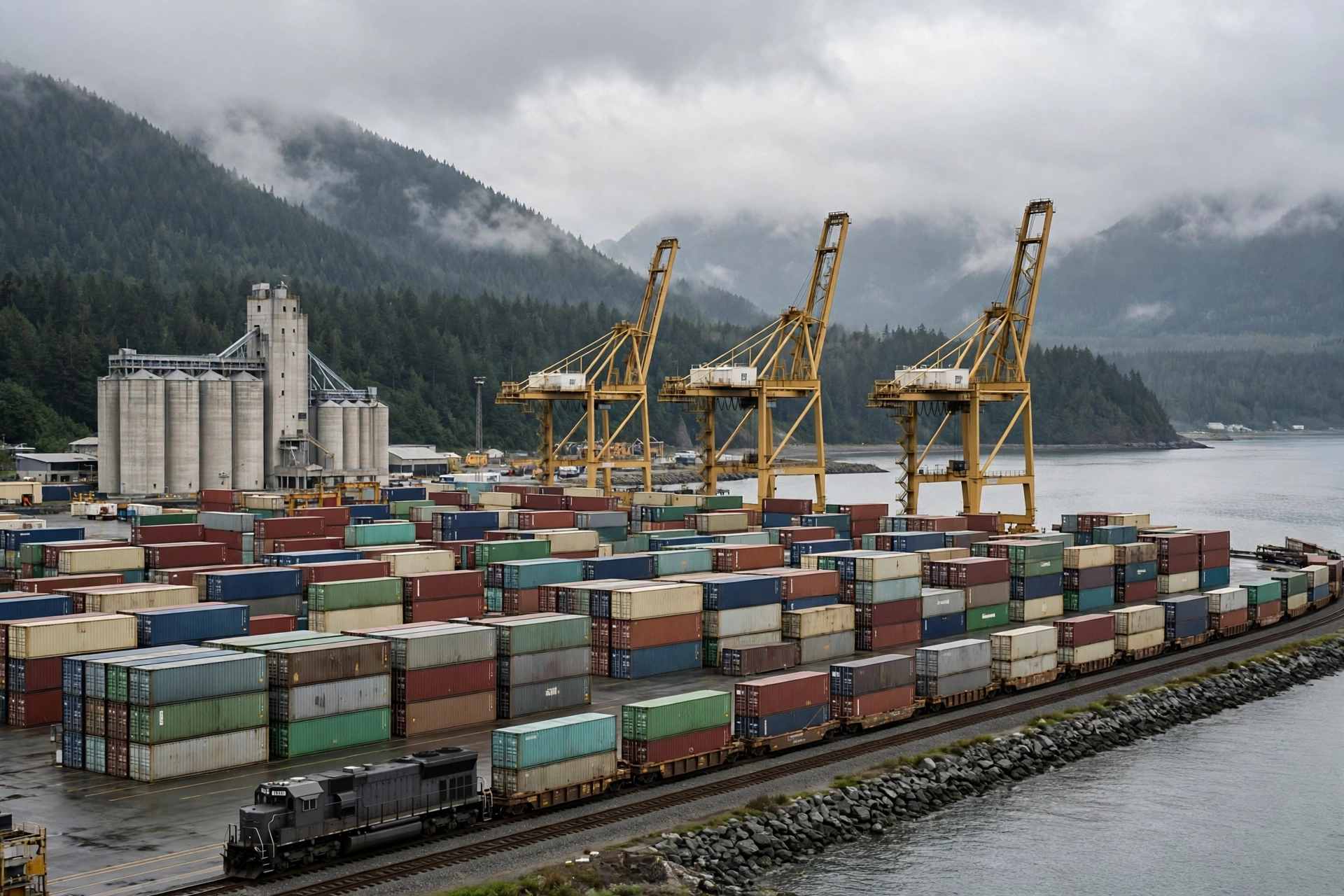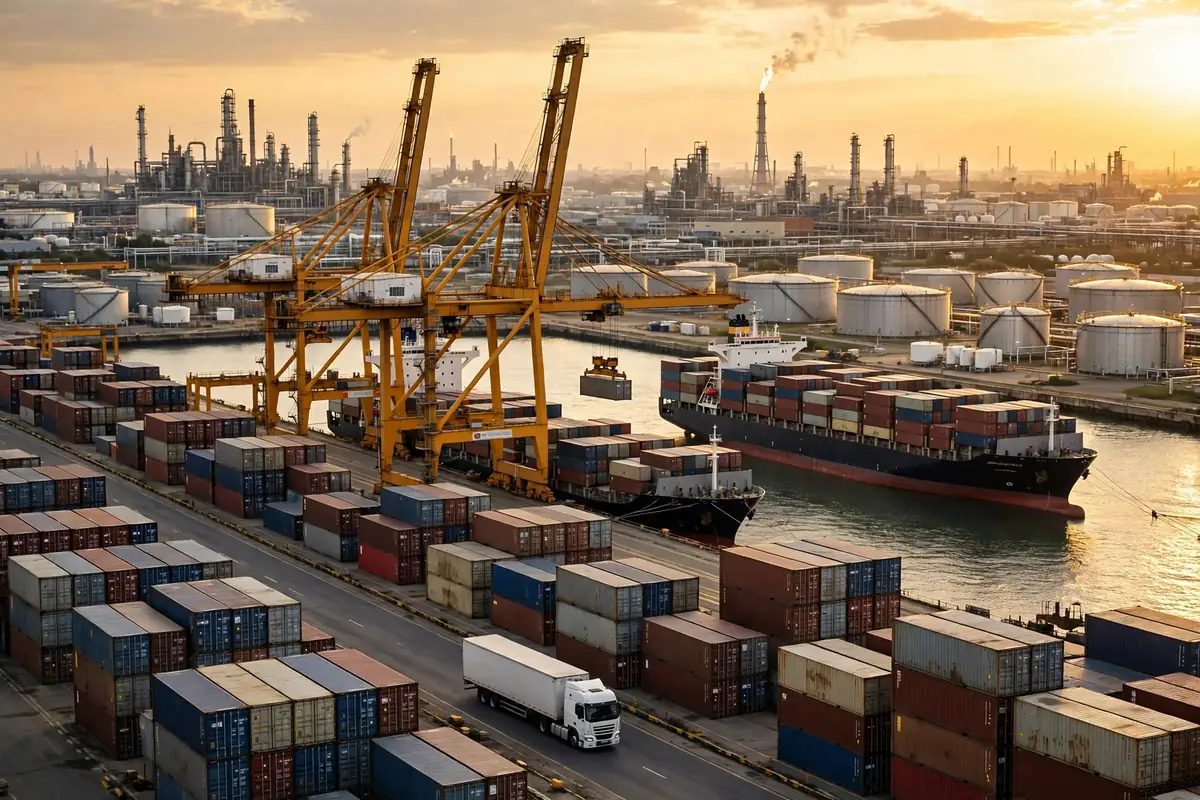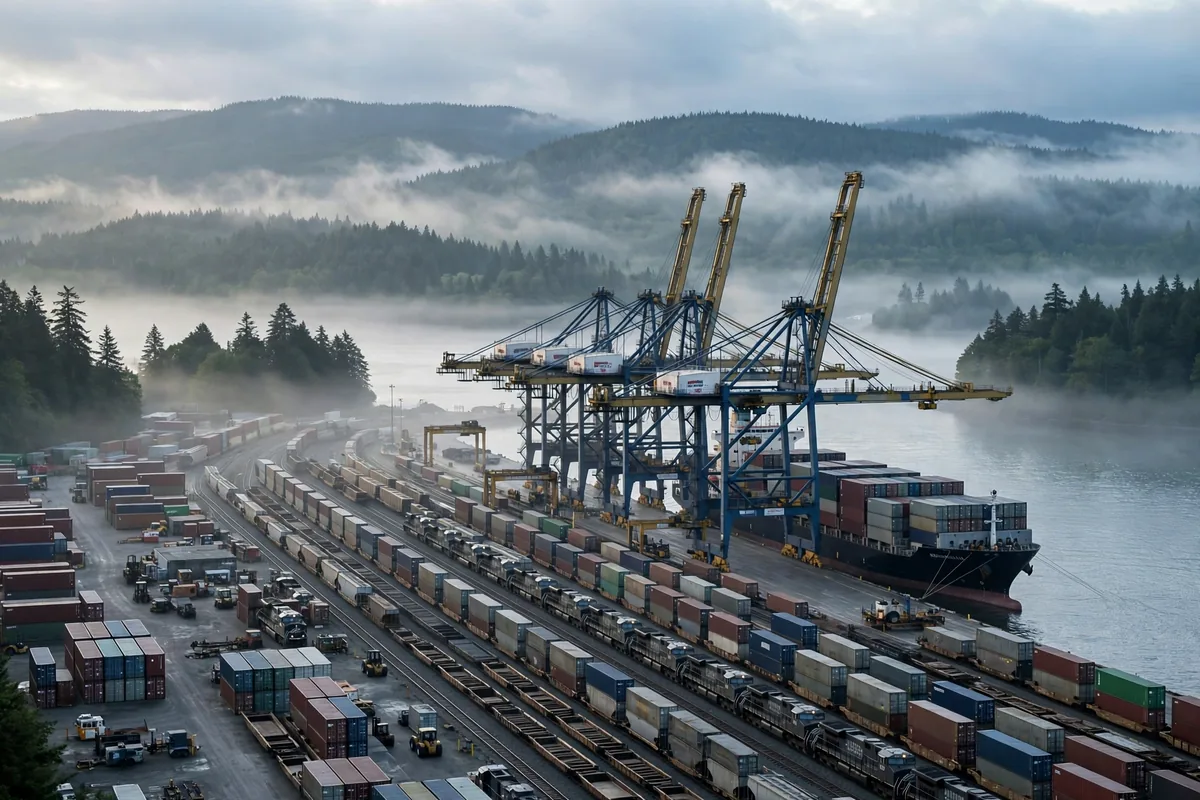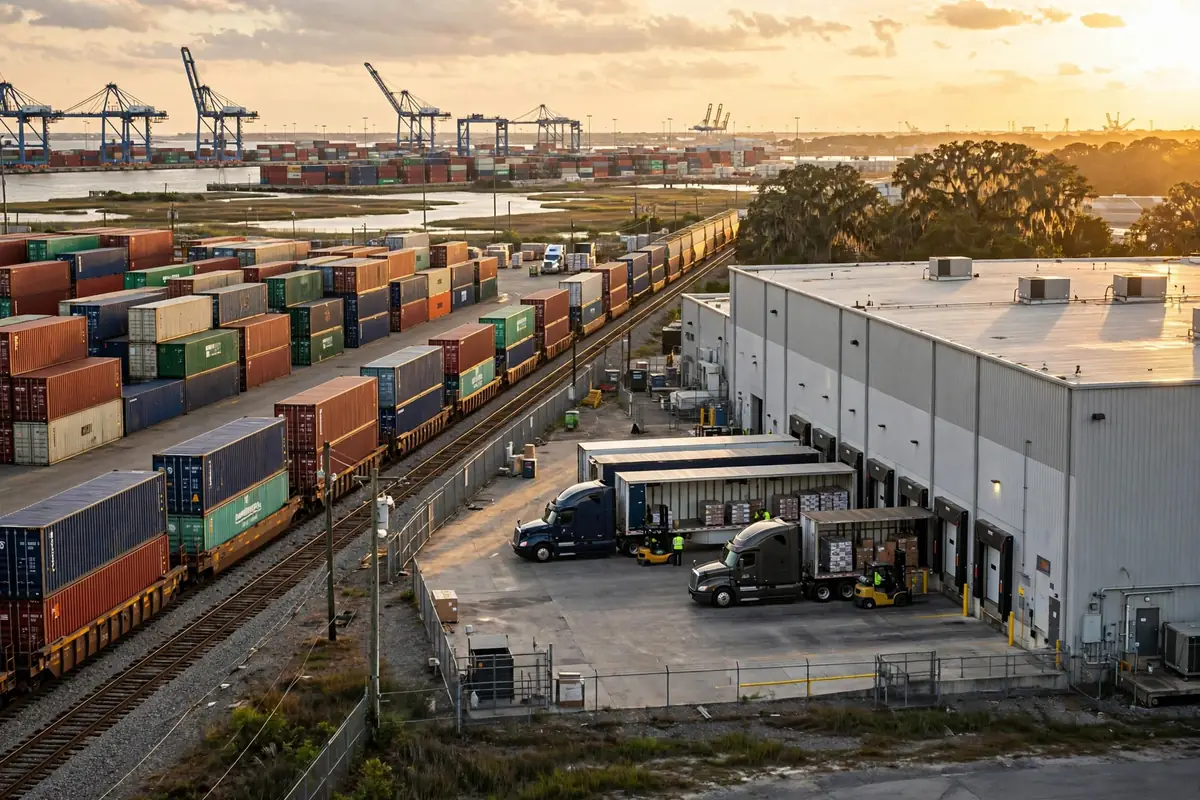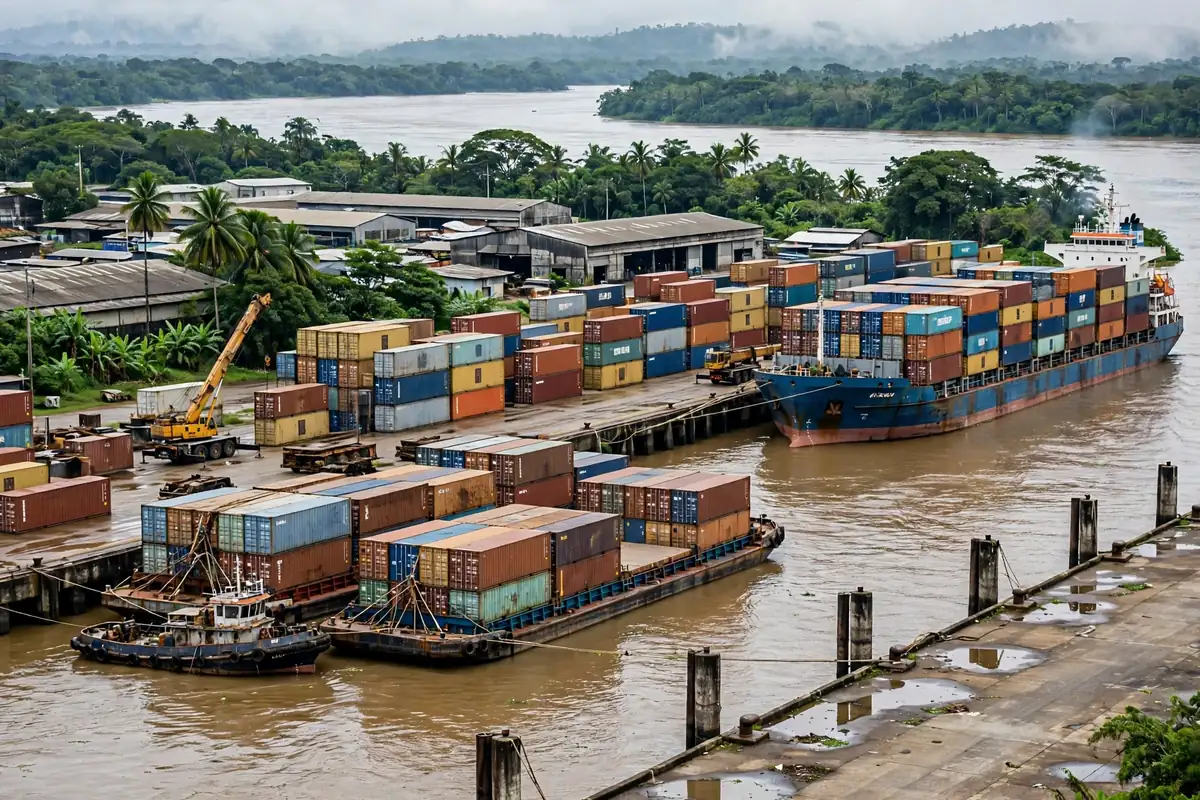
Belém port warehouse logistics starts with a blunt fact: put the warehouse in the wrong place and every dollar saved on freight comes back as a distribution cost. Belém is the capital of Pará and the gateway at the mouth of the Amazon, where cargo arrives by river and leaves by sea. The warehouse, the quay, and the split point have to follow the rhythm of the water, not the habits of a highway warehouse. I have seen too many teams bring an inland warehouse drawing to a river mouth and copy it line for line. The cargo ends up stuck beside the quay, and the peak season exposes the mistake.
This is a two-sided problem. The river is cheap because it can move large volumes and reach deep into the interior. The river is expensive because its rhythm is not yours to control. Water levels, sailing schedules, and barge connections all move on their own timetable, and when any link slows down, the stock in the warehouse has to wait. Anyone who wants to run cargo through Belém has to learn the temperament of this channel before deciding where the warehouse goes and how the split works.
Where the Belém Port Warehouse Logistics Chain Starts
The numbers from ANTAQ, Brazil's National Waterway Transport Agency, set the scale. In August 2025, the Port of Belém handled 264,000 tonnes. That figure looks modest until it is read in regional context: from January to August 2025, the organized ports of Brazil's northern region handled 30.2 million tonnes combined. Belém is not the largest port in the northern group by volume, but its position at the Amazon estuary makes it a river-sea junction, and that role matters more than any single month's tonnage. Cargo reaching Belém typically moves up the Amazon water system toward the interior, or out through the estuary to the sea. The warehouse has to serve that flow, not simply sit close to the quay.
In October 2025, the Atem Group completed South America's first heavy barge lifting operation at a private terminal in Belém: 16 barges, each about 380 tonnes, lifted aboard the AAL Hamburg between 8 and 24 October, with the barges destined to serve the Paraguay-Paraná Waterway. The lesson for Belém port warehouse logistics is plain. The river mouth is not only about containers moving in and out. Barges are themselves movable storage and schedulable capacity. What the warehouse stocks, and how much, has to follow the barge rhythm rather than waiting for the vessel to arrive before anyone thinks about it. Because barges can travel the inland waterway, split points can be pushed toward the interior, and a Belém warehouse works best as a consolidation and transit point rather than a place where everything waits in the port area for a ship.
I have seen too many teams plan Belém as if it were an ordinary seaport, renting a shed beside the terminal and starting work. The trap at a river mouth is not rent. It is connection. When a sailing changes, the picking plan inside the warehouse changes with it. When a barge arrives half a day late, the shipment time promised to the customer moves back. A distribution plan with no buffer for waterway variation is a plan written in sand.
How the Belém Port Warehouse Logistics Bill Actually Adds Up
Costing has to separate money genuinely saved from money that cannot be avoided. The unit price advantage of the river has to be tested against total cost, not against one leg of freight. The warehouse, the port, and the split each matter. Saving money in one place by cutting corners can double the cost somewhere else.
Consider a worked scenario, clearly labelled as an assumption, for an operator placing a warehouse near Belém. Suppose 1,200 tonnes move through Belém each month, with 800 tonnes going by barge toward the interior and 400 tonnes consumed locally. Suppose smooth barge connections cut the inland leg by 90 yuan per tonne against pure road transport, so the 800 tonnes save 72,000 yuan a month. Suppose late barges add extra handling and overtime worth 25,000 yuan a month on the local cargo, and suppose the operator keeps a further 15,000 yuan a month as a reserve for schedule variation. On those assumptions, the net effect is a saving of 32,000 yuan a month. The numbers will move with schedules and volumes, but the framework stays the same: subtract dwell, rehandling, and variation reserves from the river saving before calling anything a real saving.
| Distribution leg | Worked scenario | How to read the bill |
|---|---|---|
| Barge to the interior | Suppose 800 tonnes a month by barge | Deduct variation cost before counting the saving |
| Local consumption | Suppose 400 tonnes a month locally | Closer to demand means one less transfer |
| Port transit warehouse | Suppose consolidation and short stays only | The longer cargo sits, the higher the dwell cost |
| Interior split point | Suppose points follow the barge rhythm | Cargo moves when the barge arrives, not before |
Here is the counterintuitive judgement: a Belém warehouse built closer to the quay is not automatically cheaper. A port warehouse suits consolidation and fast transit. Cargo left sitting there burns money. The place to spend is the connection capacity of the interior split points and flexible rostering inside the warehouse, so stock can follow the sailing schedule instead of making the vessel wait for the warehouse. The trade-off at the heart of Belém port warehouse logistics is absorbing variation rather than pushing it onto someone else.
Do Not Copy the Southern Playbook for Belém Splits
The big southern ports run on frequent liner sailings and a dense warehouse network, with cargo splitting as soon as it lands. Belém runs on a different rhythm, where waterway sailings and barge connections set the pace, so split plans have to follow the sailing schedule rather than a fixed calendar date. Where to place a split point depends on where barges can reach and how cargo disperses inland, not on which city looks largest on a map.
Take another labelled scenario. Suppose an operator copies the southern model at Belém and stocks 1,000 tonnes in the port warehouse for a fixed sailing, but a change in barge connections leaves 300 tonnes waiting for the next sailing window, slowing warehouse turns at once. Suppose instead the port warehouse holds only 400 tonnes for consolidation, with 600 tonnes placed at interior split points on the barge rhythm, moving as soon as the barge arrives. The warehouse stops holding stock, and customers wait less time. The point of the scenario is direction, not precision: Belém splits must follow the waterway, and the warehouse is a tool for following the sailing schedule, not an excuse for stockpiling.
Managers running cargo through Belém should also change what they measure. Rent and freight per shipment are not enough. Watch schedule reliability, waiting time at barge connections, and average dwell days in the port warehouse. When the measures change, the placement of warehouses and split points changes with them. A distribution plan can look elegant on paper and still fall apart when the sailing schedule slips. What survives is not the largest warehouse but the most adaptable plan.
The opportunity at Belém sits in its position at the river mouth, and so does the risk. Place the warehouse right, let the split follow the waterway, and Belém becomes a channel that saves money. Place it wrong, copy another region's playbook, and the river's cheap freight will be eaten by variation. Anyone planning to stay here for the long term should start the distribution plan from the sailing schedule and the barge rhythm, and only then talk about rent and freight. Get that order wrong and the arithmetic will be wrong however carefully it is done.
By Lao Mi, Supply Chain Veteran (20 yrs)