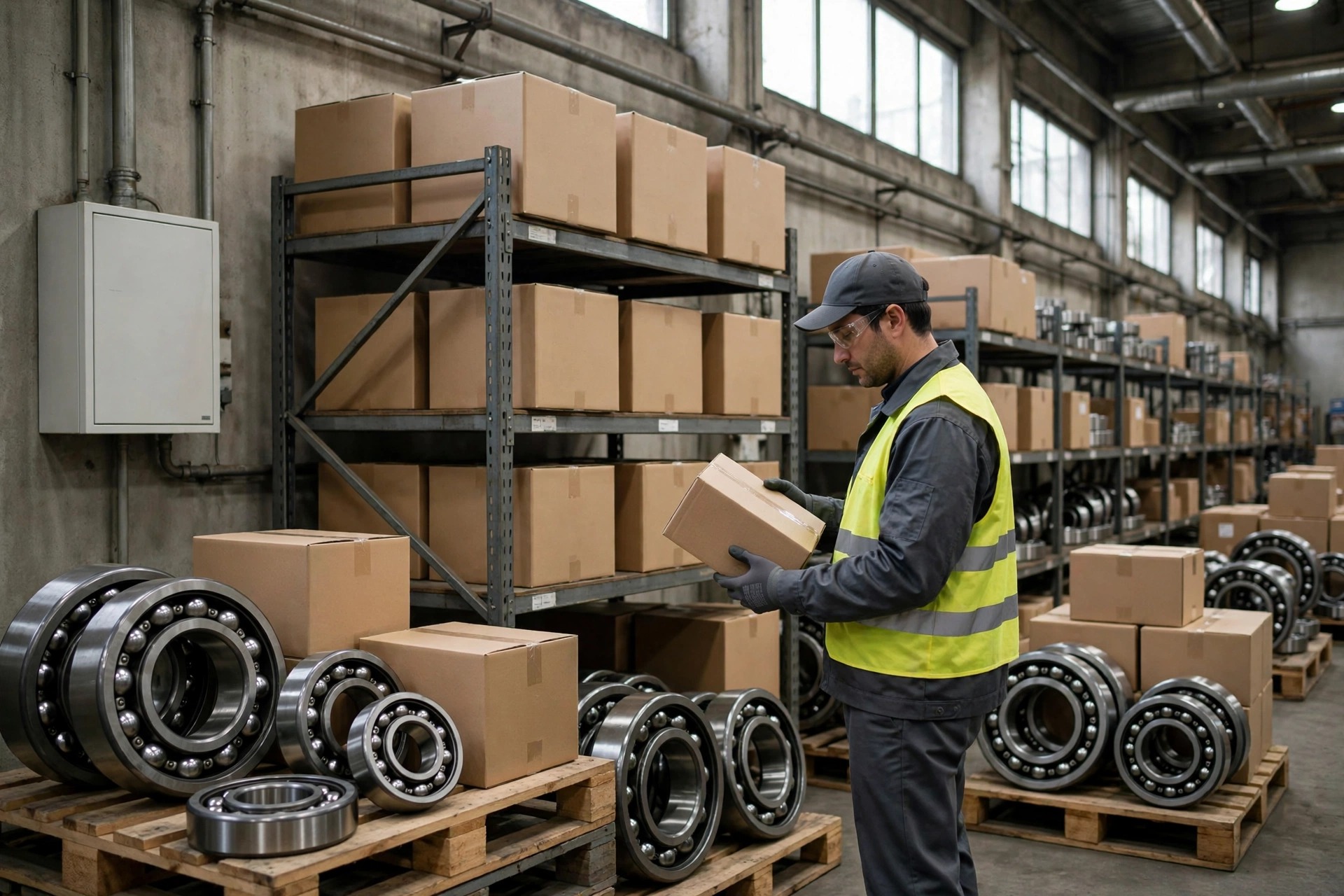
Bearing warehouse storage rust prevention sounds like the least dramatic job in an industrial spares warehouse, and that is precisely why it causes so much quiet damage. A bearing does not fail loudly on the shelf. It rusts gradually: a faint film appears on the surface, then pits form, and by the time the part reaches a machine its precision is already gone. The bill arrives later, as rework, returns, or unplanned downtime. In my research visits to spares warehouses, I have rarely found a facility that lost bearings because it owned no rust-preventive oil. The losses usually came from small failures at three points: packaging, humidity, and handling.
In the autumn of 2024, I visited an aftermarket spares warehouse in East China serving construction machinery. One row of bearings stored near a window had been received less than six months earlier, yet a sample inspection found rust spots on several boxes. The warehouse was not damp. The problem was location. That rack faced a side door that stayed open: sunlight warmed it by day, cold air poured in at night, and the steel surface went through repeated cycles of condensation. The rust-preventive oil film was washed, a little at a time, by a thin layer of moisture. The same batch stored deeper inside the warehouse was untouched, while the window-side stock needed full rework. Re-cleaning, re-oiling, and repackaging consumed labour and materials worth roughly a tenth of that batch's value, and two boxes with deeper pitting could no longer be issued to their original specification at all.
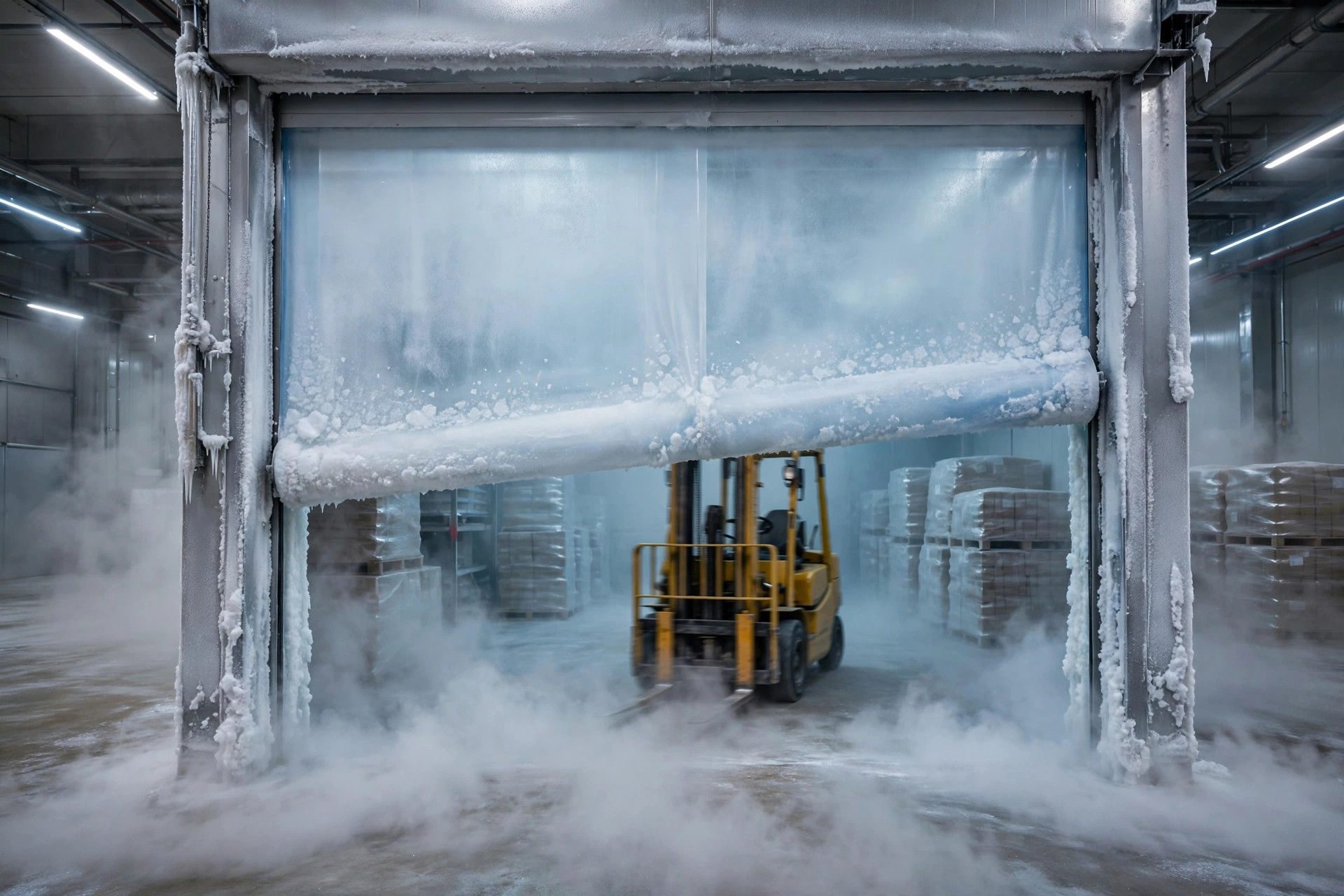
A mining equipment spares centre in North China, visited in the first half of 2025, showed the opposite failure. Its dehumidification was excellent, with humidity held low year-round. The problem occurred at receiving. Bearings brought in from outdoors in winter were still cold when they were moved into a warm warehouse, and moisture condensed on the cold steel almost immediately. By the time staff opened the boxes to verify the goods, water had already reached the packaging. The lesson from both cases is the same: bearing rust is rarely a single accident. It is the cumulative result of packaging, environment, and operating practice each giving way a little.
Bearing Warehouse Storage Rust Prevention Starts With Packaging
The factory packaging of a bearing is itself a rust-prevention design: a film of rust-preventive oil inside a sealed bag, keeping out moisture and the salts left by bare hands. Much warehouse rust begins with well-meaning unpacking. Counting by opening bags during stocktaking, handling bearings bare-handed to compare part numbers, or leaving a bearing on a pallet for photographs all expose the oil film to air. Worse, a resealed bag rarely recovers its factory seal. A small gap at the fold is enough for damp air to creep in over weeks.
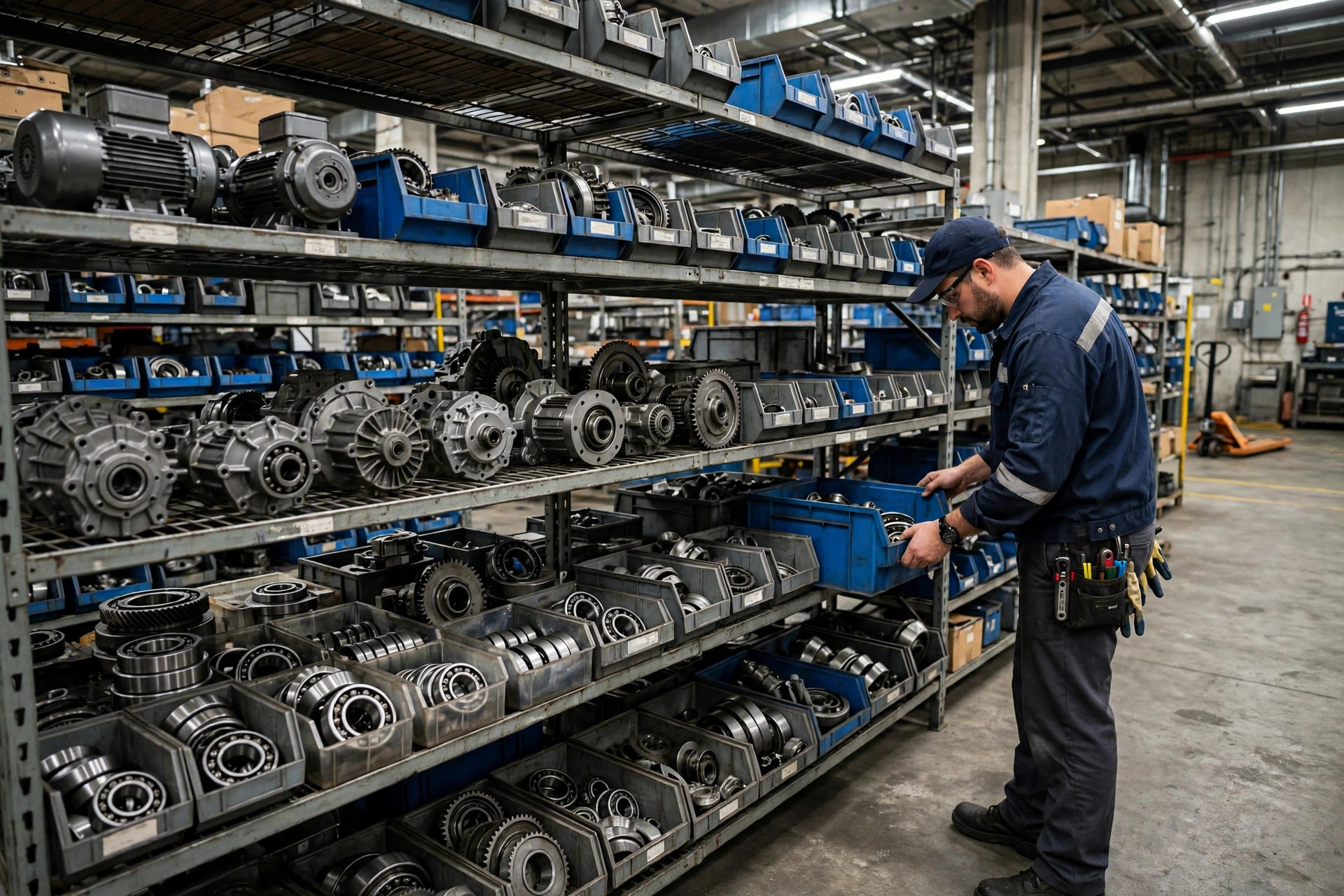
The discipline for this first line of defence is simple, though it is rarely popular. Do not open a box unless you must. Count by carton where possible, sample rather than unpacking everything, and wear clean gloves whenever a bearing must be handled, so fingerprints never touch the metal directly. Any packaging opened during inspection should be re-treated and resealed the same day, not left for a later shift. More oil is not better oil, either. An excessively thick film traps dust, and dust holds moisture against the surface, accelerating corrosion. A thin, even film inside sealed packaging is the more reliable combination. This is the cheapest line of defence, and the one that most depends on discipline.
The Second Line Is Temperature Difference, Not the Dehumidifier
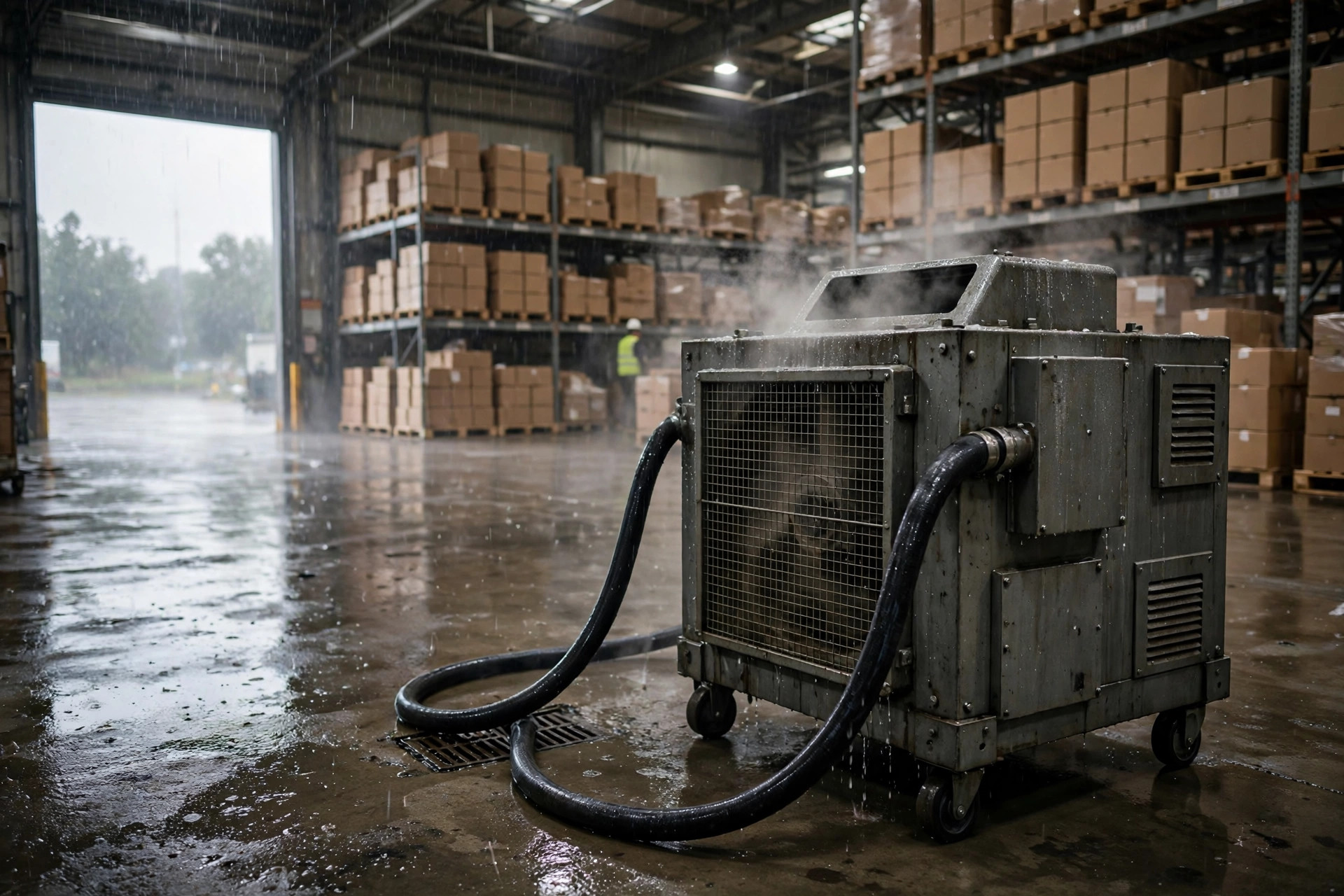
The generic guidance published by bearing manufacturers is usually consistent: keep relative humidity below 60 percent, hold temperature around 20 to 25 degrees Celsius, store goods about 30 centimetres off the floor, and follow each manufacturer's own specification where it differs. That guidance is not demanding. The hard part is keeping it stable. A humidity gauge can read well while a bearing surface is wet, because condensation is driven by temperature difference, not by average humidity. Day and night, indoors and outdoors, near a door and deep inside the warehouse, the gaps in temperature are what put water onto steel.
So bearing warehouse storage rust prevention at this stage should focus on reducing temperature swings rather than simply pushing humidity lower. Bearing storage should sit away from doors that stay open and away from windows where sunlight strikes the racks. In seasons with large temperature gaps, newly received bearings should rest in a buffer area until they approach warehouse temperature before the boxes are opened. Pallets should raise goods about 30 centimetres off the floor, which protects against ground moisture and improves air circulation. Whether a climate-controlled room is worth the investment depends on value and turnover: precision bearings with high value and slow movement justify it, while common fast-moving models are usually served well by zoned control and regular inspection. Money spent on managing temperature difference often outperforms a larger dehumidifier.
The Economics of Bearing Rust Prevention: First In, First Out and Sampling
The third line of defence is rotation. Bearings deteriorate with time on the shelf, so a model stored for three years carries a very different rust risk from the same model stored for three months. First in, first out is not a slogan here; it is the rust-prevention strategy itself. Batches should be labelled with receipt dates at inbound, the earliest batch should be issued first, and the system should surface models that have sat untouched beyond a set period for re-inspection. Many rusted bearings are only discovered during dead-stock clearance, long after simple treatment would have worked.
Sampling also needs a decision rule agreed in advance, rather than judgement on the spot. I suggest three grades. Bearings with light surface rust and unaffected dimensions and precision go through cleaning, re-oiling, and repackaging, then re-inspection before release. Bearings with clear pitting, or rust reaching a mating surface, are downgraded or scrapped and never issued to critical equipment. If a sample keeps failing within one batch, the whole batch is re-inspected, and its storage location and unpacking history are traced. The table below compares the three lines of defence, with figures given as the orders of magnitude commonly seen in warehouse visits; actual costs should follow each manufacturer's specification and the warehouse's own records.
| Line of defence | Investment | Cost of failure | | Packaging and oil | Gloves, sealed bags, re-inspection labour | Moisture from unpacking, batch rework | | Humidity and temperature | Zoned storage, raised pallets, routine checks | Condensation rust, precision loss | | Rotation and sampling | Batch labelling, scheduled sampling | Dead-stock write-offs, downtime after fitting |
The counterintuitive finding from this research is that the largest rust-prevention investment is often not equipment at all. It is the discipline of keeping boxes closed and racks away from doors. A warehouse can spend heavily on dehumidification and still lose bearings because stock sits by the entrance and every stocktake opens every bag. Conversely, a small spares warehouse without a climate-controlled room can keep bearings clean for a year if packaging is never opened casually, racks avoid doors and windows, and batches move on a first-in, first-out basis. Bearing warehouse storage rust prevention is not a single technology. It is an operating discipline.
Looking ahead, the direction of travel is from experience-based oiling toward data-based environment management: temperature and humidity records, batch movement records, and unpacking records, all traceable rather than held in one veteran's memory. The warehouses that can connect those three records will be able to answer a customer's question about why a batch rusted with evidence, not impression. The open question for any spares warehouse manager is this: could your warehouse go a full year opening boxes only for sampling, and counting everything else by carton? If the honest answer is no, rust may already be starting on your shelves.
By Dr. Chen, Supply Chain Researcher