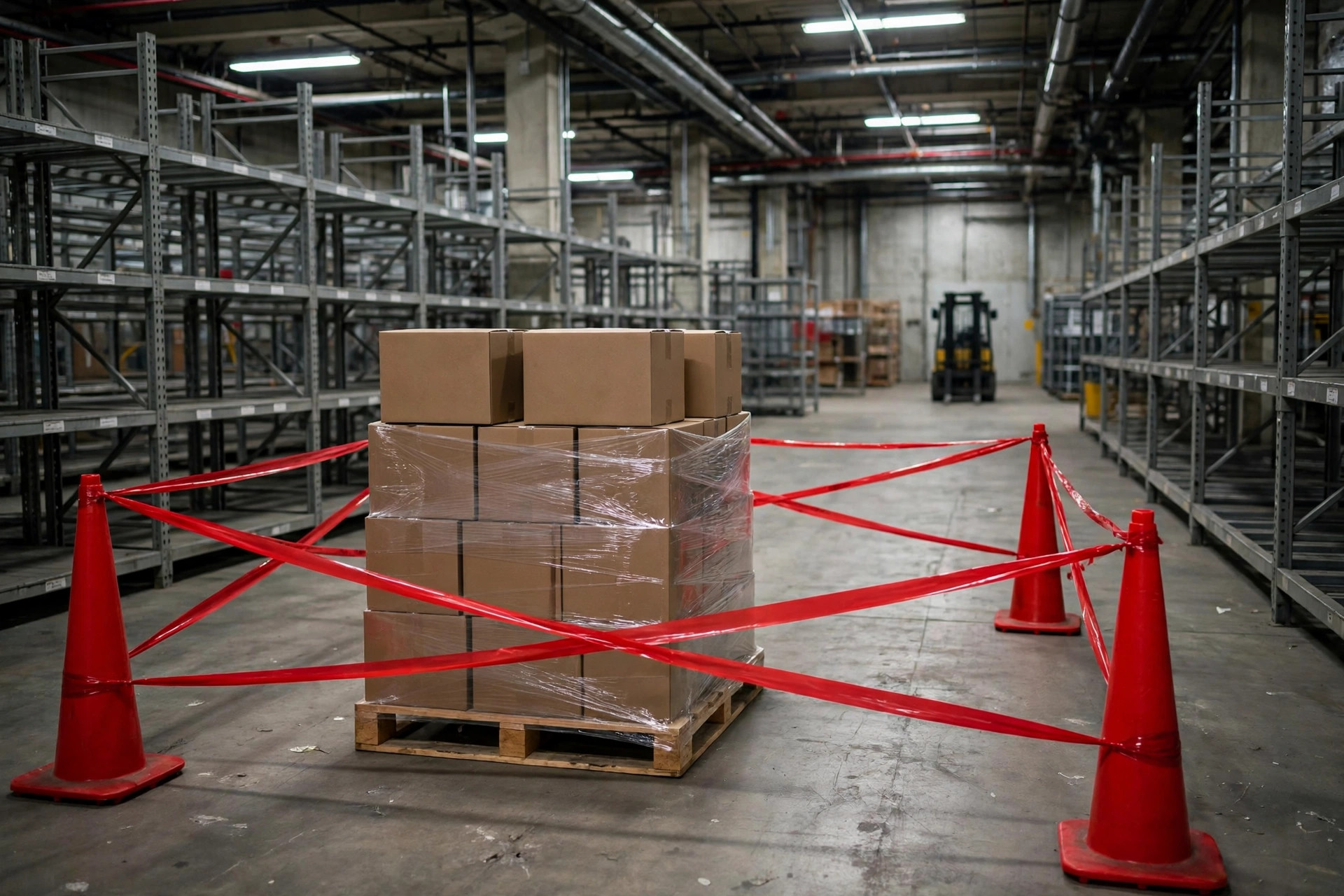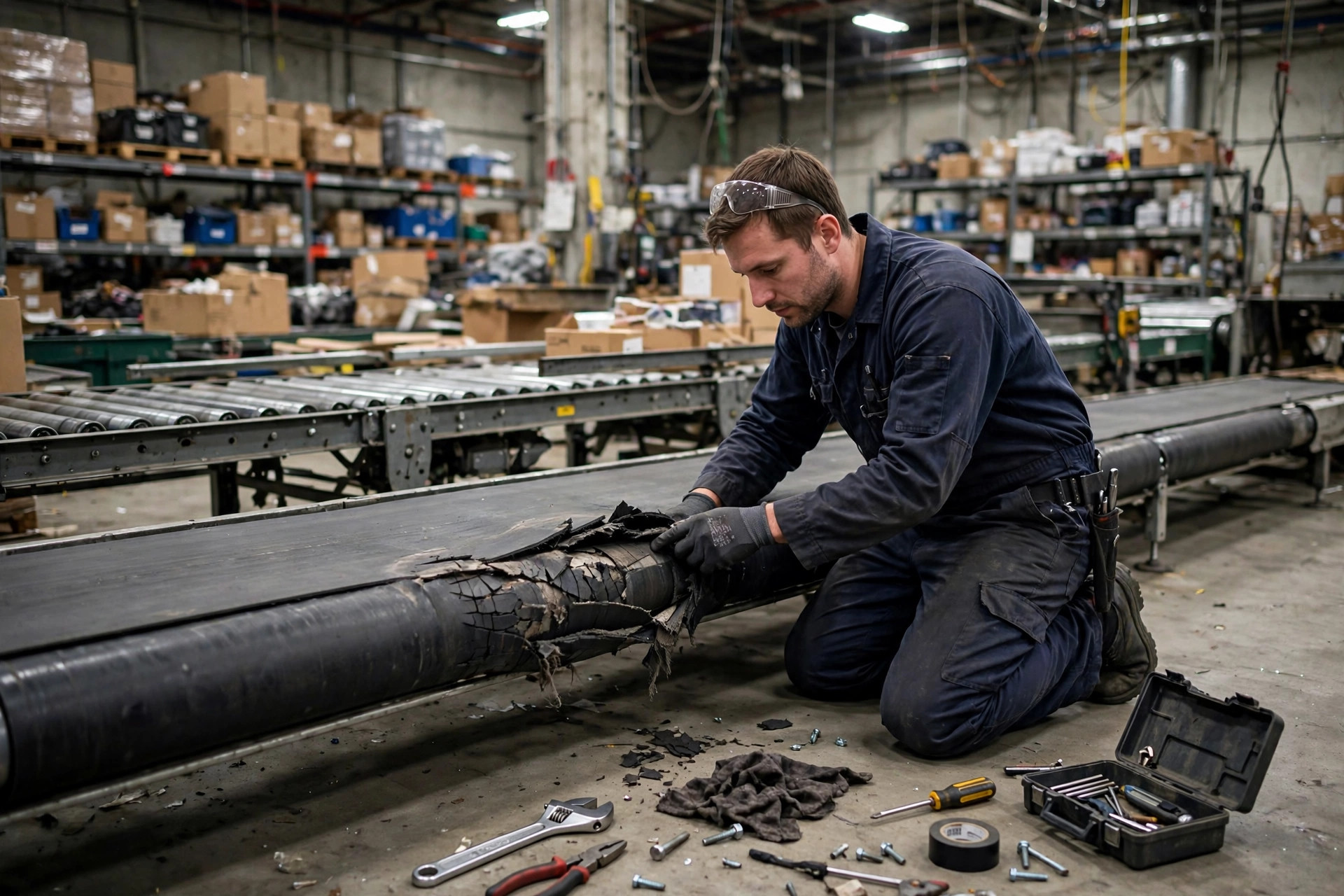
Start with the money, because that is where warehouse MRO spare parts inventory always goes wrong. I have watched a warehouse lose three days of peak-season throughput because a conveyor drive bearing failed and nobody had a spare on site. The crew moved product by hand for three days. When the dust settled, the overtime and late-shipment costs would have bought twenty sets of bearings. I have also watched the opposite failure: a spares cage packed floor to ceiling, a third of it untouched for years, cash sitting on a shelf gathering dust. Both warehouses made the same mistake. They never put two numbers side by side: what it costs to hold a part, and what it costs when the machine stops.
Every decision in spares management is a trade between those two numbers. More stock is not better. Less stock is not cheaper. The question is always which parts earn their shelf space, how many of each, and where they sit.
Warehouse MRO Spare Parts Inventory ABC Classes: Sort First, Stock Second
My first step in any spares review is never counting. It is listing the critical parts, and the test has three questions: if this part fails, does the line stop immediately? Is there a workaround? How long does a replacement take to arrive? Parts that hit two of the three go into class A. Class A is small, usually around a tenth of all part types, but it carries nearly all of the downtime risk.
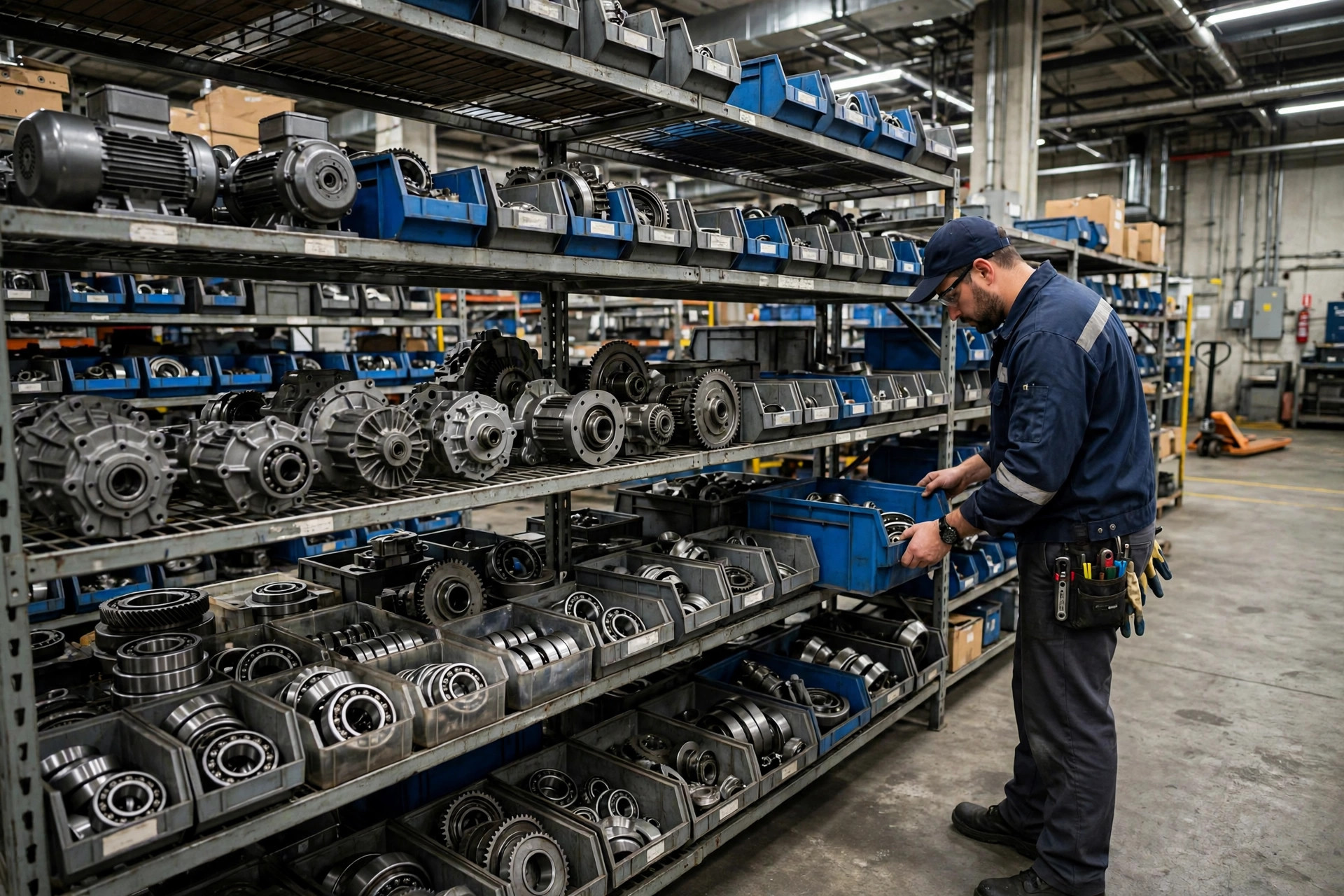
One warehouse I respect keeps its class A parts in a small locked cage with red tags, counted monthly, and every issue logged against a machine number and a failure reason. Class B parts slow the line down but do not stop it — certain sensors, belts, rollers — so they keep one or two on an ordinary shelf. Class C parts are commodity hardware: bolts, gaskets, standard bearings. Buy them in bulk, top them up when they run low, and do not lose sleep over them.
Classification also changes the budget conversation. When the boss asks why the spares budget went up, you stop talking about feelings and show the table: how many class A types, what each costs, how long each takes to arrive, and what an hour of downtime costs on the machine it serves. Numbers turn a request into a case.
| Class | Test | Stocking rule | Count cycle |
|---|---|---|---|
| A | Failure stops the line, no workaround, long lead time | Always in stock, safety stock sized to lead time | Monthly |
| B | Failure slows the line, workaround exists | One or two on hand | Quarterly |
| C | Commodity, easy to buy | Bulk, replenish on use | Twice a year |
Warehouse MRO Spare Parts Holding Cost Versus One Hour of Downtime
Most people price a spare part at its purchase price. That is only part of the cost. Holding a part also ties up cash, takes shelf space, needs counting, and risks obsolescence or rust while it sits. A cheap part that never moves for three years can cost more to hold than it cost to buy. On the other side, downtime costs more than the labor you can see: delayed orders, expedited freight, and the quieter cost of a customer losing confidence. That last one cannot be priced precisely, and everyone in the building knows it is the expensive one.
Build your own comparison sheet. On one side, list class A parts and their holding cost. On the other, estimate one hour of downtime for each machine they serve: the orders affected, times margin per order, plus overtime and any outsourced labor. The method does not need to be fancy; it needs to be yours, and it needs to be written down. The result usually surprises people, and it runs against common sense: the most expensive spares strategy is rarely overstocking. It is understocking class A while overstocking class C. One extra class A part has a known, bounded cost. One missing class A part has an unknown, unbounded one.
I saw this play out with a stacker crane encoder. To save budget, a warehouse cut its spare encoders from two to one. When the crane failed, the single spare turned out to be an older revision that did not match, and the line sat for another full day. The money saved on that second encoder did not cover one day of overtime. Save money on class C bulk pricing. Never save it by cutting class A quantities.
Lead Times and Supplier Terms for the Parts That Take Longest
Once the classes are set, deal with lead time directly. For any class A part with a lead time beyond two weeks, negotiate separately: a framework agreement, consignment stock held at your site, or an expedited channel. Consignment is often the best deal on offer — the part sits in your cage, the supplier still owns it, and you pay only when you use it. It costs you almost no cash and buys you availability. Just agree in writing who counts it and what happens to expired or superseded stock, or you will argue about it later.
The critical list is not a one-time document. After every major failure, review it: did the failed part belong on the list? Was its class wrong? Was the lead time estimate accurate? Did a machine upgrade make some old spares obsolete? Two reviews a year keep the list honest. One more item people miss: when a manufacturer announces a model is going end-of-life, stock up on its class A parts early. Prices and lead times move against you after that announcement, and hunting for secondhand parts later is always the most expensive option.
Here is the calculable conclusion to take back to your own warehouse. Pull your class A list and compute three numbers: total class A holding cost, the cost of one hour of downtime on the machines those parts serve, and the longest class A lead time. If one hour of downtime costs more than one month of holding that class A part, stock it — and stock enough to cover its lead time. Once that rule is on paper, nobody has to guess the spares budget anymore.
By Lao Zhou, Logistics Cost Analyst