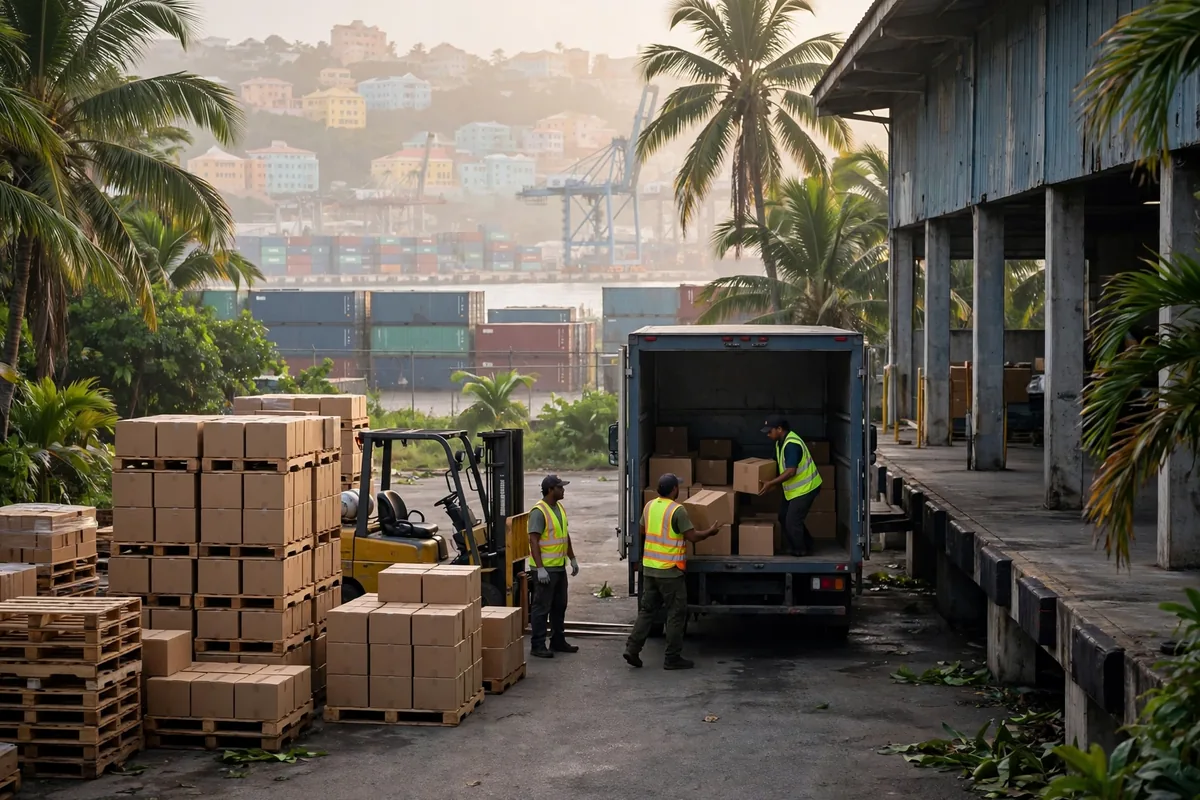
It was 5:40 in the morning, still dark, and I was standing by the dock counting trucks. That is how Barranquilla urban warehouse distribution starts for us — not with a plan on a screen, but with a headcount of vehicles and a look at the clock.
A container truck from the port was forty minutes late. The driver climbed down, shrugged, and said the queue at the terminal had eaten his morning. My crew had been waiting on the dock for half an hour, forklifts idling, nothing to unload. Six city delivery trucks were due out that day, and the first one had to leave at seven. Miss that, and the whole morning delivery window for the shops would fall apart.
Let me be straight with you: in Barranquilla, finding a warehouse is not the hard part. Getting freight into the city on time is.
Barranquilla last mile: the problem is not distance, it is waiting
Barranquilla sits on Colombia's Caribbean coast, beside the Magdalena River, with the port right next to the city. Freight comes in from the sea easily enough. The trouble starts on the few roads into town. Once the morning rush builds, a short drive can turn into a long crawl.
When I first took over deliveries here, I made a rookie mistake. I planned routes by distance on the map — nearest stop first, farthest stop last. It blew up on day one. The nearest shopping district would not take a truck in daylight at all. The driver had to park outside and haul cartons in by handcart, trip after trip. Unloading took more than an hour. A residential area farther out, meanwhile, was easy: wide streets, parking right at the door.
We changed the rule that week. Routes are now planned by time window, not by distance. When can the customer receive? When can a truck park outside? When is the street at its worst? Ask those questions first, then order the stops. It sounds slower. In practice it is faster.
Our trucks now leave in two waves: the first at seven in the morning, the second at three in the afternoon. Between waves, drivers come back, eat, rest, and double-check the afternoon load. That pause matters more than it looks. A tired driver at noon makes the kind of mistake — wrong carton, wrong street — that costs you an evening.
Loading order was another lesson, and it came out of an argument. We used to load in picking order: whatever came off the shelf went straight onto the truck. One day a driver spent twenty minutes digging through the back at a customer's door for a single urgent carton. The customer called me while the driver was still searching. That night the driver and I argued. He said the warehouse loaded badly. I said he did not know his freight. We were both right, and both wrong. The process was wrong.
Now we load in reverse delivery order. The last stop goes in first, deep in the truck. The first stop goes in last, right by the door. The loading sheet does not list bin codes. It says, in plain words: stop one, what it is, how many cartons. A veteran teaching a new hire starts here: you are not loading freight, you are loading the order the driver will meet it on the street.
Barranquilla city warehouse vs. suburban warehouse: the trade-off we actually ran
Before last peak season, the boss asked whether we should move the whole operation out to a bigger suburban warehouse. More space, and the rent looked cheaper. I did not say yes on the spot. We spent three days running the numbers in the warehouse, and the answer was not what he expected.
| What changes | Small city warehouse | Big suburban warehouse |
|---|---|---|
| Space | Tight, racks packed close | Plenty of room |
| First departure | Out at 7 a.m. without a fight | A drive into town first |
| Trips per truck per day | Usually two | Usually one and a half |
| Last mile time | Short, even when streets are busy | Long, and a jam eats half a day |
| Best for | Fast-moving goods, daily replenishment | Bulky stock, planned orders |
There is no universal winner in that table, and anyone who tells you there is has not run the trucks. That is the honest shape of urban warehouse distribution here: you are always trading space against time, and time is the part you cannot buy back. We ended up keeping both. The city warehouse holds only fast-moving stock, replenished in small, frequent trips. The suburban warehouse holds slow stock and bulk, sending top-ups into the city two or three times a week. It adds one extra step on paper. In real life, the trucks run smoother, and drivers stop starting every day in the dark just to fight their way into town.
Here is the counterintuitive part. Most people think urban distribution is won with more trucks and a bigger warehouse. Our experience says it is won between seven and nine in the morning. Were the trucks loaded? Did the first wave leave on time? Did the first delivery land when promised? Get those three right and the day holds together. Get them wrong and no amount of chasing in the afternoon buys the hour back.
Peak season proved it. One week, orders jumped by about a third. We did not add a single truck. Instead we changed the night shift: two people stayed two hours later to pick, label, and stage the next morning's first wave by truck, in order. When drivers arrived, they checked the load and left. They did not wait for picking. That week our first-wave on-time rate was better than usual. The boss asked how many trucks I had added. None. We had just moved the work two hours earlier.
Drivers, rosters, and veterans: the last mile is a people problem
Navigation does not know every street in Barranquilla. Some older districts are narrow, one-way, full of dead ends that look fine on a screen. Our fix is old-fashioned: a veteran rides with a new driver for three days. No navigation. Learn the signs, the shops, the corner where you turn. After three days, the new driver draws his own route map and tapes it in the cab. It is ugly. It works.
Rosters matter just as much. City drivers dread back-to-back early starts — up at five, working through the afternoon, day after day. We rotate early and late shifts so everyone gets at least one normal morning a week. Some managers call that wasteful, one trip lost here and there. I call it cheap insurance. Losing a veteran driver costs far more than a missed trip: recruiting, training, wrong turns, and an unhappy customer while the replacement learns the streets.
Morale is not a soft topic on a warehouse floor. Every morning we hold a five-minute stand-up. Three things only: how many trucks today, which order is urgent, and who ran a clean route yesterday. When someone ran it clean, we say so out loud. That is all. It sounds small. It changes how people work. Warehouse work is genuinely tiring, but being noticed makes the tiredness bearable.
Customers need the same kind of care. Shop receivers change often. One person says tomorrow is fine; the next day someone else says it is not. For each key customer we now keep a card on the dispatch desk: a contact name, receiving hours, and where to park. A new dispatcher phones from the card instead of starting from zero every time.
So this is how we run it now: first wave out at seven, load in reverse delivery order, fast stock in the city warehouse, bulk stock outside town, and no new driver on the road alone until a veteran has ridden with him for three days. None of it came from a textbook. All of it came from a jam, an argument, or a lost order.
If you are setting up distribution in Barranquilla, do not start by asking what the rent is. Start by asking whether your first truck can leave at seven in the morning. If you cannot answer that, the size of the warehouse will not save you. By Chen Feng, Warehouse Operations Manager