We have a client who has been in Bangladesh garment export for more than a decade, and last year he told me his biggest fear is not a shortage of orders. It is opening a container in Europe and finding mould spots on the clothes. The volume is huge and the margin per piece is thin, so one bad container can wipe out the profit on a whole order. He asked me where warehousing really leaks money. I told him to forget the rent for a minute and start with moisture.
The scale explains why the details matter. In fiscal year 2024-25, Bangladesh garment exports reached USD 39.35 billion, up 8.84% year on year, accounting for about 81.5% of the country's total exports of USD 48.28 billion. Knitwear contributed USD 21.16 billion and woven garments USD 18.19 billion. The market is concentrated too: the European Union took USD 19.71 billion, or 50.1%, followed by the United States at USD 7.54 billion and the United Kingdom at USD 4.35 billion. On a calendar-year basis, garment exports were USD 38.48 billion in 2024, the second largest in the world. This is not a cottage-industry problem. It is a multi-billion-dollar business where the same warehousing losses repeat every day.
Bangladesh Garment Export Warehousing Fears Moisture, Not Heat
Garments do not fear heat. They fear moisture. When the monsoon arrives, humidity works its way into fabric, warehouse floors sweat, cartons soften first and clothes go mouldy next. The nastier problem is container rain: a sharp temperature change at sea makes water condense on the inside of the container roof and drip onto the top layer of cargo. The buyer does not want a weather report when that happens. The buyer wants an inspection report.
Here is a scenario worth keeping in mind (illustrative scenario): a factory finished-goods warehouse skipped its pre-monsoon moisture check, a crack in the floor damp-proofing let water in along the wall, and the cartons stacked against that wall went soft at the base. The mould was only found during sampling inspection, so the whole batch had to be re-pressed and repacked, and the sailing was missed. Part of the shipment then had to fly to catch the delivery date, and the freight bill jumped several times over. No saving on rent can cover that. Moisture control belongs in the contract, not in a verbal promise: who manages warehouse humidity, who checks moisture before loading, who supplies desiccants, how much is used and who verifies it.
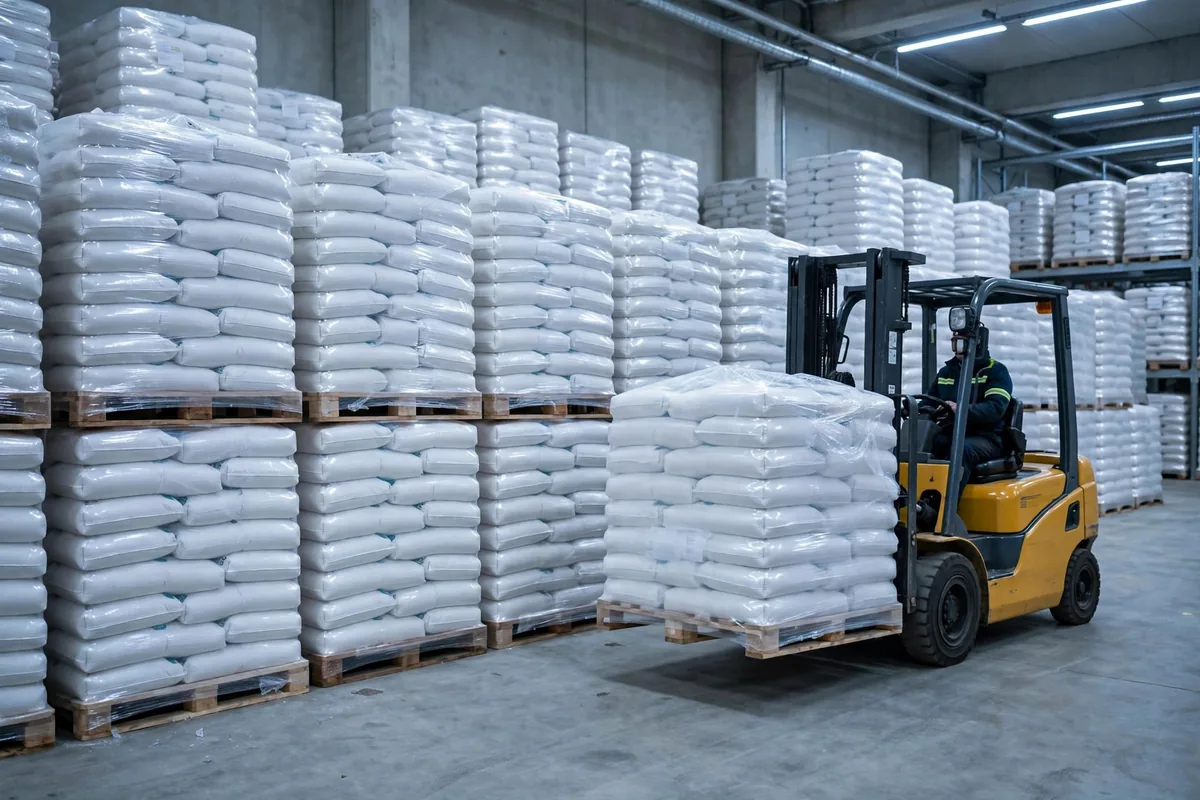
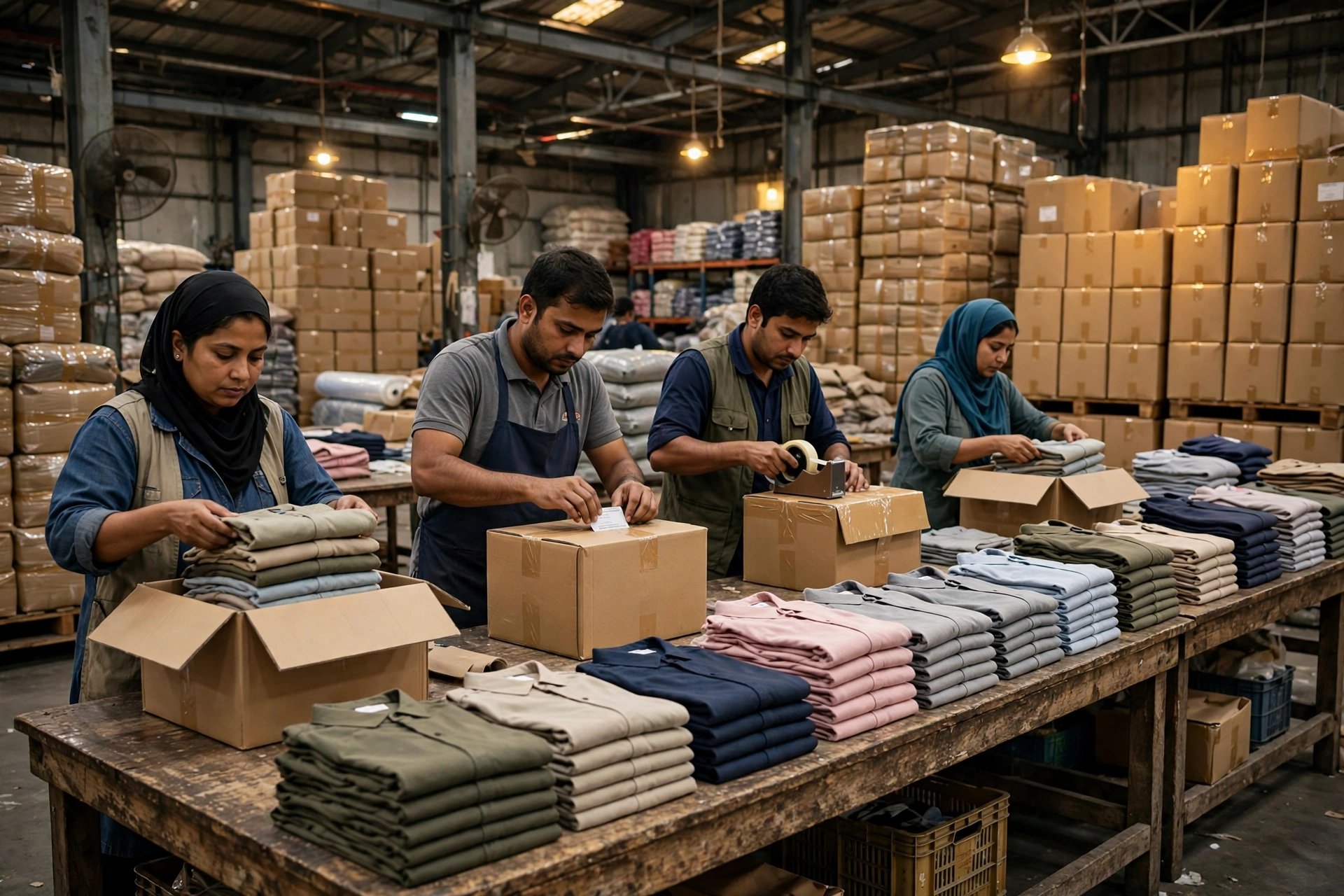
Hanging and carton packing pull in different directions, and both touch moisture. Hanging avoids creases and suits coats and suits that cannot take pressure, but it takes far more space, so the rent per piece goes up. Carton packing saves space and suits knitwear that tolerates pressure, but once a carton gets damp, everything inside suffers with it. My advice is blunt: split the calculation by product type instead of applying one rule to everything. Knitwear and woven garments are different warehousing jobs, and the USD 21.16 billion and USD 18.19 billion figures behind them point to two different ways of running a warehouse.
Bangladesh Garment Export Consolidation Looks Cheap Until the Small Print Arrives
Consolidation is normal in Bangladesh garment export. Small orders cannot fill a container, so several factories share one box and split the freight. That looks cheap, but the saving comes with a question nobody wants to answer later: whose cargo sat by the door, whose sat on top, whose was loaded first and unloaded last, and whose cargo pays when mould appears.
Take another scenario (illustrative scenario): three factories consolidated one container for Europe, and the middle factory's goods had a higher moisture content. By the time the container reached the destination port, the other two factories' goods had picked up damp as well. The buyer claimed, the three factories blamed each other, and the consolidator paid first and argued later. The lesson is to inspect before loading, check moisture content, agree the desiccant and damp-proof matting, and only then load. Consolidation saves freight and costs control. Which one matters more has to be settled in the contract before the container moves.
The table below is the one I often show clients. The figures are hypothetical and only the structure matters (hypothetical example):
| Cost item | Full container | Consolidated container |
|---|---|---|
| Freight share | High, one shipper pays all | Low, shared across shippers |
| Warehousing and sorting | Low, loaded in one pass | High, waiting for all cargo |
| Inspection and moisture control | Low, one party decides | High, each shipper must be checked |
| Cost of arguing after a problem | Low, responsibility is clear | High, responsibility is hard to split |
| Risk of missing the sailing | Low | High, waiting for cargo delays loading |
Read the table and the trade-off is plain. Consolidation moves money saved on freight into management and risk. It suits small orders. For large orders with a tight delivery date, a full container is often the calmer choice. Here is the counterintuitive part: many clients assume consolidation always saves money, yet once waiting time, inspection, rework and arguments are added up, a small consolidated shipment can cost more in total than a full container. Saving money means counting the whole bill, not only the freight line.
Quality inspection and rework need space and time booked in advance. When sampling finds a problem before shipment, rework needs floor space, labour and repacking. If the warehouse has no dedicated rework area, cartons pile up in the aisles, rework drags, and the sailing is missed. When I negotiate a contract, I ask about rework capacity in plain terms: is there a separate rework area, can re-inspection finish before loading, and how is rework labour charged. These questions look small. In peak season they are real money.
After Graduation, Who Pays the Garment Export Tariff Bill
One larger change is already reshaping the cost structure. On 24 November 2026, Bangladesh will graduate from least developed country status, and the European Union tariff is expected to rise from 0% to an average of about 12%, subject to the latest official policy. That is not a warehousing issue on its own, yet it changes how warehousing is bought and sold. When tariffs rise, European buyers renegotiate prices, factories recalculate margins, and the price terms in warehouse contracts have to move with them.
The negotiation logic has to change too. It used to be about rent per square metre. Now it is also about how prices adjust when tariffs change, how minimum charges work if order volumes fall, and whether a long-term contract has an exit clause. The buyer will push the price down and the warehouse operator has to defend a floor, so both sides need the numbers on the table. My view is that the low-price route will get narrower after the tariff rise, while a warehouse that can cut hidden costs from damage, rework and missed sailings will have more room to negotiate. The value of warehousing is not cheap rent. It is cargo that arrives without a problem.
Bangladesh garment export warehousing comes down to three bills: the moisture and mould bill, the consolidation bill, and the post-graduation tariff bill. Chittagong is the main export port, and the longer goods sit in a warehouse on the way from a Dhaka factory to the port, the larger the risk. Get moisture control right, write consolidation responsibility down clearly, and put tariff changes into the contract, and the goods stand a far better chance of arriving clean.
Next time you negotiate a contract, remember to ask these three questions: first, are warehouse moisture responsibility and inspection standards written into the contract? Second, if a consolidated shipment goes wrong, how is responsibility split, and who handles desiccants and inspection? Third, when tariff policy changes, how do prices and minimum charges adjust? Ask those three clearly, and the contract is properly negotiated.
By Susan, 3PL Sales Director