We small warehouses cannot afford to burn money like that. That was my first reaction when I heard the quote for an automated truck loading system, ATL for short. The salesperson made it sound magical: full pallets gliding into the trailer, a whole truck loaded in minutes, nobody even stepping inside the trailer. My only thought was: that thing is built for big warehouses running dozens of trucks a day. What does it have to do with a small warehouse like mine that loads a handful of trucks?
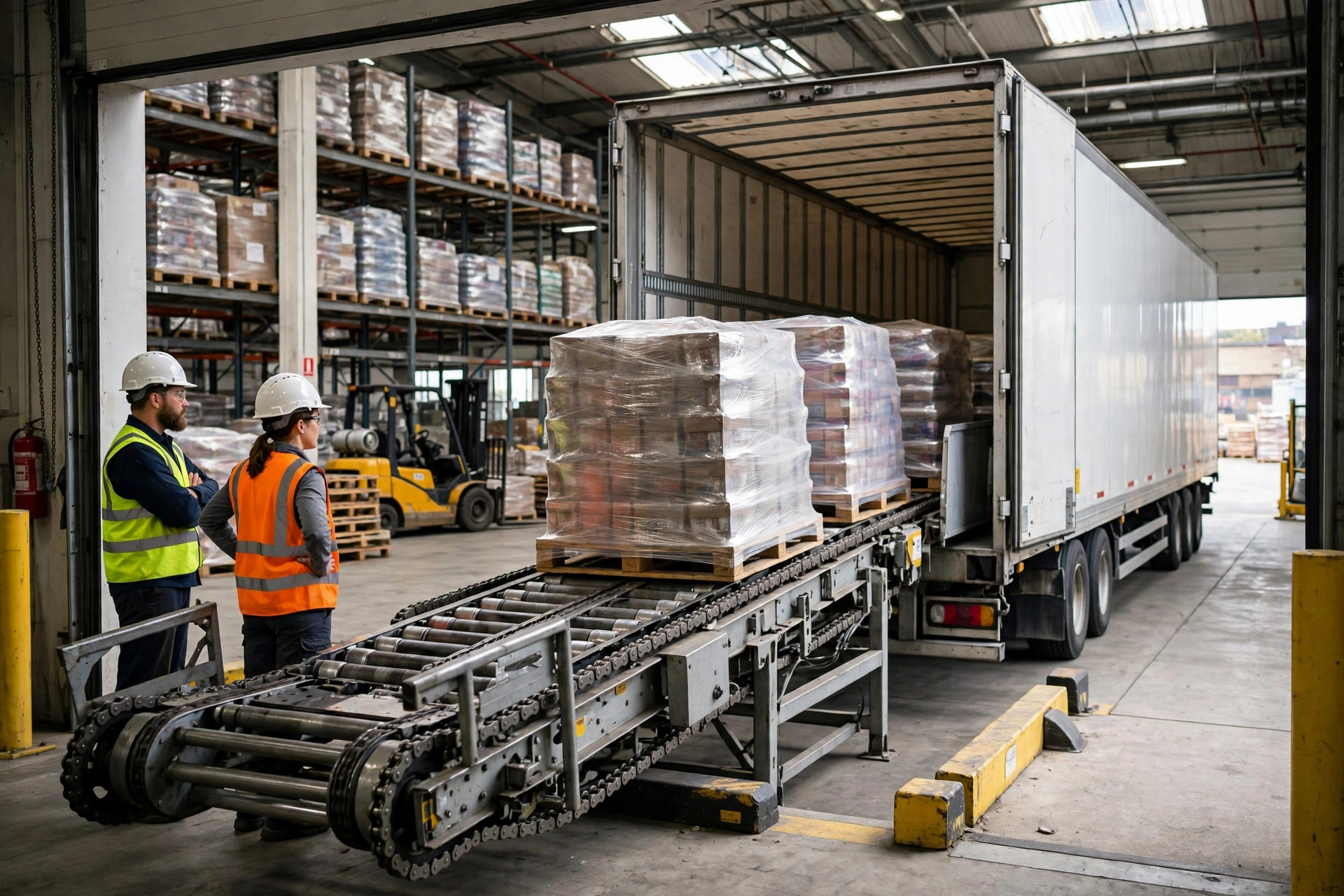
Then I learned the picture is not that simple. ATL is not completely off-limits for a small warehouse. You just have to be clear about what it loads, what it saves, and where it gets expensive. Automated truck loading sounds impressive, but taken apart it is a dock system that moves full pallets into a trailer automatically: chain conveyors, skate systems, or roller beds carrying goods from the dock straight into the trailer and docking with it. Unlike a telescopic belt conveyor, which moves loose cartons one by one, ATL moves whole pallets at a time.
This article looks at ATL from a small warehouse owner's side: when it is worth it, below what volume you should leave it alone, and what cheaper paths small warehouses actually have.
What Automated Truck Loading Actually Loads
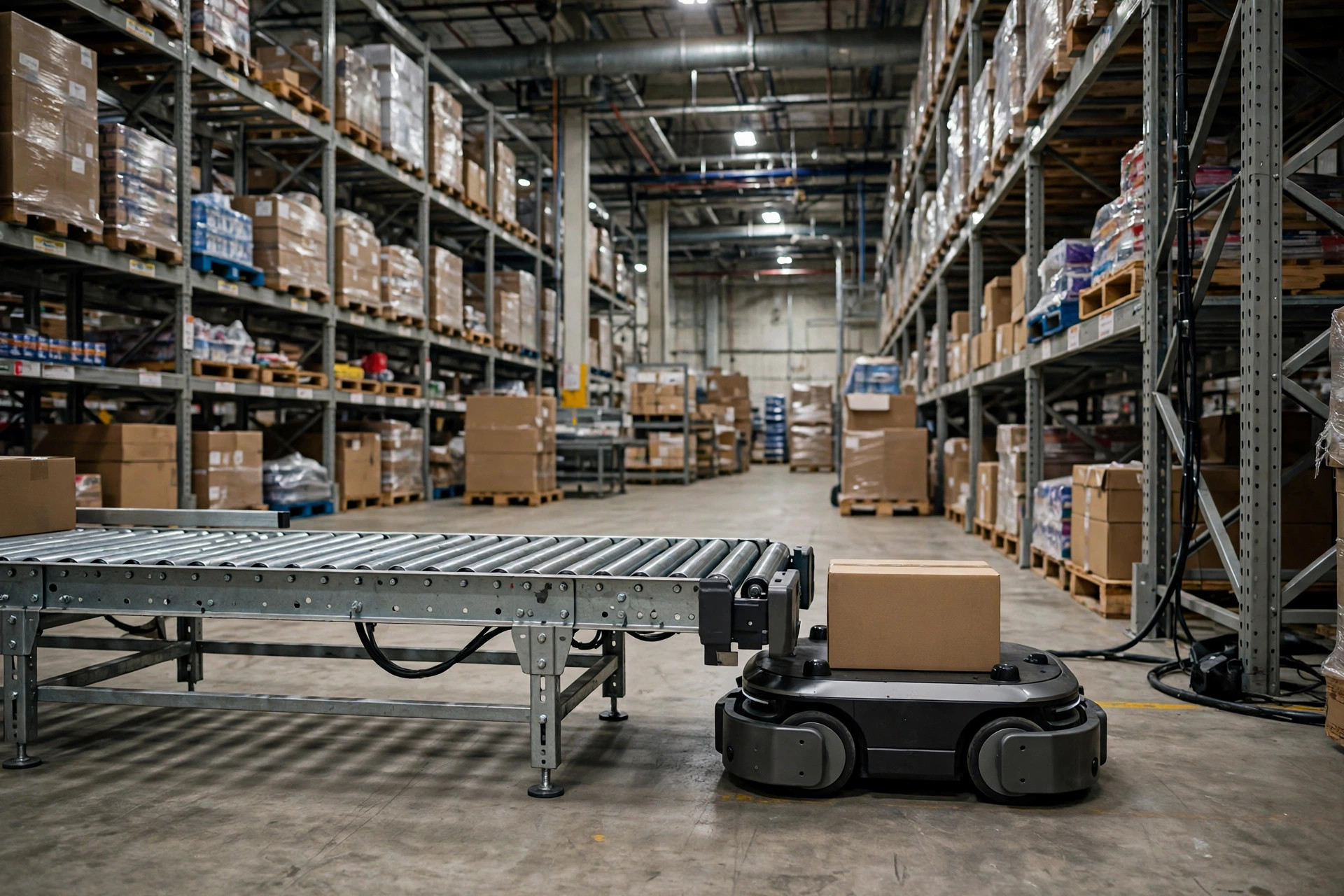
Let us get the concept straight before a salesperson talks circles around you. ATL is not one machine. It is a dock system: conveying equipment on the warehouse side, a docking mechanism at the dock edge, and sometimes a skate or roller bed inside the trailer. Goods are palletized in the warehouse, pushed onto the conveyor, and the system carries the pallets into the trailer, parks them in position, and the doors close and the truck goes.
It works best for standardized, full-trailer freight. Think beverages, paper products, or daily goods shipped as full loads of the same product, where pallet sizes are uniform and the loading logic is simple. That is where the system runs smoothly. Flip it around: mixed freight, random pallet sizes, and a trailer that needs a dozen different products every time force constant adjustment, and the advantage evaporates.
Then there is the trailer compatibility trap. Trailers are not all built alike. Trailer height, width, and floor construction all vary. An ATL system has to match the trailers you actually use, or today's truck loads fine and tomorrow's truck jams at the dock. Before buying, run your most common trailer types through the system. Do not judge it by the standard trailer in the demo video.
The owner of the warehouse next door learned this last year. They bought a secondhand system that ran beautifully in the demo, then found several carrier trailers could not dock with it at all. It sat idle for two months, and half the labor savings went right back out the door. With ATL you are buying system fit, not a machine to park beside the dock.
Below What Volume Should You Leave Automated Truck Loading Alone
Small warehouses should start with volume. The cost of ATL is not just the equipment price. There is dock retrofit work, maintenance, training, and downtime. When the system stops, the dock stops with it. A big warehouse can absorb that risk. A small one cannot.
Here is a decision framework a small warehouse can use directly, no complicated formulas needed. Check four items:
| Check | Worth a serious conversation | Leave it alone for now |
|---|---|---|
| Full-trailer loads per day | Several stable full-trailer loads daily | One or two trucks, irregularly |
| Freight standardization | Uniform pallet sizes, full loads of one product | Mixed loads, random pallet sizes |
| Trailer consistency | Carrier fleet mostly fixed models | A different truck every day |
| Dock availability | A dedicated dock can be tied up long-term | Docks rotate daily and cannot be spared |
If two or more items land in the right-hand column, my advice is to leave ATL alone for now. It is not that ATL is bad. It is that your volume cannot carry its fixed cost. Equipment sitting idle costs more than labor.
Here is a counterintuitive point: faster loading does not automatically mean higher overall efficiency. ATL may load a truck in minutes, but if palletizing, stretch-wrapping, and staging cannot keep up, the dock still jams. The system only fixes the last stretch of the road. If the earlier work lags, total turnaround time barely improves. The classic mistake is staring at those few loading minutes and forgetting the rhythm of the whole line.
There is one more budget to work through: where do the saved workers go? A small warehouse has few people to begin with. A loading crew might be two or three workers, and they cannot simply be let go when ATL arrives. They need to move into palletizing, quality checks, or scheduling. If that reassignment is not planned, the labor savings exist only on paper while real spending stays exactly where it was.
Our Small Warehouse Workarounds: Make Loading Faster Before Automating It
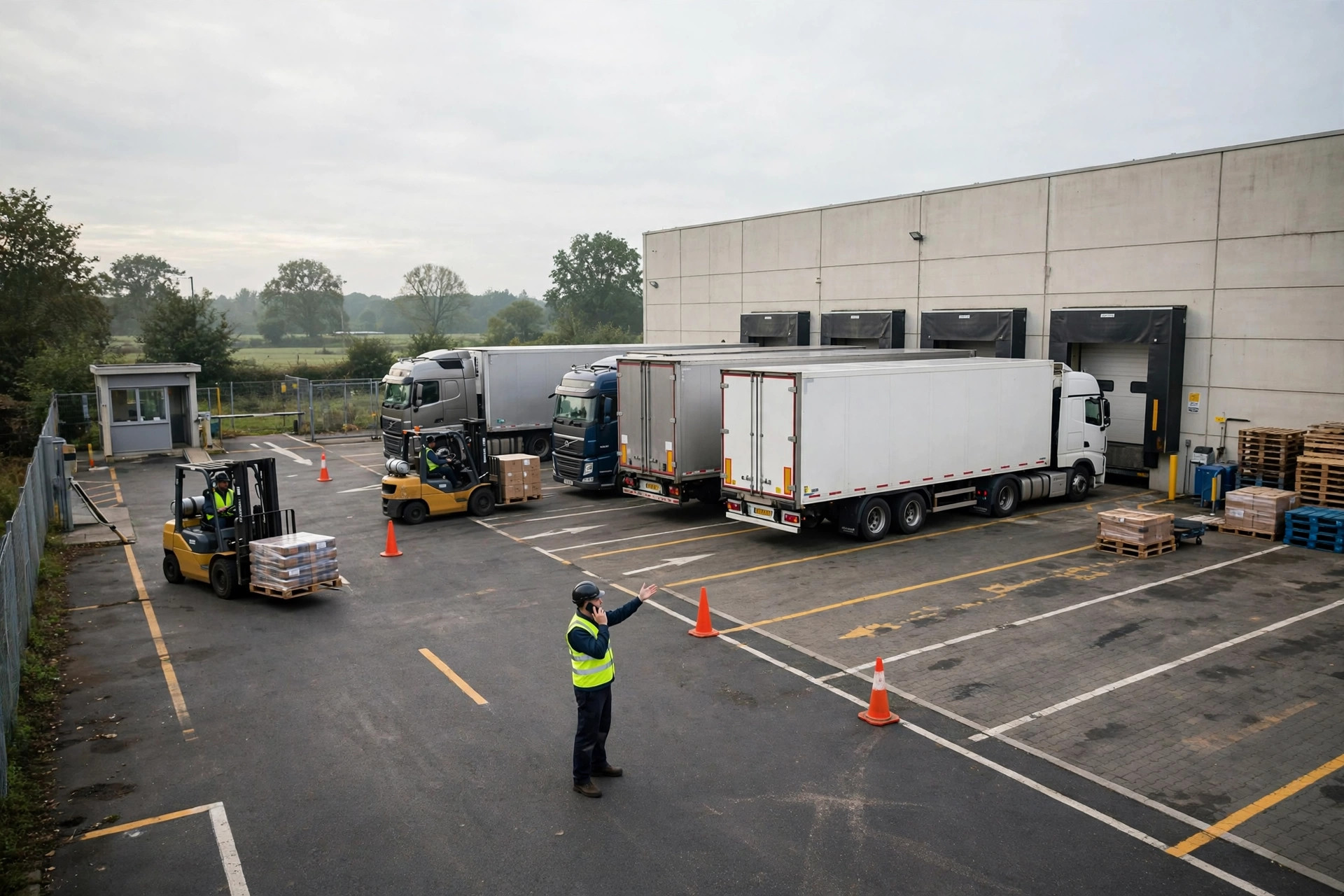
Let me tell you about our own squeeze. Our warehouse is about three thousand square meters with two docks, and the loading peak lasts only part of the day. When the ATL quote landed, I ran the numbers, and the payback period was so long I did not want to look at the second page. So we went the scrappy route, and the results were surprisingly good.
The first fix was palletizing standards. Pallets used to be stacked unevenly, and forklifts had to adjust again and again inside the trailer. Once we set a standard pallet height and wrapping rule, a pallet arriving at the dock could go straight in. That alone cut a lot of fumbling per truck.
The second fix was dock flow. The most expensive part of loading is waiting: for people, trucks, and paperwork. We moved staging closer to the dock and prepared paperwork in advance, so a truck could start loading the moment it arrived.
The third fix was simple dock equipment first. An adjustable dock leveler, decent manual handling gear, and a sturdy roller section cost little individually, but they removed the bumps in forklift travel in and out of trailers. Loading stayed manual, but manual work got smoother, and speed followed naturally.
Together, those three fixes cut our per-truck loading time by a large margin, for a fraction of an ATL price. A small warehouse should get the basics running smoothly before talking automation: putting a big system on broken basics is like putting a gold lid on a leaking bucket.
Rent, Phase In, or Share: Three Middle Paths to Automated Truck Loading
If your volume grows and ATL starts making sense, do not jump straight to a full purchase. Small warehouses have three middle paths to test the water.
The first is renting. Some equipment providers offer rental or usage-based pricing, so you rent for peak season and return it in the off-season. A small warehouse with uneven volume can rent for a quarter, see if it runs smoothly, and only then talk about buying. The risk is far smaller than an outright purchase made on a hopeful day.
The second is phasing in. ATL does not have to arrive all at once. You can start with the in-warehouse conveying section, moving pallets automatically from staging to the dock edge, while the trailer interior stays manual. That cuts the investment roughly in half, solves half the dock bottleneck first, and when volume grows further, you add the trailer section later.
The third is sharing. Several small warehouses can share a dock in the same industrial park, or split one system and share maintenance costs. Write the rules down first: time slots, repair responsibility, and cost splits. Say the awkward things upfront.
My advice comes down to one line: count volume first, run the money second, and look at equipment last. If volume is not there, scrappy fixes are your best automation. If it is there, phased and rented approaches are safest. Only with steady daily full-trailer loads of standardized freight is a full ATL system worth a serious conversation.
Big-company automation stories sound thrilling, but small warehouses live differently. Without big-warehouse volume, do not force big-warehouse solutions onto yourself. Straighten out the dock, standardize palletizing, and make manual work smoother. Those jobs are cheap and save money every day, and they are exactly what makes ATL run smoothly later, if your volume ever supports it.
Small warehouses have their own way of surviving, and there is nothing embarrassing about that. Spending money where it counts beats buying equipment just to admire it at the dock.
By Xiao Ma, Small Warehouse Owner