It was 6:30 on a peak-season morning last August. I had just walked into the warehouse when Lao Wang from the verification team blocked my path at the door.
"Manager Chen, that cosmetics order from yesterday — the customer is complaining about a short shipment again. Twelve cartons on the order, eleven arrived. That's the third one this month."
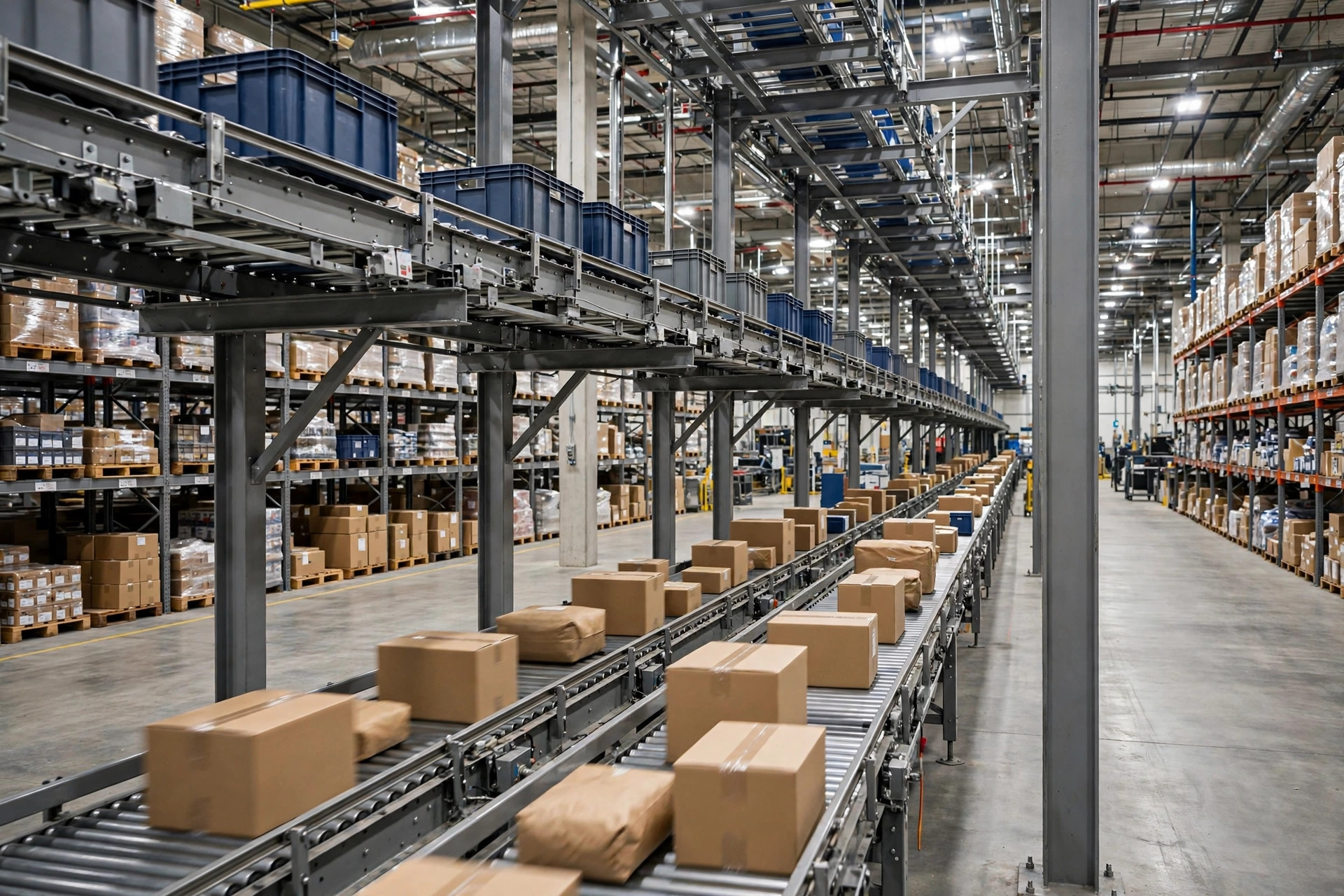
I pulled up the record. Every step — putaway, picking, packing — was logged. Except the outbound verification step. At the end of the conveyor line, our verifier was counting cartons by eye. When it gets busy and a single order has twenty-plus cartons, miscounts are inevitable. One bad review plus a chargeback, and that order cost us over 2,600 yuan — not counting the customer-service hours spent arguing about it.
Let me be straight with you: if your verification depends on human eyes, you don't have verification.
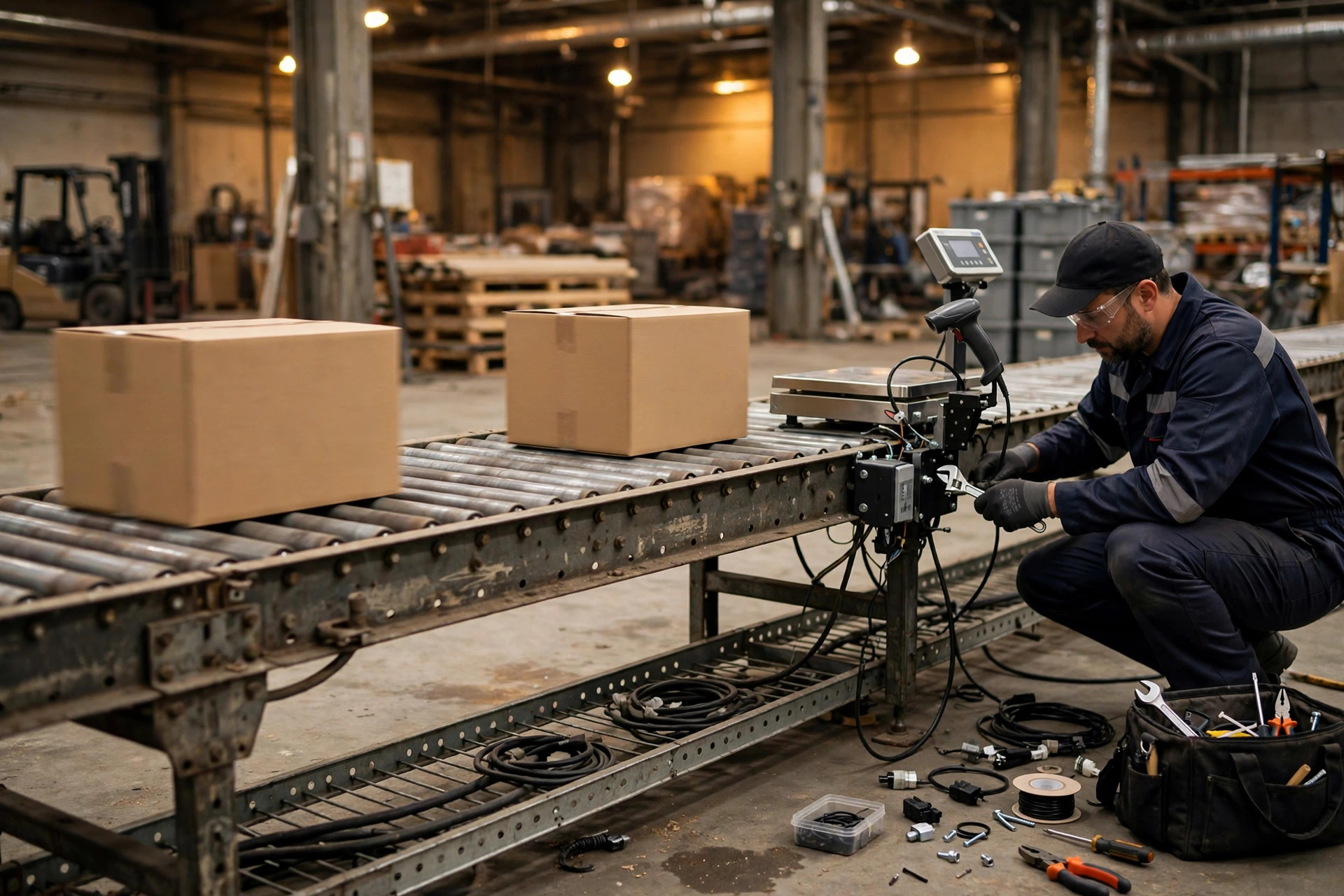
That night, after the night shift ended, I pulled in Lao Li from maintenance and Xiao Zhao from systems. I gave them one sentence: can we retrofit scan-and-weigh onto the old line? No downtime. Peak season, we can't stop for a single day. That one sentence kicked off three months of work.
Why Scan AND Weigh, Not Just Scan
People ask: isn't scanning enough? Scanning only tells you something was scanned — not whether it was the right thing. Wrong label, mixed cartons, an extra carton tossed in — scanning catches none of that.
Weighing gives every order a "body weight." Say an order has 12 cartons with a theoretical weight of 8.6 kg in the system. The scale reads 7.9 kg. Off by 700 grams — something's wrong, and the carton gets diverted to the exception chute. We call it "scan plus weigh, double insurance."
Our measured numbers (three months of our own data):
- Short/over shipment complaints: 9 per month before, 1 per month after (and that one was a mislabeled carton even the scanner couldn't read)
- Verification labor: used to take 2 people at the end of the line counting cartons; now 1 person watches the exception chute and the other moved to packing
- Verification speed: about 6 seconds per carton manually; now the line never stops, under 2 seconds per carton
Equipment plus installation came to under 90,000 yuan (project experience — quotes vary). At roughly 20,000 yuan a month saved in chargebacks, payback was just over four months.
The Real Hard Part: Scheduling the Retrofit Without Stopping Production
The hardest part wasn't the technology — it was the schedule. In peak season we ship 8,000+ orders a day; stop the line for one hour and the backlog runs past midnight.
Our approach: phased construction, using only night-shift and weekend windows.
We split the retrofit into 4 phases. Each one fit inside a single night shift, 22:00 to 06:00, with normal production during the day:
- Reader gantry: A steel frame independent of the conveyor body, pre-welded offsite, then lifted in and anchor-bolted during the night shift. Why independent? The failure story later will explain.
- Weighing section: Cut 1.2 meters out of the old line and drop in a dynamic scale. Cut, lift, level — one night shift.
- Electrical and cabling: Scanners, photo eyes, alarm lights, the reject cylinder — all wired through cable trays. No conflict with production, so daytime work was fine.
- Commissioning: Half a day on Saturday, affecting only half a shift, with rollback time reserved.
Before every phase, we prepared a rollback plan. If the weighing section couldn't be installed, the original conveyor segment went back in before dawn — the bolt holes were pre-drilled, so restoration took about 2 hours. Honestly, it was for the boss's signature — the moment he saw "if it doesn't fit, it goes back," he approved it on the spot.
One more detail: use a crew that has worked on logistics lines, not general contractors. A regular electrician doesn't understand conveyor timing — tell him "the photo eye goes 300 mm before the scanner" and he'll install it backwards. We learned that the hard way on phase one.
Picking the Gear: Handheld Gun, Fixed Reader, or Weighing Module
We went through three rounds of trials. Our final combination may not fit your warehouse, but the decision logic should travel:
| Option | Read rate (our measured) | Cost per unit (typical range) | Pros | Cons |
|---|---|---|---|---|
| Handheld scanner + manual | ~99% (depends on the person) | A few hundred yuan per gun | Cheap, fast to deploy | Slow, gets skipped when busy — same as nothing |
| Fixed reader, single-sided | ~98.5% | 10k–20k yuan per unit | Automatic, no labor | Misses labels facing down |
| Fixed reader, multi-sided/tunnel | 99.5%–99.8% | 30k–60k yuan per set | Any orientation, rarely misses | Expensive, vibration-sensitive |
| Dynamic weighing module | ~97% weight-anomaly detection | 20k–40k yuan per section | Safety net against mixed/extra cartons | Accuracy suffers with vibration |
We went with tunnel-style multi-sided reading plus dynamic weighing. Both. No compromise.
Here's the counterintuitive takeaway: when your read rate won't go up, it's probably not the reader's fault — it's the bracket.
Our first version mounted the reader directly on the old conveyor's frame. A reader rated at 99.8% measured barely 96% in production. Lao Li filmed it in slow motion: when the line runs, the bracket visibly shakes, the reader shakes with it, and every image comes out blurred. We rebuilt it as an independent gantry, anchor-bolted into the floor. Read rate jumped straight back to 99.7%. Honestly — those 3 points weren't won by buying a pricier reader. They were won by two anchor bolts.
And one trade-off to be clear about: weighing is a safety net, not a substitute. Some people want to install only the scale and skip scanning, to save money. Wrong call. A scale can only tell you "the weight is off." It can't tell you which carton is off. Without the scan giving each carton an identity, everything at the exception chute has to be opened and checked by hand — which defeats the purpose.
The Three Things Most Likely to Go Wrong
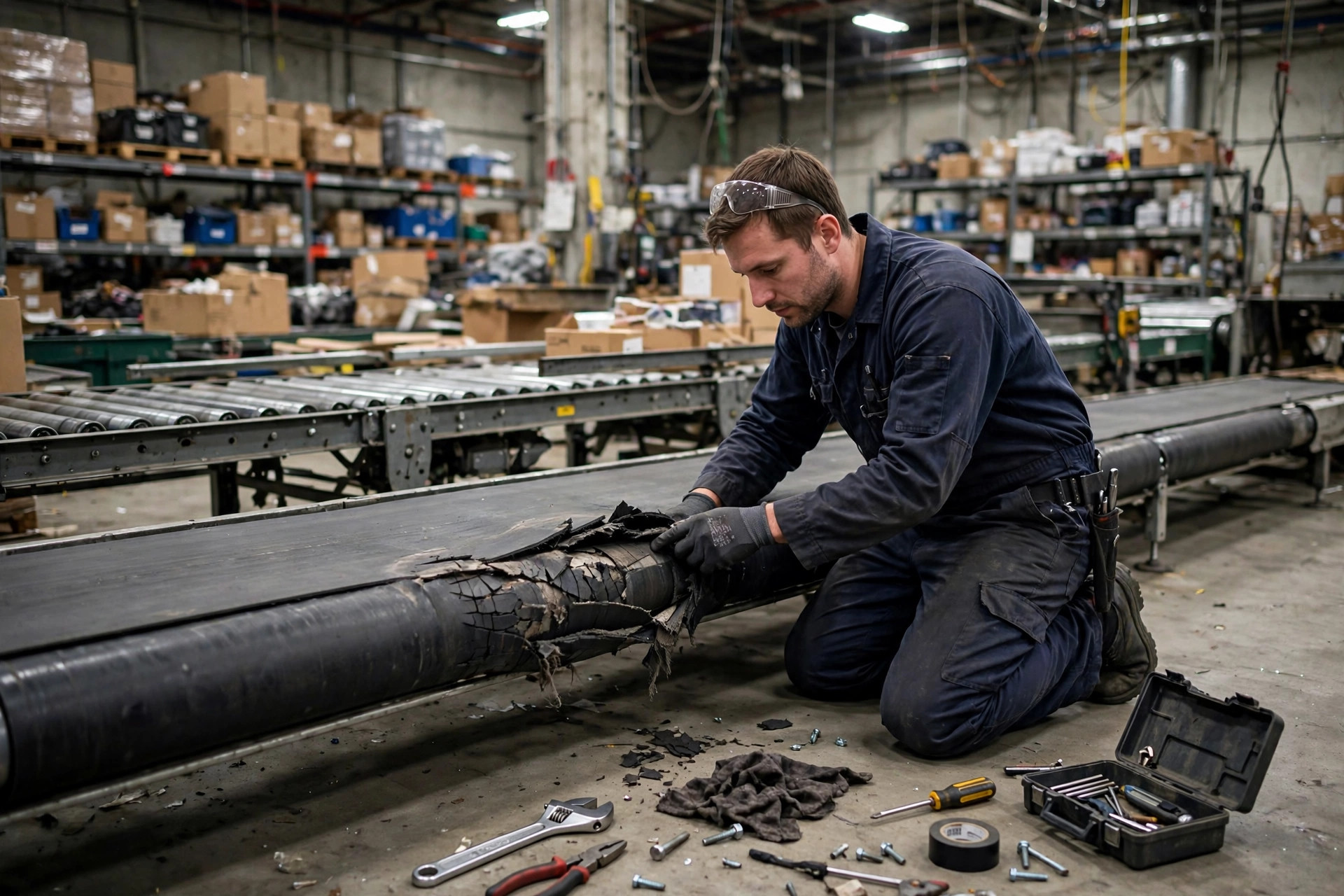
First: bracket vibration. Rule of thumb: keep readers and weighing modules off the old line's body whenever you can. After seven or eight years, those frames are loose. Don't bet on them being rock solid.
Second: label orientation. Our labels are everywhere — side, top, occasionally upside down. A single-sided reader is decoration against that kind of freight. Options: go multi-sided tunnel, or standardize label placement (we tried — in peak season nobody follows the standard). One more data point from experience: wrinkled or torn labels hurt read rates worse than bad orientation. Having packers smooth the label flat saves a lot of trouble.
Third: integration with the WMS. This one grinds you down the most. Our WMS is a five-year-old version — it has inbound/outbound documents, no real-time verification API. The vendor's first proposal was "deep integration" with an extra 50,000 yuan on the quote.
Our move: don't integrate yet. Let the line run standalone for two weeks. The scan-weigh system keeps its own order-versus-theoretical-weight table (order details exported from the WMS daily, synced on a schedule), and exceptions just trigger local light-and-sound alarms handled manually. After two weeks of stable running, we knew our numbers and the vendor couldn't pad the quote. In the end we built one simple write-back interface — exception records pushed to the WMS on a timer — for under 10,000 yuan.
Honest advice: don't rush the data into the system. Get the line running first.
What Our Post-Retrofit Checklist Looks Like
Installation isn't the finish line — it's the starting line. Here's our daily, weekly, and monthly routine, no exceptions:
Daily (10 minutes before startup, done by the verifier):
- Run our 3 known-weight test cartons through the line — scan, weigh, alarm, reject, the full cycle. Line starts only if everything passes.
- Eyeball the gantry anchor bolts (we drew chalk lines; any shift is instantly visible)
- Wipe the reader windows (warehouse dust is brutal — skip a week and read rate drops a full point, measured)
Weekly (maintenance):
- Calibrate the dynamic scale with standard weights (five minutes)
- Check the reject cylinder's air pressure and action — don't wait for a stuck exception carton to discover a problem
Monthly (I review the reports myself):
- Pull read-rate and interception-rate numbers; anything down more than 0.5 points gets investigated
- Review the exception chute — too many false alarms means the threshold needs tuning
The checklist is taped to the end of the line, readable by anyone. Equipment isn't afraid of use — it's afraid of neglect.
A Word for Fellow Warehouse Folks
Retrofitting scan-weigh onto an old line isn't technically hard. The hard parts are three: scheduling (don't stop production), brackets (don't vibrate), integration (don't do it all at once).
One last honest word: don't wait until peak season to start. We were forced into it by complaints — the crew breathing down my neck. If you're reading this in the slow season, that's the best time to act. Retrofit in the slow season, collect in the peak season.
By Chen Feng, Warehouse Operations Manager