If you are selling into Australia through an Australia overseas warehouse GST setup, hear my rant first: the market looks small, but the traps are not. Just over twenty million people, most of them squeezed into a few coastal cities in the southeast, and then a whole lot of empty land in between. You think shipping stock to a Sydney warehouse is the whole job? GST, remote-area delivery, and returns — if you cannot clear those three gates, your profit is only on paper.
I paid tuition at each of those three gates with my first shipment to Australia. Once I figured them out, I found Australia is actually a good market: less cutthroat than the US or Europe, decent order values, and customers who are not that brutal about returns. But only if you do the math on all three gates first.
Australia Overseas Warehouse GST: The Tax Gate — Don't Guess
The core of the Australia overseas warehouse GST gate is one sentence: import GST and sales GST are two different things. Don't blend them.
When goods enter Australia, there is import GST at the border. When goods are sold, there is a separate sales-side GST treatment. The filing basis, the credit rules, and the timing are all different. Rates, thresholds, and filing cycles change, so I will not print specific numbers here — always check the Australian Taxation Office (ATO) website for the latest policy. My rule is simple: before you open the warehouse, hire a local accountant and walk your whole model through with them. How imports are filed, how sales are filed, how invoices are issued, how long records must be kept.
For example, my local accountant costs me around two thousand-plus Australian dollars a year for bookkeeping and filing. I winced at that fee at first. Then I did the math: the input-credit treatment he sorted out for me paid that fee back within one quarter. The accountant fee you save by guessing will come back as back taxes and penalties.
There is another trap: platform collection. Some platforms collect and remit GST on Australian orders. Some do not. If a platform already collected it and you file it again, you pay twice. If a platform did not collect it and you assumed it did, you under-file. Every platform's rules are different. Before you list, read that platform's tax documentation, screenshot it, and save it. Do not rely on memory.
Remote Delivery: Split Your Australia Overseas Warehouse Math by Postcode
Australian last-mile delivery is two different worlds. Sydney, Melbourne, Brisbane — one world. Remote postcodes — a different one. The same parcel that reaches a metro buyer in two days can take over a week to reach a remote buyer, and the freight costs more on top. If you promise metro transit times to every order, the bad reviews write themselves.
I blew this up once. I had a camping lantern stocked only in a Sydney warehouse, and the listing promised delivery across Australia in 2 to 4 days. Remote-postcode orders took up to 9 days to arrive. Customer-service messages roughly doubled, and the return rate on that SKU jumped from about 4% to about 11%. Those are example figures from my own store, not industry statistics — but the lesson was real: remote orders need their own promised transit time.
After that, I switched to postcode-zone planning. The method is simple: pull the last 90 days of orders by postcode, flag which postcodes are remote, and look at their share of orders and their return rate. High-frequency remote postcodes get their own planning sheet, and last-mile costs are calculated in two tiers — metro warehouse rate plus a remote surcharge — never blended into one average.
| Cost item | Metro orders (example) | Remote orders (example) |
|---|---|---|
| Last-mile transit | ~2 days | ~5 to 9 days |
| Last-mile freight | Base rate | Base rate + remote surcharge |
| Customer-service contacts | Low | Noticeably higher |
| Return rate | ~4% | ~11% |
Once I changed it, remote listings carried their own promised transit times, and the price left room for the remote surcharge. Inquiries dropped. Return rates came back to normal. Australia's distances are a fact of geography. You cannot change the distance, but you can change how you do the math.
Returns: Three Accounts Every Australia Overseas Warehouse Must Keep
Most sellers keep one returns number: the return rate. I keep three: the return-rate account, the return-address account, and the resale account.
The return-rate account has to be done before you sell. Australian shoppers are not the worst returners, but remote orders, seasonal goods, and bulky items naturally return at higher rates. When I plan stock, I budget returns-handling and inspection labor as "sales volume times expected return rate." Do not wait until returns are piled up to find people to process them.
The return-address account is the floor. Returns for Australian orders must go to an Australian address — ideally your overseas warehouse. Asking an Australian buyer to ship a return back to China? The freight costs more than the product, and you will eat the bad review and the dispute. The return label, return address, and return window belong on the product page and in the order-confirmation email, not in a customer-service reply after the buyer asks.
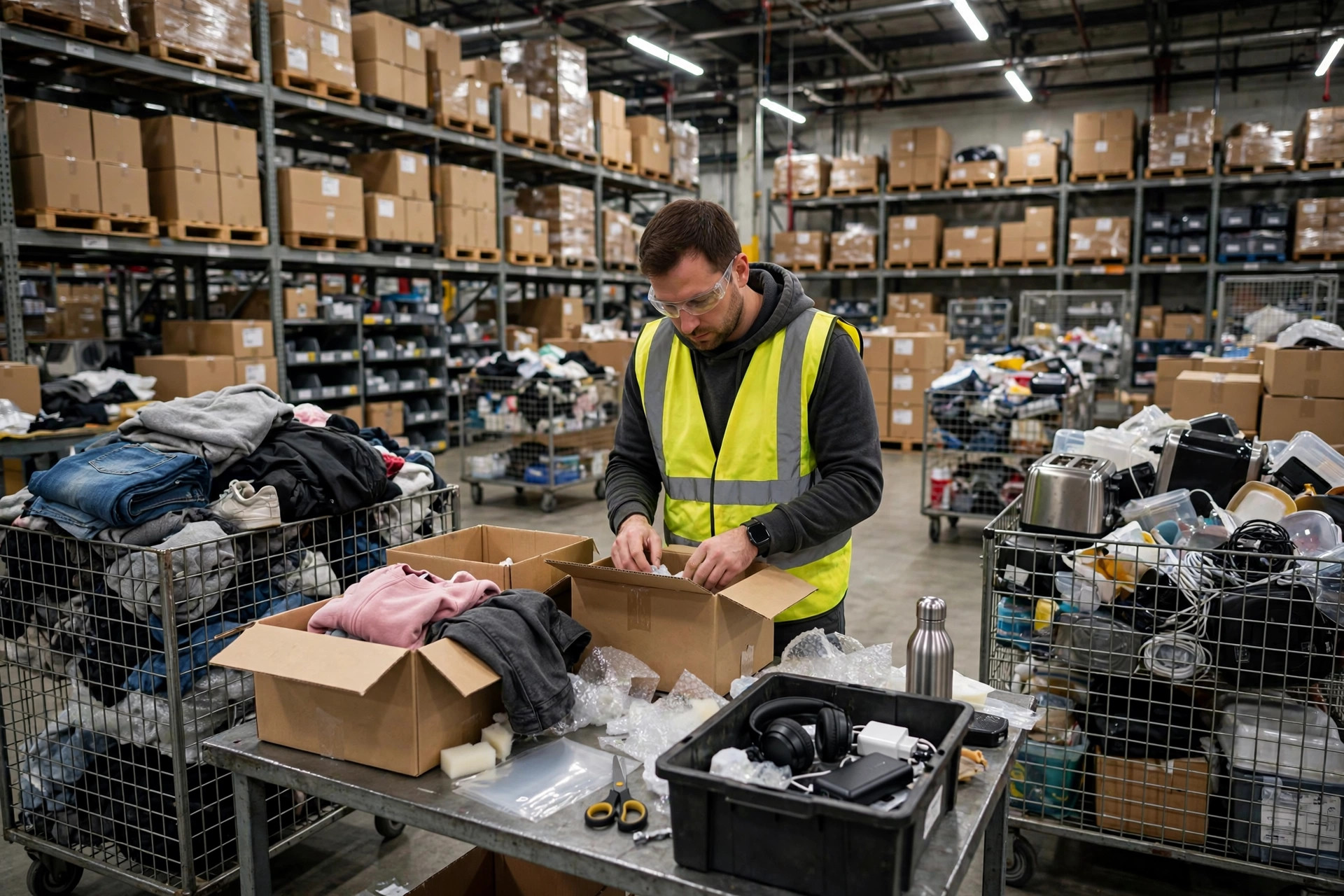
The resale account is where the profit hides. Every return gets graded. Grade A, original packaging intact, goes straight back on the shelf. Grade B, packaging damaged but product fine, gets cleared at a discount. Grade C, damaged, gets written off — no dithering. For example, out of 100 returns, about 60 might be Grade A, about 25 Grade B, and about 15 Grade C. The A and B units you can sell again are your real recovery. Returns without grading means mixing sellable stock with scrap and losing money on both.
Pre-Launch Checklist: Run Through It Before You Open the Warehouse
- Accountant first: have a local accountant confirm import GST and sales GST treatment. Policy per the latest ATO website.
- Screenshot platform rules: confirm each platform's Australian GST collection rules one by one. Never go by impression.
- Zone by postcode: pull 90 days of orders by postcode, plan remote postcodes separately, promise transit times separately.
- Localize the return address: Australian orders return to an Australian warehouse, and the returns process goes on the product page.
- Grade every return: A goes back on the shelf, B clears at a discount, C gets written off. Budget inspection labor in advance.
- Leave buffer stock: remote orders and return units both eat inventory, so do not set safety stock on a metro-only model.
The Australia overseas warehouse GST game has three gates, and none of them is cleared on guts. GST is cleared with an accountant. Remote delivery is cleared with postcode math. Returns are cleared with grading. This one I've tested myself — it works. Do the math on paper first, then decide how much stock to send to Australia.
By Ah K, E-commerce Seller (5 yrs)