
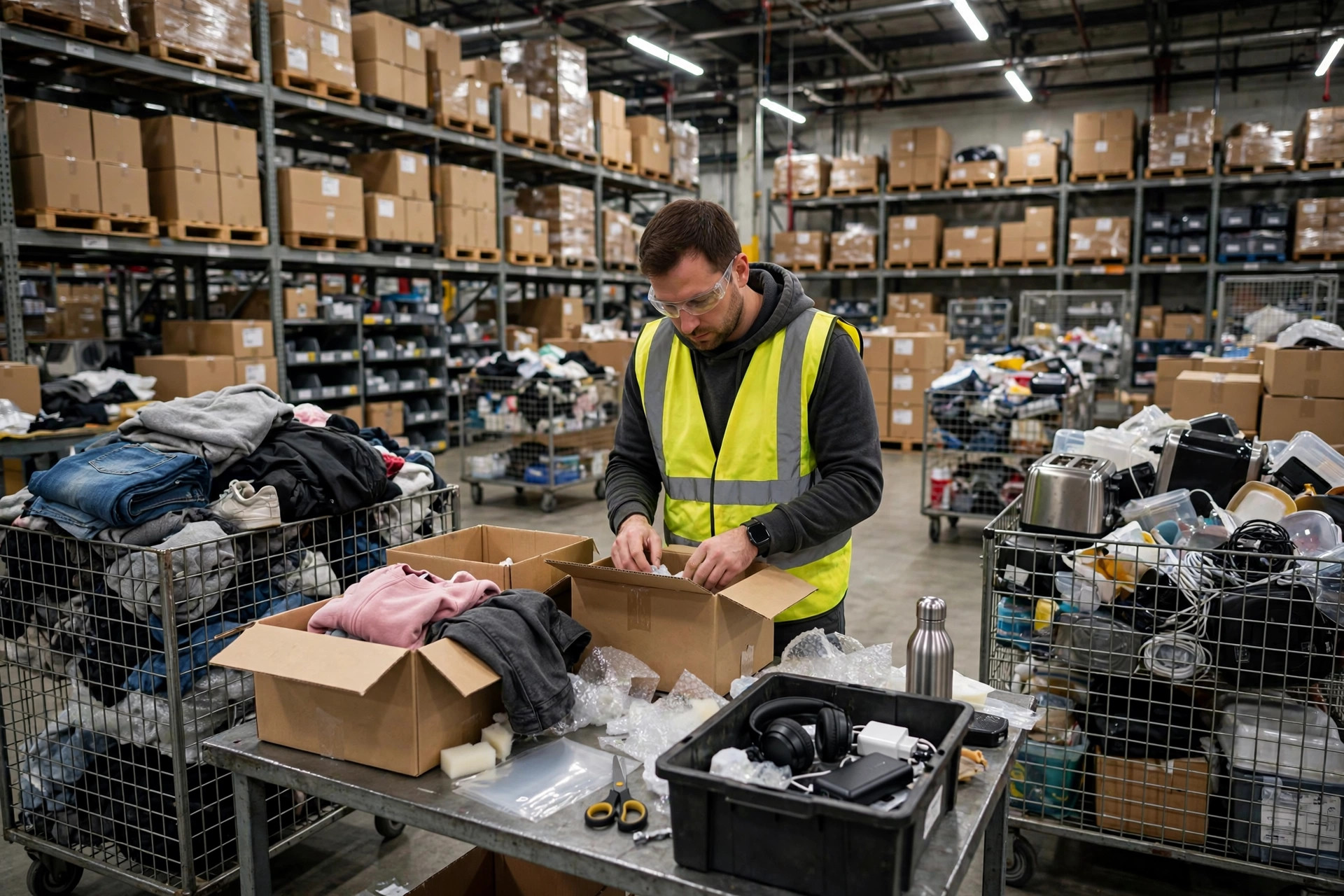
We have a client, a women's fashion DTC seller out of Shenzhen, who learned this the hard way during last year's Black Friday returns wave. Her overseas warehouse returns address was a UPS store mailbox she'd rented herself. Three hundred-plus parcels piled up in that little shop until the owner started messaging her on WeChat: "Honey, if you don't pick these up, I'm charging you storage." She was in Shenzhen. The parcels were in California. Her returns were stuck in limbo, going nowhere.
That's what we're talking about today: whose address goes on the return label — your 3PL's returns hub, or a small warehouse you rent yourself to handle returns? Don't underestimate that one line of address. It decides more than half of your total returns cost.
What a Returns Address Actually Controls
Most sellers think the returns address is just a delivery point. Wrong. On our side of the table, that address equals control over returns processing. Whoever's address is on the label receives the returns, and with them, three things:
First, inspection and triage. Is this return grade-A and resellable, grade-B for clearance only, or straight to disposal? Whoever makes that call decides your reuse rate. That fashion client eventually got her parcels back — but nobody inspected them. Sellable and unsellable inventory sat in one giant pile until the whole lot was written off. Brutal.
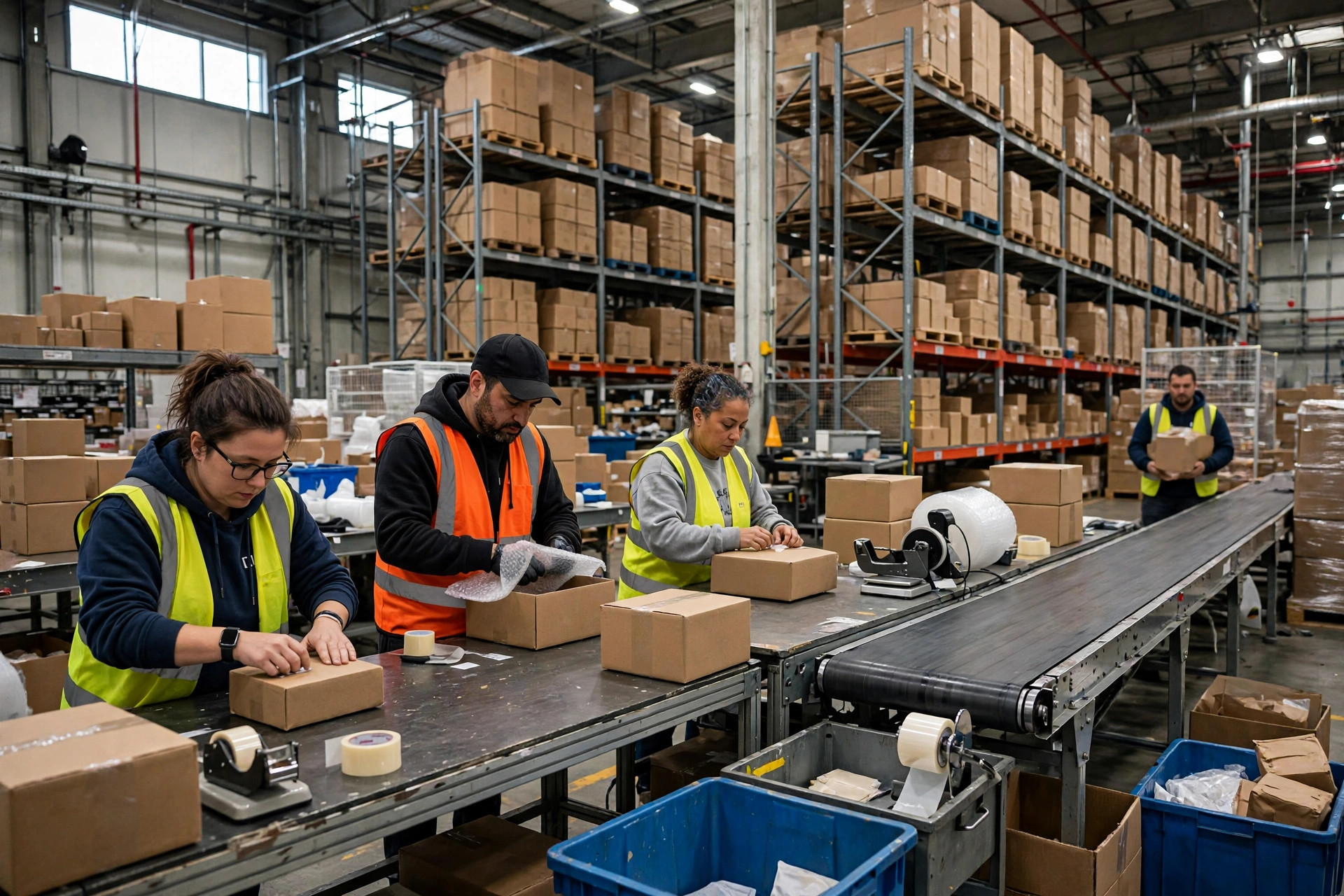
Second, processing speed. Every extra day a return sits in a warehouse costs money. A 3PL's returns hub usually runs a standard SOP — parcels get opened and inspected within a few days of receipt (confirm the exact SLA with your provider). Your own rented unit? That depends entirely on whoever you hired, and seasonal temp workers have a habit of disappearing mid-peak.
Third, the fee structure. Returns processing fees are where negotiation skill matters most. Let me break that down separately below.
3PL Returns Processing: The Pricing Logic They Don't Volunteer
Here's an insider detail: many 3PLs don't process returns at their main warehouse at all. Prime LA warehouse space is expensive, and returns are low-turnover, space-hungry work. A sharp 3PL consolidates returns at a cheaper inland facility where rent and labor cost far less. So if the "returns warehouse address" on your contract differs from your "fulfillment warehouse address," don't panic — that's usually a sign of cost optimization, not a red flag.
Now the fees — this is where it gets murky. Returns processing is typically itemized by action: receiving and unboxing, inspection, photo documentation, repackaging and restocking, disposal or donation handling. Each step is priced separately (always get the full rate card from your sales rep before signing — rates change, so go by your provider's latest quote). Two things your 3PL rep won't volunteer:
First, the headline "processing fee" looks cheap; the expensive part comes after. Some quotes show an attractively low processing fee, then charge separately for photos plus repackaging, a restocking fee, and escalating storage for aged returns. Add it all up and the per-unit cost can easily double. When negotiating, don't just look at the "returns processing" line — price the whole chain.
Second, storage on piled-up returns is the silent killer. Unlike forward inventory, returns turn slowly — two or three months of sitting is common. Many contracts use tiered returns storage: cheap for the first month, then the rate jumps after 60 or 90 days. If your reuse rate is low, you're effectively paying monthly rent on a pile of unsellable goods.
The Math: 3PL Returns Hub vs. Your Own Returns Warehouse
We have another client, a 3C accessories seller in LA doing several thousand orders a month with a return rate hovering around 8%. He started out the lazy way — returns straight to our returns hub. After peak season he came to me with the bill: "Susan, what I'm spending on returns is catching up to my outbound warehouse rent."
I ran the numbers with him (illustrative example — confirm actual rates with your provider's latest quote):
| Cost item | 3PL returns hub | Your own returns unit |
|---|---|---|
| Rent | No fixed rent; tiered storage after free period | Fixed monthly lease, paid even in slow season |
| Labor | Per-unit pricing — pay for what you use | Fixed headcount cost; can't hire temps at peak |
| Inspection quality | Standard SOP, one-size-fits-all | Your own standards — flexible, but people-dependent |
| Reuse data | You have to ask; may not get the full picture | Fully in your hands |
| Scalability | Absorbs returns surges | Blows up at peak |
The math surprised him: at seven or eight hundred returns a month, the per-unit 3PL model was actually cheaper than hiring his own people. He'd priced a 2,000-square-foot unit in Ontario — monthly rent plus one part-timer came to tens of thousands of dollars a year in fixed cost, all of it sunk during slow months. Worse, his part-timer quit last November, and returns sat untouched for three weeks.
But flip it around: another client selling high-ticket outdoor gear, with high average return value and a reuse rate above 60%, built his own returns warehouse. Every return was worth the careful handling of a dedicated person, and the 3PL's standard process was treating high-value returns like ordinary parcels — that was his money being left on the table.
So the decision line is clear:
- A few hundred returns a month, average return value → put the 3PL's address on the label; per-unit pricing wins.
- Large, steady return volume with high reuse rates → build your own returns warehouse; keep inspection standards and reuse data in your own hands.
- Stuck in between → use the 3PL's address, but negotiate two clauses into the contract until they're airtight: returns data reporting back to you, and automatic disposal or donation triggers for aged returns.
The Counterintuitive Part
Here's the contrarian take: returns aren't a cost center. They're your most undervalued profit lever.
Most sellers do returns math as "processing fee plus freight" — pure expense. But across the hundred-plus clients we've handled, the gap between sellers who do returns well and those who don't shows up in net margin — several points of it — and the entire gap is one word: reuse rate. A returned jacket that gets inspected, steamed, and relisted costs a few dollars in processing. The same jacket sent to disposal costs you the full unit cost plus inbound freight. Whose address is on the return label is really a question of who controls the reuse-rate lever.
So stop asking "which address saves me the most money" and start asking "which address maximizes my reuse rate." Saving money is tactics. Reuse is strategy.
Next time you negotiate a contract, ask these three questions:
One: "Can you itemize every step of returns processing — photos, repackaging, restocking, disposal — what's each one priced at?" Break the bundled price apart so you know where the money goes.
Two: "How does storage escalate after 60 and 90 days, and can we agree on automatic disposal or donation for aged returns?" Don't pay open-ended rent on inventory that will never sell.
Three: "Can the inspection report give me reuse-rate data by SKU?" Without that data, you'll never know how much money returns are actually costing you.
Ask those three, and the sales rep will know they're dealing with an insider — and the quote will get honest fast.
By Susan, 3PL Sales Director






