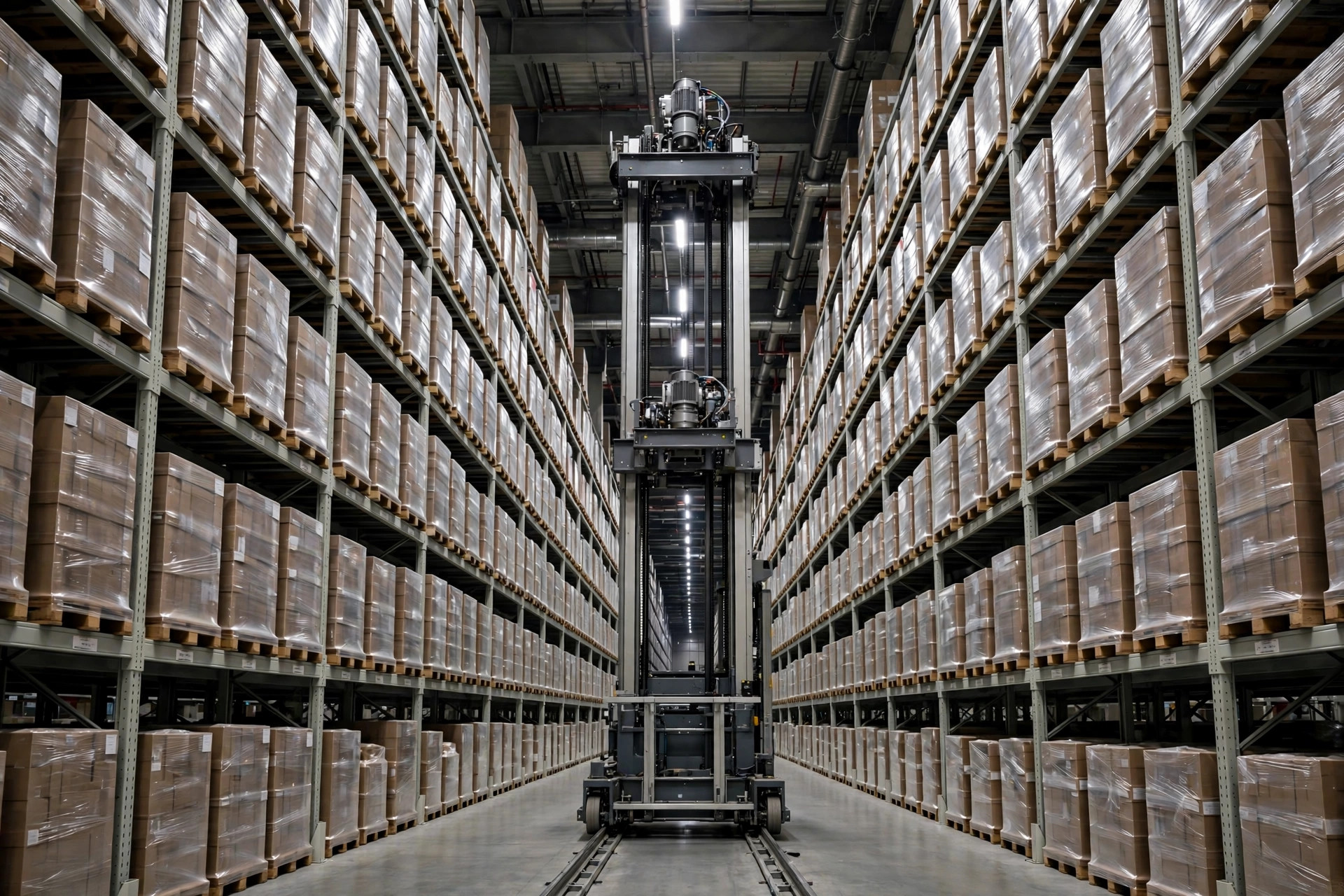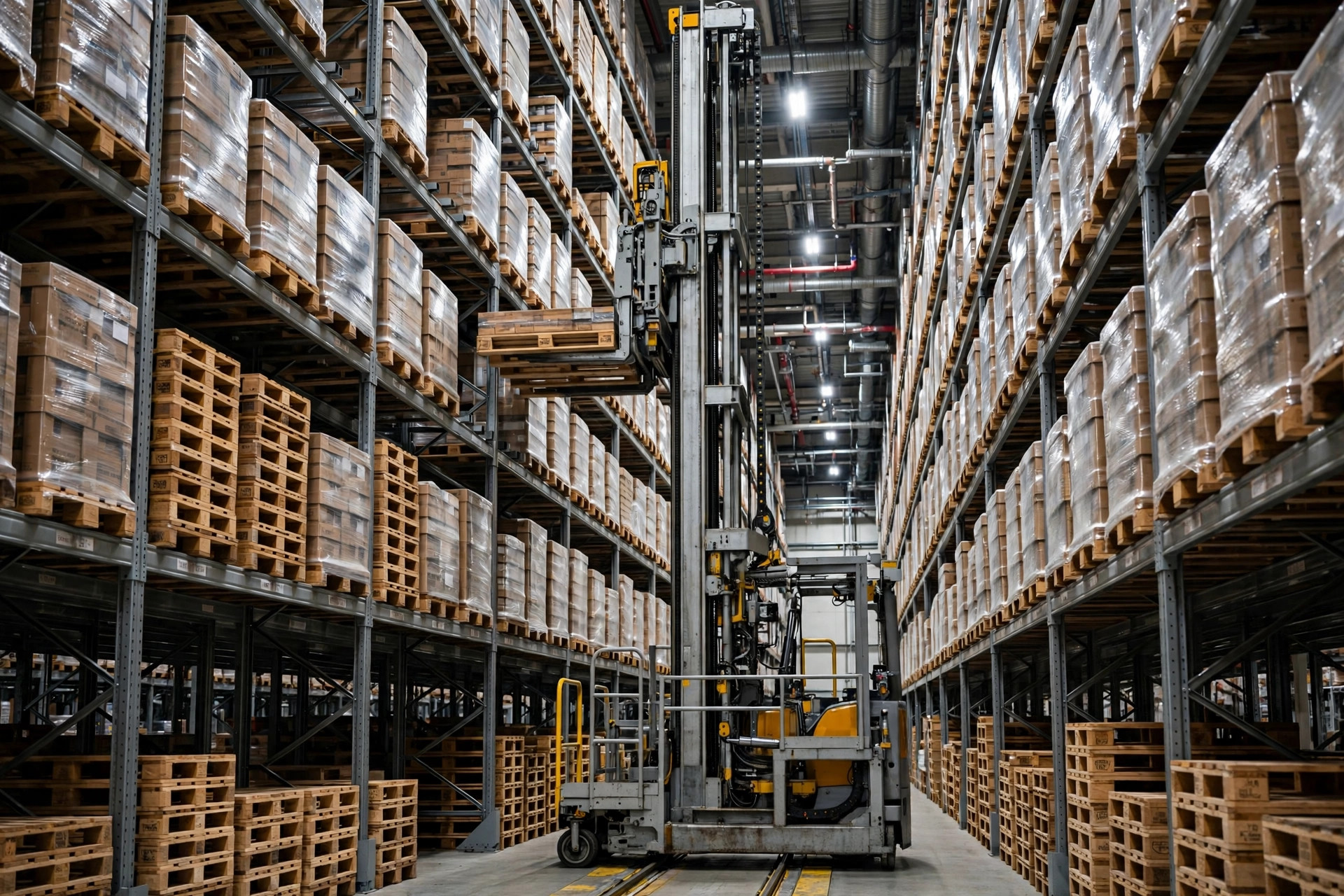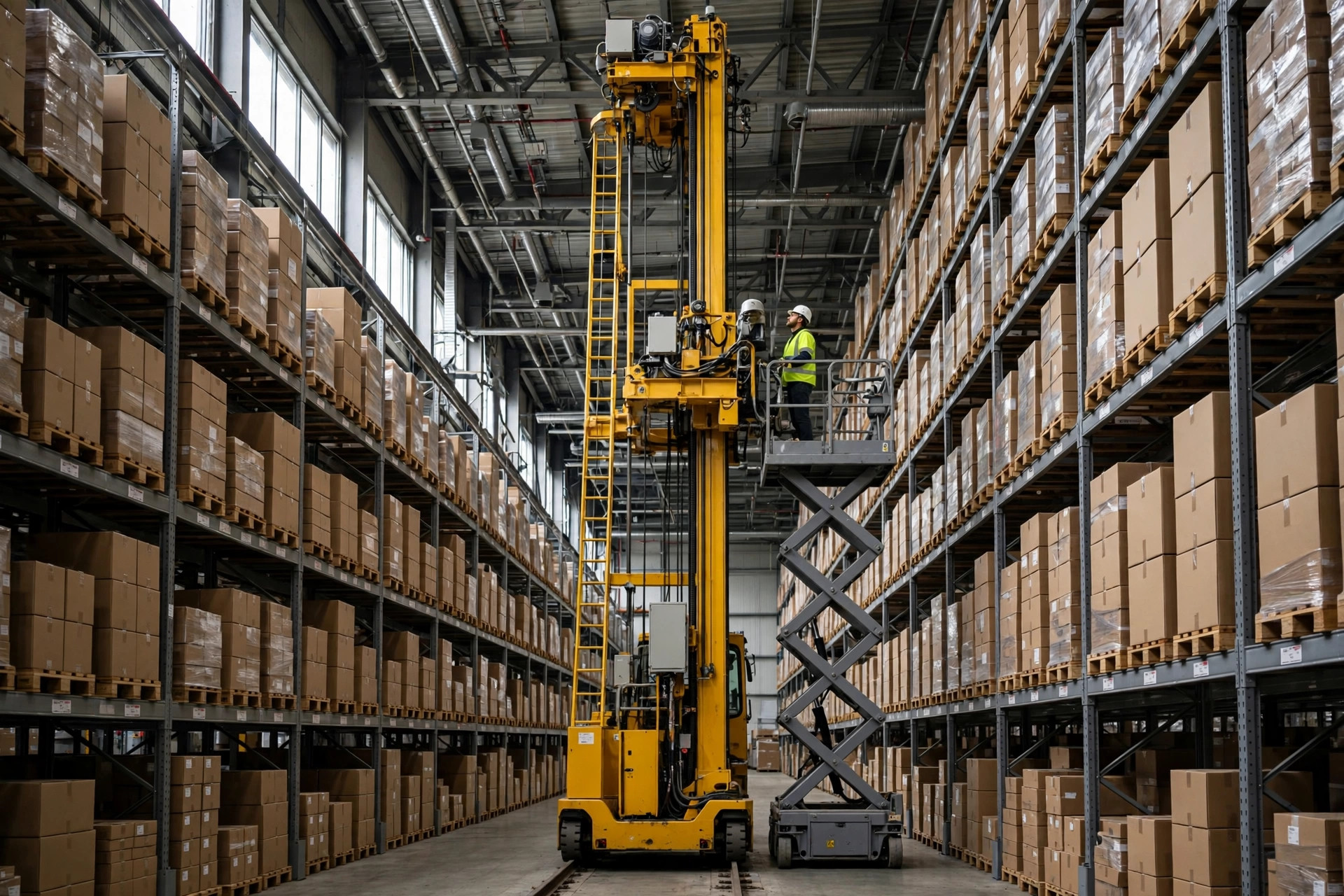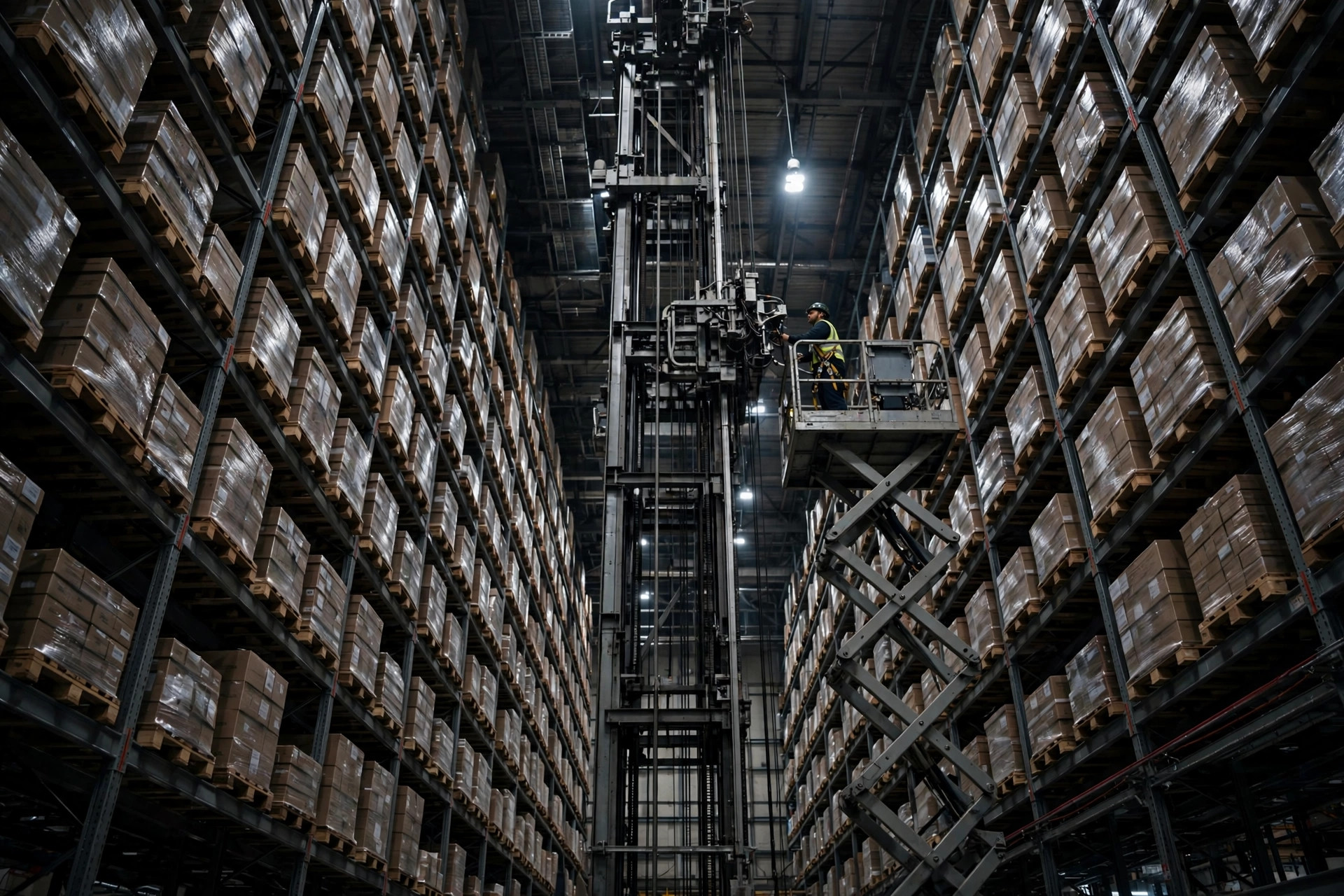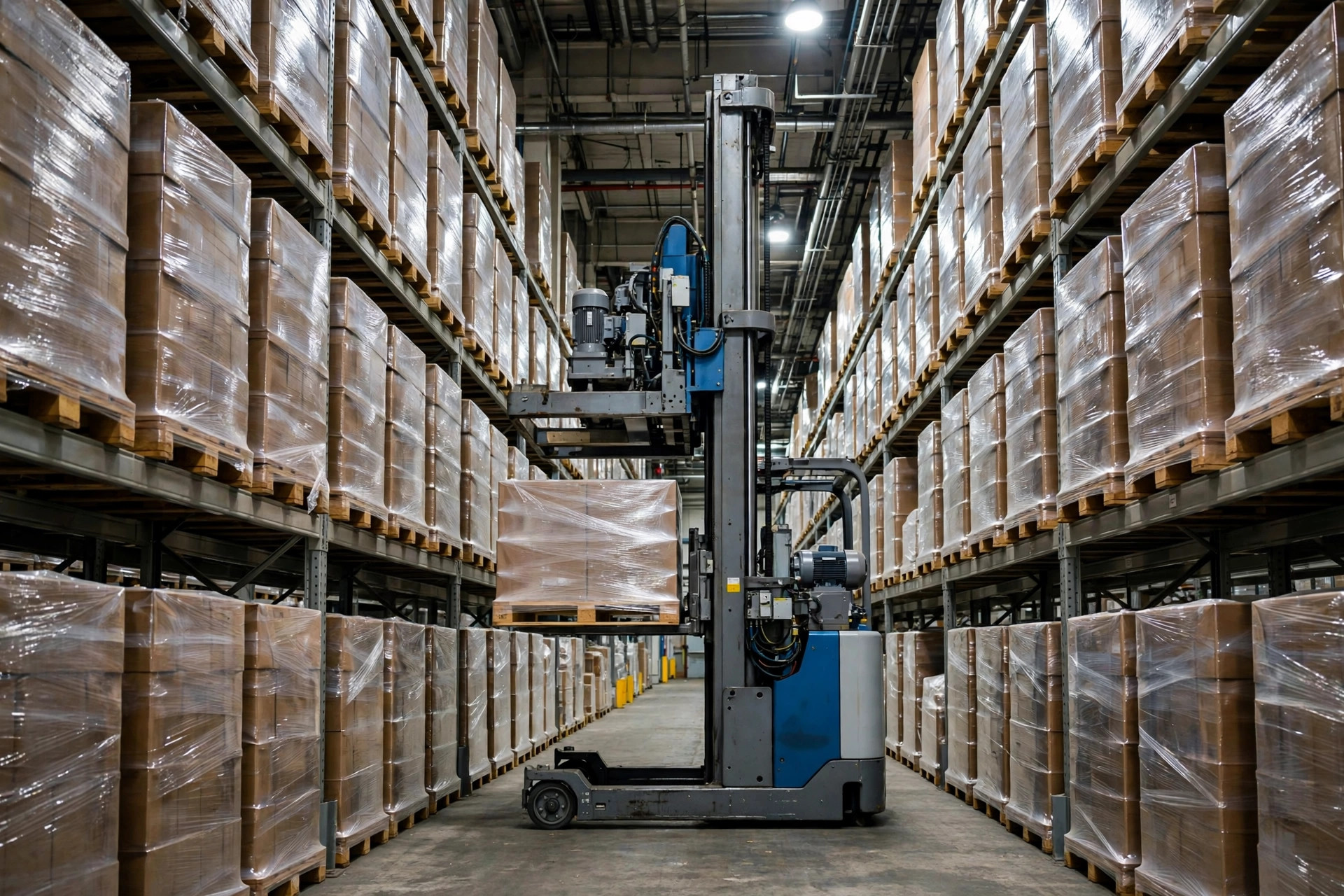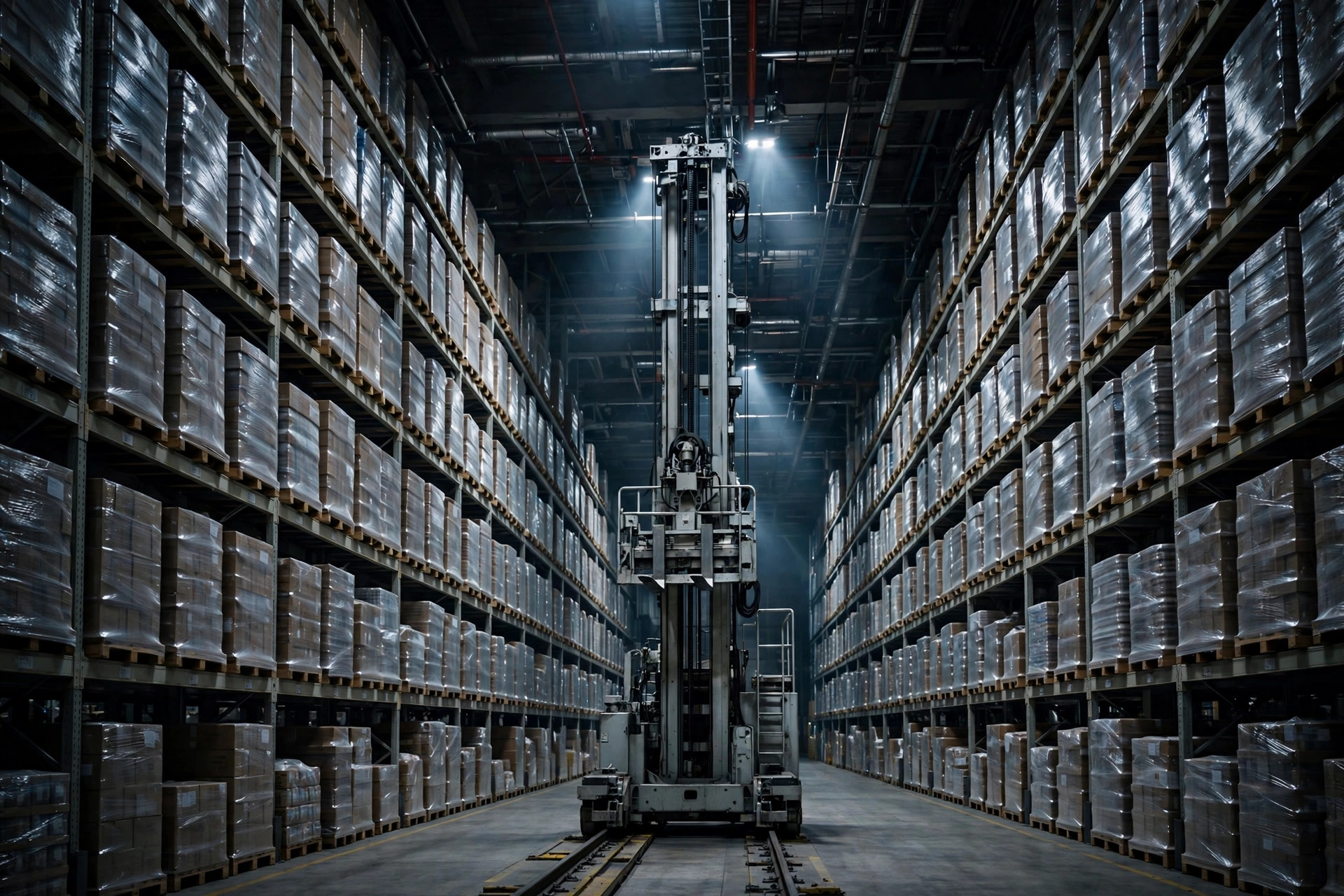
The phone woke me at 2:17 in the morning. The night-shift supervisor at a 3PL warehouse in Rancho Cucamonga said the stacker crane in aisle 3 had alarmed out: 4,000-plus locations frozen, outbound orders piling up. By the time I arrived, maintenance was already at the aisle entrance. A pallet had shifted on the rack, its stringer cracked, one corner sagging and wedged against the beam. The crane couldn't move — one wrong move would bend the racking.
That night, the whole aisle sat dead for more than six hours while two people in harnesses pulled freight out by hand, a forklift catching cases below. Between the repair bill, overtime, and next-day delay penalties, several thousand dollars evaporated. And the pallet that caused it had arrived with a supplier shipment, its stringer already cracked. Nobody at receiving had looked at it.
Since then, I tell every client running an AS/RS the same thing: the thing you should fear isn't the crane breaking down. It's bad pallets. The equipment was designed around a standard pallet. The moment a pallet goes out of spec, the entire aisle pays for it.
What a single jam really costs
Most people budget an AS/RS for equipment and electricity. The real cost of a jam breaks down differently.
First, the whole aisle goes dark. A stacker-crane aisle is a single line: one jammed pallet freezes thousands of locations. The other aisles can absorb some volume, but at peak they can't keep up, and the outbound queue keeps growing while the manager's phone won't stop ringing.
Second, manual extraction. A pallet wedged high in the rack is something no machine will touch: two people, harnesses, a forklift, pulling cases down one at a time. Slow and dangerous. I've seen extractions eat an entire day shift, the crew barely able to lift their arms afterward.
Third, equipment repair. A shifted pallet might only trigger an alarm, but a bad one bends forks and smashes sensors. A few thousand dollars per repair is normal, parts have lead times, and the aisle stays down while you wait.
Fourth, the invisible losses. Delayed customer shipments, expedited freight to make up for them, lost trust. You can't put an exact number on these, but each one dwarfs the cost of the pallet itself. I once watched a client miss its carrier cutoff over an aisle outage; the upgraded shipping to recover cost several times the repair bill.
My blunt take: the pallet is the cheapest component in an AS/RS and the most overlooked single point of failure. Saving money on pallets is gambling with the uptime of the whole aisle. It's a bad bet.
Five ways pallets fail an AS/RS
Stacker cranes and shuttles are literal-minded machines. The pallet has to look exactly the way they expect. Ranked by how often I've seen each one cause trouble:
Cracked or broken stringers top the list, and they're the most dangerous. Once a stringer cracks, the pallet carries its load unevenly. Sit it on a rack long enough and it slowly tilts until it wedges. Flip the pallet over at receiving and the cracks are obvious. People skip this because it feels like a hassle. That hassle is what keeps aisles running.
Missing or broken deck boards come next. The crane's forks enter from the bottom of the pallet. Lose a section of deck board and the fork loads unevenly, so the pallet tilts in midair. Cheap single-use pallets start with thin deck boards. They break after two trips, nobody reports it, and the pallet goes into the AS/RS anyway.
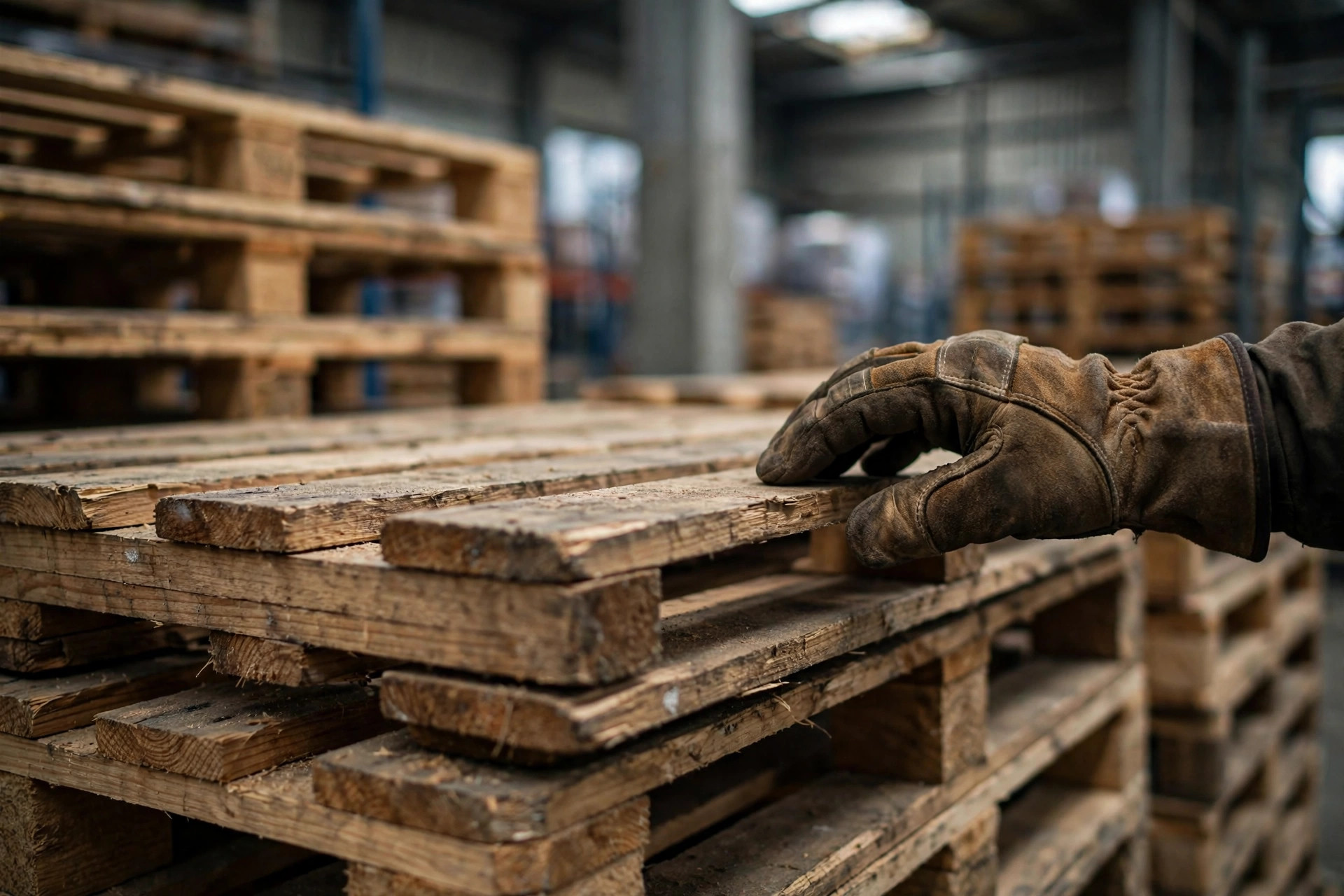
Protruding nails are quiet killers. A raised nail head scores conveyor rollers and snags sensors. Bad enough, and it stops a pallet dead on the roller bed. Inspection is gloriously low-tech: run a gloved hand across the surface. If it catches, the pallet fails.
Moisture warping is the seasonal one. Wooden pallets that got rained on or sat in water warp as they dry. A warped pallet never sits level on the rack, and the crane's positioning throws alarms. Watch rainy-season inbound. Pallets that are blackened or smell of mold are almost always compromised. Quarantine them on sight.
Dimensional drift is the sneakiest. A GMA 48x40 pallet is nominally standard, but cheap pallets can deviate noticeably from spec. Oversize and it won't clear the conveyor guides. Wrong fork-opening height and the forks can't enter. You can't eyeball this, which is exactly why it gets missed.
The three gate checks
Once you know where pallets fail, the inspection practically writes itself. Three gates, none of them expensive.
Gate one is visual inspection at receiving. Every inbound pallet gets looked at: flip it to check stringers and deck boards, feel the surface for nails, sniff for mold, look for blackening. No equipment needed; the receiving clerk can do it in passing. But it has to be written into the process, assigned, and spot-checked. If it isn't written down, it isn't happening.
Gate two is dimensional screening before anything enters the AS/RS. Big operations can justify an inspection line that auto-measures dimensions, weighs the pallet, and archives photos — tens of thousands of dollars, but worth it at scale. Smaller sites get most of the way there with a tape measure and a reference template: check diagonals, check fork-opening height. Remember that the equipment vendor's pallet specification is a hard requirement. An out-of-spec pallet in an AS/RS is a time bomb, and the vendor's spec is the only authority that matters.
Gate three is sampling. First few shipments from a new supplier get checked pallet by pallet. Once the supplier proves out, move to a sampling rate written into your acceptance standard, something like one in ten. One failure expands the sample; two consecutive bad batches and the whole shipment goes back. Sampling isn't about picking fights. It's about making sure the supplier knows you're watching — watched suppliers ship better pallets.
Three fates for a bad pallet
A failed pallet doesn't have to go straight to the dumpster. It has three possible fates.
Re-palletizing is the safest. Transfer the freight onto a standard captive pallet. Slower, but nothing enters the AS/RS on a questionable base. For high-value or long-term storage freight, always re-palletize. Don't begrudge the labor.
Repair works for minor damage: hammer a raised nail back down and add another, replace a single broken deck board. A decent carpenter clears a hundred pallets a day at very low cost. But a cracked stringer is structural. Scrap it — a patched stringer is a future jam with a delay timer.
Rejecting the shipment is the strongest signal: a whole batch of warped, out-of-spec pallets gets refused at the dock, photographed, freight charges on the supplier. This only works if your acceptance standard was in the contract first. I've done it twice. Both times, quality improved immediately. Nothing motivates like a rejected truck.
A word on pallet selection while I'm at it. For AS/RS service, use standard captive pallets, not single-use ones. A disposable pallet saves a few dollars, but dimensions wander, deck boards are thin, and moisture ruins them. One jam costs more than the price difference on thousands of pallets. The math isn't hard. Committing to it is.
A pallet acceptance checklist you can use tomorrow
All of this boils down to one sheet of paper. Print it, post it at receiving, put a copy in every receiver's hand:
- Stringers: no cracks, no breaks. Flip and inspect visually.
- Deck boards: none missing, none broken. Fork entries clear.
- Nails: nothing protruding. Gloved-hand sweep catches nothing.
- Moisture: no blackening, no mold smell, no warping.
- Dimensions: length, width, and height per the equipment vendor's spec. Spot-check diagonals and fork-opening height.
- Records: photograph, tag, and quarantine every failed pallet. Expand sampling on failed batches.
One page, zero cost. You've already spent millions on the AS/RS. Don't let a few-dollar pallet be the thing that takes it down. I've been saying that for over a decade, and the clients who listened all saw their aisle alarms drop sharply.