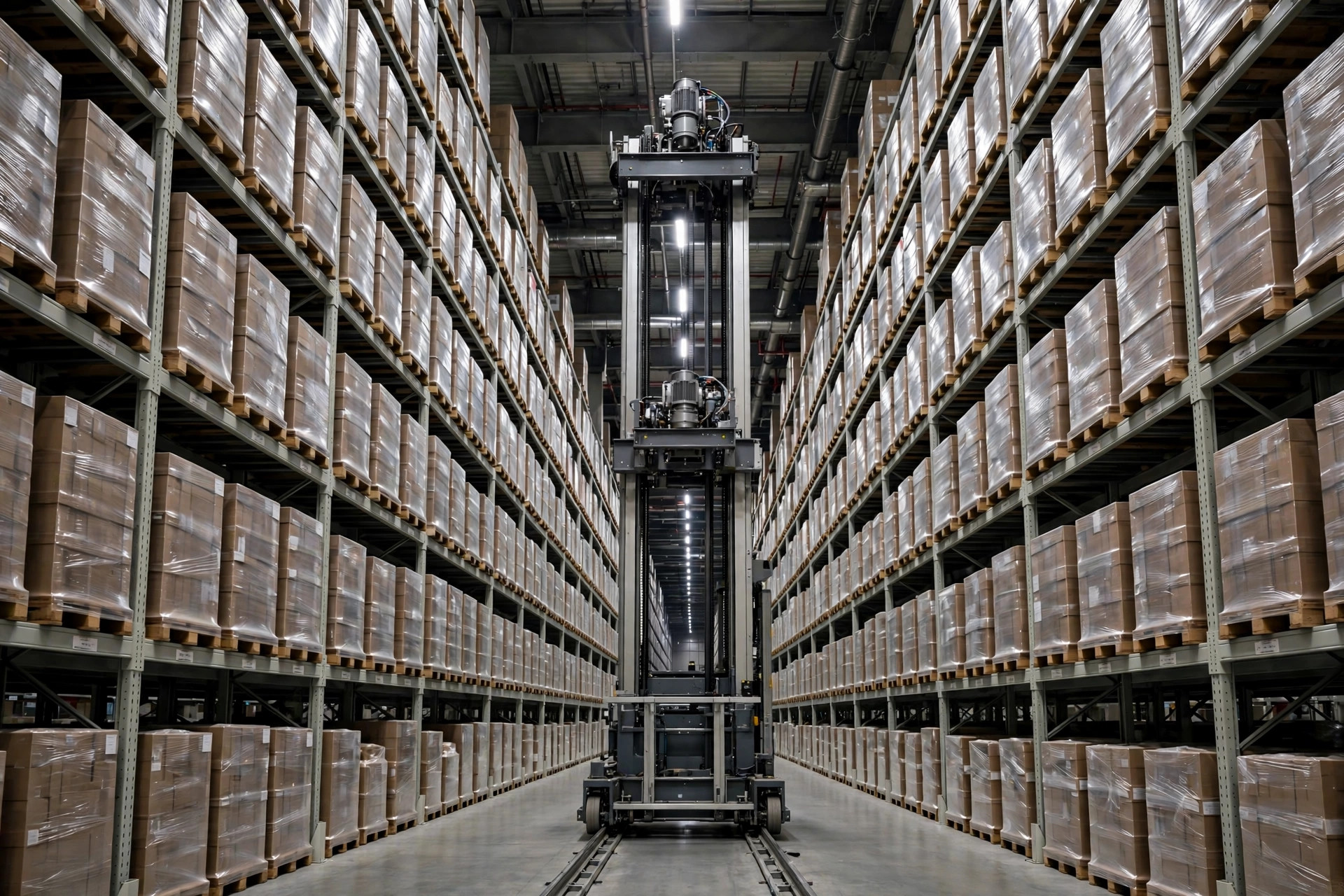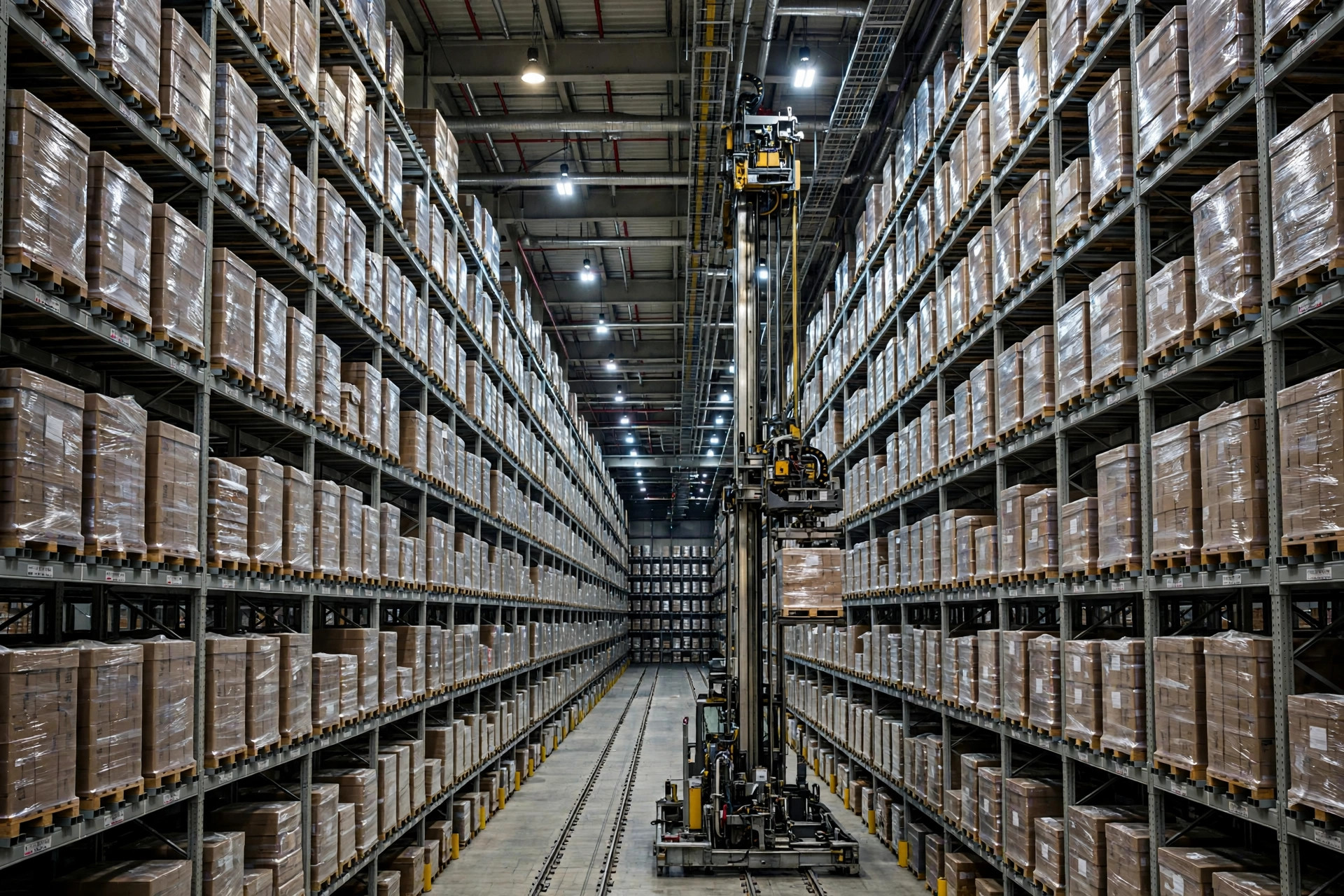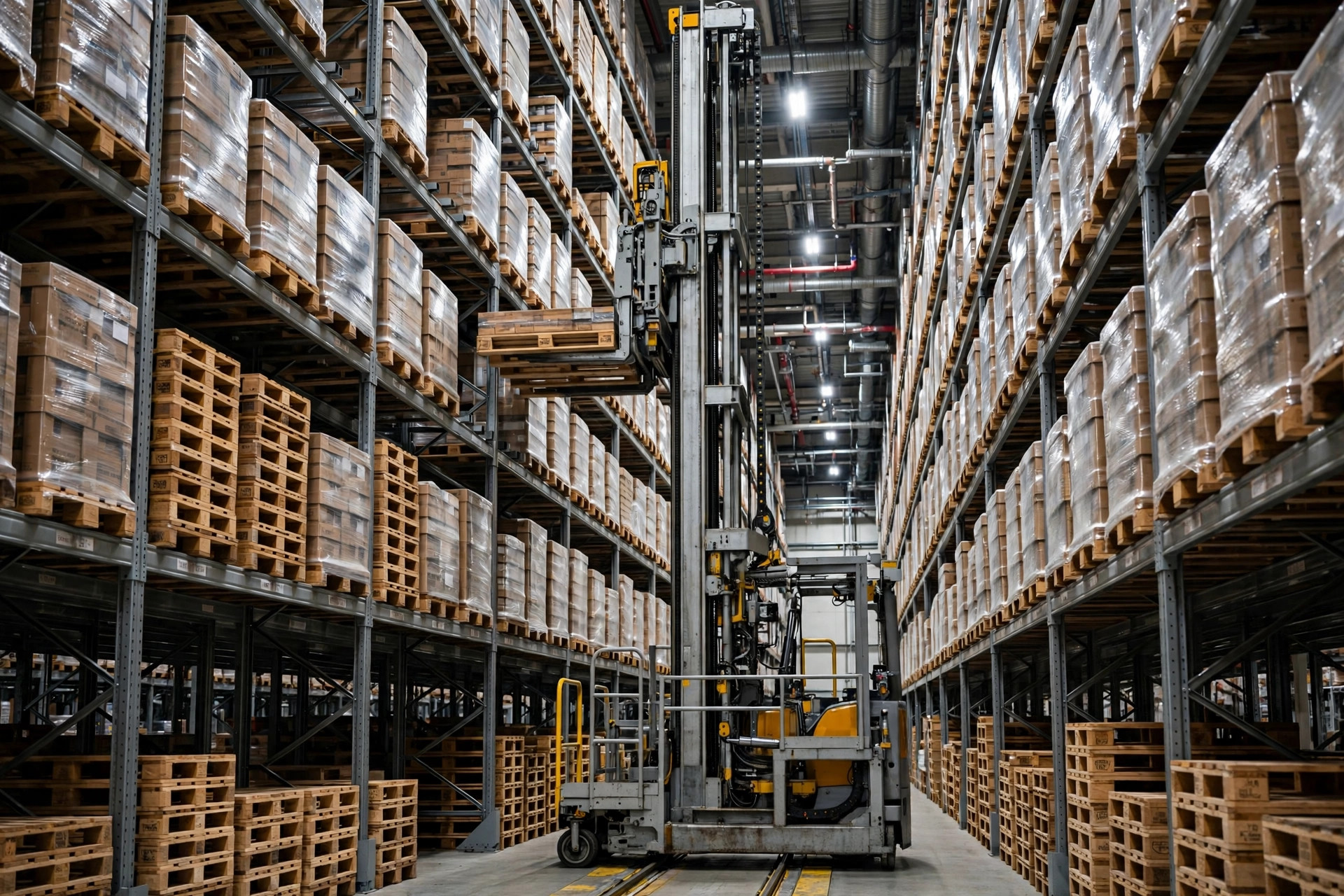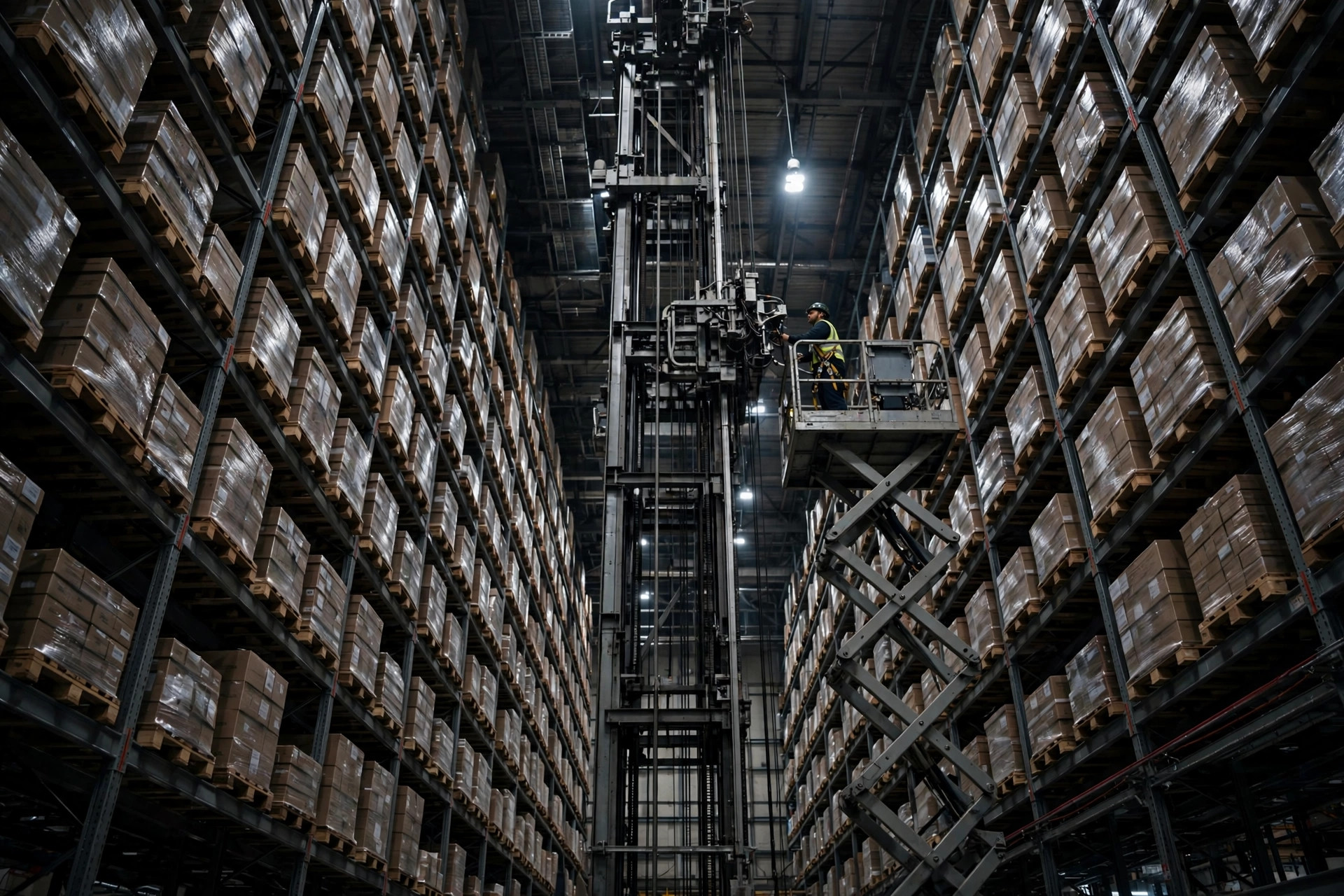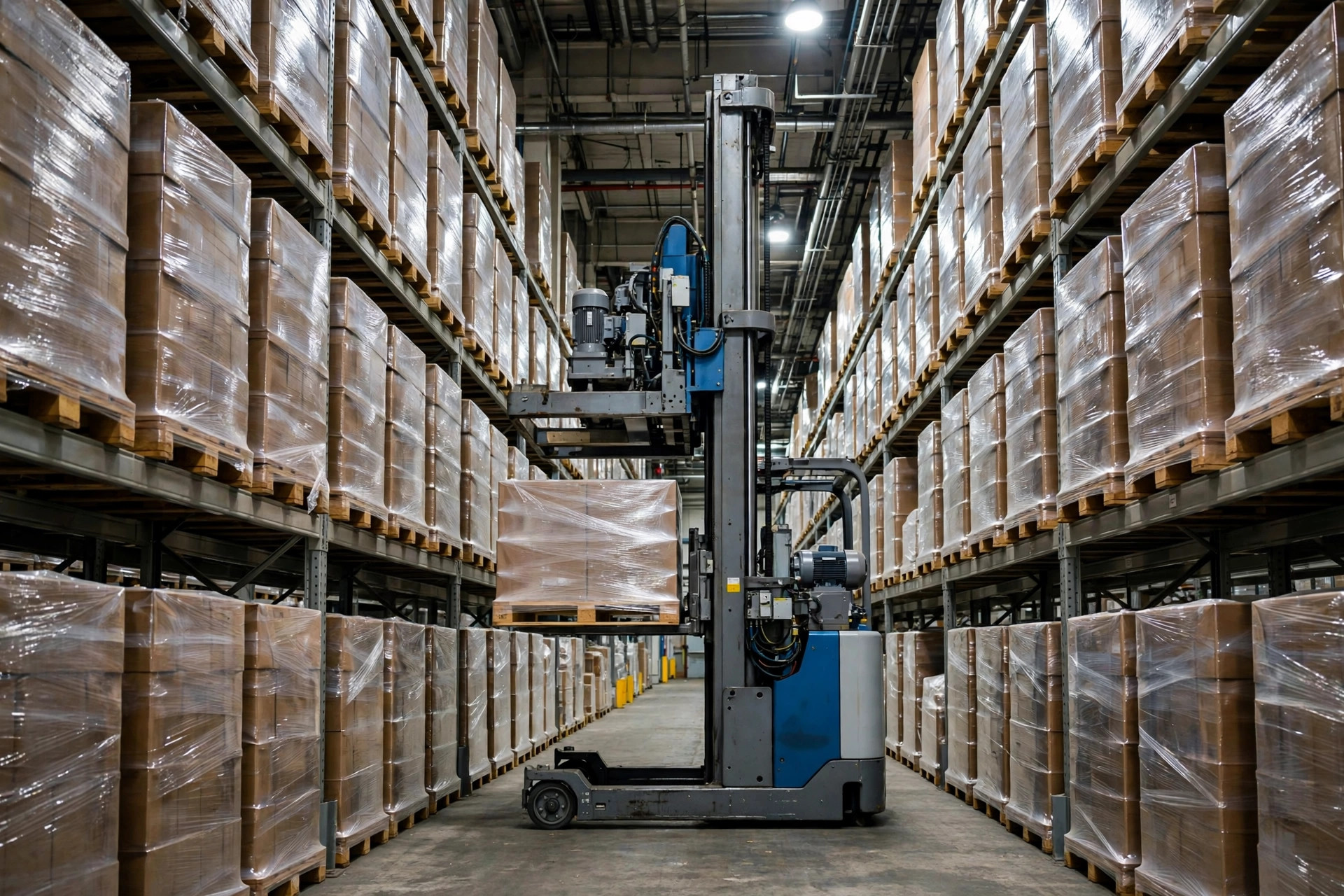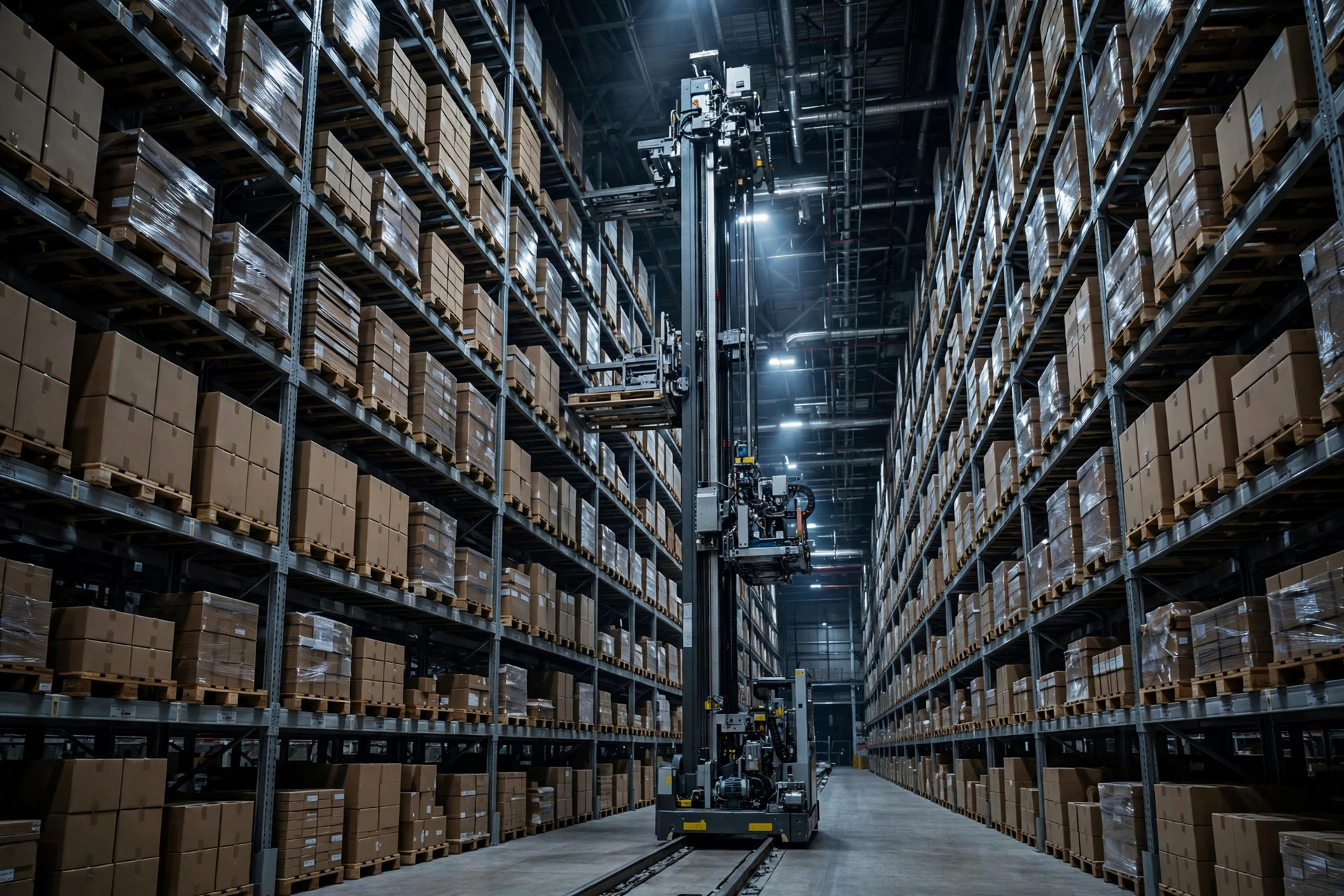
In the spring of 2023, I walked a fire inspection with a client at their new stacker-crane ASRS in Chino, California. Fifteen meters tall, 24 beam levels, and the cranes were already running test cycles on the rails. The fire marshal walked the racks twice with a tape measure, then said the words no owner wants to hear: the overhead sprinkler piping only covered the top of the aisles, there was not a single in-rack sprinkler inside the rack structure, and the building was not allowed to start operating.
The owner went pale. The crane commissioning crew billed by the day, and the shutdown dragged on for three months. There is a harsh truth about automated warehouses: in a conventional warehouse fire, firefighters can at least drag hoses inside. In an ASRS fire, nobody can get in.
Ceiling sprinklers cannot reach a fire 40 feet up
Most first-time ASRS builders make the same mistake: they assume a row of high-flow sprinklers on the roof is enough. I checked the rules in NFPA 13, the standard governing sprinkler installation in storage occupancies, and the height limits are explicit. The workhorse K14.0 ESFR (early suppression fast response) sprinkler can protect rack storage under ceilings up to 35 feet — but only if in-rack sprinklers are also provided. The larger K22.4 and K25.2 ESFR sprinklers stretch ceiling-only protection to 45 feet. That is the ceiling of what the ceiling-only approach can do. Beyond that height, physics wins: water discharged from the roof has to fall through dozens of feet of hot smoke and rising heat, and much of it evaporates or is carried away before it reaches the fire seat.
An ASRS is routinely 40, 50, even 80 feet tall. A fire burning at a 30-foot beam level is unreachable from the ceiling. So a tall ASRS gets a two-layer system: ceiling sprinklers handle the big fire at the top, while in-rack sprinklers pin down fires inside the rack levels.
NFPA 13 devotes an entire chapter (Chapter 25 in the 2019 edition) to in-rack sprinklers. Translated into plain English, the key points are:
First, sprinklers go directly below a horizontal barrier. Every so often up the rack you build a solid barrier — nominal 3/8-inch plywood or 22-gauge metal — and the in-rack sprinklers sit just beneath it. Heat from a fire below gets trapped by the barrier, so the sprinkler above the fire operates early and sprays the goods at that level. Without a barrier, heat sails past, the sprinkler opens late, and the water lands nowhere useful.
Second, the vertical spacing cannot exceed 12 feet. Counting from the floor up, every 12 feet of rack height must have its own level of in-rack sprinklers. With 5-foot beam levels, that means sprinkler piping roughly every two to three levels.
Third, the sprinkler type matters. In-rack sprinklers are typically quick-response heads with K8.0 or K11.2 orifices, ordinary temperature rating. A bigger K-factor means more flow, but it has to match the hydraulic calculations — the pump and water supply were sized for a specific design.
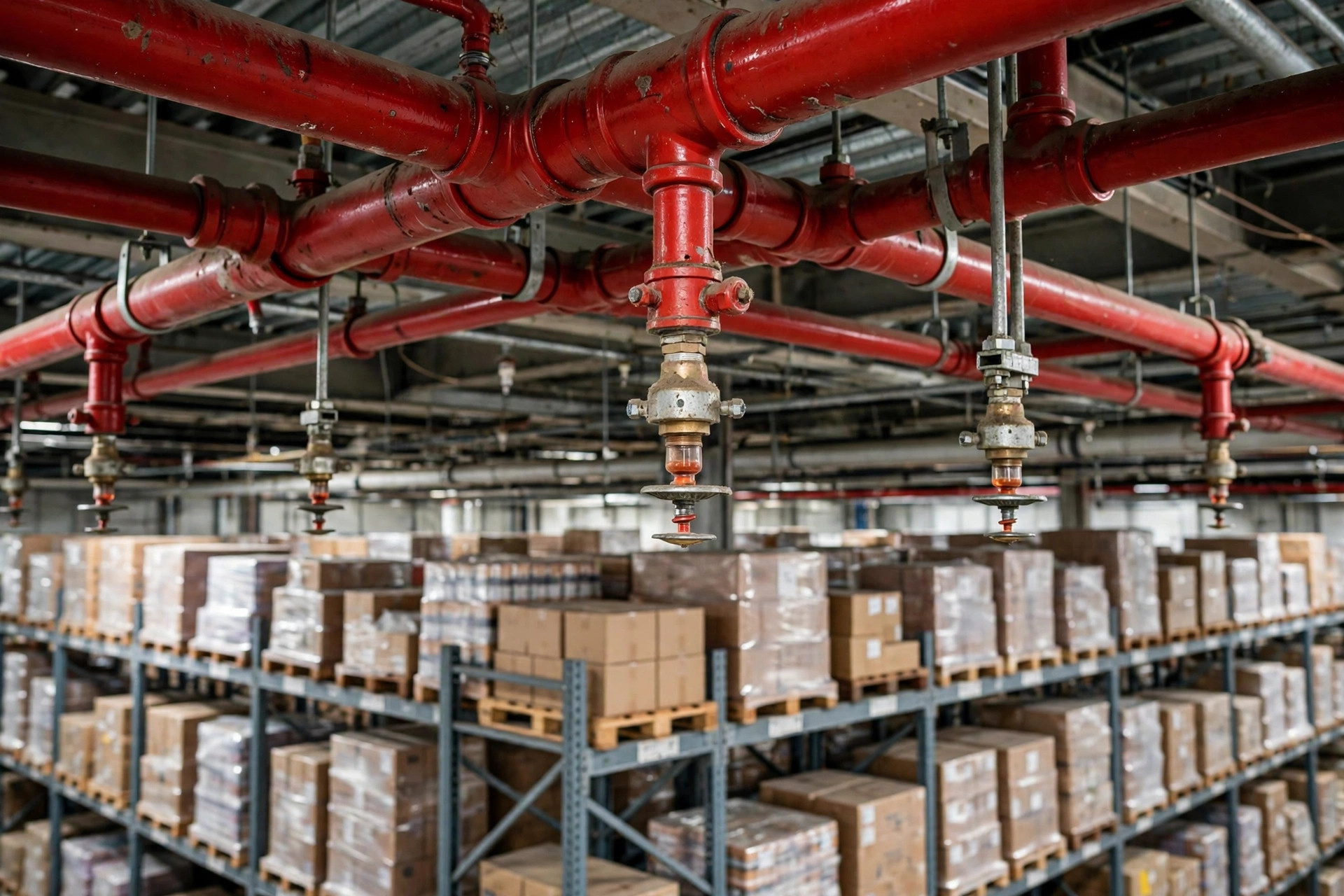
Fourth, single-, double-, and multiple-row racks are piped differently. Single-row racks get sprinklers between every pallet load; double-row racks add a line in the longitudinal flue space between every other load. Flue spaces are the channels left for water and smoke to travel through. A disturbingly common operating sin is to fill the flue spaces with extra pallets — which effectively blocks the sprinkler system. Inspectors measure this. They fail buildings for it.
One detail that gets overlooked: the in-rack system should be zoned separately from the ceiling system, with its own control valve. In-rack piping gets hit by pallets and lift trucks more than any other part of the system. A separate zone means fixing rack piping does not take the ceiling system offline.
The crane aisle is a chimney — treat it like one
The stacker-crane aisle is the strangest part of ASRS fire protection. It is tall, narrow, and has a moving machine inside it. Two fire scenarios exist: the stored goods catching fire, and the crane itself catching fire — motors, cable chains, and power systems are all ignition sources.
Goods fires are the in-rack sprinklers' job, as covered above. But the aisle itself needs thought. A crane running the aisle physically blocks water falling from overhead sprinklers — the mast and load table break up the spray. In practice, overhead sprinklers protect the aisle space while in-rack sprinklers protect the goods on both sides.
Vibration and clearance matter too. Sprinklers cannot sit where a moving crane will smash them, and pipe hangers need impact protection.
Detection is half the battle. Nobody walks an ASRS aisle, so early warning is entirely on the detectors. Many projects install aspirating very-early smoke detection at the top of the aisle: it catches a fire before it is a fire, and it can interlock to stop the crane and start smoke exhaust. In 2022 I reviewed a 48-foot ASRS project in the Chicago suburbs where the owner had cut the aspirating system to save money, substituting ordinary spot smoke detectors. The fire marshal's response was one sentence: at this ceiling height, how long does smoke take to reach the top — have you done the math? The aspirating system went back in.
The three things inspectors always flag
Fire acceptance testing is the least controllable phase of an ASRS project. Across the inspections I have attended, the findings almost always fall into three buckets.
First: blocked flue spaces. The design drawings show clean flue spaces; operations starts, someone squeezes extra pallets into the flues, and pallets overhang the beam and block sprinkler discharge. The fix is operational discipline: mark the flue-space lines on the floor plan, add them to the daily walk checklist, and never allow an overhanging pallet into a beam position.
Second: beam levels were changed, sprinklers were not. Tenants change, product dimensions change, beam heights get adjusted — and the carefully engineered sprinkler geometry silently breaks. The correct practice: every beam-level change triggers a re-check of the sprinkler layout, with the fire protection contractor issuing a revision if needed.
Third: damaged sprinklers nobody replaced. In-rack heads live between beam levels where pallets and trucks hit them. Bent frames, deformed deflectors, heads knocked clean off — I have seen all of it. The right practice: protective cages on in-rack heads, a monthly inspection walk, and any damaged sprinkler replaced within 48 hours. A sprinkler head costs tens of dollars. Being late costs millions.
Maintenance grabs whatever head is on hand — K8.0 mixed with K11.2, quick-response mixed with standard-response. The hydraulic calculations assumed a uniform model, so a mixed installation voids the design.
A checklist you can use tomorrow
If you run an ASRS, or you are building one, print this and put it on the wall:
- Check the building height against the ceiling system: if the ceiling is over 35 feet and you are relying on K14.0 ESFR with no in-rack sprinklers, the design itself is non-compliant — have a fire protection engineer review it.
- Count from the drawings: is there any stretch of rack where in-rack sprinkler levels are more than 12 feet apart vertically? Was any level "optimized" out?
- Inspect the horizontal barriers: is there a barrier under every in-rack sprinkler level, and are any of them broken or missing?
- Measure the flue spaces: are the longitudinal and transverse flues clear of goods and overhanging pallets, with nothing blocking sprinkler discharge?
- Verify sprinkler uniformity: is the whole building on one sprinkler model, with no mixed K-factors or response types, and does the spare-parts shelf stock only that model?
- Check protection: do the in-rack heads have protective cages, and are there any impact-damaged heads unreplaced from the last three months?
- Review change records: have beam heights been adjusted since commissioning? If so, was the sprinkler layout re-verified?
- Test the detection system: run the aisle-top smoke detection (aspirating or spot) and confirm the interlocks — crane stop, alarm, smoke exhaust — all work.
- Confirm zone valves: does the in-rack system have its own control valve, is its location clearly marked, and does the duty crew know where it is?
- Pull the last acceptance report: were the previous findings actually closed out? Do not let the inspector raise the same issue twice.
Fire protection in an ASRS is invisible on a normal day, decisive on inspection day, and life-or-death on fire day. The whole coordination between sprinklers and racks comes down to one sentence: wherever the fire is, the water has to get there, with nothing in between. Get that right, and you will not flinch when the fire marshal shows up with a tape measure.