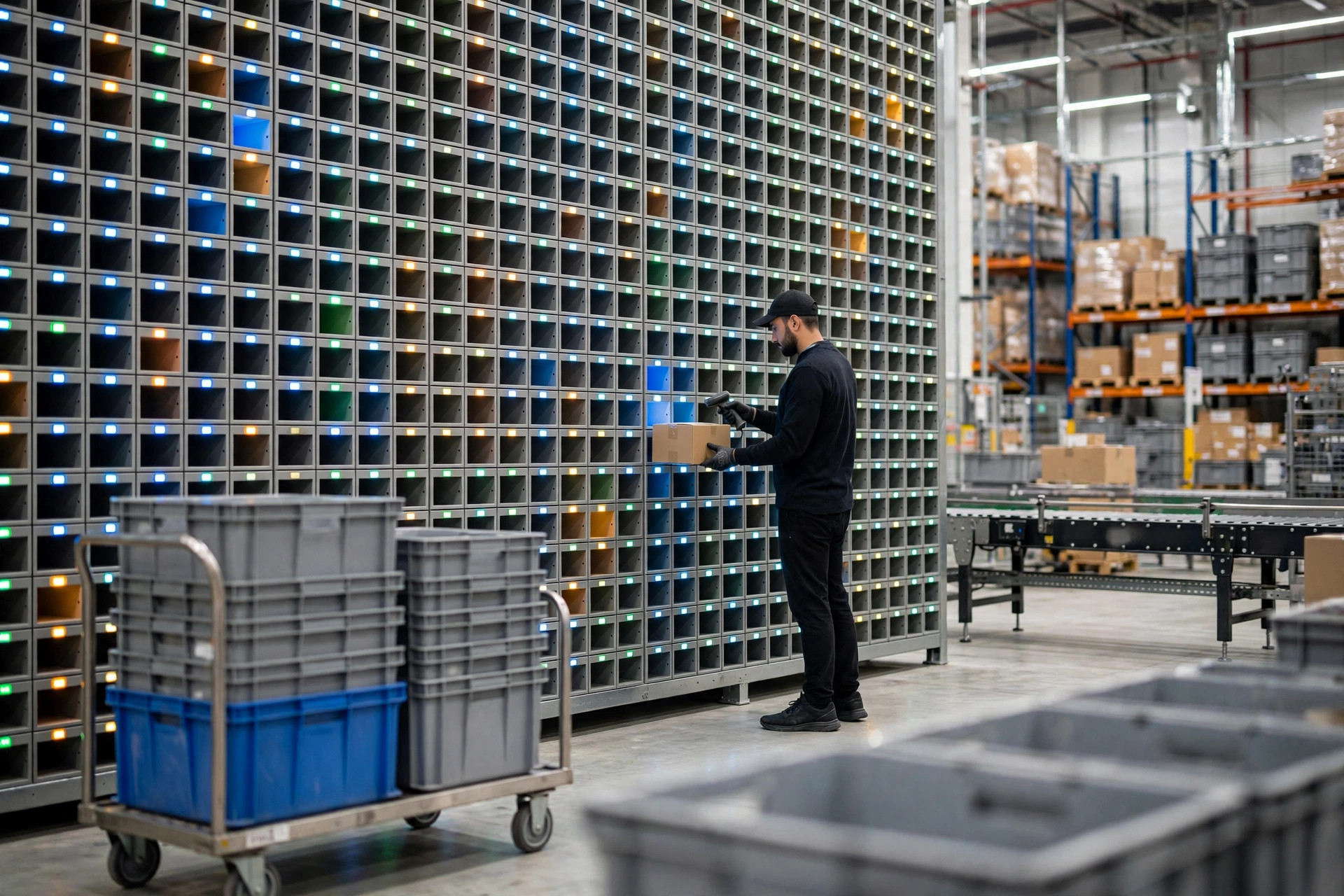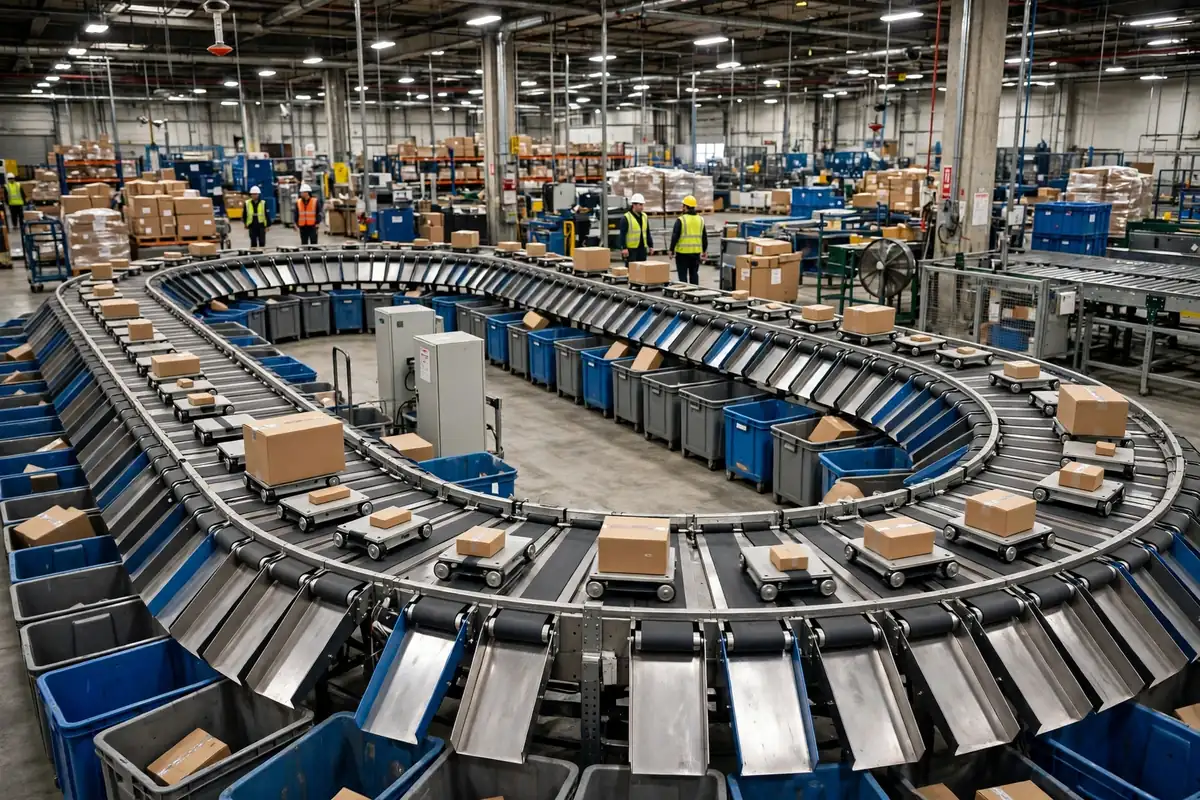
Here is the call up front: in ASRS double-deep vs single-deep racking, do not start with the racking quote. Start with your SKU profile and your aisle utilization math. Few SKUs, large batches per SKU, first-in, last-out you can live with — take double-deep, and you get roughly twice the pallet positions on the same footprint. Many SKUs, frequent small picks, and strict first-in, first-out — take single-deep, because 100% selectivity is the floor your operation stands on. Double-deep saves floor space. Single-deep protects flexibility. Neither is wrong. Picking the wrong one for your freight is.
Do the math first: what double-deep does to aisle utilization
The honest benefit of double-deep is exactly one thing: it roughly halves the number of aisles, which means roughly double the pallet positions on the same footprint. Racking vendors' comparison material typically puts the recovered floor area at 20% to 40%. Note the wording — recovered floor area, not saved money. Confusing the two is how bad decisions get signed.
Take a project I worked on in Kunshan in March 2024: an auto-parts 3PL needing 8,000 pallet positions inside an existing building. Single-deep needed 12 aisles and still came up about 600 positions short. Double-deep needed 6 aisles and recovered roughly 30% of the floor, turned into cross-dock staging and packing. The math worked because the freight fit: around 320 SKUs, averaging 25 pallets each, mostly full-pallet in and out. Eight months after go-live, rear pallets were rotating on an average 11-day cycle, and first-in, last-out had not cost a single expired batch.
Now the price tag. First, selectivity falls to 50%: the rear pallet sits behind the front one, so reaching it means moving the front one first, and the lane runs first-in, last-out. Second, the equipment changes: double-deep needs a deep-reach truck or telescopic forks — in an ASRS, a crane with double-deep forks. A standard counterbalance truck cannot reach the rear position, so do not plan to reuse the fleet. Third, placement accuracy matters far more. Put a pallet down crooked in a deep lane and you damage an upright — repairs cost real money plus real downtime.
Here is the counterintuitive part most proposals leave out: fewer aisles make the system more fragile, not just denser. When one aisle goes down, single-deep loses one row of positions; double-deep loses two. The recovered floor is real, and so is the doubled blast radius of one aisle failing. If floor space is genuinely scarce, that risk is worth carrying. If you still have floor to spare, do not volunteer for it just to make the utilization number look good.
| Factor | Single-deep | Double-deep |
|---|---|---|
| Number of aisles | Baseline | Roughly half |
| Pallet positions, same footprint | Baseline | Roughly double |
| Floor area typically recovered | — | 20%–40% |
| Selectivity | 100% — every pallet directly reachable | 50% — rear pallet blocked by front |
| Access pattern | First-in, first-out | First-in, last-out |
| Handling equipment | Standard crane or forklift | Deep-reach truck, telescopic forks, or double-deep crane forks |
| Placement accuracy | Standard requirement | Much higher — misplacement damages uprights |
| Best fit | Many SKUs, frequent small picks, strict FIFO | Few SKUs, full-pallet moves, large batches |
Double-deep vs single-deep: two warehouses, two opposite answers
The second story is the one I tell more often — it is the rescue. In November 2023, a cosmetics warehouse in Shanghai with over 1,800 SKUs and mostly piece picking had already built four double-deep aisles before anyone asked me to look. On site, fast-moving pallets kept getting trapped behind slow-moving ones, and replenishment was shuffling more than 40 pallets a day just to reach the stock it needed. Promotions made it worse every time.
We did not tear the racking down. We rezoned it: one aisle near the outbound end became a single-deep fast-pick zone for fast movers only, plus a hard WMS rule — no SKU with a turnover cycle under 7 days goes into a rear deep position. Two weeks later, the site's own count showed daily reshuffles down from more than 40 pallets to single digits. The real lesson was not about racking — nobody asked "how many SKUs do you actually have?" on the day the decision was made.
Put the two projects side by side and the dividing line draws itself. Double-deep is not a premium version of single-deep — it is racking for a different kind of freight. When the freight matches, it saves space and money. When it does not, every square meter you saved gets paid back in reshuffling.
The double-deep dividing line: five questions before you sign
My dividing line is a five-question test: score four or five before you consider double-deep, three or below and you stay single-deep.
One: are there genuinely few SKUs, averaging at least 4 pallets per SKU? Below that, the rear position probably holds a different SKU, and you are blocking yourself. Two: can you live with first-in, last-out? Expiry dates, batch control, any hard FIFO requirement — one hard "no" disqualifies double-deep outright. Three: is the budget carrying telescopic forks or double-deep crane forks? I have seen this hole three times — racking signed, cranes ordered, and a week before go-live someone discovers standard forks cannot reach the rear lane. Four: are your pallets uniform? Double-deep tolerates far less variation in pallet size or condition. If your pallet pool is a mixed bag, fix the pallets before discussing deep lanes. Five: is floor space actually scarce? If single-deep fits and the only reason to go deep is a prettier aisle utilization number, do not. Utilization is a means, not the goal.
The same test has a second use: mixed layouts. A warehouse split between fast small-batch SKUs and slow bulk SKUs does not need one racking type for the whole building. Put fast movers in single-deep, slow bulk in double-deep, and let the WMS route by turnover days. The Shanghai rescue was a mixed layout installed two weeks late. Planned up front, it costs nothing extra.
Go-live night checklist — plus the mistake I have seen three times
Seven items, none optional, and none of them get done on go-live night if they were not planned the week before.
First, test every lane physically: one full pallet front, one full pallet rear, and run the telescopic forks through the complete cycle. The front pallet must not shift when the rear one is pulled. Second, check the WMS location master data: every double-deep location needs a front and a rear sub-location. If the system stores one location number per lane, tasks jam the moment a crane is told to fetch an unreachable rear pallet. Third, inspect the pallets: pull every oversized or broken-deck pallet out of circulation — in a deep lane nobody can see the problem until something breaks. Fourth, confirm upright protection at aisle ends and turns — one bent upright costs more than dozens of pallets. Fifth, rehearse the first-in, last-out task chain: simulate an expiring pallet behind fresh stock and confirm the system correctly orders "move front, then fetch rear." Sixth, rehearse an aisle outage: kill one aisle and watch whether the WMS reroutes tasks on its own, instead of discovering on a real failure day that rerouting is manual. Seventh, write the rollback down: which SKUs move to single-deep first if the deep zone keeps blocking, who gives the order, how long it takes. Put it on paper, on the wall.
And the three mistakes I have seen three times. The first is crooked placement damaging uprights: operators cannot see the rear position in a deep lane, so they place by feel — within three months, two uprights were bent. The fix is laser positioning on the forks with system confirmation for every putaway — no placing by feel. The second is a WMS that knows locations but not front versus rear: the system assumes the rear pallet is reachable, the task reaches the crane, the whole aisle locks up. The fix is item two on the checklist — sub-location master data first. The third is the fork budget missing from the plan: racking, cranes, civil works all signed, then the double-deep forks need another approval round. The fix is to put the equipment list and the racking list on the same comparison sheet on day one.
ASRS double-deep vs single-deep racking never gets decided in a vendor brochure. It gets decided in your SKU list and your outbound orders. Fill in the five-question test, tick off the go-live checklist item by item, and then sign. Get those two steps right and the decision is hard to get wrong.
By Lin Xiao, WMS Implementation Consultant