Let me give you the short version first: in the Argentina lemon export warehouse cold chain, the money is won or lost in the first 48 hours after harvest, not during the 20 days at sea. Get the temperature down and the humidity steady right after picking, and the ocean leg mostly takes care of itself. Miss that window, and no fast vessel or smooth discharge at Philadelphia will save the shipment — you end up paying freight on rotten fruit.
Here is the thing about lemons. They look tough. They are not. They are not bananas, which turn black the moment they get cold, and they are not apples, which can take real cold. Lemons in storage and transit need 10–12°C and 85–90% humidity. One degree warmer and the peel yellows faster. One degree colder for too long and chilling injury shows up as watery spots on the skin. Let the humidity drop and the fruit loses water all the way across the Atlantic, arriving light and hollow. Two lines on a spec sheet. A fortune to actually hold.
I have seen too many people treat cold chain as one decision: rent a reefer, set the temperature, load the ship. That is only half the story. A reefer maintains temperature. It does not bring temperature down. Fruit loaded warm stays warm in the middle of the pallet for days while the cold air works its way in, and during those days the fruit is ripening in its own field heat. What decides whether a container arrives in Philadelphia green or yellow is the 48 hours before the doors close.
Argentina Lemon Export Cold Chain: The First 48 Hours Decide Everything
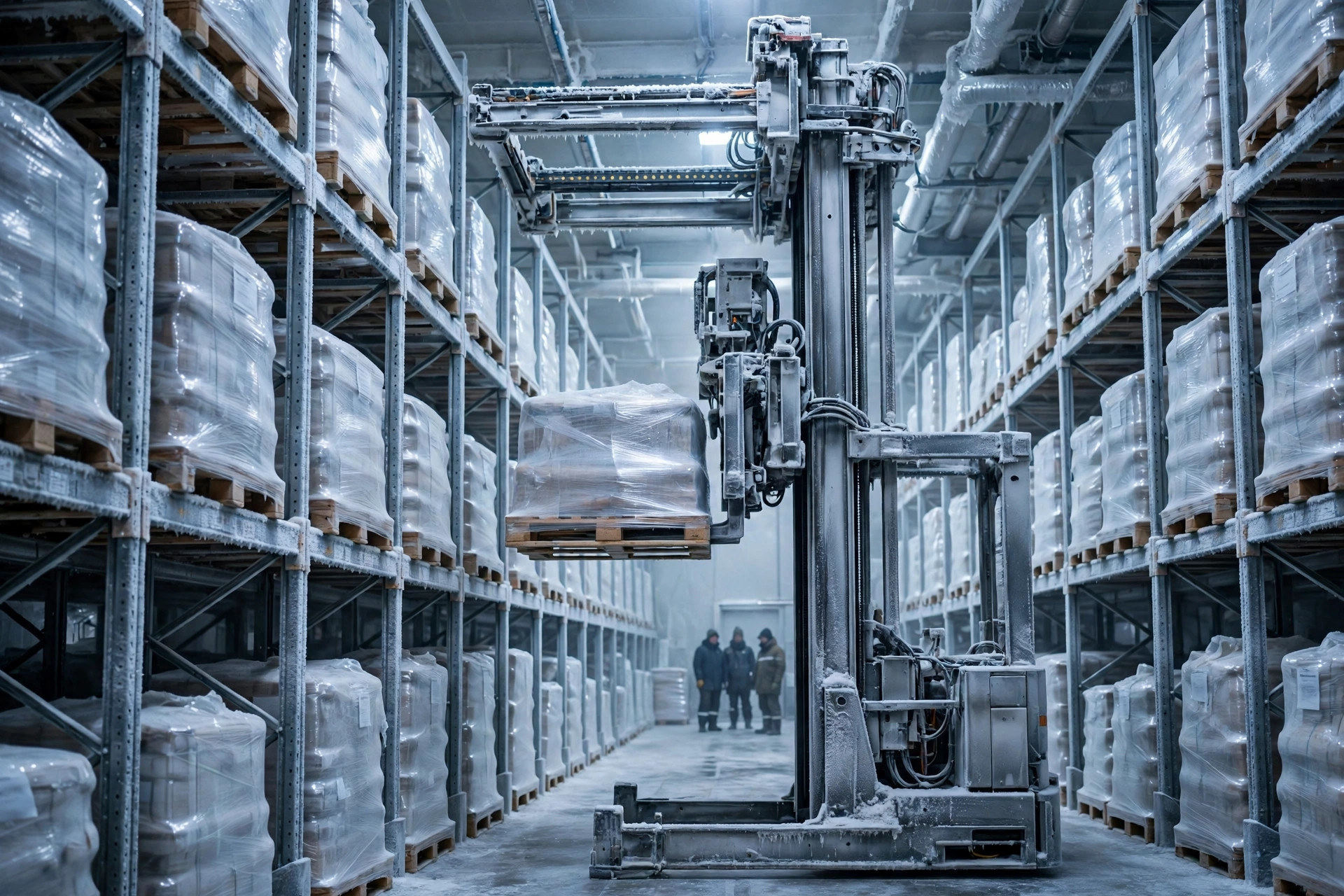
Tucumán is the heart of Argentina's lemon country, and most of the country's export lemons pass through it. In November 2026, Tucumán airport was building 1,000 square meters of cold storage plus a 500-square-meter pre-cooling room. That sounds like a small infrastructure note. For anyone shipping lemons, it is a big deal — pre-cooling capacity right by the airport means fruit can come off the orchard truck and into a pre-cool room within hours, instead of traveling to a distant cold store while the field heat does its damage.
Why does that matter? A friend of mine in South American fruit learned it the expensive way a few years ago. His lemons came out of a Tucumán orchard in the afternoon, reached the packing house late at night, and sat in an ambient shed because the pre-cool room was booked. They went into the reefer at noon the next day, set at 11°C. Looked fine on paper. Twenty days later the container opened in Philadelphia, and the receiver graded box by box — yellowed peel, moldy stem ends, far too much of it to deliver as contracted. The whole container was bought down to second-grade price. The freight was paid in full anyway.
The failure happened before the ship sailed. The fruit went in warm, and a reefer's cooling capacity is sized to hold temperature, not to pull it down. Fruit loaded at field heat can take days for the core temperature to reach 11°C, and by then the fruit has spent days ripening inside its own box. On a 20-day voyage, losing the first few days to uncontrolled temperature is something the remaining two weeks cannot fix.
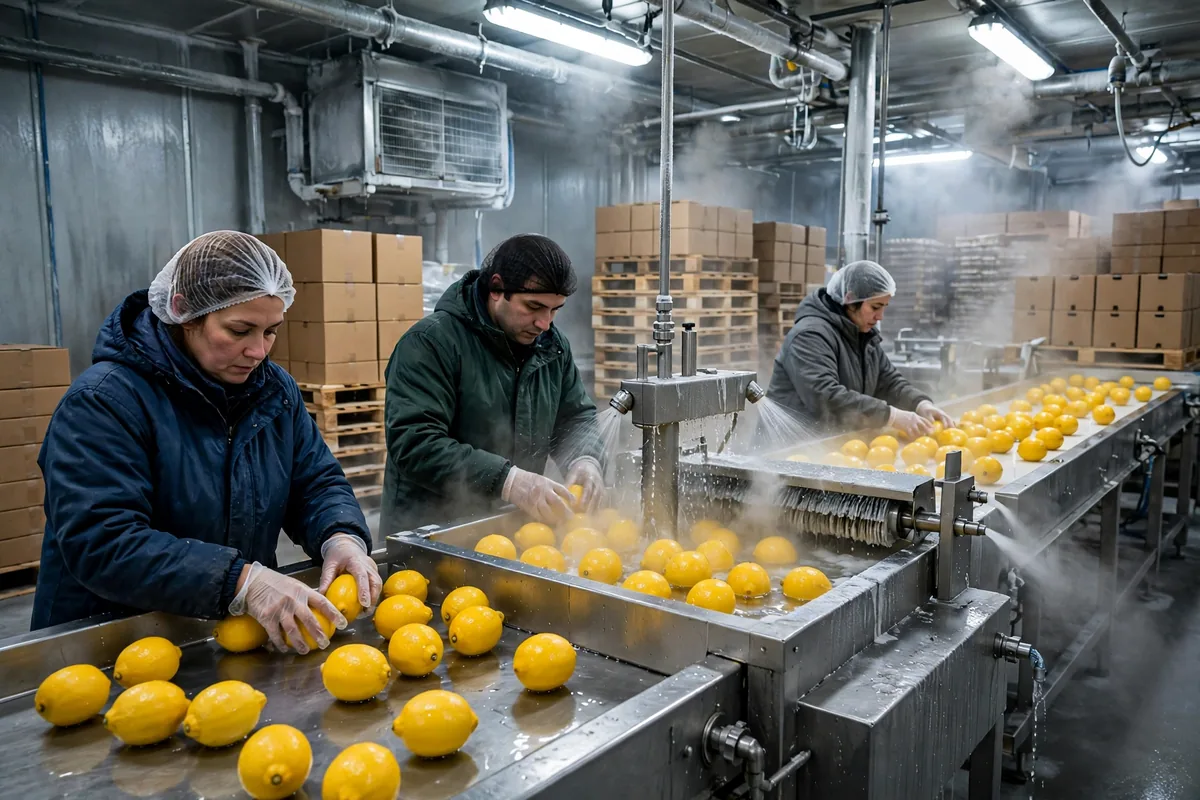
Now look at the other side. San Miguel, one of the big Argentine exporters, ships around 6,000 containers of lemons a year. It does not do that by finding a faster ship. It does it by making the post-harvest sequence routine: harvest scheduling at the orchard, a booked pre-cool slot at the packing house, and a reefer arriving on time. Fruit goes into pre-cool within hours of picking, comes down to 10–12°C, and only then gets loaded. The container's job is to hold the line, not to rescue the load. Argentina exports roughly 230,000 tonnes of lemons a year, and at that scale cold chain is not a heroic effort in one link of the chain — it is a roster.
What the Argentina Lemon Export Cold Chain Actually Costs: Three Links, Three Ways to Lose
Most people price the Argentina lemon export warehouse cold chain as if it were only freight. That math is wrong. A container of lemons carries three cost blocks: post-harvest handling, inland cold transport, and the ocean leg plus discharge. Save money in the wrong block and the loss comes back multiplied in damaged fruit.
The table below is a hypothetical example. The figures are round illustrative numbers built on typical industry cost structure, only to show where the money sits — not a real quotation:
| Link | Hypothetical example (per container) | What goes wrong if you cut here |
|---|---|---|
| Pre-cooling and grading/packing | About $400 | Fruit waits overnight for a pre-cool slot; yellow fruit at arrival climbs visibly |
| Inland reefer trucking, Tucumán to port | About $600 | One leg in an ambient truck undoes the pre-cooling entirely |
| Reefer ocean freight and Philadelphia discharge | About $2,800 | Freight is paid in full no matter what; the damage comes out of the cargo value |
Read that table and you get the counterintuitive part: the cheapest line item is the one you must never cut. Pre-cooling is barely a tenth of the container's cold chain cost, yet it decides the condition of the whole load. The ocean freight is the most expensive line, and all it can do is hold the status quo — it cannot fix fruit that was loaded warm. Cutting pre-cool to pay for freight is like ignoring a leaking tire and buying premium fuel instead. The tank can be full and the truck still will not go far.
There is another trap outsiders fall into: thinking colder is safer, and setting the reefer to 5°C just to be sure. Lemons are not a frozen product. Hold them below 10°C for long and chilling injury appears as water-soaked spots on the peel, and the receiver grades those out just the same. Cold in this trade has a scale, and 10–12°C is a range the trade worked out over decades, not a number someone guessed. When it comes to the set point, trust the data, not your gut.
Philadelphia Is Not the End of the Bill
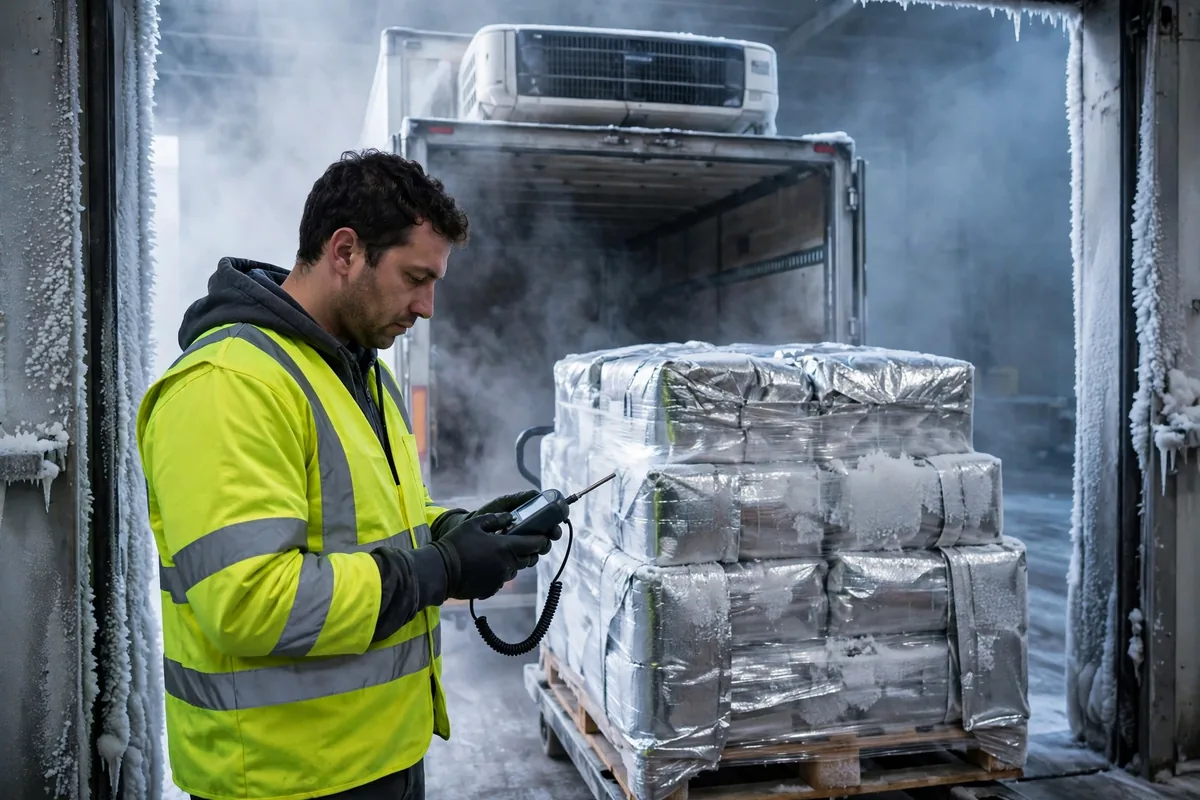
The cold chain does not end when the ship docks. Philadelphia is the main U.S. East Coast port for Argentine lemons, and the receiver inspects right there. The first thing checked when the doors open is not the fruit — it is the temperature log. Any gap in the record, any stretch above the set point, gives the receiver grounds to downgrade the whole container, and the argument can drag on for weeks.
So before the ship sails, have three documents ready: the full temperature log, the pre-cool record from the packing house, and the packing house quality inspection sheet. They look like paperwork. At the moment of a claim, they are money. Without them, nobody can say whose damage it is. With them, the line of responsibility is clear. I have seen small exporters do the first two links of the chain properly and then lose every claim at the port because their documentation was a mess — not because the fruit was fine, but because they could not prove it.
Do not overlook the inland leg either. The reefer truck from Tucumán to the port — the box temperature, the loading speed, the door-to-door handover time — all of it belongs in the operating instructions. Fruit pre-cooled to 11°C and then left baking in the sun for half an hour with the truck doors open has just had its pre-cooling thrown away. There is no "close enough" in a cold chain. Every handover is a point where it can break.
One piece of advice for anyone exporting Argentine lemons: before you ask the shipping line for a rate, ask your packing house three questions. When is the next free pre-cool slot? How many hours after picking can the fruit get into pre-cool? And can you get a temperature record for every container? If those three have no answer, do not rush to book the vessel, no matter how good the sailing looks. Every dollar saved up front in the Argentina lemon export warehouse cold chain gets collected with interest on the inspection table in Philadelphia. So tell me — the container you have in your hands right now, what temperature is it at?
By Lao Mi, Supply Chain Veteran (20 yrs)