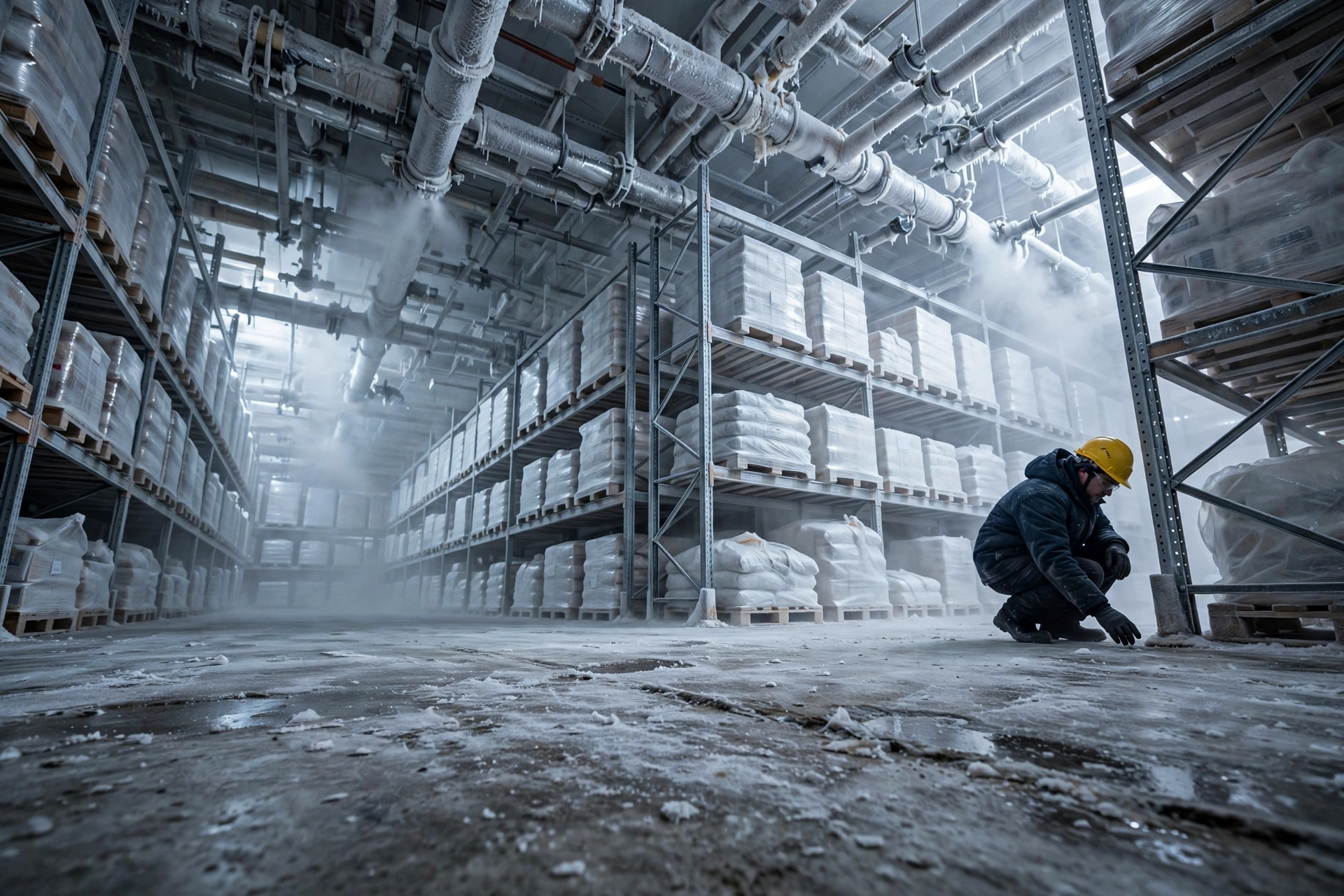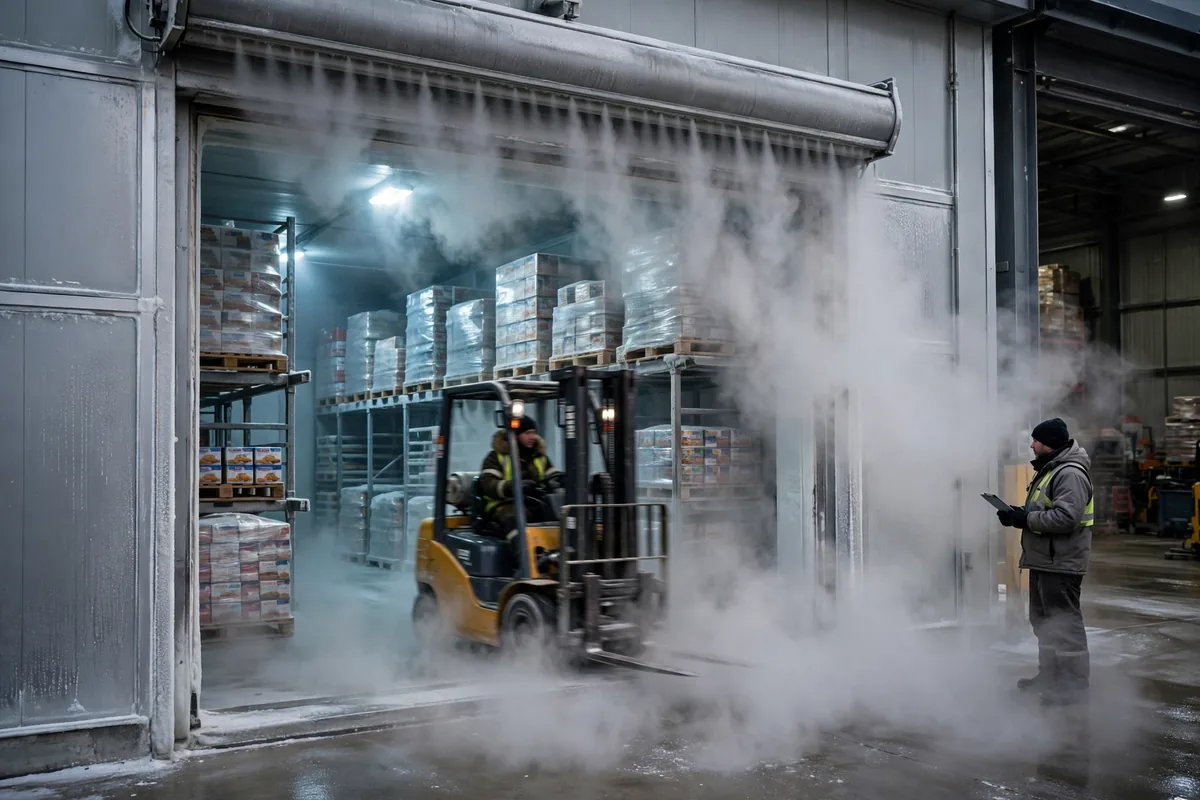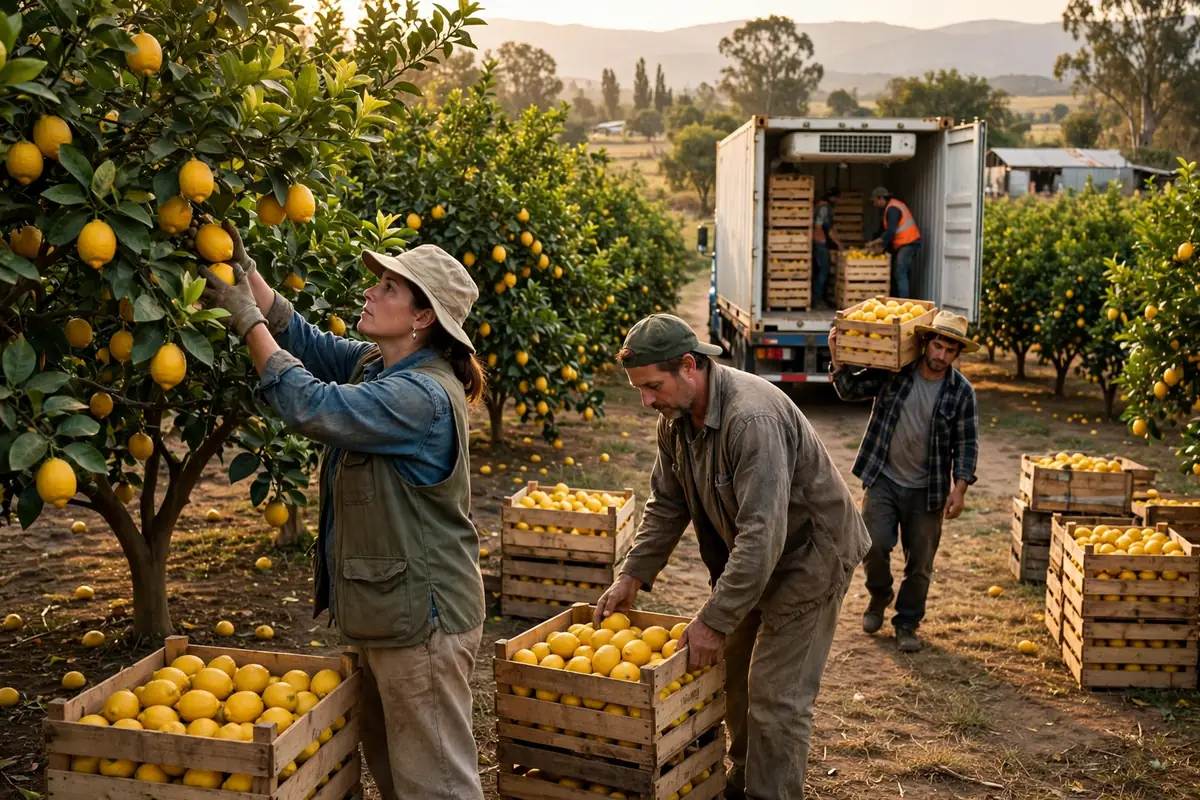
Let me be honest up front: our little warehouse cannot afford to burn money like that. Three thousand square meters, two forklifts, and a cold room we rent by the month — and you want me to talk about the argentina lemon export cold chain warehouse business? It sounds like asking a street stall to cater a state banquet. But in 2025 I followed one lemon shipment from the grove all the way to the port, and it turned out the game is not as out of reach as it looks. The big players win on scale. Small players win by hitching a ride — if they hitch it in the right place.
First, the size of the board. According to the Argentine Citrus Federation, Argentina produced 2.21 million tons of lemons in 2025, up 29% on the year before, roughly 22% of the world's entire lemon harvest. Tucuman province alone grows 80 to 90% of the country's lemons. Fresh exports came to 216,919 tons that year, which sounds like a lot until you hear the awkward part: 56.67% of the crop went into processing — juice, essential oils, peel — and only about 10% left the country as fresh fruit. So the lemons that travel the world as fresh fruit are the honor students, picked out from a much bigger class. The season runs roughly May to September, right when Europe and the United States are short of lemons. That timing gap is the whole reason this chain exists.
Argentina Lemon Export Cold Chain Warehouse: First, Learn What Lemons Are Afraid Of
Lemons are fussy in a very particular way. Fresh off the tree in Tucuman, plenty of fruit is still green on the outside while fully ripe on the inside. Degreening is the step that fixes that: the fruit sits in a temperature-controlled room, gets a low dose of ethylene, and the peel turns evenly yellow. Industry references put lemon degreening at around 25–30°C with ethylene at 1–5 ppm. Sounds simple. Every expensive mistake hides right here.
Take a small exporter I know in Tucuman — call him Lao Chen. In May 2025, right at the season's start, he had 12 pallets of lemons and wanted to squeeze them into a reefer bound for Rotterdam. He rented degreening room time from a local packhouse, charged by the hour. To save two days of rent, he cut the treatment short. The peel came out yellow in patches, like camouflage. At Rotterdam the buyer knocked the shipment down a grade — not unsellable, just no longer fresh-fruit money. Part of the load ended up diverted to processing, and the price gap stung for half a year. Figures here are an illustrative scenario: roughly 40% of those 12 pallets were downgraded, and the loss ran to about three months of his cold-room rent. The counterintuitive bit is this: you think the cold chain is about keeping things fresh, but step one is actually about ripening — and if you ripen unevenly, everything after it is wasted effort.
Here is an even more counterintuitive one: lemons are afraid of the cold. Plenty of people assume colder is better and want the reefer cranked toward zero. Wrong. Lemons store and ship best at 10–13°C, with reefer set points usually around 11–12°C. Hold them below 10°C for long and the peel develops chilling injury — spots that look worse on arrival than sunburn. Chilling damage does not heal. Heat damage you can sometimes rescue; chilling injury is a write-off. So the first lesson of the lemon cold chain is not "how to refrigerate" but "how not to freeze your own cargo." Pre-cooling follows the same logic: a reefer maintains temperature, it does not bring it down. Lao Chen loaded fruit whose core was still warm rather than miss the vessel, and the logger drew a slow downward curve all the way to Rotterdam. The buyer did not reject the load, but the claim letter arrived before the fruit did.
Shared Container or Full Container: The Small Exporter's Math
For a small warehouse owner, the practical question is just one: my cargo does not fill a container, so what do I do? Three routes, and I have run the numbers on all of them. The table below is an illustrative scenario — figures are hypothetical, and freight rates should be checked against the latest carrier and forwarder quotes.
| Route | Suits whom | Where the money goes | Biggest trap |
|---|---|---|---|
| Shared container (LCL reefer) | Small exporters shipping 10–20 pallets at a time | Consolidation fee, pre-cooling and stuffing at the consolidation warehouse, deconsolidation at destination | Someone else's cargo goes wrong and drags yours down; the temperature log cannot tell whose fault it was |
| Full container (FCL reefer) | Anyone who can fill a box | Full reefer freight, booking, pre-cooling | Half-empty box means paying to ship air; bookings are hard to get in peak season |
| Sell to the processor | Fruit that does not make export grade | Almost no cold chain spend | The price is a fraction of fresh export value — resignation money |
Consolidation sounds like the small player's best friend, and it is also the most demanding. You are hitchhiking: your 12 pallets share a box with somebody else's cargo, the temperature set point follows the fussiest item in the box, and ventilation and ethylene management have to suit the whole load. If your box-mate is a heavy ethylene producer, your lemons may yellow early and soften early. And when something goes wrong, whose fault was it? There is one temperature logger, and when the data comes out, everyone points at everyone else. So before you consolidate, ask three things: what is the other cargo, whose standard sets the temperature, and how is liability split if there is damage. If you cannot get straight answers, wait for the next sailing.
A full container sounds respectable, but it burns cash. Ship half a box and you are paying freight on empty air, and in peak season you may have to pay extra just to secure the booking. My advice: do not dream of your own box yet. Run two seasons with a reliable consolidator first, learn the paperwork and the buyer's inspection standards, then think about a full container. In the cold chain business, tuition fees are unavoidable — the only question is whether you pay once or pay all season.
Argentina Lemon Export Cold Chain Warehouse: Arrival Is Only Half the Story
Getting to the port is not the finish line. In the 2025 season, Europe took about 57% of Argentine lemon shipments, Russia about 19%, and the United States about 17%. On full-year 2024 data, the United States was still the largest single-country destination. Different markets inspect differently: European buyers obsess over peel appearance and residues, American buyers obsess over the cold chain record and arrival temperature. The same shipment bound for Europe versus the United States may need different grading at the packhouse.
The second story is a shipment bound for the United States in August 2025. The shipper was a small growers' cooperative, first time in the U.S. market. Pre-cooling was incomplete, the fruit core was warm at loading, and then the vessel hit an inspection queue at the destination port and waited two extra days. In Los Angeles, the buyer looked at the temperature record and deducted under the contract. The cooperative later told me the shipment's entire margin went into that deduction, plus the extra inspection storage fees on top. Figures are an illustrative scenario: the deduction and extra storage came to roughly 70% of that shipment's gross margin. The lesson is one line: the cold chain bill does not stop at loading. Destination handling, inspection waits, and buyer inspection are all on the same invoice.
Three scrappy tricks for fellow small warehouse owners, all learned by following that lemon shipment. First, do not economize on degreening and pre-cooling — whatever you save there comes back doubled at the destination. Second, negotiate liability before price on a shared container, and get the temperature logger data ownership written into the contract — do not wait for a dispute to argue about it. Third, when entering a new market, send one small trial shipment first; do not bet the whole season on a single buyer. The small player's biggest advantage is that a small boat turns fast. Do not copy the big players and go all in.
Small warehouses have their own way of surviving. The Argentina lemon chain is a 2.21-million-ton pie, and the big players eat the scale. We eat the flexibility and the attention to detail. One small slice is plenty — as long as the cold chain does not spill it halfway there.
By Xiao Ma, Small Warehouse Owner